Are you a small business or entrepreneur looking to add some more color and excitement to your product offering? Sublimation print on demand is an attractive option for creating eye-catching designs that can help improve sales – but how do you make the most of it?
In this comprehensive guide, we will show you step-by-step how printing all over items such as apparel and accessories with sublimation can boost your bottom line. We’ll walk through the basics of this creative printing method, from which fabrics work best to where to find wholesale supplies at an affordable cost. You’ll also get top tips from successful sellers on making sure every item looks its best.
So, whether you’re just getting started in customizing products for sale or already have a sizable inventory ready to go – let’s dive into our ultimate guide for optimizing profits when selling with sublimation print!
What is sublimation printing?
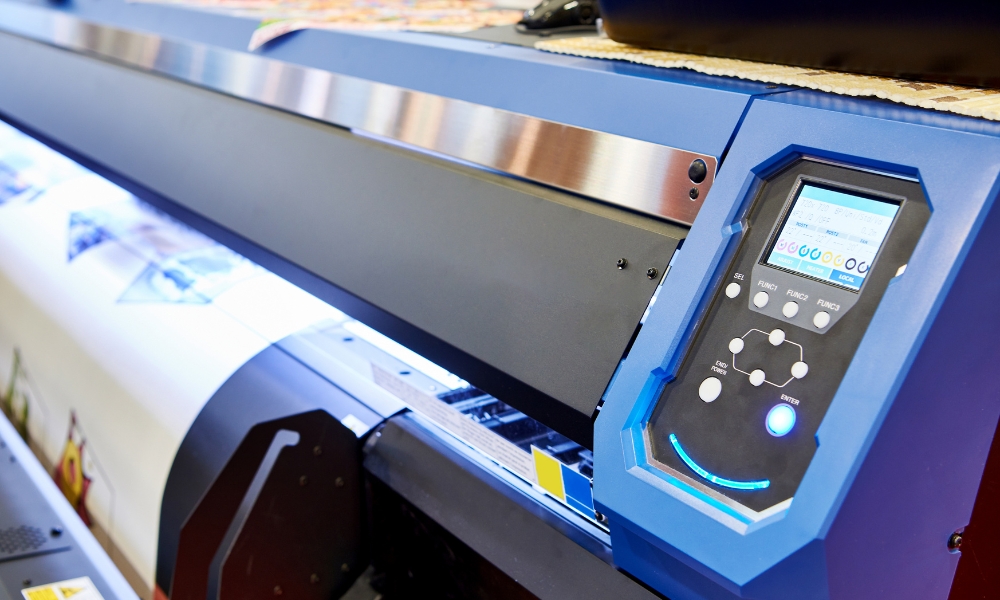
Sublimation printing is a digital printing method that uses heat, pressure, and time to permanently transfer dye into a material — not onto it. That distinction matters more than it might seem, and we’ll come back to it when we talk about durability.
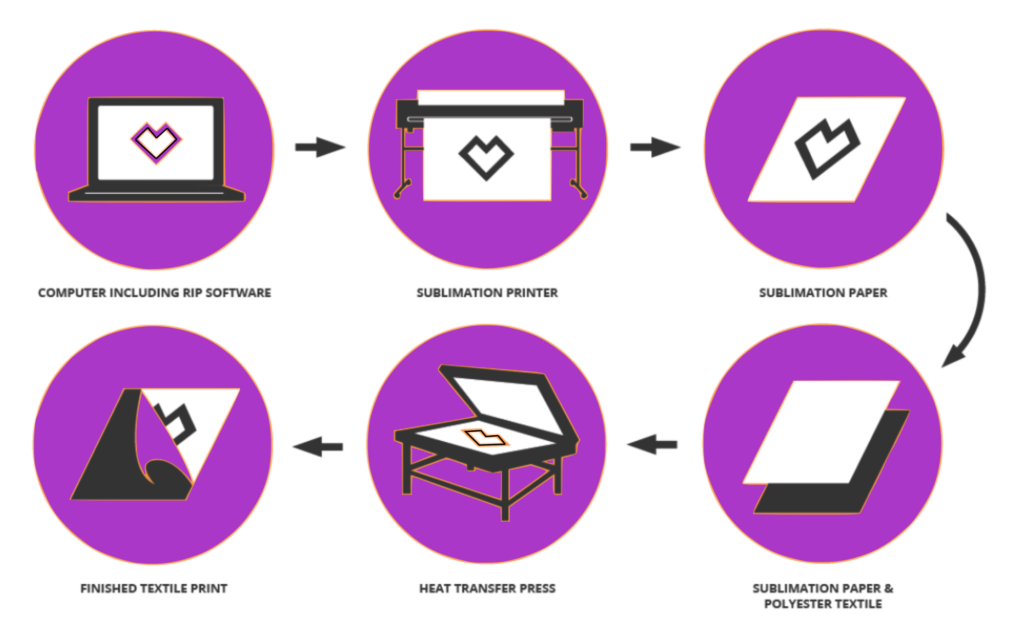
Here’s how the process works from start to finish:
Your design is printed onto transfer paper. A sublimation printer uses special dye-based inks to print your artwork onto a coated transfer paper. At this stage, the colors look muted and dull — that’s normal. The vibrancy comes later.
The paper is placed onto the blank product. The printed transfer paper is carefully aligned on the fabric or substrate — a t-shirt, a mug, a pillowcase — and secured to ensure nothing shifts during pressing.
Heat and pressure are applied. A heat press clamps down on the paper and product at temperatures typically between 180°C and 210°C, holding for 30 to 60 seconds depending on the material. This is where the chemistry happens.
The ink turns to gas and bonds with the material. Under that heat and pressure, the solid dye particles skip the liquid phase entirely and convert directly into a gas — this is the sublimation process the technique is named after. The gas penetrates the surface of the material and bonds at a molecular level with the polymer fibers.
The paper is removed and the print is permanent. Once the press opens and the transfer paper is peeled away, the ink is already locked inside the material. It can’t be scraped off, washed out, or peeled like a sticker — because it’s no longer sitting on top. It’s part of the fabric itself.
The result is a print with sharp edges, vivid color, and a soft hand-feel because there’s no ink layer sitting on the surface to crack or peel.
Benefits of sublimation printing
This printing technique has a wide range of applications and advantages – That’s why many people choose this printing method for their products, especially customizable ones. Here’s why:
Prints that last as long as the product itself
Because sublimation ink bonds at the molecular level with the fabric’s polymer fibers — rather than sitting on top of the surface — the print effectively becomes part of the garment. It won’t crack, peel, or fade the way screen print transfers or heat vinyl can after repeated washing. A well-made sublimation product washed correctly will look the same after fifty washes as it did on day one.
For sellers, this translates directly into fewer refund requests, better reviews, and repeat customers. When buyers trust the quality of what they’re getting, they come back.
Vibrant, detailed color with full design freedom
Sublimation supports an unlimited color palette with no added cost per color — unlike screen printing, where each additional color increases setup costs. Gradients, photographic images, intricate patterns, and fine detail all reproduce with precision. There’s no visible texture or ink layer on the surface, so the fabric’s natural feel is preserved.
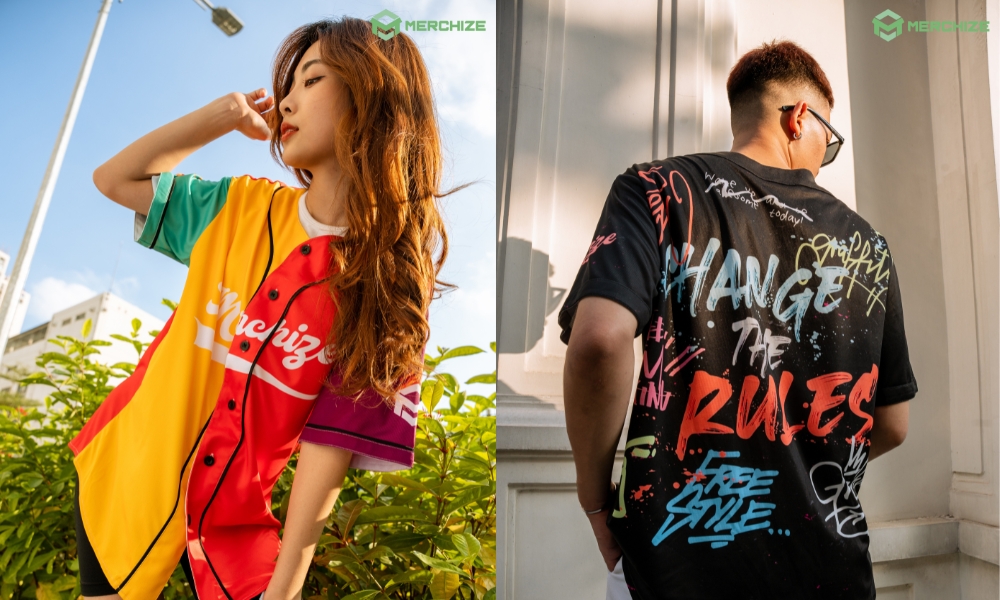
Combined with all-over print coverage, this gives you a genuinely large creative canvas. Your design doesn’t have to live in a chest-sized box. It can wrap around sleeves, run across the back, cover the legs of a pair of shorts — whatever the design calls for.
Versatile across product categories
Sublimation works on a wide range of materials beyond apparel — ceramic mugs, aluminum drinkware, phone cases, mousepads, blankets, pillows, flags, doormats, and more. This makes it one of the few printing techniques that can anchor an entire store across multiple product categories without switching suppliers or production methods.
For sellers who want to build a cohesive brand across apparel and home décor, sublimation makes that possible with consistent print quality across every product type.
No minimum order quantities
Working with a print-on-demand supplier like Merchize means you can order a single item at the same unit cost as a larger run. There’s no upfront inventory investment, no minimum order requirement, and no risk of sitting on unsold stock.
This also makes product testing low-risk. You can launch a new design, order one sample to verify quality, list it in your store, and only produce more units when orders actually come in. For sellers still finding their niche, that flexibility is genuinely valuable.
A more sustainable printing method
Sublimation uses dry, solid dye particles rather than liquid solvent-based inks, which means there’s no ink runoff, minimal waste, and no water used in the printing process itself. Ink is only applied to the areas that need it, so there’s very little excess.
This is worth communicating to your customers. Sustainability is an increasingly important purchase factor, particularly for younger buyers — and being able to describe your products as made with a low-waste printing process is a credible differentiator, not just marketing language.
Disadvantages of sublimation
Polyester-only fabric requirement
As covered in the previous section, sublimation only works on polyester and high-polyester-content fabrics. If a customer is specifically looking for a 100% cotton t-shirt, sublimation isn’t an option for that product.
In practice this matters less than it might seem, because the majority of all-over print products are specifically designed around performance polyester fabrics — and buyers shopping for vibrant all-over print designs are generally not expecting the feel of a heavyweight cotton tee. But it’s worth being transparent in your product descriptions about fabric composition, so buyers know what they’re getting.
White and light base colors only
Because sublimation inks are transparent and there’s no white ink in the process, your product range is effectively limited to white and light-colored blanks. Dark fabric simply won’t produce usable results.
This is the single biggest constraint on your product catalog. You can’t offer the same design in a black colorway and a white colorway — the black version either won’t work or will look completely different from the design intent. If offering multiple colorways matters for your niche, you’ll need to pair sublimation with DTG for your dark-base products.
White creasing near seams
On pre-made finished garments, the heat press can leave unprinted streaks near seams and edges where pressure and heat don’t penetrate evenly. The result looks like a defect and is a common source of customer complaints for sellers who aren’t aware of it.
The fix — cut-and-sew all-over print manufacturing — eliminates this entirely, but it’s worth knowing that not all suppliers use this method. When evaluating fulfillment partners, ask specifically whether their sublimation garments are made with cut and sew or pressed as finished products. The quality difference is significant.
At Merchize, all all-over print apparel is produced using the cut-and-sew method, so seam-related print gaps aren’t an issue in our catalog.
Fabric feel on lower-quality polyester
Not all polyester is equal. On lower-quality polyester, the fabric can feel slightly synthetic or rough against the skin — which some buyers don’t expect, particularly if they’re used to cotton blends. This is a materials sourcing issue as much as a printing issue, and it’s one reason why choosing the right supplier matters.
At Merchize, we select fabric specifically suited to each product type — softer polyester blends for items like pajamas and base layers where comfort is the priority, more durable technical fabrics for sportswear and outerwear. The fabric spec is listed for each product in our catalog.
Why choose sublimation for your print-on-demand business?
The market for sublimation print on demand products is expanding at a noticeable speed and is expected to reach $10.67 billion in market value in 2030. It is a green light for you to explore and experiment this highly potential market.
Highly customizable
This is how sublimation takes the print on demand products to the next level. With sublimation, you can customize nearly every part of the products, and not restrain to just a small printing area just like other common printing techniques like DTG and screen printing.
There is more room for you to unleash your creativity and create visually stunning designs that stand out from the rest.
Applicable for many products
Sublimation can be used on different materials and products, including clothing, home decoration, accessories, and more.
For the most common print-on-demand category – clothing, the possibilities are endless. As sublimation can be cut and sewn, there is no need to rely on the existing blank products and limit your options to a few common products like classic t-shirts, tank tops, or hoodies.
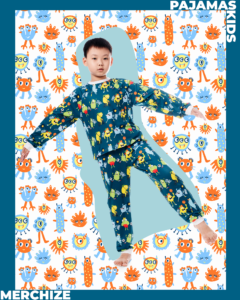
With this printing technique, print-on-demand providers can make literally any type of clothing, for example, bomber jackets, sweatpants, pajamas, polo shirts, baseball jerseys, etc.
Diverse your catalog with sublimation print-on-demand products!
Check out Merchize’s list of sublimation all-over print products and start selling now!
Obviously, sublimated products are not as ubiquitous as other traditional DTG products. Not many printing companies have the facilities and human resources to make all-over print products. That’s why there are fewer all-over print products available in the market. It also means less competition and more opportunities to gain profits.
Combined with unique designs, you can totally put your sublimated products at premium pricing and increase the profit margin. This way, you can earn more from each product sold.
At Merchize, we have early adopted sublimation techniques into manufacture. At the moment, we have developed a professional procedure for making all-over print and sublimated products that meet the high standards of customers.
High quality: Our print-on-demand sublimated products are made with advanced technology and skilled employees. Each product is printed, cut, and sew carefully and goes through quality scrutiny so that products are delivered to customers with the best quality.
Various materials: At Merchize, we select various materials for our all-over print products. Depending on the preference for each product, we will choose the materials that fit it most.
For example, we use nylon fabric for bomber jackets to ensure the best durability and resilience against the weather. While for products that require comfort like pajamas, we use the polyester blend for better comfort, softness, and breathability. With sportswear, we make use of bird eye pique fabric/mesh fabric to ensure the highest level of comfort and stretchability to fit physical activity.
Affordable pricing: After years of research and improvement, our facility is optimized to cut down the cost of manufacturing. We can deliver the best quality products at an affordable price. With a good base cost, you can get better profit margins, and save more for other marketing activities.
Wide range of sublimation products: Merchize put a strong emphasis on finding new opportunities for print-on-demand sellers. We have released a wide range of all-over print products in different categories. Our all-over print catalog covers from basic items like t-shirts, hoodies, sweaters, and pillows to unique items like bomber jackets, leggings, pajamas, polo, Hawaii, baseball jersey, and bucket hats.
How All-over Print Products are made at Merchize’s factory
Sublimation vs other printing methods: which should you sell?
One of the most common questions sellers ask when building a print-on-demand store is not “what is sublimation?" but “should I be selling sublimation products instead of — or alongside — what I’m already doing?" That’s the question this section answers.
Understanding how sublimation compares to other printing methods helps you make smarter product decisions, choose the right fulfillment partner, and position your store correctly for the customers you’re trying to reach.
Sublimation vs DTG printing
Direct-to-garment (DTG) printing is the most common method used in print-on-demand. If you’ve ever ordered a custom t-shirt from any major POD platform, it was almost certainly made with DTG. It’s the default — which is exactly why sublimation represents an opportunity.
Here’s how the two methods compare across the dimensions that matter most to sellers:
Sublimation
DTG
Compatible fabrics
Polyester and high-poly blends
100% cotton or cotton-rich blends
Base color
White and light colors only
Any color, including black
Print area
Full garment, edge to edge
Limited to platen size — typically chest or back panel
Color vibrancy
Extremely high on white polyester
High on light fabrics, slightly reduced on dark (due to white underbase)
Durability
Excellent — ink is part of the fiber
Good — ink sits on surface, may crack over time with heavy washing
Hand feel
Smooth — no ink layer on surface
Slight texture where ink is applied
Setup time
Longer (cut and sew for garments)
Fast — printer applies directly to finished garment
Best for
All-over print designs, activewear, swimwear, home décor
Single-placement designs on cotton apparel
Minimum orders
None (with a POD supplier)
None (with a POD supplier)
The most important practical difference for sellers is the print area. DTG is constrained by the size of the printer’s platen — typically a rectangle covering the chest or back of a garment. Sublimation, using the cut-and-sew method, can cover the entire surface of a garment seam to seam. If your design concept only works at full-coverage scale — a Hawaiian shirt with an all-over floral pattern, a pair of leggings with a full-leg graphic, a bomber jacket with a wraparound print — sublimation is the only viable route.
The second key difference is fabric. DTG’s natural home is cotton — the fiber type that most buyers associate with comfortable everyday wear. Sublimation’s natural home is polyester — associated with sportswear, swimwear, and performance apparel. These aren’t competing for exactly the same customer, which means the smarter move for most sellers is running both in parallel rather than choosing one exclusively.
The seller’s verdict: Use DTG for single-placement designs on cotton basics — t-shirts, hoodies, sweatshirts in any color. Use sublimation for all-over print designs on polyester products and for home décor and accessories. A store that runs both has a much wider addressable market than one that runs either alone.
Sublimation vs screen printing
Screen printing is the oldest and most established method in the industry. It’s what’s used for band merch, branded workwear, and high-volume promotional products. For most print-on-demand sellers, it’s not a direct alternative — but understanding the difference helps when you’re explaining your products to customers or evaluating bulk order options.
Sublimation
Screen printing
Compatible fabrics
Polyester
Cotton, linen, most natural fibers
Color range
Unlimited colors, gradients, photos
Typically limited to 1–6 spot colors
Print area
Full garment coverage
Limited placement area
Setup cost
None at POD scale
High — requires physical screens per color
Minimum orders
None (with a POD supplier)
Usually 24–50 units minimum
Durability
Excellent
Good to excellent depending on ink type
Best for
Custom all-over print, one-off and small runs
Large volume runs of simple designs
The defining constraint of screen printing is color. Each color in a design requires a separate physical screen, and each screen adds setup time and cost. A photographic image or a gradient that sublimation handles trivially would require dozens of screens to approximate in screen printing — making it economically unworkable for anything complex.
For POD sellers, screen printing is rarely the right tool. The minimum order requirements and per-color setup costs make it unsuitable for the one-at-a-time fulfillment model. Where it does make sense is for sellers who’ve validated a design through POD, know it sells consistently, and want to lower their unit cost by switching to bulk production for that specific product.
The seller’s verdict: Screen printing isn’t a realistic option for most POD sellers at the start. If you ever reach the volume where it makes sense for a proven bestseller, the economics change — but until then, sublimation and DTG cover the full range of what you need.
When to choose sublimation for your store
Rather than thinking of sublimation as universally better or worse than other methods, think of it as the right tool for a specific set of situations. The following checklist makes the decision straightforward.
Choose sublimation if:
Your design concept requires full-garment coverage — the design wraps around sleeves, legs, the full front and back, or across seams
You’re selling into activewear, swimwear, sportswear, or outdoor apparel niches, where polyester is the expected fabric
Your designs are photographic, gradient-heavy, or use a large number of colors — sublimation handles these better than any other method
You’re selling home décor and accessories alongside apparel, and you want consistent print quality across all product types
You want to position your products at a premium price point — all-over print products command higher retail prices than single-placement DTG equivalents
You’re looking for a less saturated product category — the all-over print market has fewer sellers than standard DTG, which means less direct price competition
Stick with DTG (or add DTG alongside) if:
Your designs are single-placement — a logo, a graphic, a text design meant for the chest or back of a shirt
Your customers specifically want cotton fabric
You want to offer the same design on both light and dark base colors
Your niche is everyday casual wear rather than activewear, swimwear, or statement pieces
Consider running both if:
You have a winning DTG design that could be adapted into an all-over print version — this is one of the fastest ways to expand a product line without starting from scratch on design
You want to offer a full range within a niche — for example, a fitness brand that sells cotton gym tees (DTG) and polyester performance leggings and sports bras (sublimation)
You’re testing which product type your audience responds to before committing more heavily to one
At Merchize, both sublimation all-over print and other printing methods are available under one roof, so there’s no need to manage multiple suppliers as your product line grows. You can test both, compare performance, and scale whatever works — without the operational complexity of splitting your fulfillment.
How to start selling all-over print products
Selling print-on-demand all-over print products is no different than selling regular print-on-demand products. The process goes down to the same five stages:
Product and niche research
The goal is to find potential niches and products. At this stage, you will want to ask:
What niches have high demand and low competition?
What products fit the niches best?
What keywords people are using to search for products in this niche?
What design styles and ideas are popular in this niche?
What quality do customers expect when buying the products?
Find suppliers
After finding the right products and niches, you are set to find the suppliers that fit your expectations. Here, you will have to consider some factors
Base cost
Production time
Product quality
Other additional services (Do you want to build a brand? Or what platforms are you selling on?)
Create eye-catching designs
What makes all-over print products edge over other regular items out in the market is obviously the designs.
With sublimation printing, you can create products with visually stunning designs that spread all over the fabric. You have more space to add details and visual elements to create impactful designs.
Order product samples
To avoid unwanted customer complaints, you should order product samples to check if the products are up to your requirements before bringing the products into the market. When it comes to all-over print, there might be a few solid concerns regarding the material and printing quality.
At Merchize, to make it convenient for print-on-demand sellers to check product quality, we offer special discounts for sample items. These sample discounts are available for all products in our catalog!
Sublimation Print on Demand Recommendatins: Pricing, margins, and production timelines
This is the section most POD guides skip, and it’s the one sellers actually need before they commit to a product category. Understanding the numbers behind sublimation — what it costs to produce, what the market will bear at retail, and how long it takes to get to a customer — is what separates sellers who launch confidently from sellers who guess and get burned.
None of the figures below are guarantees. Pricing varies by supplier, product spec, and shipping destination. But the ranges here give you a realistic working model to build your store’s economics around before your first sale.
Base cost ranges by product type
Base cost is what you pay your fulfillment supplier per unit — before shipping, before your margin, before any platform fees. For sublimation all-over print products, base costs are generally higher than equivalent DTG products because of the additional production steps involved in cut-and-sew manufacturing.
Here’s a realistic range across the most common sublimation product categories at Merchize:
Product type
Typical base cost range
Notes
All-over print t-shirt
$10 – $16
Varies by fabric weight and fit style
All-over print hoodie
$22 – $32
Heavier production; premium positioning justified
All-over print leggings
$14 – $20
High-margin category; strong in fitness niches
All-over print swimwear
$16 – $24
Seasonal but high AOV; pairs well with cover-ups
All-over print bomber jacket
$28 – $40
Lower competition; commands strong retail price
All-over print pajama set
$24 – $34
Gift-driven; strong in Q4
Sublimation mug
$7 – $12
Low base cost; high volume potential
Sublimation blanket
$18 – $28
Popular gift item; large print area is a design advantage
Sublimation pillow
$12 – $18
Home décor staple; low barrier to entry
Sublimation phone case
$8 – $14
Accessories category; good for brand extension
These figures reflect base production cost only. Always check the current pricing in Merchize’s catalog for live figures, as costs are updated periodically to reflect material and production changes.
Suggested retail pricing and margin examples
Knowing your base cost is only half the picture. The other half is understanding what the market will actually pay — and how much room there is between those two numbers.
All-over print sublimation products consistently command higher retail prices than comparable DTG single-placement products. There are two reasons for this. First, the visual impact of a full-coverage design signals premium quality to buyers at a glance — it looks like more work went into it, because more work did. Second, the all-over print category has fewer sellers than standard DTG, which reduces direct price competition and gives you more pricing power.
Here’s how that plays out across a few representative products:
Example 1: All-over print t-shirt
Base cost: $13
Recommended retail price: $32 – $38
Gross margin: approximately 59–66%
Platform fee (Etsy example, ~6.5%): $2.10 – $2.47
Net margin after platform fee: approximately 52–60%
Example 2: All-over print hoodie
Base cost: $27
Recommended retail price: $65 – $75
Gross margin: approximately 58–64%
Platform fee (Etsy example, ~6.5%): $4.23 – $4.88
Net margin after platform fee: approximately 51–58%
Example 3: All-over print bomber jacket
Base cost: $34
Recommended retail price: $85 – $100
Gross margin: approximately 60–66%
Platform fee (Etsy example, ~6.5%): $5.53 – $6.50
Net margin after platform fee: approximately 53–59%
Example 4: Sublimation mug
Base cost: $9
Recommended retail price: $22 – $28
Gross margin: approximately 59–68%
Platform fee (Etsy example, ~6.5%): $1.43 – $1.82
Net margin after platform fee: approximately 52–61%
A few things to notice in these numbers. First, gross margins are broadly consistent across product types — sublimation products at different price points tend to hold similar margin percentages. Second, higher-ticket items like bomber jackets earn more absolute dollars per sale even at similar margin percentages, which matters for sellers who want to build revenue without high order volume. Third, platform fees are calculated on the retail price, not your profit — so they take a larger absolute bite on higher-priced items, which is worth factoring into your pricing model.
These are working examples, not prescriptions. Your actual retail price should be informed by competitor research on your specific platform and niche — search for comparable all-over print products in your category, find the price band where quality sellers are clustering, and price within that range rather than below it. Undercutting on price in the all-over print category is rarely the right strategy; buyers here are shopping on design and quality, not looking for the cheapest option.
Shipping costs and their effect on margin
Shipping is the line item most new sellers underestimate, and it has a meaningful effect on net margin. There are two ways to handle it: charge shipping separately at checkout, or build it into the retail price and offer free shipping.
Free shipping consistently outperforms paid shipping in conversion rate across most POD platforms — particularly on Etsy, where the algorithm actively favors free shipping listings and buyers have been conditioned to expect it. The tradeoff is that absorbing shipping cost compresses your margin.
Here’s how to think about it:
For lower-ticket items like mugs and phone cases, absorbing a $4–$6 domestic shipping cost into a $25–$30 retail price is manageable and keeps the price competitive.
For mid-ticket items like t-shirts and leggings, a $5–$8 shipping cost absorbed into a $35–$45 retail price still leaves healthy margin.
For higher-ticket items like hoodies and bomber jackets, free shipping is easier to absorb because the absolute margin in dollars is larger — a $70 hoodie with $8 shipping absorbed still leaves $31+ after base cost and platform fee.
For international orders, shipping costs rise significantly — sometimes to $15–$25 or more depending on destination. Most sellers either charge shipping separately for international orders or set international retail prices higher than domestic prices to compensate. Merchize ships globally, so factor destination-specific shipping rates into your pricing before listing internationally.
Production and shipping timelines
Timeline transparency is one of the most underrated trust signals in e-commerce. Buyers who know exactly when to expect their order are far less likely to file disputes or leave negative reviews — and sellers who set accurate expectations upfront spend far less time on customer service.
Here’s a realistic timeline breakdown for sublimation all-over print orders at Merchize:
Standard production time: 3–7 business days
All-over print products require more production steps than standard DTG — design printing, fabric cutting, and sewing are all done in sequence — so production time is slightly longer than a simple DTG order. Most orders are completed within 3–5 business days under normal conditions; allow up to 7 during peak periods like Q4 or around major holidays.
1-day production option
For select products in Merchize’s catalog, a 1-day production upgrade is available. This is particularly useful for sellers running time-sensitive promotions, fulfilling last-minute gift orders, or testing a new product without waiting a full week for the sample. Check the product page for availability — not all sublimation products qualify.
Shipping timelines by region (after production)
Destination
Standard shipping
Expedited shipping
United States
5–10 business days
3–5 business days
Europe
7–14 business days
5–8 business days
Australia / NZ
10–18 business days
7–12 business days
Rest of world
12–20 business days
8–14 business days
Total order-to-delivery estimate
Adding production and shipping together gives you the realistic window to communicate to buyers. For a standard US domestic order: 3–7 days production plus 5–10 days shipping equals roughly 8–17 business days from order to delivery. For a customer placing an order on a Monday, that’s typically 2–3.5 calendar weeks.
Be transparent about this in your store policies and product listings. Phrases like “made to order — please allow 2–3 weeks for delivery" set accurate expectations without alarming buyers. Most customers shopping for custom all-over print products understand and accept this timeframe when it’s communicated clearly upfront.
Peak season planning
Production and shipping timelines extend during peak periods. For Q4 specifically — the highest-volume period for POD sellers — plan for production times to run at the upper end of the range from mid-November onward, and communicate earlier cutoff dates for Christmas delivery. A clear “order by [date] for Christmas delivery" notice in your shop banner and listings reduces last-minute disputes significantly.
Putting the numbers together: a simple store model
To make this concrete, here’s what a basic sublimation store’s economics might look like at modest scale:
Assumptions:
30 orders per month
Average order value: $45 (mix of t-shirts, mugs, and one or two higher-ticket items)
At 60 orders per month with the same averages, gross profit approximately doubles to $1,084. These are conservative figures that don’t account for advertising costs or returns, but they illustrate that even at modest volume, the margin structure of sublimation all-over print is genuinely workable — and that scaling order volume is the primary lever for growing absolute profit, since the margin percentage stays relatively stable.
How to create stunning designs with sublimation
Create strong and vibrant designs
With a full canvas in your hand, you can create the most mind-blowing designs without minding the limit of a small printing area box.
All-over print products with strong visuals and vibrant designs always sell like hot cake. Unleash your creativity, make the most stunning products, and skyrocket your sales!
Make full use of all the printing areas
To take full advantage of sublimation printing, you should make your designs cover the entire printing area.
Don’t just waste all potential by making some simple designs that cover a part of the whole printing area. You can do better than that!
Use your winning DTG designs
If you are already gained success with traditional DTG products, you can extend your winning streak by transferring these successful designs into all-over print ones.
You can create a pattern using your DTG designs, or add striking backgrounds that enhance the designs and easily capture customers’ eyes. This way, you can ensure a chance of gaining similar success, or even more.
Some great niche ideas for all-over print designs:
If you have no clue where to start making impressive all-over print designs, here are some popular design styles that have earned tremendous success in the market.
Painting
Spiritual
Space
Conclusion
In conclusion, sublimation printing can be a great way to make more money with an all-over print print-on-demand business. It provides many advantages, like being highly customizable and applicable for many products, making it less competitive and more profitable. While this method of printing does have a few drawbacks as well, these are usually more than compensated for by the long-term financial gains of using sublimation.
To get started with selling all-over print products with sublimation, you’ll need to make sure you do thorough product and niche research, find reliable suppliers and create eye-catching designs derived from your existing DTG designs. When it comes to creating stunning designs with sublimation though, having strong and vibrant mockup images is key! You’ll also want to make full use of the available printing area when creating your designs as well.
So contact Merchize now to start selling Sublimation Print on demand products, Merchize helps businesses stay ahead of the competition by providing them with resources on trends, advice for optimizing strategies and more so be sure to visit us at Merchize today!
is a senior writer at Merchize covering products, services, and consumer tech issues and trends. Previously, she was a content writer for trustworthy brands and International corporations. With her deep knowledge in multiple industries, Bich has become a professional writer and has chosen Merchize to explore eCommerce, MMO, and Print on Demand... In her free time, she loves reading, listening to music, and hanging out at cafes.
Discover 15 creative New Year’s decoration ideas for 2027, from personalized home decor to festive party decorations, plus inspiration for POD sellers.