
Contents
Is starting a pet business still profitable if you’re thinking about leaving your current job in 2026?
Absolutely, but not in the way most people expect. While opportunities in the pet industry certainly exist, the most profitable pet businesses aren’t always the most popular ones.
This guide breaks down 15 realistic pet business ideas for 2026, from home-based models to overlooked niches with proven demand. More importantly, it helps you identify which ideas are worth your time, which require significant capital, and which only look profitable on the surface.
Is a pet business still profitable in 2026?
Absolutely. The global pet market is projected to reach $157 billion in 2025, growing at an average rate of ~8.7% per year since 2020 – even through the pandemic and economic slowdowns.
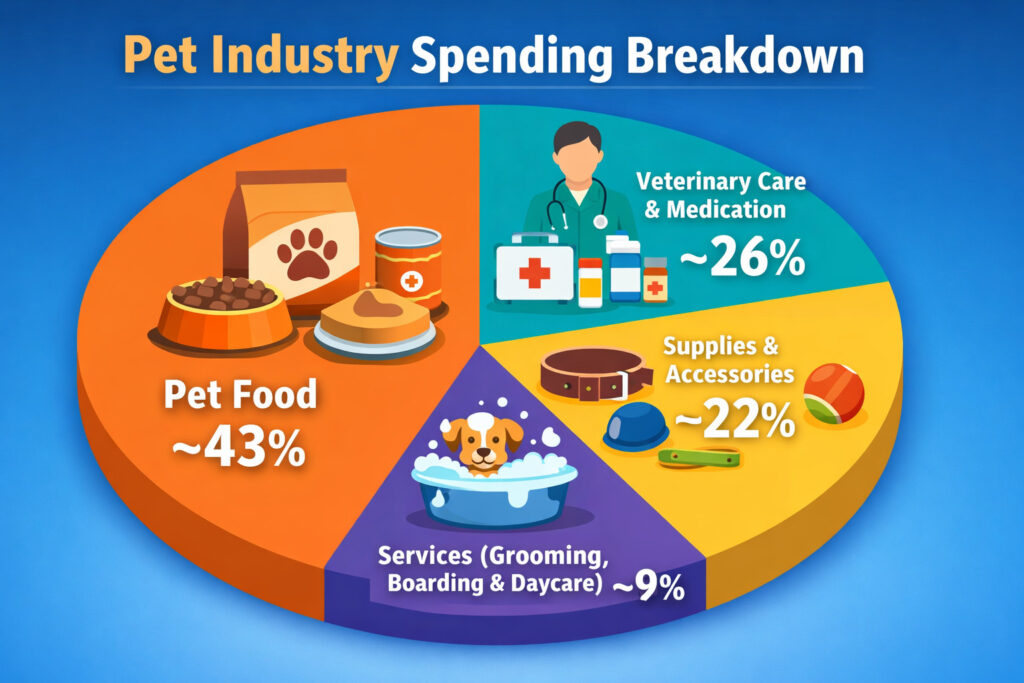
According to the American Pet Products Association (APPA), most spending goes to everyday, repeat-need categories:
- Pet food: ~43%
- Veterinary care and medication: ~26%
- Supplies and accessories: ~22%
- Services (grooming, boarding, and daycare): ~9%
Still unsure? Look at how people spend. In the U.S., pet owners pay around $109–$210 per month. Europe averages about $130 per pet, while Asia is catching up fast as incomes rise. Add to that 15–20% e-commerce growth driven by TikTok and Instagram Shop, and the picture is clear.
So yes, there is demand for pet products and services in every market.
15 Profitable Pet Business Ideas
1. Selling custom pet product online
The most accessible way to launch a pet business is through a print-on-demand model for pet products, as it requires little to no upfront investment. You don’t have to worry about manufacturing, inventory, or shipping. Those operational tasks are handled by print-on-demand platforms like Merchize, allowing you to focus on design and demand generation.
This model is especially effective if you have a background in sales or marketing. Instead of learning complex operations, you can apply your existing skills to drive traffic, test products, and scale faster.
And the demand is there. Pet owners are willing to pay for personalized, one-of-a-kind items for their pets, from custom shirts, tank tops, and keychains to collar signs, and fashion accessories.

Test product samples, design from real pet-owner experience, and promote through social media or e-commerce platforms. It’s one of the simplest ways to turn a love for pets into a home-based, scalable income stream.
See more: Print on demand pet product
2. Pet food brand
Selling pet food can be highly profitable, but only if safety and quality come first. Without proper certifications, it’s difficult to compete in the mass market.
A smarter approach is niche-focused products, such as digestive-support food, skin and coat formulas, or shedding-control treats. These solve specific, real pet health needs and are easier to differentiate than generic pet food.

3. Pet toy store
Pet toys are also a solid business idea, especially if you have owned a pet yourself. As a pet owner, you already know you are willing to spend money to keep your “fur baby” happy, healthy, and out of trouble around the house. From durable chew toys and interactive balls to smart toys with sound or scent features, this market is broad, accessible, and easy to enter.
You can start with an online store on platforms like Shopify or Etsy without a large upfront investment. To appeal to more customers, consider adding personalized options such as toys with a pet’s name, or eco friendly products. Many pet owners prefer items that feel special and thoughtful rather than mass produced.
Statement: The global pet toy market is estimated to reach a value of USD 4.4 billion by 2025, driven by a strong compound annual growth rate (CAGR) of 7.9% throughout the forecast period extending to 2035.

4. Pet-sitting services
Pet sitting is a great option for people who have time and genuinely enjoy working with animals, while still being able to generate solid income. In large cities with high pet ownership rates such as New York (around 50%), Canada (roughly 58–77%), Sydney (73%), and London (46% dogs and 44% cats), pet owners often need reliable care when they travel for work or take vacations without their pets. That is where pet sitting services become essential.
In Canada alone, the pet sitting market is projected to reach USD 320 million by 2030, growing at a 11.2% CAGR, with dogs and cats accounting for most of the demand. In London, pet sitting jobs typically pay £11–15 per hour, making it a viable income stream for individuals and small service businesses.
To attract more clients and build trust, consider obtaining professional certifications such as pet CPR, nutrition, or animal behavior training. It is also important to understand local regulations and carry liability insurance to handle potential issues like pet illness, bites, or lost pets. Combined with online marketing through platforms like Rover, Wag, or local Facebook groups, this approach can help you maintain a steady flow of customers.
5. Animal content creator business
Besides business models that require upfront capital, you can also start with your own pet by creating fun, creative videos that are easy to go viral. Getting started is very simple. Pet-related content attracts a lot of attention on social media, and there are countless angles you can explore and develop over time.
So why does this trend actually generate significant income? Because pet content is favored by algorithms on platforms like TikTok, YouTube, and Instagram. When combined with basic growth tactics such as posting consistently three to five clips per week, using a strong three-second hook, trending music, and popular hashtags like #PetLovers, #ChoMeoVN, #CatOfTikTok, or #DogLife, the chances of going viral increase significantly.
That said, your income will largely depend on channel views or affiliate performance. This means you need a clear plan for content direction and monetization if you want to grow this model sustainably.
6. Cat and dog grooming business
Pet grooming shops along busy streets are often fully booked and require appointments in advance. Beyond basic grooming, businesses can expand into services like pet massage or at home grooming, depending on local demand.
Many pet owners now see grooming as a “spa day” for their pets, including bathing, drying, nail trimming, ear and eye cleaning, and even trendy fur coloring.
Success depends on choosing the right location and delivering consistent service quality. A good location attracts customers, while great service keeps them coming back and drives referrals.

7. Pet supply store
Pet supplies are becoming increasingly diverse, ranging from beds, food bowls, leashes, and clothing to storage organizers that meet the growing shopping needs of pet owners. One of the most effective ways to identify real demand is to join pet groups and online communities, observe how owners discuss the products they buy for their pets, and then build a product list based on those insights.
In addition to serving local customers, you can also sell internationally through online channels. Pricing varies by market. For example, the same product may sell for $6 in the US but £4 in the UK. Smart pricing strategies can help you achieve better profit margins across different regions.
8. Pet photography services
If you have a background in photography, make the most of it. Out of ten pet owners, all ten are likely to post photos of their pets on social media. There is nothing more compelling than showing them beautifully captured pet photos and inviting them to use your service.
It is hard to say no to preserving memories with such a special member of the family, isn’t it?

9. Cat cafe
For cat lovers, a space filled with “fluffy little creatures” showing every possible expression is often enough to make all the stress fade away. With this model, café owners usually combine selling drinks with allowing customers to interact directly with the cats in the space.
People come mainly for the cats, not the coffee. That is why the most important factor is proper cat care and management: keeping the space clean, ensuring the cats are friendly with strangers, and providing regular health checkups. When the experience feels comfortable and enjoyable, customers are more likely to return multiple times, book time slots, or recommend the café to friends.
Beyond beverage sales, a cat café can grow through activities such as workshops, themed events, selling cat-related merchandise, or partnering with rescue shelters for adoption programs. At that point, the café becomes a true community hub for cat lovers.

10. Dog training business
If you are targeting a customer segment with a clear and specific intent, dog training is a business where owners are often willing to spend significant money to help their pets develop well-structured, desirable behaviors.
Any pet owner feels proud when their dog can use the toilet in the right place, follow basic commands, or, in some cases, even help protect the household. Well-trained pets not only make daily life easier but also strengthen the bond between owners and their animals, which is why this service holds strong long-term value.
11. Pet transportation and travel services
Transporting pets over long distances or during relocation can become a nightmare if owners lack the right experience or proper equipment. Pet transportation services solve a real customer pain point by ensuring pets are picked up and delivered safely, with minimal stress and reduced risk throughout the journey.
12. Dog walking business
In apartment complexes or densely populated city centers, many pet owners work full time and leave their pets at home for long hours. If this situation continues over time, a pet’s physical and mental health can gradually be affected and decline.

Pet walking services are well suited for these cases, as they do not cost as much as pet boarding and can be scheduled within specific time slots during the day.
13. Pet massage, wellness, or senior care services
As pets grow older, their needs change as well. They are no longer as active as before and often face joint issues, reduced mobility, or prolonged fatigue. When owners lack the expertise or experience to care for aging pets, it can easily lead to unwanted situations.
Short-term massage and routine wellness care services help pets relax, improve mobility, and maintain a more stable physical condition. For many pet owners, this is a practical and reassuring solution, especially when they want their pets to receive proper care without resorting to complex medical treatments.
14. Aquarium and fish tank maintenance services
Many people choose fish as their pets and want them to live in the healthiest environment possible. However, without regular tank cleaning, algae can build up, the water becomes cloudy, and waste accumulates at the bottom, all of which can harm the fish’s development.
You can offer an at-home, recurring aquarium cleaning service that keeps the tank clean without changing the aquascape layout or stressing the fish. Service fees are usually based on tank size and care complexity, typically around $20–50 for small tanks, $60–120 for medium tanks, and $150 or more for large or complex planted aquariums.
For customers who subscribe to monthly maintenance, this model provides a fairly stable and predictable source of recurring revenue.
15. Pet sprays, colognes, and grooming products
Pets that live indoors naturally come with challenges like odor, shedding, and ongoing hygiene issues. And since owners cannot always take their pets to a grooming salon, deodorizing sprays, light pet colognes, and at-home grooming products become a convenient solution.
This product category tends to generate frequent repeat purchases with steady, year-round demand, making it a strong option to consider.
Tip: Natural, pet-safe formulas are generally better received and have stronger long-term scaling potential if you can build a brand that owners trust.
How to sell pet products online
Step 1: Choose a business model that matches your capabilities
Mid-range budget ($1,000–$5,000):
Starting with non-consumable, personalized pet products such as custom tank tops or matching owner–pet apparel (for example, “Proud Frenchie Mom” tees) requires less upfront capital thanks to print on demand or dropshipping. Most costs go toward building your store, testing marketing campaigns, and handling basic logistics, while still avoiding complex regulatory barriers.
High budget (>$5,000):
Pet business models at this level demand more experience and operational complexity. You can develop private-label products or manufacture functional items like grooming tools, health-related accessories, or even expand into pet food and supplements. However, these models require significant budgets for R&D, inventory, certifications, and strict compliance with safety and import regulations. This path is better suited for founders with market data and a long-term scaling plan, rather than as a starting option.
Step 2: List your pet products or services
It is best to start with 5–10 specific products to test the market. This range keeps your risk manageable, so even if sales are slow at first, your losses remain limited.
Possible directions to explore:
- POD products: Review supplier catalogs to identify trending items you can customize.
- Pet food products: Validate local demand through surveys or basic market research.
- Pet services: List your service strengths clearly and promote them to well-defined target groups.
Step 3: Design with storytelling in mind
No matter which pet business idea you choose, high-quality visuals combined with stories that customers can see themselves in help build emotional connection. When people feel part of the story, they are far more likely to become loyal customers.
Step 4: Promote on the right platforms
Instead of spreading yourself across too many channels, focus on one or two platforms where your products or services naturally fit. For pet products, visual-first platforms like Instagram and TikTok, or marketplaces such as Etsy, often deliver faster results.
Pet services, on the other hand, tend to perform better on platforms like Facebook and Google Maps, where users actively search for local services and rely on reviews and detailed business information.
Pet business ideas: FAQ
1. What is the most profitable pet business?
Personalized and niche focused pet businesses are the most profitable because they rely on emotional value, not price competition.
2. How much does it cost to start a pet business?
It can cost under $1,000 with print on demand models, while inventory based or regulated pet businesses often require several thousand dollars.
3. Is the pet industry still growing?
Yes, growth is driven by premium and personalized products as pet owners spend more per pet, not just more pets.
4. Do I need a license for every pet business?
No, only regulated products, such as food, supplements, or medical items, require licenses, while non-consumable products usually do not.
5. Are pet sprays or colognes worth selling?
They can be profitable but carry higher regulatory and safety risk, making them better for established brands than beginners.
6. Is fish breeding a viable business?
Yes, but it requires specialized knowledge, physical infrastructure, and is harder to scale compared to online pet businesses.
7. How do pet subscription boxes succeed?
They succeed by targeting a specific niche and retaining customers through consistent value and personalization.


