
Contents
AI fashion trends are rapidly reshaping the print-on-demand landscape, but many POD sellers are still struggling to keep up. Designs become outdated faster, trends peak and fade within weeks, and relying on intuition alone often leads to wasted testing costs and low sell-through rates.
In this fast-moving market, understanding AI fashion trends is a competitive advantage for you to spot demand early, validate ideas with data, and reduce the risk of chasing short-lived hype.
In this article, we’ll break down how AI fashion trends are changing the POD game and, more importantly, show you practical ways to apply them so you can make smarter design decisions, build more consistent collections, and find a clearer growth path for your business.
Is AI slowly becoming the center of the fashion industry in 2026?
It sure feels that way. AI is no longer just a “support tool”; it’s now stepping in to handle everything from data analysis and trend forecasting to design assistance and customer insights. For sellers, this means fewer guesswork decisions and more clarity in a market that moves faster every year.
So where does fashion fit into this picture? Online shopping has been popular. Consumers are browsing more, comparing more, and expecting more. They want products that feel personal, align with their values, and arrive quickly. Style is no longer about what’s trending globally; it’s about what fits their taste, their lifestyle, and their timing.
That shift is exactly where AI shines in fashion. By combining consumer behavior insights with predictive analytics, AI can help identify what styles people are likely to want next when demand starts forming. In other words, it helps sellers deliver the right designs, to the right audience, at the right moment.
We’re already seeing AI-powered fashion brands and digital-first designers prove this in action, reshaping how designs are created and how collections are marketed. And for small creators and POD apparel brands, integrating AI into the workflow is about staying competitive. In today’s landscape, using AI to guide design and market decisions can be the difference between constantly chasing trends and building a brand.

Top AI fashion trends to watch in 2026
1. Using AI to predict fashion trends before they explode
If you’re selling fashion through POD, you already know one thing for sure: timing is everything. Trends don’t wait, and guessing based on feeling is getting riskier. That’s where AI steps in.
AI can analyze massive volumes of data in real time, from social posts and search behavior to customer reviews and online conversations. These signals reveal early patterns of what styles, colors, and aesthetics are appearing.
For sellers, this means you can track shifts in consumer interest early and adjust your designs, collections, or product focus accordingly. Some tools even analyze images shared online, helping identify emerging color palettes, silhouettes, or visual details.
- Simple tools like Google Trends or even ChatGPT can already help surface rising topics and recurring themes in online discussions.
- For deeper insights, Heuritech uses AI-powered image recognition to scan millions of social posts daily, detecting early style signals.
- Similarly, Edited delivers near real-time market intelligence, allowing fashion brands to react faster as trends shift.
- For B2B-focused teams, solutions like Accio add another layer by letting users ask complex data questions and instantly uncover market patterns that support smarter decision-making.
For POD, the takeaway is simple: AI-powered trend forecasting isn’t about chasing hype faster; it’s about making calmer, more informed decisions.
Also read: Unlock the Power of AI for Your Print on Demand Business: A Detailed Guide to Using ChatGPT
2. AI-generated design & Prototyping
Across the fashion industry, using AI to generate patterns, textures, and even full collections dramatically speeds up the journey from concept to production-ready design. What used to take weeks of sketching and sampling can now happen in just a few days.
AI will handle the repetitive, time-consuming parts, while human creativity stays in control of aesthetics, storytelling, and brand identity. This balance helps sellers cut costs, shorten production cycles, and explore creative directions that simply weren’t practical before.
Several fashion-focused platforms show how creativity and automation can work hand in hand:
- Fashwell pioneered AI visual search and auto-tagging, reaching millions of users through Apple integrations.
- Stylitics helps retailers scale outfit building and product bundling, improving how collections are presented.
- Creati.ai (formerly ZMO.ai) can generate studio-quality product images from a single photo.
- Pixyle.ai and ViSenze simplify catalog management with reliable image recognition and tagging.
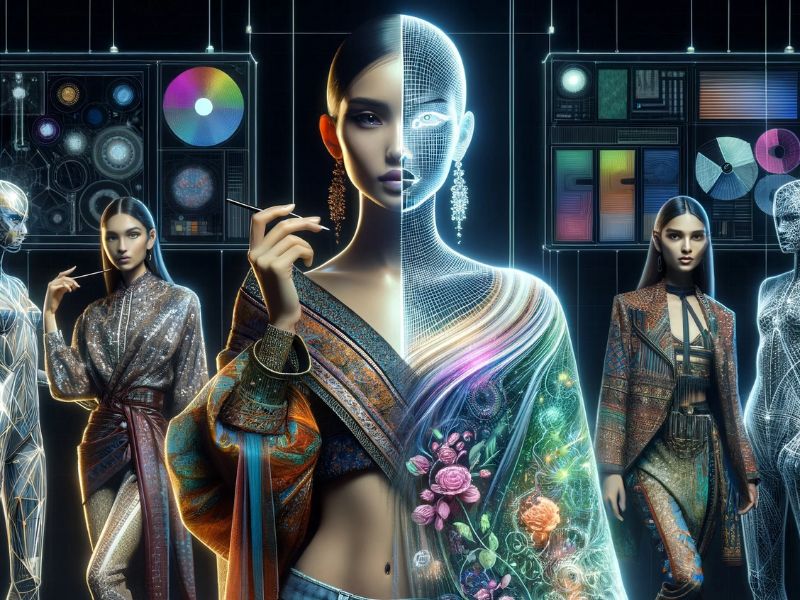
For POD, the real competitive edge is using AI to track trends at scale while you focus on brand voice and design intent. That combination allows you to test ideas faster, move from inspiration to production-ready designs.
3. Personalized fashion powered by machine learning
Today’s shoppers expect fashion to feel personal. That’s why leading brands rely heavily on AI stylists and recommendation engines.
Behind the scenes, machine learning systems analyze social media activity, shopping patterns, and user behavior in real time. The result is highly relevant product suggestions that guide purchase decisions and keep customers engaged throughout the shopping journey.
The good news is that you don’t need to be a massive brand to benefit from this. Smaller sellers can tap into tools like Vue.ai, which offers fashion-specific recommendation systems for ecommerce, while Shopify’s built-in AI features help segment customers based on buying behavior.
4. Market segmentation
Knowing exactly who you’re designing for is extremely important. In a world powered by AI fashion trends, guessing customer taste is no longer enough.
Today, AI-driven market segmentation allows fashion brands and POD sellers to sift from demographics and location to browsing and buying behavior and uncover niche audiences and regional style preferences.
What does this mean in practice? When AI is built into your segmentation strategy, your launches feel more personal, your designs reach the right communities, and seasonal collections resonate with different audiences.
And smaller POD sellers and independent creators can tap into accessible tools like Shopify Audiences or Google Analytics 4, both powered by AI insights, to automatically segment customers and reveal which groups actually engage, click, and buy the most
5. Virtual try-on & Digital showrooms
AI-powered augmented reality (AR) and image recognition are changing how shoppers experience fashion online. Instead of imagining how a product might look, customers can now virtually try on clothing through mobile apps or social platforms. Then they can see how items fit into their lifestyle before hitting the buy button.

With AI woven into fashion retail, virtual showrooms let shoppers browse, mix, and match products in a more interactive way. For ecommerce sellers, this helps lower return rates, improves customer confidence, and builds trust with buyers who are already comfortable shopping online.
A well-known example is Warby Parker, which introduced virtual eyewear try-on through its app. Customers can test multiple frame styles digitally, then order up to five frames to try at home with free return shipping. Using computer vision, the app analyzes face shape and skin tone to deliver more personalized fit recommendations.
6. AI fashion trends and sustainable fashion
Sustainability is becoming part of how smart brands stay profitable. And AI fashion trends are helping sellers produce less waste while making better business decisions at the same time.
By combining historical sales data, market signals, and real-time trend insights, AI-powered systems help brands predict demand more accurately. Sellers can align production with what customers are actually looking for. That means fewer unsold items, less wasted material, and tighter inventory control.
AI is also reshaping how fashion brands think about pricing, quality control, and supply chain transparency. From identifying inefficiencies in production to supporting more responsible material choices, these tools make it easier to balance margins with long-term sustainability goals.
Big names like H&M and Stella McCartney have already proven that AI-driven supply chains and material innovation are good for not only the planet but also business.
7. AI for small creators and POD sellers
This is where things get especially exciting for print-on-demand sellers. AI fashion trends, when combined with POD, remove many of the traditional risks of fashion retail. You can create designs using generative AI tools, validate ideas through trend forecasting, and launch products.
AI tools help generate visuals, optimize product descriptions, and speed up mockup creation, while POD platforms handle fulfillment. The result? Faster launches, lower risk, and more room to experiment.
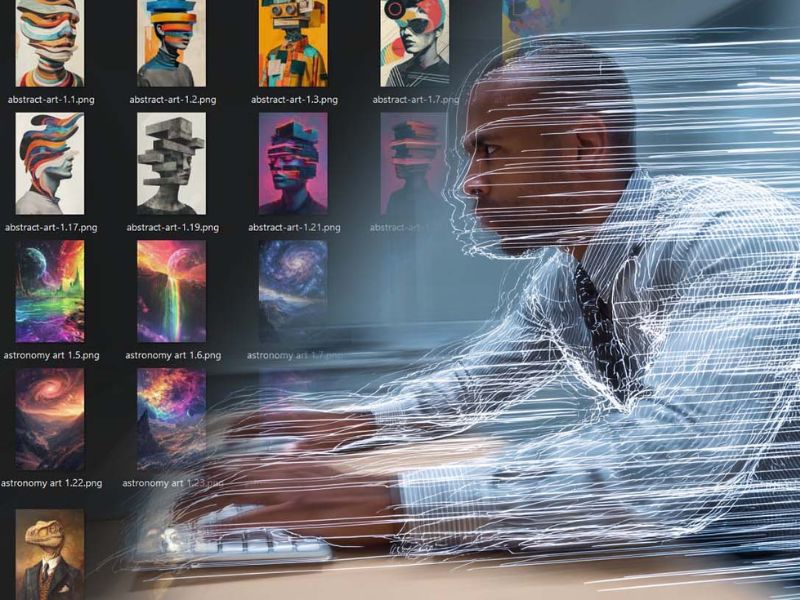
What should POD sellers do right now?
The smartest move right now is changing how you work with AI.
Validate ideas
Instead of launching designs based on instinct, sellers should use AI tools to validate ideas. Look at AI-driven insights around best-selling designs, rising keywords, and repeating visual patterns across marketplaces. The goal is to confirm there’s real demand before you hit publish.
Design
AI should sit inside your workflow as a creative accelerator. You should use it to generate rough concepts, create fast mockups, and explore color or style directions. Then step back and decide what actually fits your brand.
Expand product collections
Once you have a strong core concept, use AI to build variations. It can be different text, visuals, or themes tailored to specific niches. This approach works especially well for POD automation and dropshipping.
Just remember: AI helps you multiply ideas, but you are responsible for keeping visual consistency and brand voice intact.
FAQs
1. Can AI fashion trends help with niche selection?
Yes. AI can surface micro-trends and underserved niches by analyzing search behavior and product performance, helping sellers avoid overly saturated markets.
2. How often should POD sellers review AI fashion trends?
Weekly is ideal for fast-moving niches, while monthly reviews work better for evergreen categories. The key is consistency, not constant over-optimization.
3. Are AI-generated designs safe from copyright issues?
AI does not automatically guarantee copyright safety. Sellers should always review outputs, avoid referencing specific brands or characters, and add original elements before launching products.


