Strategy 7: Create urgency with seasonal drops and limited releases
One of the most common mistakes new brands make is trying to “sell everything, all the time.” It sounds logical, but in reality, it lowers perceived value. Fast-growing brands often do the opposite. They limit availability to increase demand. Not because the product is naturally scarce, but because they intentionally create scarcity.
When a product is limited by time or quantity, customer behavior shifts. Instead of “I’ll think about it later,” it becomes “I need to buy this before it’s gone.” This is FOMO—one of the strongest psychological drivers in marketing. Many brands are successful because they control supply and manage expectations extremely well.
The key is building anticipation before the launch. If you only post on launch day, you’re missing most of the impact. The pre-launch phase is where demand is created: teasing designs, leaking details, running countdowns, even letting your audience vote or guess what’s coming.
At the same time, you need to clearly communicate why the product is limited. If it feels like fake scarcity, trust drops fast. But if it’s tied to a seasonal drop, a collaboration, or a one-time concept, perceived value increases significantly.
Finally, timing matters. Your launch should be synchronized across channels — email, social, SMS — all pushing at once to create a peak moment. A highly effective tactic is giving early access to loyal customers or subscribers. It not only boosts initial sales but also makes them feel like part of something exclusive.
Strategy 8: Run giveaway campaigns the right way
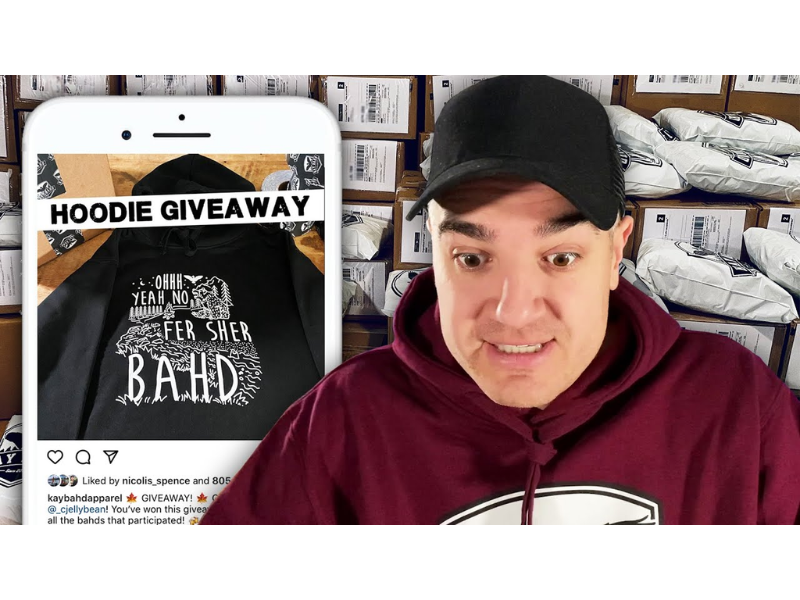
If you want to increase brand awareness quickly without relying heavily on paid ads, giveaways are worth considering. The biggest mistake is treating giveaways as random “free gifts.” In reality, they need to be structured as growth campaigns with a clear objective.
The core of a giveaway is its viral mechanism. When you ask participants to tag friends, share posts, or repost content, each person becomes a distribution point for your brand. If the reward is attractive and directly with your product, the campaign can spread quickly within your target audience.
However, not all giveaways create long-term value. If you attract the wrong audience, you may gain followers but lose conversion. That’s why your entry conditions must stay closely tied to your product and brand.
And don’t skip the winner announcement. It’s a small step, but it builds credibility and reinforces trust for future campaigns.
Strategy 9: Scale with affiliate and referral programs
One of the smartest ways to scale without increasing risk is to only pay for results. That’s the core logic behind affiliate and referral programs.
Instead of doing everything yourself, you build a network of people who promote your products for you. Each partner gets a unique link or code, and you only pay a commission when a sale happens.
The biggest advantage here is cost efficiency. You’re not paying for impressions or clicks but for actual revenue. This makes it especially suitable for brands that want tight control over ROI.
But the real power goes beyond cost. Affiliate and referral marketing leverage something traditional ads struggle with: trusted recommendations. When someone buys because of a friend’s suggestion or a blogger they trust, conversion rates are significantly higher.
Incentives also play a critical role. Commission rates, exclusive perks, or special rewards determine whether partners are willing to actively promote your brand or just passively participate.
Strategy 10: Use experiential marketing and pop-up stores to create real connection
Yes, most shopping today happens online. But while brands are competing for attention on screens, real-world experiences have become rare and therefore incredibly valuable.
Pop-up stores, events, or interactive spaces allow customers to engage with your brand physically: to see, touch, try, and feel the quality, atmosphere, and identity you’re building. This is something digital alone cannot fully replace.
The biggest advantage of experiential marketing is emotional connection. Someone who visits your pop-up, tries your products, and experiences your brand in person will remember you far more than someone who just scrolls past an ad.
A well-designed pop-up still continues online. If your space is visually compelling and “share-worthy,” visitors will naturally take photos and post on social media. At that point, each visitor becomes a distribution channel.
That’s why the “shareable factor” is critical. Your space needs a clear concept, strong visuals, and an experience worth capturing. If it’s just a basic temporary shop, the impact will be limited.
Exclusivity also plays a role. Products only available at the pop-up, limited-time offers, or special gifts give people a reason to show up now instead of “buying later.”
And this doesn’t require a massive setup. Even a small booth in the right location, targeting the right audience, with a well-crafted experience, can outperform many standard online campaigns.
Strategy 11: Optimize SEO to build a sustainable traffic source
If you want consistent customers without paying for every click, SEO is a foundation you can’t ignore. The key thing to understand is that SEO doesn’t deliver instant results. But once you start ranking, it becomes a steady stream of high-intent traffic (often more valuable than traffic from most other channels).
Everything starts with understanding what your customers are actually searching for. Not what you want to sell, but what they’re actively looking up. Tools like Google Keyword Planner, Ahrefs, or Ubersuggest help you uncover that demand. Keywords should shape your entire content strategy and site structure.
Another critical factor is backlinks when other websites mention and link to your store. This is why collaborating with fashion bloggers still works so well. When they review your products and link back to your site, you’re not only getting referral traffic but also building credibility in Google’s eyes.
A practical way to execute this is by sending products to relevant bloggers in exchange for honest reviews and backlinks. If you do this consistently and target the right audience (even just a few dozen partners), you’ll start seeing organic traffic and sales coming in—even before running ads.
Strategy 12: Invest in paid advertising for controlled growth
SEO and organic channels are great for long-term growth. But if you need faster results and more control over scaling, paid ads are essential.
In a competitive space like fashion, relying only on organic reach will eventually hit a ceiling. Ads allow you to put your products in front of the right people at the right time.
Take Google Ads as a simple example. When you bid on the right keywords, your products can appear at the top of search results. This is high-intent traffic, because users are already actively searching.
Meanwhile, Facebook and Instagram Ads excel at targeting. You can reach users based on behavior, interests, demographics, and even past interactions with your brand.
That said, ads only work if your foundation is solid. If your product, creatives, or landing page aren’t strong enough, increasing budget will just burn money faster. Scaling ads should come after you’ve validated what already converts.
Strategy 13: Personalize products to increase value and differentiation
One of the fastest ways to escape price competition is to make your product feel irreplaceable. Personalization is how you do that.
When customers can add their name, tweak a design, or create a unique version of a product, they’re no longer buying a basic item; they’re buying something personal. That instantly increases perceived value and makes them more willing to pay a premium.
Beyond value, personalization creates emotional connection. These products are often purchased as gifts or for meaningful occasions, so the buying decision becomes more emotional than rational. That’s when your brand becomes memorable.
Over time, this also strengthens loyalty. When customers have a good personalization experience, they’re far more likely to return instead of looking for alternatives elsewhere.
Strategy 14: Build a loyalty program to increase retention
Acquiring new customers is expensive, so it makes sense to focus on the ones you already have. Retaining customers is often far more profitable, which is why loyalty programs are essential for sustainable growth.
An effective loyalty program goes beyond simply “giving points.” It needs to create a clear reason for customers to come back and make them feel valued.
When customers know that every purchase leads to rewards, exclusive perks, or special treatment, their behavior changes. Instead of comparing you with competitors every time, they’re more likely to return because staying loyal benefits them.
At the same time, loyalty programs give you deeper insights into customer behavior. Purchase patterns, frequency, and preferences become valuable data you can use to personalize everything—from email campaigns to paid ads.
Strategy 15: Use livestream to shorten the distance between your brand and customers
Livestreaming is quickly becoming one of the most effective ways to sell and build trust in ecommerce. As customers grow more skeptical of traditional ads, they tend to trust what they can see in real time.
That’s the biggest advantage of livestream: authenticity. You’re showing how your products actually look and perform. These are things static images can’t fully communicate.
A strong livestream always starts with a clear purpose. It could be launching a new collection, styling outfits, or answering common customer questions. Viewers need a reason to stay and watch.
Before going live, build anticipation. Teasing the session on social media, email, or your website helps drive initial traffic and momentum.
During the livestream, interaction is everything. The more questions you answer and the more you engage, the higher the level of trust. This is what makes livestream different: customers are both watching and participating.
To drive conversions, give people a reason to act immediately. Limited-time offers during the livestream like discounts, free shipping, or bonuses create urgency and push instant purchases.
You can also expand your reach by collaborating with micro-influencers. They bring in new audiences and make the content feel more natural and relatable.
After the livestream ends, don’t let the content go to waste. Cut it into short clips for TikTok or Reels, or embed it on product pages. A single well-executed livestream can fuel your content strategy for weeks.
Milestones to grow a clothing brand: A 30–60–90 day plan
The hardest part isn’t coming up with strategies—it’s turning them into consistent action. Without a clear structure, it’s easy to lose direction. A 30–60–90 day roadmap helps you focus on the right priorities at the right time, while generating enough data to optimize later.
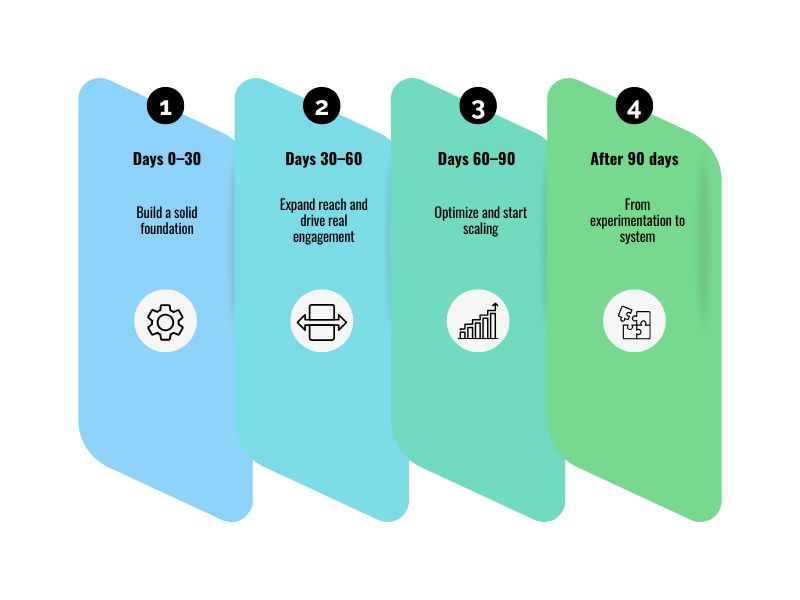
Days 0–30: Build a solid foundation
At this stage, your focus is on setting up the core assets: your website, social channels, and initial content. Your website doesn’t need to be complex, but it must clearly present your products, make purchasing easy, and reflect your brand identity. At the same time, you need to establish a presence on the platforms where your audience بالفعل spends time—typically TikTok, Instagram, or Pinterest for fashion brands.
Content in this phase should focus on “explaining” your brand: what you sell, your style, and how your products look in real life. Outfit videos, styling content, and behind-the-scenes clips are easy to produce and highly effective formats.
Don’t overlook email collection from the start. Even with low traffic, every email has long-term value. A simple incentive like a first-order discount or early access to new drops is enough to get started.
This is also when you begin building your first relationships—reach out to a few relevant micro-influencers or creators to set the groundwork for future collaborations.
Days 30–60: Expand reach and drive real engagement
Now it’s time to increase your visibility and test different types of content. By posting more frequently, you’ll quickly start to see what resonates—what content your audience engages with and which products attract attention.
This is the right moment to activate user-generated content (UGC). Encourage customers to share photos, reviews, or styling content, and actively repost it. UGC builds trust faster than almost any brand-created content.
A small giveaway or a collaboration with another brand can also help you reach new audiences without a large budget. At the same time, you can begin testing paid ads on a small scale to understand costs, targeting, and conversion performance.
If you have any offline opportunities, use them. Distribute flyers, postcards, or show up in spaces your target audience frequents. The goal at this stage isn’t immediate sales—it’s awareness.
Days 60–90: Optimize and start scaling
After about two months, you’ll have enough data to understand what’s working and what’s not. This is where you shift from “doing more” to “doing what works.” Analyze which channels, content, and campaigns are driving the most traffic and sales, then double down on them.
If a platform performs well, invest more into it. If a content format drives strong engagement, scale it. On the flip side, cut anything that doesn’t deliver results to avoid spreading your resources too thin.
You can also start implementing higher-leverage activities such as retargeting ads, pop-up stores, or local events to boost visibility. At the same time, continue nurturing your email list and building a loyal customer base.
After 90 days: From experimentation to system
After three months, the most valuable outcome isn’t explosive revenue—it’s clarity.
You’ll understand which channels bring in the best customers, what content truly resonates, and which products have the most potential.
From there, you can start building a more predictable marketing system instead of constantly experimenting.
That said, there’s no one-size-fits-all formula. Every brand is different. The key is to answer four fundamental questions: Who are you selling to? What do they need? What makes you different? And what action do you want them to take?
Once these are clear, every strategy you implement will become far more effective.