
Contents
Many POD sellers jump into metal prints without fully understanding the process, which often leads to faded colors, poor finishes, or costly reprints. Metal printing can be a high-margin product, but it also comes with stricter requirements around materials, file setup, and production methods. Without the right knowledge, sellers risk returns, negative reviews, and wasted ad spend.
In this guide, you’ll learn how to print on metal correctly, which printing methods work best for print on demand, and factors to choose the right method for long-term product performance.
How to print on metal: 5 popular techniques
1. Laser printing
How it works
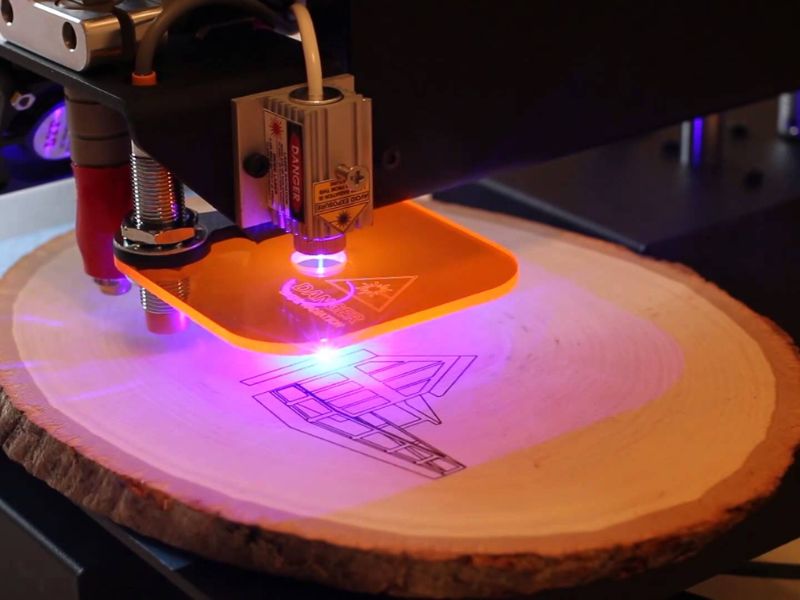
Laser printing is a contact-free marking method that uses a concentrated laser beam to permanently alter the metal surface. The interaction happens in three main ways:
- Laser engraving: The beam removes a thin layer of metal, creating deep, long-lasting marks.
- Laser etching: Heat from the laser slightly melts the surface, forming raised, high-contrast markings.
- Laser annealing: The surface is heated just enough to trigger oxidation, changing the metal’s color without removing material.
The process starts when a laser source generates a high-energy beam. Then it is guided through mirrors or fiber-optic cables and focused precisely onto the metal. The intense heat modifies the surface structure, making the design or text clearly visible and permanent.
Types of lasers used
Several laser technologies are used for metal marking, each suited to different needs:
- Fiber lasers: The most widely used option for metal printing, operating at a wavelength of 1,064 nm and effective on most metals.
- CO₂ lasers: Less efficient on bare metals but suitable for coated metals and certain non-metal surfaces, with wavelengths ranging from 9,000 to 11,000 nm.
- UV lasers: Commonly used for specialized applications that require extremely fine detail or low heat impact.
- YAG lasers: An older technology that has largely been replaced by fiber lasers but is still found in some legacy systems.
Suitable metals
You can use laser printing for a wide range of metal materials, including:
- Aluminum and anodized aluminum
- Carbon steel and stainless steel
- Copper (with lower efficiency due to reflectivity)
- Lead
- Precious metals such as gold and silver
Common applications
- Automotive: Component labeling, serial numbers, and structural parts
- Aerospace: Permanent marking of high-precision components
- Electronics: Branding and identification on device frames and circuit boards
- Medical: Marking surgical tools and medical implants
- Manufacturing: Part tracking, barcodes, and traceability systems
- Jewelry: Custom engraving and personalization of metal pieces
Advantages and disadvantages
| Advantages | Disadvantages |
|
|
2. Screen printing
How it works
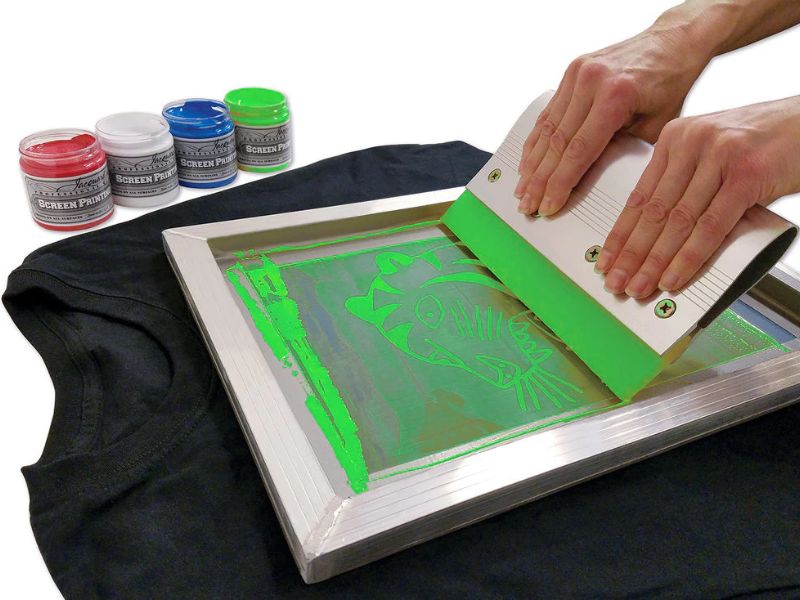
Screen printing on metal, often called silk screen printing, is a method used to transfer designs onto metal surfaces using ink and a mesh screen.
The process starts with preparing the artwork and converting it into a film positive. A polyester mesh screen is then coated with a light-sensitive emulsion. The film is placed on the screen and exposed to light. Then the hardened emulsion blocks ink in non-design areas. The screen is washed to remove unexposed emulsion.
This step creates a clean stencil. Ink is pushed through the open areas of the screen onto the metal using a squeegee. The printed metal is then dried or cured based on the ink type.
Ink types for metal
Different inks are used in screen printing to match durability needs:
- Solvent-based inks bond well to metal surfaces.
- UV-cured inks harden instantly under UV light.
- Epoxy inks offer strong chemical resistance.
- 2-component inks deliver long-term durability for outdoor use.
- Heat-cured inks withstand high temperatures and harsh environments.
Common applications
- Automotive parts use it for labels and surface markings.
- Electronics rely on it for circuit boards and component labels.
- Industrial tools use it for identification and instructions.
- Outdoor signage uses it for long-lasting nameplates.
- Promotional products use it for branded metal items.
- Artistic metalworks use it for decorative designs.
Advantages and disadvantages
| Advantages | Disadvantages |
|
|
3. Direct printing
How it works
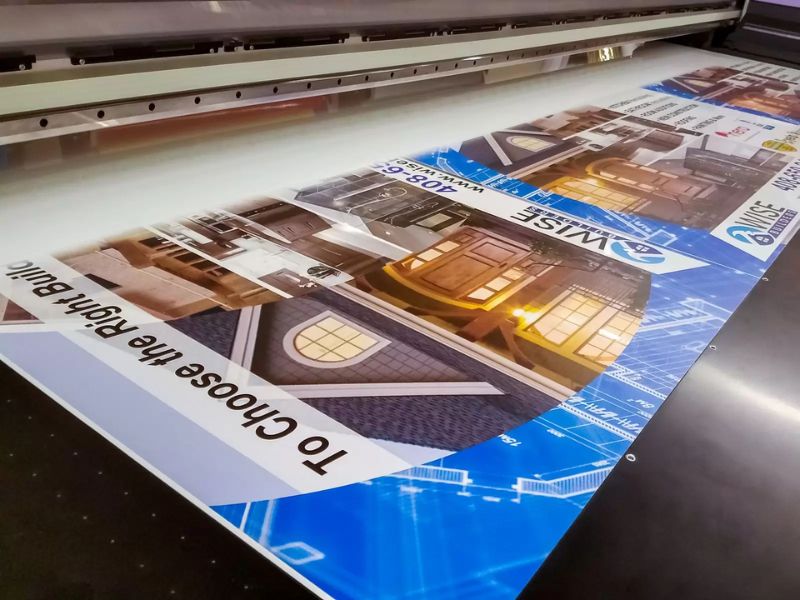
Direct printing on metal uses UV-cured ink to print designs directly onto the metal surface. The process starts with cleaning the metal to remove dust and oil. Some metals require a pre-treatment step to improve ink adhesion. After that, UV ink is sprayed straight onto the surface using inkjet printheads.
Once printing is complete, UV light is applied immediately. The light activates a chemical reaction that causes the ink to cure instantly. This allows the ink to bond firmly to the metal. In some cases, extra curing time is added for better durability. The entire process prints directly on metal without heat or transfer layers.
Suitable metals and surfaces
UV direct printing works on many metal types:
- Aluminum and anodized aluminum print very well.
- Stainless steel supports strong ink adhesion.
- Brass allows clean and vibrant prints.
- Titanium can be printed with proper surface prep.
- Coated metals accept UV ink easily.
- Galvanized steel works with the right treatment.
- Flat metal surfaces are ideal for this method.
- Curved surfaces are possible with proper alignment.
- Highly uneven surfaces can cause print issues.
Uses in industry and art
- Industrial equipment uses it for labels and panels.
- Automotive parts use it for interior markings.
- Aerospace components rely on it for identification.
- Signage uses it for durable indoor and outdoor signs.
- Promotional products use it for custom metal items.
- Fine art uses it for photo prints on metal.
- Architecture uses it for decorative metal panels.
- Electronics use it for metal housings and parts.
Advantages and disadvantages
| Advantages | Disadvantages |
|
|
4. Dye sublimation
How the process works
Dye sublimation on metal uses heat to transfer ink into a coated metal surface. The design is first created in digital format. The image is then printed onto sublimation transfer paper with specialized inks.
Before printing, the metal surface is cleaned to ensure proper adhesion. Most metals used in this process already have a polyester coating. The transfer paper then is placed directly onto the metal surface. And a heat press applies high temperature and consistent pressure.
Under heat, the ink changes from solid to gas. The gaseous dye moves into the polyester coating. As the metal cools, the dye bonds permanently with the coating. The final result is a durable and high-quality image on metal.
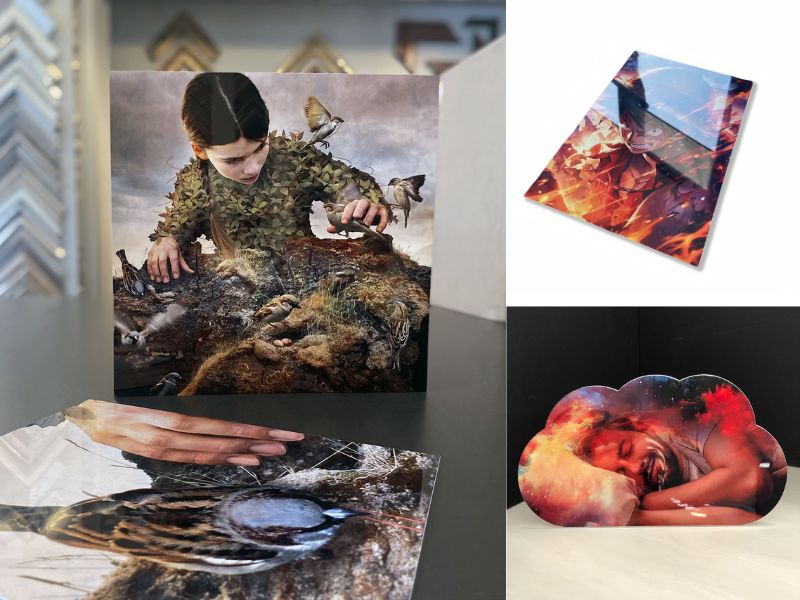
Types of metals used (usually aluminum)
Dye sublimation works best on coated metals:
- Aluminum is the most commonly used metal – offers light weight and corrosion resistance.
- Stainless steel can be used with polyester coating.
- Brass and copper work with proper surface preparation.
Applications in photography and signage
- Photography uses it for high-quality metal prints.
- Signage relies on it for durable displays.
- Awards use it for plaques and trophies.
- Promotional products use it for custom metal items.
- Interior decor uses it for metal wall art.
Advantages and disadvantages
| Advantages | Disadvantages |
|
|
5. Etching and engraving
How the process works
Chemical etching, often called photo etching, removes metal using controlled chemical reactions. The process starts with creating a photoresist mask for the design. This photoresist layer is applied evenly to the metal surface.
UV light then hardens the exposed areas of the mask. After exposure, the unprotected photoresist is washed away. This step reveals the metal areas to be etched.
The metal is then placed into an acid solution. The acid removes only the exposed metal. Once etching is complete, the remaining photoresist is removed. The surface is neutralized to stop the chemical reaction. The result is a clean and precise etched design.
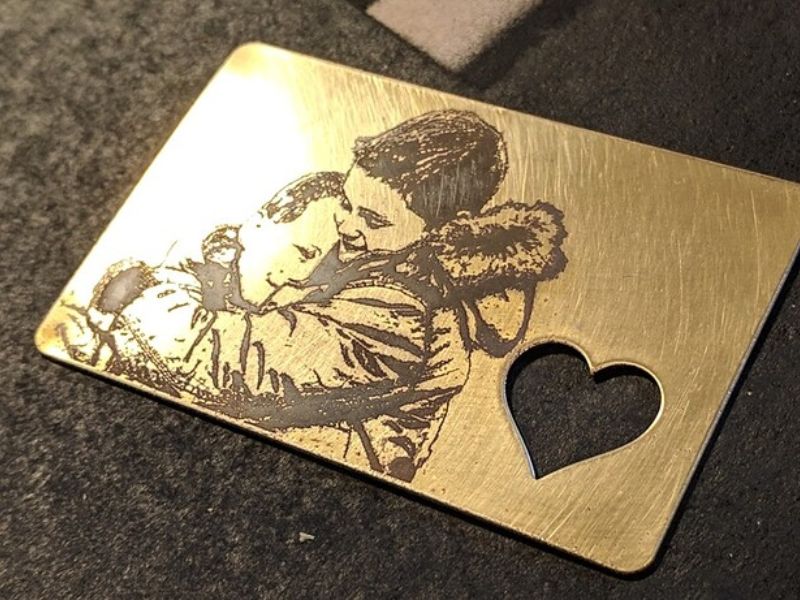
Mechanical engraving techniques
Mechanical engraving removes metal through physical force.
- Rotary engraving uses a spinning cutting tool and then carves grooves into the metal surface.
- Diamond drag engraving uses a diamond-tipped stylus.
- The stylus scratches fine lines into the metal.
- Laser engraving removes metal with concentrated heat.
- The laser vaporizes the surface material.
** Each method creates permanent marks. The depth varies by technique and settings.
Suitable applications
- Industrial parts use them for identification marks.
- Decorative metalwork uses them for artistic designs.
- Signage uses them for textured lettering.
- Electronics use them for circuit and component markings.
- Personalized products use them for custom names and awards.
Advantages and disadvantages
| Advantages | Disadvantages |
|
|
Comparison of methods for different needs
Best for permanent industrial marking
Laser printing and etching/engraving are the strongest options when permanence is the top priority. Laser printing works well for serial numbers, barcodes, and compliance marks. Etching and engraving are better for deep marks and tactile surfaces. These methods suit industrial, medical, and aerospace applications where wear resistance matters more than color.
Best for vibrant colors and visual impact
Screen printing, UV direct printing, and dye sublimation perform better when color quality is important. Screen printing excels in bold, solid colors and branding elements. UV direct printing supports high-resolution graphics and complex designs. Dye sublimation produces smooth gradients and photo-quality images, which makes it ideal for wall art and photography.
Best metal printing method for POD and customization
UV direct printing and dye sublimation are the most POD-friendly methods. UV printing allows direct printing on various metals with fast turnaround. Dye sublimation works best for aluminum prints and photo-based designs. Screen printing becomes cost-effective only at higher volumes, which limits its use for one-off POD orders.
Best for high-volume production
Laser printing and screen printing scale efficiently for large production runs. Laser systems handle fast marking with minimal setup changes. Screen printing reduces cost per unit when printing thousands of identical items. UV direct printing is flexible but slower for mass production.
Best for fine detail and precision
Laser printing, UV direct printing, and engraving deliver the highest detail levels. Laser excels in micro text and sharp edges. UV printing supports photographic detail. Engraving provides depth but limits color flexibility.
Best for decorative and premium products
Dye sublimation and engraving suit premium decorative products. Dye sublimation creates glossy, modern metal art. Engraving adds texture and perceived value to jewelry and awards. These methods target customers who value aesthetics over mass pricing.
Key factors to choose the right method
- Durability
Consider how the product will be used. Items exposed to heat, friction, or outdoor conditions require methods like laser printing or engraving. Decorative or indoor products allow more flexibility with UV printing or dye sublimation.
- Color requirements
Decide whether your design needs full color or simple markings. Photo-based designs and gradients work best with UV direct printing or dye sublimation. Single-color text, logos, or codes are better suited for laser printing or etching.
- Detail level
Evaluate the level of precision your design requires. Fine text and sharp lines benefit from laser printing and UV direct printing. Deeper textures and tactile effects are better achieved through engraving or etching.
- Cost considerations
Look beyond the initial setup cost. Screen printing and laser systems require higher upfront investment but reduce cost per unit at scale. UV printing and dye sublimation offer lower entry barriers for small batches and POD.
- Production volume
Match the method to your order size. Large, repetitive runs favor laser and screen printing. Small batches and custom orders work better with UV direct printing or dye sublimation.
- Material compatibility
Not all methods work with every metal. Dye sublimation requires polyester-coated metals. UV printing performs best on coated or pre-treated surfaces. Laser and engraving are more flexible across metal types.
- Speed and turnaround time
Consider how fast you need to deliver. Laser printing and UV printing offer fast processing. Screen printing requires longer setup time but speeds up in large runs.
- Environmental and compliance factors
Check regulations and sustainability goals. Laser and UV printing produce minimal waste. Chemical etching requires proper handling and disposal. UV inks generally emit low VOCs compared to solvent-based inks.
Top printing metal products to sell POD
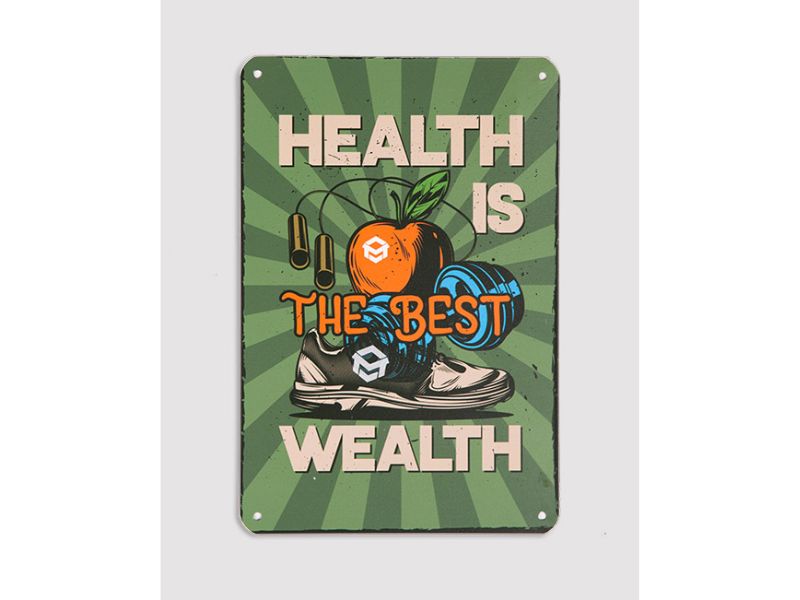
Decorative metal signs turn simple designs into eye-catching home décor pieces. Compared to paper posters or canvas prints, metal signs instantly feel more premium, durable, and display-worthy.
Customers love using them to showcase humor, personality, or personal memories. This emotional and decorative value makes metal signs especially appealing as home décor upgrades and personalized gifts, which naturally drives higher perceived value and stronger buyer intent.
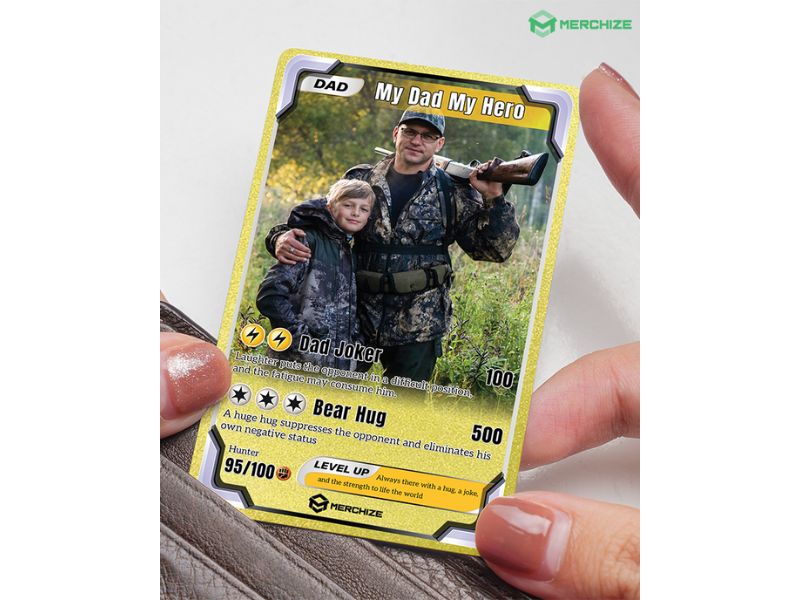
Metal wallet cards may be small, but they carry strong emotional weight. Customers often personalize them with photos, names, or heartfelt messages, turning a simple metal card into a meaningful keepsake.
Because it fits perfectly into a wallet, the product becomes something users carry every day, reinforcing its sentimental value. The durability of metal also adds to its appeal as a gift.
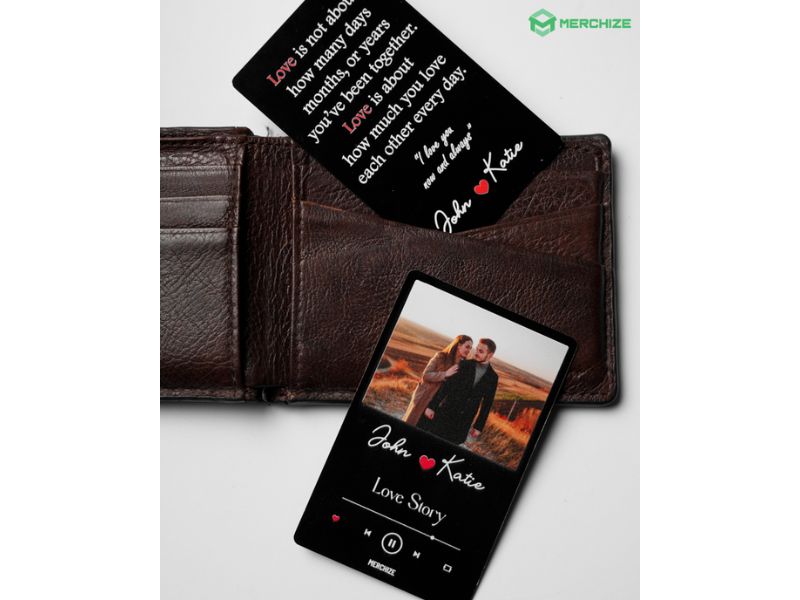
(3) Metal Wallet Card (Made in US)
The Made-in-USA version of the metal wallet card adds a powerful layer of trust, quality perception, and premium positioning, especially for customers in the US and EU markets.
For many buyers, country of origin matters, particularly when purchasing gifts. This version allows sellers to position the product as a higher-end, more reliable option, making it easier to justify premium pricing and stand out from generic alternatives.
FAQs
1. Can I print full-color images on metal?
Yes. UV direct printing and dye sublimation both support full-color printing. Laser printing and engraving are usually limited to monochrome results.
2. Is aluminum the easiest metal to print on?
Yes. Aluminum is lightweight, corrosion-resistant, and works well with laser printing, UV printing, and dye sublimation, making it the most popular choice.
3. Which printing method is best for detailed designs?
Laser printing and UV direct printing offer the highest precision for fine text and intricate graphics.
4. How do I choose the right metal printing method for my project?
Consider your design complexity, color needs, metal type, durability requirements, production volume, and budget before choosing a method.
Whether you are producing industrial parts, creating metal artwork, or building a print on demand business, understanding how to print on metal helps you choose the right technique, material, and workflow to achieve consistent, high-quality results. Each printing method offers different strengths and works best when matched with the right application.


