
Contents
Selling print-on-demand products in Europe isn’t a simple venture. Between EU VAT rules, customs barriers, delivery speed expectations, sustainability concerns, and rising competition, choosing the right print-on-demand partner can make or break your store. A supplier that works perfectly in the U.S. can quickly become a liability when shipping to Germany, France, or the Nordics.
That’s why Europe-focused POD sellers need a different playbook. From platforms with deep EU fulfillment networks to eco-first providers and high-volume apparel specialists, the European POD landscape is far more diverse than it first appears. In this guide, we break down the most important print-on-demand companies operating in or serving Europe—what they’re best at, where they fall short, and which types of sellers they’re truly built for—so you can choose a partner that aligns with your margins, brand positioning, and growth strategy.
1. Printful
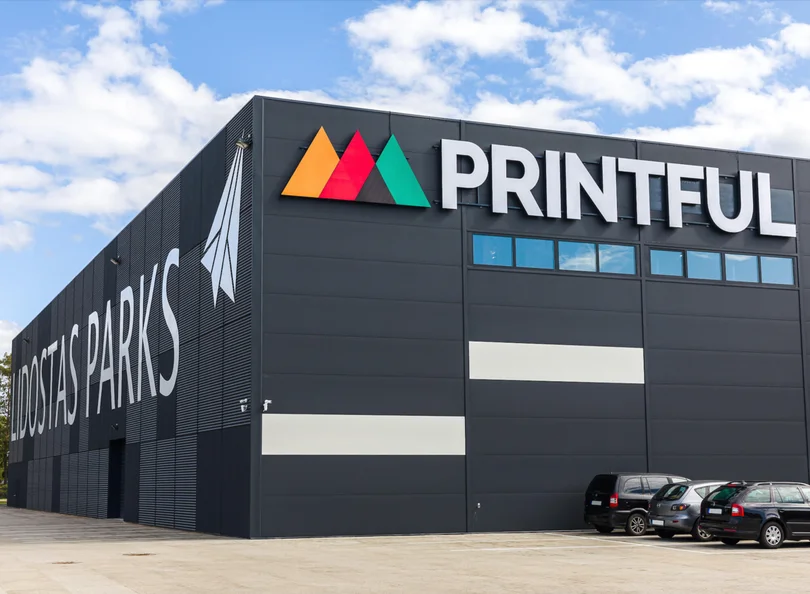
Printful is one of the most well-known print on demand companies. It’s the go-to option for sellers who want reliable quality and smooth integrations.
Founded in 2013 in Latvia, Printful has grown into a global POD platform with strong fulfillment infrastructure in Europe, making it a popular choice for EU-focused stores.
In Europe, Printful operates fulfillment centers in Latvia, Spain, and the UK, which helps reduce shipping times and customs issues across the EU.
Printful offers a wide range of print-on-demand and warehousing services, from apparel printing to embroidery and home decor. It’s best known for its consistent print quality, premium product options, and deep integrations with multiple platforms like Shopify, Etsy, WooCommerce, and more.
- Headquarters: Charlotte, North Carolina (USA) (Main EU fulfillment centers in Latvia, Spain, and the UK)
- Product range: Apparel, accessories, hats, phone cases, wall art, home & living, eco products
- Shipping: Ships from EU facilities to most European countries (typically 2–7 business days within the EU)
- Pricing: Mid-to-high range base costs; no monthly fees, pay per order
✅ Pros
- Strong EU fulfillment network: Orders produced in the EU usually reach EU customers in 2–5 business days, which is significantly faster than US-based fulfillment.
- Consistent, high print quality: Printful uses in-house production (not third-party printers), which means better quality consistency. They also have among the most advanced technology facilities for print on demand.
- Premium product selection: Offers popular brands like Bella+Canvas, Stanley/Stella (EU favorite), Gildan, and AS Colour, making it easier to position your store as mid- to premium-tier.
- Excellent integrations & automation: Native integrations with Shopify, Etsy, WooCommerce, Wix, Amazon, plus API access for custom setups—ideal for scaling stores.
- Branding & white-label options: Custom pack-ins, inside labels, and branded packing slips are available, which helps build a real brand instead of a “generic POD store.”
❌ Cons
- Higher base prices than many EU-local competitors: For example, a basic EU-printed t-shirt often starts around €10–13 base cost, compared to €7–9 with some local EU printers. This can squeeze margins if you’re selling low-ticket items.
- Limited customization compared to smaller EU printers: You won’t get ultra-custom options like unusual garment cuts, niche materials, or highly flexible packaging that some smaller EU-only suppliers offer.
- Less competitive for price-sensitive markets: If your strategy is volume sales or aggressive pricing, Printful may feel expensive compared to other POD suppliers.
2. Merchize
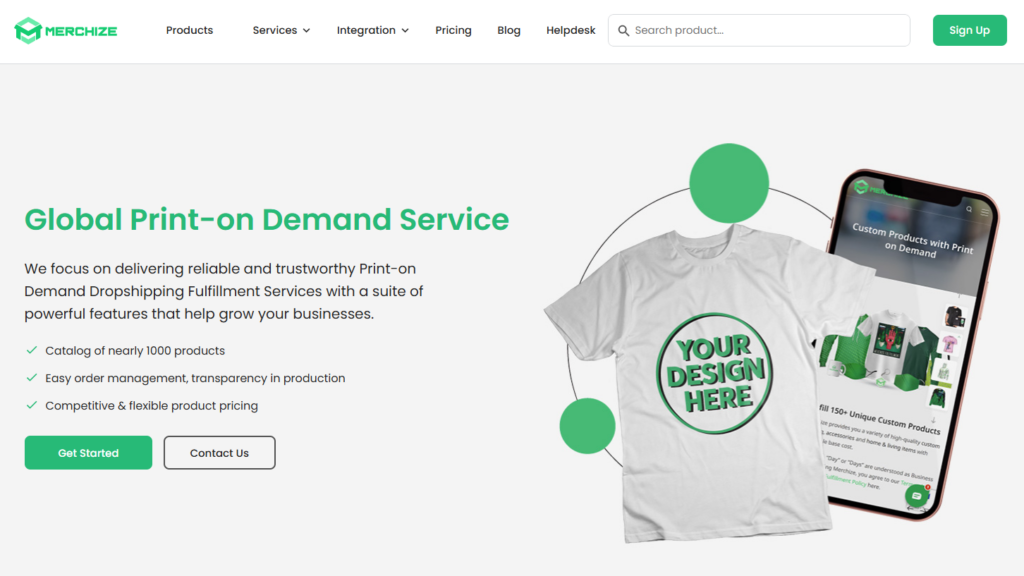
Merchize is a rapidly growing print-on-demand and fulfillment company that’s become a popular choice for e-commerce sellers looking for competitive base costs and a wide product catalog.
Unlike many traditional POD firms that rely solely on third-party network partners, Merchize builds much of its production in-house and operates a global fulfillment footprint that includes facilities in the EU, US, Vietnam, UK, Australia, and China, giving sellers options to serve local markets with shorter shipping times.
Merchize is most known for its very broad product range, including apparel, all-over print items, home decor, and gift items, along with its affordable pricing that helps improve margins for sellers. It also provides a full range of optional branding services like custom labels and hang tags to help merchants build a stronger brand presence.
- Headquarters: Hanoi, Vietnam (global production & fulfillment network including EU facilities)
- Product range: 650+ customizable products, including apparel, accessories, home & living, giftables, and specialty print items. For the EU fulfillment facility, Merchize offers around 20 products, mostly apparel clothing. Especially, they can offer unique options like all-over print Hawaiian shirts, hoodies, and pillows, which can differentiate your offers from the standard printed blank options.
- Shipping: Worldwide shipping including EU, US, and AU; typical production 1-3 days, then carrier transit depending on destination
- Pricing: Competitive base costs (e.g., apparel starting ~$6-$10) with no subscription required for fulfillment. You only pay per order and can apply tiered discounts for volume
✅ Pros
- Very competitive pricing: Base product costs tend to be lower than many Western POD providers, especially apparel and accessories, which can mean higher profit margins when selling budget-friendly items.
- Huge product variety: With 650+ items and growing, Merchize lets you diversify beyond basic tees and mugs into niche items like ornaments, home decor prints, and AOP garments. This breadth helps sellers test products and find winners.
- Global fulfillment footprint: Sellers can fulfill from EU-based facilities when targeting European customers, helping reduce delivery times and customs complexities versus shipping from Asia.
- Optional branding services: Custom hang tags, labels, and packaging inserts allow for a more professional brand experience, a big advantage over basic white-label POD setups.
- Flexible storefront & integration tools: Merchize offers hosted storefront tools and integrates with Shopify, Etsy, Amazon, WooCommerce, making setup and automation smoother for sellers.
❌ Cons
- Shipping times vary: While EU-based fulfillment exists, many products still ship from Vietnam or other global facilities and can take 10–15+ business days to deliver, which is slower than Europe-localized print houses.
- Not beginner-friendly: Merchize offers some complicated products that require working with professional design software like Photoshop. If you are not familiar with these tools, it might require some time and effort to get a grip of how things work.
3. Printify
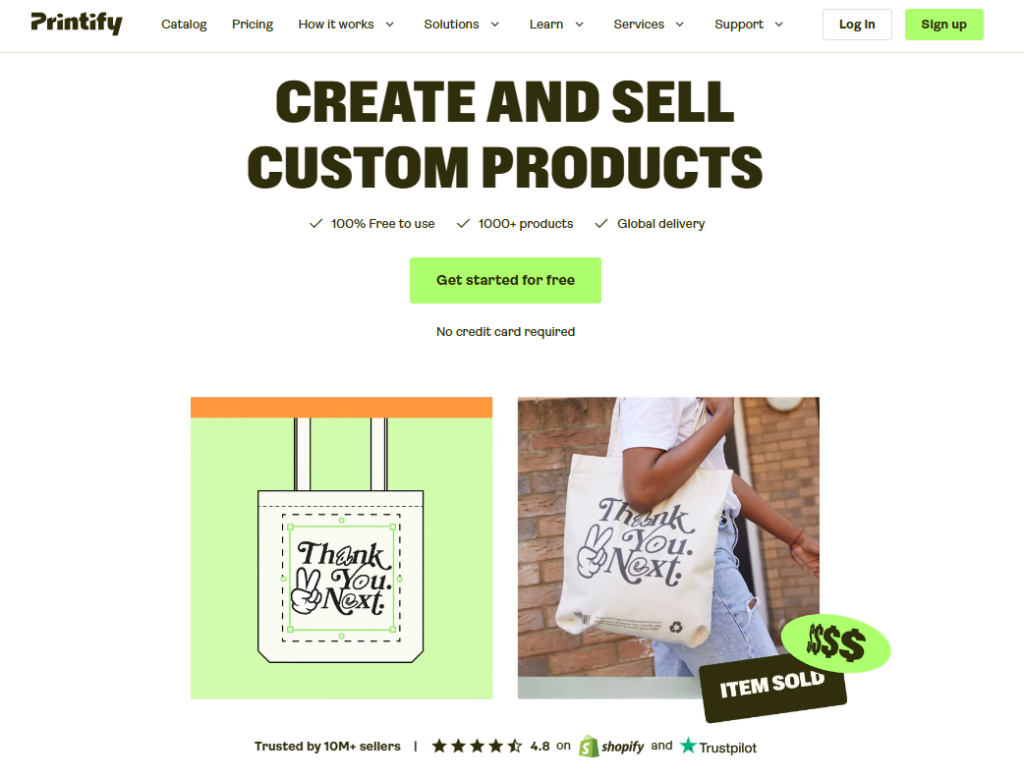
Printify is another household name in the world of print on demand. If you’re looking to start or scale a custom products business with minimal upfront costs, Printify can offer a good start. Launched in 2015 in Riga, Latvia, Printify started with a simple mission: help creators sell custom-printed products without inventory headaches. Unlike Printful or Merchize, Printify doesn’t operate its own factories; instead, it connects merchants with a global network of over 140 third-party print providers, including many across the EU (UK, Germany, Poland, Czech Republic, Latvia, and more).
Printify also offers integrations with top e-commerce platforms like Shopify, Etsy, WooCommerce, eBay, and TikTok Shop, making it a good choice for sellers who want scalability and value without committing to large inventories.
- Headquarters: Originally founded in Riga, Latvia; global presence with headquarters listed in Wilmington, Delaware, USA (as of latest filings).
- Product range: Over 1,300+ customizable items, from apparel and accessories to tech gear, home goods, mugs, and seasonal products.
- Shipping: Local and international fulfillment through partner print providers; EU routing available but may require manual provider selection for best results.
- Pricing: Free core platform; optional Premium plan (~$29/month) for up to ~20% discounts on product costs and expanded tools.
✅ Pros
- Huge, flexible product catalog: Printify’s marketplace lists 1,300+ products, far more than many competitors — giving sellers room to experiment with niches beyond apparel like pet products, accessories, and home decor.
- Competitive pricing & Premium discounts: Many base products start in the low-to-mid price range (e.g., basic tees often single-digit base costs, mugs under ~$5 before shipping) with an optional Premium membership that can cut costs ~10–20%, helping protect margins.
- Localized fulfillment options: With EU print providers in countries like Germany, the Czech Republic, and Poland, you can route orders closer to customers, reducing transit times and customs complications versus Asia-only fulfillment.
- Wide platform integrations: Seamless connections with Shopify, Etsy, WooCommerce, TikTok Shop, eBay, BigCommerce, Wix, and others help automate order flow and minimize manual backend work.
❌ Cons
- Inconsistent quality across partners: Because Printify works with many independent providers, product quality, print sharpness, and sizing can vary widely between factories. Sellers often must order samples and test providers carefully to avoid poor customer experiences.
- Shipping can be confusing: While local fulfillment is possible, the default routing often favors U.S. providers (even for EU sellers) unless you manually select alternatives, and shipping estimates can vary widely.
- Limited branding & packaging options: Unlike some competitors, Printify doesn’t include custom branded packaging or white-label shipping by default — so your merch often arrives in plain packaging unless you add inserts or custom labels manually.
- Complex pricing visibility: Some sellers report that hidden fees (like VAT handling and fluctuating shipping charges) can make profit calculations less transparent than expected. This means expected margins can shrink if not monitored closely.
- Support variability: Support quality can vary, and response times may lag during high-volume periods, which is something to plan for if you’re scaling quickly.
4. Gelato
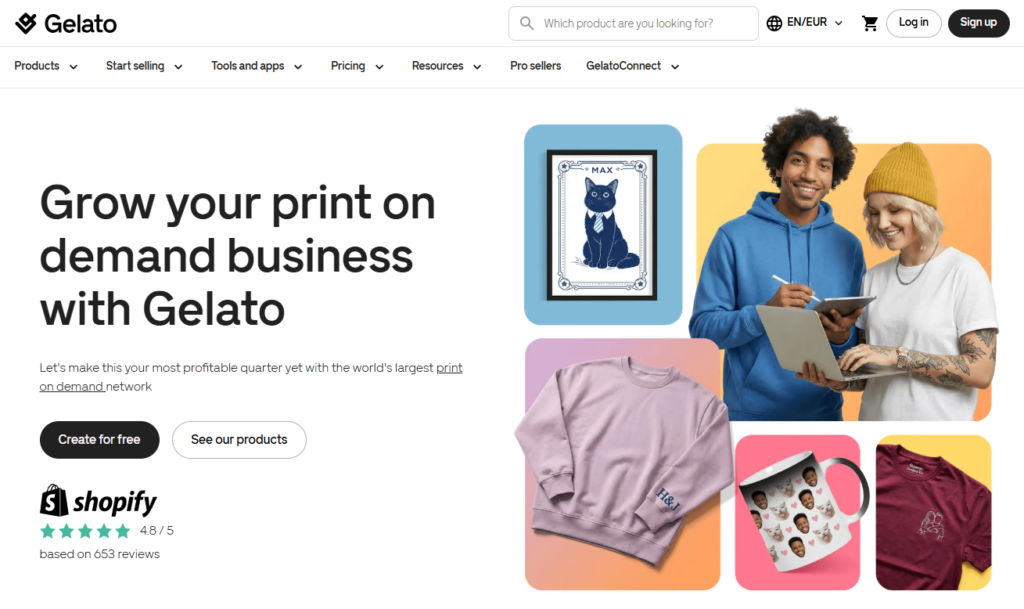
Gelato is a global POD platform with a distinct focus on local production, especially across Europe, thanks to its network of print partners in more than 30 countries. Sellers choose it because it combines global reach with truly localized fulfillment, helping reduce shipping times, lower costs, and cut carbon emissions by printing orders near the customer.
Gelato partners with local print facilities that meet its quality standards and can execute orders on demand instead of relying on one centralized production location. For ecommerce sellers, that translates to faster delivery within the EU and smoother logistics overall.
Gelato supports a wide range of customizable products, from apparel and mugs to wall art, stationery, and photo products, and also integrates easily with major ecommerce platforms like Shopify, Etsy, and WooCommerce.
- Headquarters: Gelato operates globally (platform and network based in multiple markets, with strong EU presence via partner hubs).
- Product range: Hundreds of customizable POD products — apparel, drinkware, wall art, photo gifts, stationery, accessories, and more.
- Shipping: Local production in 32+ countries means many orders are printed close to the customer (90% of orders produced locally), helping cut delivery times — often within 3–5 business days in Europe on standard options.
- Pricing: Free core plan with pay-per-order pricing; optional subscription tiers (like Gelato+ and Gelato Gold) offer product and shipping discounts plus branding and mockup tools.
✅ Pros
- Local production = faster delivery & lower duties: Because Gelato routes orders to the closest print partner, EU customers often get products in about 3–5 days, reducing long-haul shipping from overseas and lowering customs/duties risk.
- Very broad product catalog: From apparel and mugs to posters, calendars, and photo gifts — Gelato covers the mainstream categories most stores need without overwhelming complexity.
- Seamless platform integrations: Works with Shopify, Etsy, WooCommerce, Wix, and via API, so store owners can automate order flow without manual CSV uploads or outsourcing multiple tools.
❌ Cons
- Quality can vary by print partner: Gelato doesn’t own production facilities — it outsources to partners globally. That can mean inconsistent print quality and materials between products and locations unless you thoroughly test suppliers.
- Shipping costs and visibility vary: Some sellers report that shipping fees can be higher than expected or inconsistent for certain items/regions, which makes estimating margins harder if not monitored closely.
- Limited control over fulfillment source: You can’t always choose the exact production hub. Gelato uses an algorithm to pick the nearest available partner, which may affect consistency and support.
- Not as many niche printing options: While the catalog is broad, Gelato doesn’t cover specialized techniques (like embroidery or premium screen printing).
- Mixed community feedback on support & reliability: Some sellers report challenges with communication and fulfillment issues, highlighting the importance of sample testing and cautious scaling.
5. TPOP
Based in France, T-Pop was founded with a clear mission to help creators sell custom products without environmental compromises — from organic materials and water-based inks to plastic-free packaging and carbon-neutral shipping.
Unlike many POD platforms that are run primarily from outside Europe, T-Pop keeps production and fulfillment anchored in European facilities (especially France), which means fewer customs headaches, quicker delivery times for EU customers, and a truly local fulfillment experience that’s ideal for European-centric stores.
T-Pop offers the essentials POD sellers care about, DTG apparel printing, mugs, posters, tote bags, and other accessories. It’s best known for its eco-responsible approach and its strong branding support, letting sellers present a clean, professional brand experience without plastics or generic packaging.
- Headquarters: Southern France (registered as SAS TPOP).
- Product range: Apparel (t-shirts, hoodies), tote bags, mugs, posters, pet accessories, and other soft goods — with an emphasis on organic and eco materials.
- Shipping: Printed and shipped from EU facilities, typically within 48–72 hours to dispatch, then delivered across Europe (often 3–7 days within the EU).
- Pricing:
✅ Pros
- Truly sustainable print-on-demand: T-Pop uses organic cotton, water-based inks, recycled packaging and plastic-free shipping, giving your store real environmental credibility — not just a buzzword.
- European fulfillment = faster deliveries: With production in France and strong EU routing, customers in Europe typically receive orders quicker and with fewer customs delays than POD shipped from outside the EU.
- White-label + branding included: Packing slips, labels, and envelopes can carry your brand logo and messaging (even inserts on higher plans), helping you build a professional unboxing experience — a major plus for Etsy or Shopify sellers.
❌ Cons
- Smaller product catalog than global giants: Compared to mega platforms like Printify or Printful, T-Pop’s range is more limited — you won’t find every novelty item or tech accessory, which can restrict diversification.
- Pricing is modestly higher on basics: Base costs for things like tees or mugs can be above the lowest tier POD suppliers (e.g., T-shirts often ~€12+), so your pricing strategy must factor in both quality and delivered cost.
- Less advanced store integrations: While T-Pop connects well with Shopify, Etsy, and WooCommerce, it doesn’t yet support as many marketplaces or tools as some larger POD networks — so multi-channel sellers might find setup less seamless.
- Focus mainly on EU markets: Its strength is Europe — shipping outside the EU is possible but not as optimized as EU deliveries, so sellers targeting the US/Asia first might prefer other partners.
- Brand language and ecosystem may feel French-centric: Some sellers find parts of the platform and support better tuned to French users (though English interfaces exist), which can be a minor barrier for those unfamiliar with European UX styles.
If you’re serious about eco-friendly branding, T-Pop lets you live the sustainability story — not just claim it.
6. Prodigi
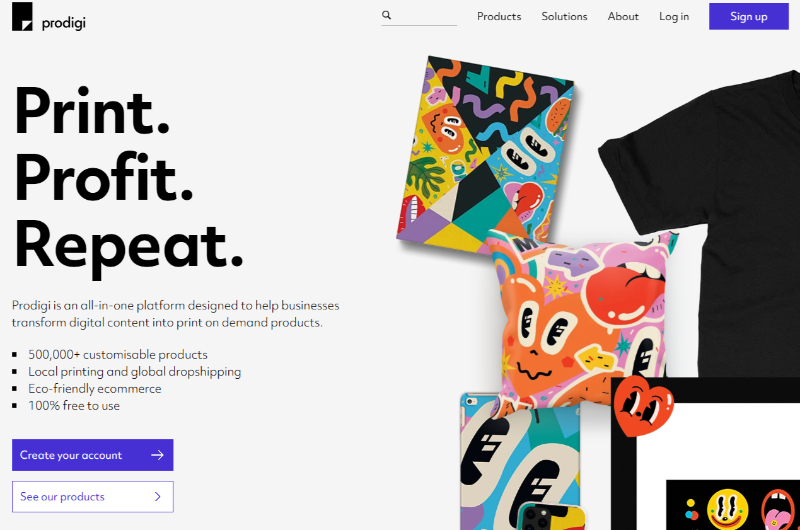
Unlike many POD players that are purely aggregator marketplaces or overseas network hubs, Prodigi combines its own in-house production facilities in Europe (UK/The Netherlands) with a powerful network of over 70 specialist print partners around the world. That means you get both localized production speed and global dropshipping reach under one roof.
Prodigi’s services cover more than simple apparel and mugs—it’s especially known among ecommerce sellers and artists for its high-quality wall art, framed prints, canvases, and photo products that stand out in terms of detail, finish, and overall presentation. At the same time, it still offers standard POD merch like phone cases, shirts, stickers, and homeware, which makes it a great hybrid platform for diversified store catalogs.
- Headquarters: Offices and in-house production in UK, Netherlands, EU locations, with global partner network across 10+ countries.
- Product Range: 500+ customizable products including fine art prints, canvases, framed work, apparel, mugs, phone cases, stationery, posters, and home goods.
- Shipping: Localized production means orders are often printed near your customer; most products are dispatched within 24–48 hours, with multiple shipping options from budget to express.
- Pricing: Free to use — no setup or subscription costs on the base plan; you only pay for manufacturing + shipping. Optional Prodigi Pro subscription offers discounts (~10–25%) and premium features for high-volume sellers.
✅ Pros
- Massive product catalog with premium options: With over 500 customizable products, you can build a diverse store—especially strong for art sellers and photographers looking for museum-quality prints and framing.
- Localized EU production = faster delivery + fewer headaches: European fulfillment hubs help reduce transit times and customs surprises compared to Asia-only POD routes. Most bestseller items ship within a few days.
- High print quality backed by expertise: As a Fine Art Trade Guild-approved partner, Prodigi delivers prints with rich color and durable materials, which is a real advantage if you’re selling wall art or premium decor.
❌ Cons
- Shipping times can vary, especially on budget options: While standard shipping is trackable and reliable, budget shipping may be slower or untracked, and delivery estimates of 5–15+ business days in EU have been reported on some items.
- Integration limitations for some platforms: Prodigi’s Shopify app has faced temporary issues, meaning some sellers might need manual linking or alternative workflows — something to anticipate if automation is a priority.
- Quality isn’t flawless across every SKU: Some feedback notes inconsistent prints or delivery delays — especially during busy seasons. Always order samples before scaling a SKU live.
- Software UX feels less polished than some rivals: Compared to Printful or Printify dashboards, Prodigi’s backend and mockup tools can feel a bit dated or less intuitive, adding learning time for new sellers
If you plan to use Prodigi for your European ecommerce store, start with sample packs — especially for wall art or framed products — so you can verify color accuracy, material feel, and delivery timelines. These are areas where customers notice quality first, and prints that disappoint often lead to refund requests.
7. SPOD
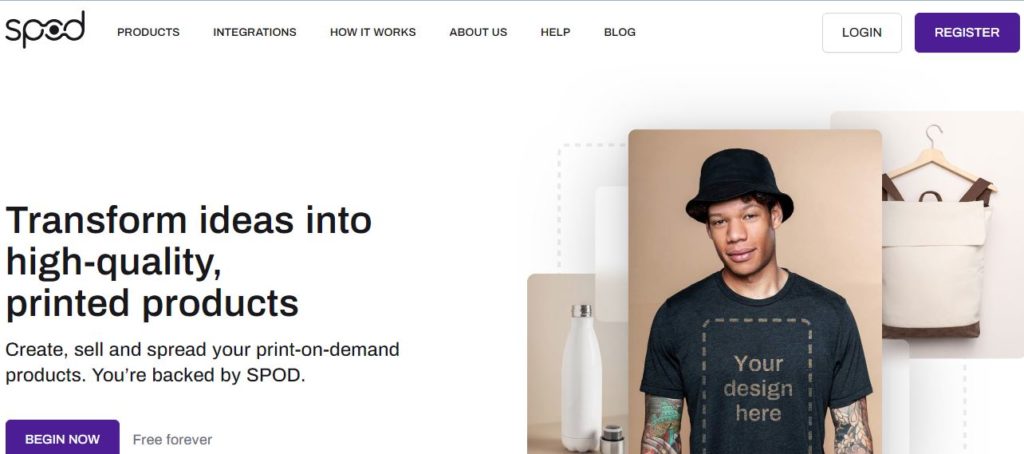
SPOD (Spreadshirt Print-On-Demand) is a European-based print-on-demand platform known for its fast fulfillment and straightforward setup. Born as part of the Spreadshirt Group — one of the earliest names in custom apparel printing — SPOD leverages decades of experience in printing quality merchandise quickly and efficiently. It’s become a favorite for sellers who want reliable turnaround and easy integration with e-commerce stores.
Headquartered in Germany, SPOD has fulfillment centers within Europe, which helps sellers serve EU customers without worrying about long transcontinental shipping times or customs delays. The platform is designed to be no-nonsense — you upload your design, pick products, and orders are printed and shipped, often faster than many competitors.
SPOD offers a broad range of customizable products with a heavy focus on apparel (t-shirts, hoodies, tank tops), but also includes accessories like mugs, phone cases, bags, and drinkware. What the company is most known for is its rapid production times — as fast as 48 hours from order to dispatch. This speed advantage is a real plus for shops running promotions or seasonal campaigns.
- Headquarters: Braunschweig, Germany
- Product range: Apparel (tees, hoodies, sweatshirts), accessories (mugs, tote bags, phone cases), drinkware, and more
- Shipping: EU fulfillment for European orders; typical delivery within 3–7 business days after dispatch
- Pricing: No subscription needed — pay per order with competitive base costs; optional design assets included
✅ Pros
- Lightning-fast production: SPOD’s standout feature is fast turnaround — as fast as 48 hours from order to delivery for many products, whereas some competitors take 3–7+ days. This is gold for sellers running flash sales or needing quick delivery windows.
- Strong EU fulfillment: With production located in Germany (and partner facilities close by), European customers typically see shorter transit times and fewer customs headaches compared to U.S. or Asia-shipped POD.
- Simple, user-friendly dashboard: The SPOD interface is intuitive and beginner-friendly, making it quick to upload designs, generate mockups, and sync with Shopify or Etsy stores without steep learning curves.
❌ Cons
- Smaller product catalog than major rivals: SPOD’s range is solid but narrower than giants like Printify or Printful, especially outside apparel. If you want niche items like art prints, eco goods, or extensive accessories, you may need supplemental POD partners.
- Branding options are basic: SPOD doesn’t offer the same level of custom labels, branded packing slips, or white-label packaging that Printful or T-Pop provide — which matters if you’re building a premium brand experience.
SPOD shines when you’re running fast-moving apparel lines and seasonal drops. 48-hour production time truly helps customer satisfaction and repeat purchases. SPOD’s EU fulfillment really simplifies selling across European markets, which is ideal for sellers focused on Europe-first strategies.
8. Shirtee
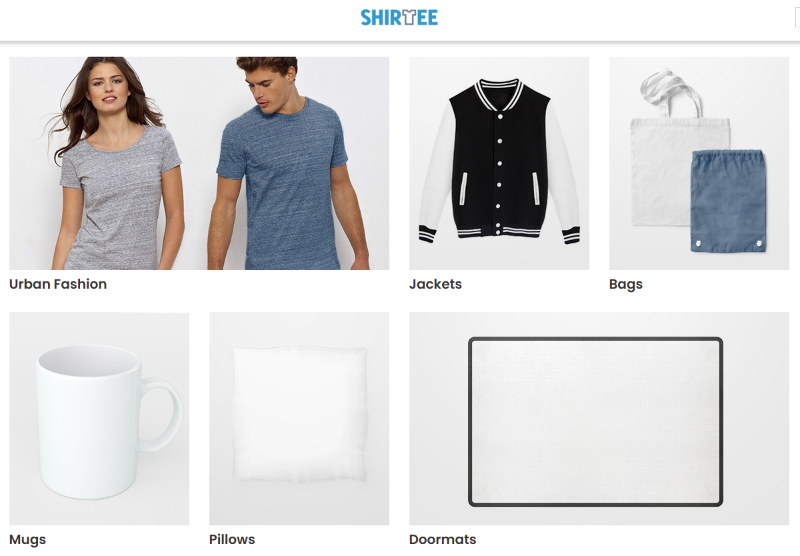
Shirtee is a print-on-demand and dropshipping provider founded in Cologne, Germany, in 2016. It combines production, fulfillment, returns management, and integration tools in one package. With local manufacturing and logistics, Shirtee is a worth-considering option for the European market.
Shirtee has strong emphasis on creating brand identity, not just printing products. It offers printing on apparel, accessories, and other merch, plus branding options like hangtags, labels, and custom inserts to help your store feel professional from order to delivery.
Products are printed and shipped from Germany and neighboring hubs, reducing transit times and customs hassles within the EU, which is a big advantage for sellers targeting European audiences who want reliable delivery times.
- Headquarters: Cologne, Germany — production and fulfillment centralized in Germany with EU-wide delivery.
- Product range: Apparel (t-shirts, hoodies, sweatshirts, jackets), accessories (tote bags, mugs, phone cases), and customizable merchandise.
- Shipping: EU orders typically arrive within 2–12 days via major carriers like DHL, DPD, UPS, and Deutsche Post.
- Pricing: Free to start (no subscription required), with base product prices from around €7.56/t-shirt, €15.55/hoodie, €5.88/mug, plus shipping (EU typically ~€5.80). Optional branding add-ons have separate costs.
✅ Pros
- European production & fulfillment = faster EU delivery: Orders are printed and shipped from Germany, so EU buyers usually see shorter transit times and fewer customs issues compared with some US/Asia-based suppliers. Delivery of 2–12 days is often achievable.
- Strong branding & white-label options: Shirtee supports custom hangtags, inside/outside labels, edge/neck labels, stickers, flyers, and washing instruction inserts, which help sellers build a branded experience instead of plain POD prints.
- Wide integrations with e-commerce platforms: Works with major platforms including Shopify, WooCommerce, Wix, Etsy, eBay, SquareSpace, Magento, PrestaShop, etc., making it simple to automate orders and sync products.
❌ Cons
- Production turnaround can be slower than rivals: While printing and fulfillment are reliable, Shirtee’s print processing may take up to ~5 days before shipping — slower than other providers with 24–48 h production guarantees.
- Shipping costs can feel high outside the EU: EU shipping (~€5.80) is reasonable, but deliveries to the US (~€9.90) or other regions tend to be pricier, which can squeeze margins or require higher retail pricing.
- Mixed reviews on platform tools and support: Some sellers note that the backend UX (shop sync, product management) and support responsiveness can be inconsistent — reviews on Shopify and app stores show a mix of great and frustrating experiences depending on user needs.
- Product range narrower than mega catalogs: Shirtee’s catalog is solid for apparel and basic merch, but it’s smaller than Printify’s 1,300+ products or Prodigi’s, which may limit diversification.
9. Shirtigo
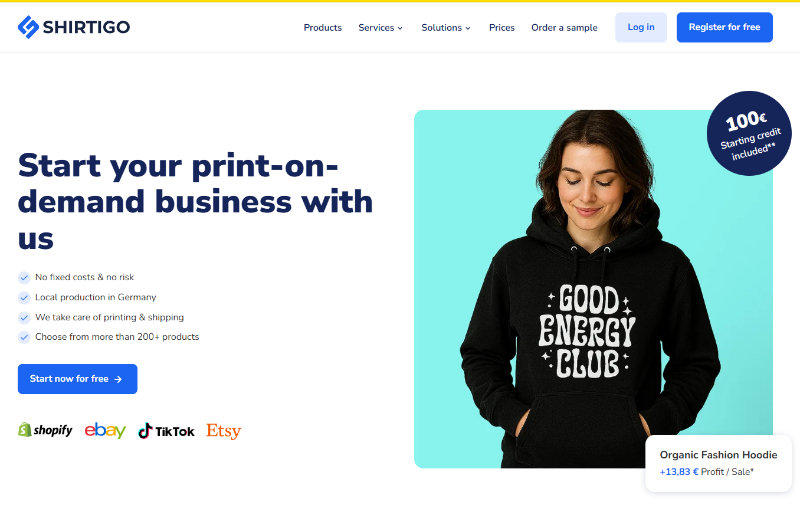
Shirtigo is a Germany-based print-on-demand fulfillment company that’s built specifically for sellers who want reliability, speed, and scale within the European market.
Founded in 2016, Shirtigo started as an in-house printing solution for large ecommerce operations before opening its infrastructure to external POD sellers. Instead of relying on small print partners, Shirtigo operates its own high-volume production facilities in Germany, optimized for apparel printing at scale. Shirtigo can be a great choice for sellers running high-volume campaigns, evergreen designs, or paid-traffic stores.
The company focuses heavily on apparel POD, with fewer distractions from novelty products. If your business is about selling t-shirts, hoodies, and sweatshirts consistently — especially to EU customers, Shirtigo is built to do exactly that, especially with a high volume.
- Headquarters: Cologne, Germany
- Product range: Apparel-focused — t-shirts, hoodies, sweatshirts, long sleeves, tank tops (men, women, kids)
- Shipping: EU-first fulfillment; production in Germany with fast delivery across Europe (typically 2–7 business days within the EU after production)
- Pricing: No monthly subscription; competitive base costs (basic t-shirts often €7–9, hoodies €16–20 before shipping), with volume-friendly pricing for scale sellers
✅ Pros
- High-capacity, in-house production: Shirtigo runs its own production lines in Germany, capable of handling tens of thousands of items per day. This is a big deal if you scale ads or experience sudden order spikes.
- Fast and reliable EU shipping: With manufacturing in Germany, EU customers typically receive orders in 4–10 days total (production + shipping), often faster than US-based POD suppliers shipping internationally.
- Consistent print quality for apparel: Shirtigo focuses mainly on DTG apparel, which means fewer product types but more standardized quality.
- Built for various e-commerce platform integration: The platform integrates smoothly with Shopify, WooCommerce, and custom stores, and supports bulk order handling — ideal for brands, not just side hustles.
❌ Cons
- Limited product catalog: Shirtigo is not the right choice if you want posters, mugs, phone cases, or home decor. Compared to Printify or Gelato, the catalog is narrow and almost entirely apparel-focused.
- Fewer built-in branding options: Unlike some competitors, Shirtigo offers limited custom packaging and inserts, which can be a drawback for premium or lifestyle brands focused on unboxing experiences.
- Less beginner-friendly UI: The backend is functional but more “operations-first” than beginner-oriented. New POD sellers may find it less intuitive compared to more polished platforms like Printful.
- Best value shows at higher volume: While pricing is competitive, Shirtigo really shines when you’re pushing consistent daily orders. Low-volume sellers may not fully benefit from its industrial strengths.
If your POD business is EU-focused and apparel-heavy, Shirtigo is a strong choice once you move past the testing phase. It’s especially well-suited for:
- Paid-ads stores scaling in Germany, France, or Western Europe
- Evergreen designs with predictable demand
- Sellers who care more about fulfillment reliability than flashy product variety
10. Printipa
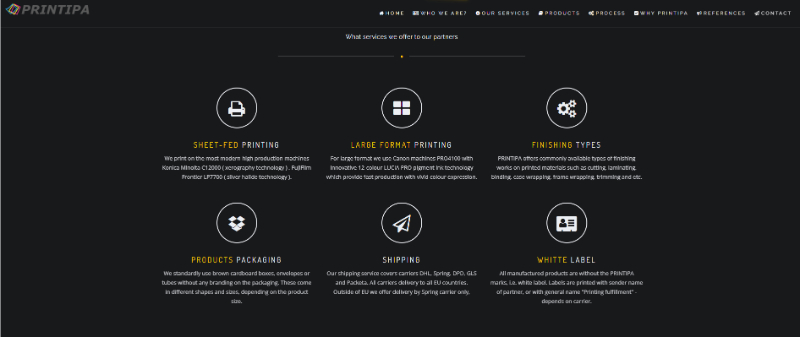
Based in Slovakia, Printipa is built to help e-commerce sellers streamline printing, packaging, and delivery within Europe’s marketplace. Rather than being a broad marketplace like Printify or Gelato, Printipa focuses on professional printing services and order fulfillment — from receiving orders to printing, packing, and shipping across the EU.
Printipa is most known for its wide range of paper-based print products (books, catalogs, calendars), photo and wall art printing (posters, framed prints, canvas wraps), and custom stickers and business print materials — all produced and shipped from a central European hub for shorter transit times across EU countries.
- Headquarters: Nitra, Slovakia (Central Europe) — strategically positioned to serve the EU market efficiently.
- Product range: Broad print catalog including photobooks, posters, canvas prints, calendars, brochures, catalogs, stickers, business cards, flyers, and large-format prints — ideal for sellers combining art, marketing materials, or brand merch.
- Shipping: Delivered throughout the EU using major carriers such as DHL, DPD, GLS, Spring, and Packeta, with tracking and multiple service options — typically faster and smoother than transcontinental shipping.
- Pricing: Pay-per-order pricing model with competitive volume pricing thanks to high-volume production (no required monthly subscription), and white-label dropshipping included so products arrive without Printipa branding.
✅ Pros
- Strategic EU location cuts delivery times and customs hurdles: Because Printipa’s production is in Slovakia, orders across the EU typically arrive more quickly and without the customs delays that often come with US/Asia fulfillment.
- Extensive product variety beyond apparel: Many POD platforms focus heavily on shirts and mugs, but Printipa’s catalog includes books, photobooks, calendars, business materials, stickers, and large-format artwork — great for sellers who want to diversify.
- Professional printing standards: Printipa uses high-end printing engines (Canon, Konica Minolta, FujiFilm) and quality control processes, which often results in crisper prints and better color accuracy, which is important for art prints and marketing materials.
❌ Cons
- Not a classic apparel-centric POD provider: If your business is mostly t-shirts, hoodies, or other garments, Printipa’s strength in paper, canvas, and art prints means you’ll likely still need a separate POD partner for apparel and accessories.
- Fewer direct marketplace integrations: Unlike platforms like Printify, Printful, or Gelato that natively integrate with Shopify, Etsy, and WooCommerce, Printipa focuses more on API or CSV order flows — which means more setup and technical work upfront for seamless automation.
- Pricing can vary by product type: Because heavy-duty print jobs (like photobooks and large framed prints) use higher-end materials, your base costs for these products can be higher than simple screen-printed merch — so pricing strategy needs careful attention.
- Production and shipping costs dependent on size and format: Big format prints, framed pieces, or bulky calendars cost more to ship, and while carriers like DHL and DPD are reliable, those costs should be factored into your checkout pricing to maintain margins.
- User experience and tooling aren’t as retail-oriented: Printipa’s platform is very production and fulfillment-oriented, with less focus on retail features like mockup generators or on-platform design tools — so sellers may need external design/mockup workflows.
Printipa are excellent choice for stores that focus on art prints, books, calendars, and branded materials. It’s also good for ones that combines both prints and classic apparel options.
11. MerchOne
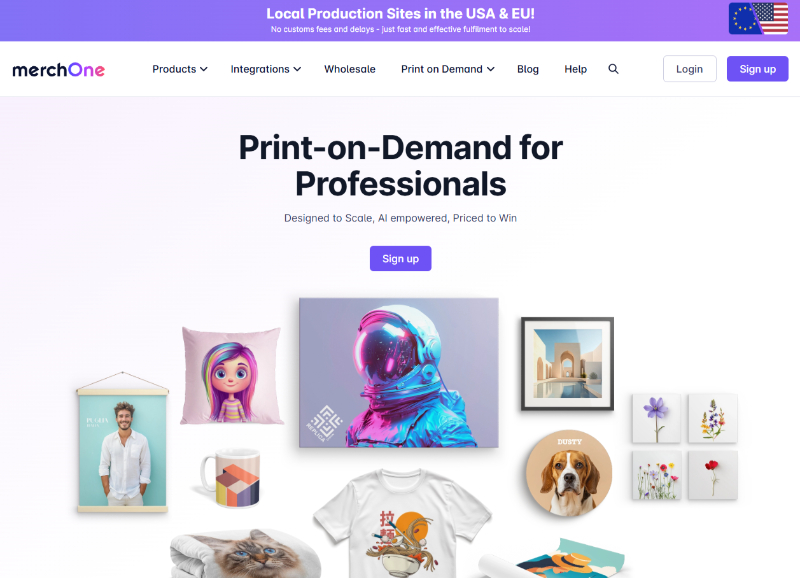
Founded around 2006 and headquartered in Cologne, Germany, merchOne has grown into a reliable print fulfillment provider with a strong focus on wall art, home décor, and high-quality printed gifts while still offering select apparel and accessory products.
The company’s roots in Europe mean it’s tuned to the needs of ecommerce sellers targeting EU customers, with production sites not just in Germany but also in Poland and Latvia — and global facilities in the US — to speed delivery and reduce international tax and customs challenges.
- Headquarters: Cologne, Germany (EU)
- Product range: Wall art and home décor (canvas, acrylic, framed prints, posters), plus lifestyle products like mugs, pillows, rugs, and pet gifts; limited apparel and accessories.
- Shipping: EU production hubs (e.g., Szczecin, PL) deliver across Europe with typical regional estimates like 3–6 days in Germany and 4–7 days across much of the EU (production + shipping).
- Pricing: Pay-per-order model — no minimum orders and no subscription; pricing consists of base product cost + shipping, with volume discounts often available for scaling sellers.
✅ Pros
- Specialized product focus with high perceived value: merchOne’s wall art and décor products (e.g., canvas, framed posters) tend to sell at higher margins than basic tees, boosting average order value.
- EU-centric fulfillment reduces delivery friction: Production in Germany, Poland, and Latvia means shorter delivery times and fewer customs issues for EU customers compared with US/Asia-based production.
- Seamless automation and integration: With Shopify apps and API support, orders can sync straight to merchOne for automatic fulfillment — great for scaling sellers without manual order uploads.
- Fast production and clear delivery estimates: Because merchOne displays total delivery windows (production + shipping) for European regions, you can set clear expectations on product pages and reduce refund rates.
❌ Cons
- Narrower product catalog than general POD platforms: While specialist wall art and home décor are merchOne’s strength, it doesn’t match the breadth of apparel, accessories, and custom novelties that platforms like Printify or Printful offer.
- Mixed review feedback on some products: Some reviews on Trustpilot and seller forums show mixed opinions on quality and packaging, so pre-selling sample checks are essential (especially for breakable items like mugs or acrylic prints).
- Apparel and accessories are secondary: If your store’s main focus is clothing or trendy merch drops, merchOne will likely complement rather than replace a more apparel-centric POD provider.
- Integration complexity for multi-channel sellers: While Shopify integration is solid, additional marketplaces (e.g., Etsy, Amazon) may require middleware or custom flows for fully automated order handling.
If you’re selling home décor or personalized gifts in your ecommerce store (Shopify, Etsy, or BigCommerce), merchOne shines when paired with a strong niche and solid product descriptions.
12. Inkthreadable
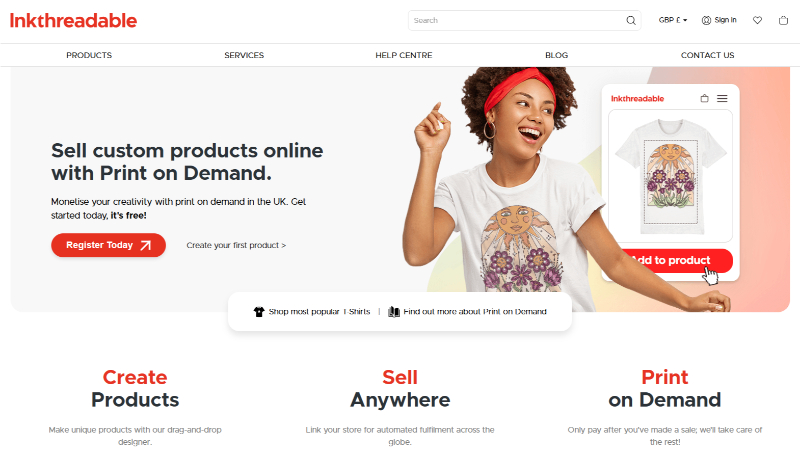
Started as a small UK print house, Inkthreadable has expanded into a full POD platform that prints, packs, and ships on demand for merchants in the UK, EU, and beyond — directly from its UK fulfilment centre.
The company offers a wide selection of custom products, including t-shirts, hoodies, sweatshirts, mugs, accessories and homeware, with over 200+ products available to personalise and sell online. Its online design tool lets sellers upload artwork, generate mockups, and even automate order fulfilment via Shopify, Etsy, WooCommerce and other platforms.
Inkthreadable is most known for its ethical and eco-friendly approach, using plastic-free packaging, water-based vegan inks, and carbon-offset shipping practices that appeal to brands conscious about sustainability.
- Headquarters: Blackburn, United Kingdom — UK production and packing for most items.
- Product range: 200+ items including apparel (tees, hoodies), mugs, bags, homeware and accessories with custom print options.
- Shipping: Worldwide delivery with tracked services; lead times are typically 3–5 working days for many products, though holiday peaks can extend this.
- Pricing: No subscription fees — you pay only for base product costs + printing + shipping; transparent pricing shown on product pages.
✅ Pros
- Eco-friendly production and packaging: Inkthreadable uses plastic-free packaging, carbon-offset shipping, vegan water-based inks and sustainability-focused products, which can be a brand differentiator for ethical, eco-friendly stores.
- Local UK-based fulfilment helps EU shipping: UK printing and packing usually mean shorter delivery windows for UK and EU customers compared to transcontinental shipping from the US/Asia — important if you care about customer experience and repeat buyers.
- Integration & automation with major platforms: Works with Shopify, Etsy, WooCommerce, Big Cartel, Squarespace and more to streamline order flow — crucial for scaling quickly with minimal manual work.
- Reward pricing tiers: Sellers can earn up to ~10% discounts as their monthly spend grows, improving margins for growing stores.
❌ Cons
- Order quality inconsistent: Recent reviews show inconsistent order accuracy, delays in dispatch, and communication challenges — which can be especially painful when fulfilling customer orders via Etsy or Shopify.
- Quality control variability reported by sellers: Some merchants report heat-warp issues, printing errors, or incorrect items in orders, suggesting QC isn’t always consistent — requiring sample testing before scaling.
- Smaller product catalog vs bigger POD networks: With around 200+ items, Inkthreadable’s range is more limited than major EU/US platforms like Printify or Gelato (which offer hundreds to thousands of SKUs), which may hinder product diversification.
- Potential Brexit/EU VAT and customs nuances: While Inkthreadable can zero-rate VAT for EU customers with correct business documentation, importing cross-border from the UK may still trigger different VAT/duty scenarios that sellers need to manage in checkout pricing.
- Support experience varies by seller: Some reviews praise friendly support, while others highlight slow or limited communication — meaning proactive seller follow-up may be necessary around busy sales periods.
Inkthreadable is particularly compelling if sustainability and ethical branding are core to your business, but it’s worth pairing with a broader POD network if you want massive catalog breadth or multi-region redundancy for scaling.
13. Biypod
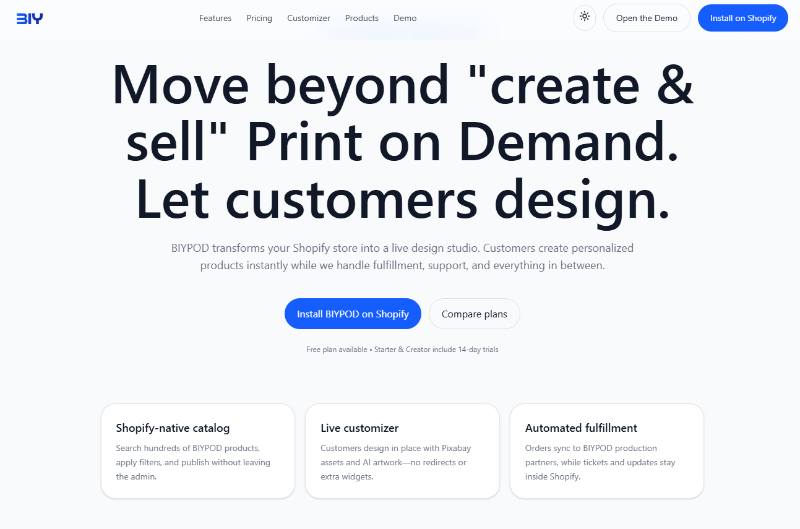
Biypod is a newer print-on-demand solution tailored especially for Shopify store owners who want to offer customizable products directly from their own storefront with built-in design tools. It’s developed by Mayo SL — a company focused on ecommerce SaaS — and launched in 2025 with the goal of making it super simple for sellers to add on-demand products without holding stock.
Rather than being a traditional POD supplier with in-house printing facilities like Printful or Gelato, Biypod operates as a Shopify app that connects your store to a print fulfillment network while giving customers the power to design products in-store via real-time 3D/2D preview tools. This means customers can upload images, add text, and personalize items before checkout — all without leaving your website.
Biypod aims to differentiate itself by combining custom product design and on-demand printing into one easy dashboard. It’s most known for its customizer tool and white-label fulfillment, letting merchants sell unique, personalized merch without inventory risk or third-party redirects.
- Headquarters: Developed by Mayo SL based in València, Spain (app developer), with fulfillment managed through integrated POD printing partners.
- Product range: Primarily apparel and accessories that support customization — typical items include t-shirts, hoodies, hats, and other fashion pieces with all-over-print potential. Catalog specifics depend on connected fulfillment partners and may evolve.
- Shipping: Fulfilled via POD print partners with white-label shipping directly to customers (timelines depend on partner facilities and region).
- Pricing: Subscription-based model with tiered plans that include platform access and feature sets:
✅ Pros
- Built-in customizer for customer personalization: The 3D/2D product design tool lets buyers personalize merch right on your site, increasing engagement and average order value compared with static POD products.
- Shopify integration simplifies automation: Orders and products sync directly to Shopify, reducing manual uploads and allowing automated fulfillment workflows — a big advantage for sellers seeking streamlined operations.
- Tiered pricing with scalable limits: Starting with a free tier is ideal for testing, while higher plans unlock customization tools and bulk product limits (~500 customizable products), which is useful for growing shops.
❌ Cons
- New and limited track record: Biypod is a very new entrant (site domain ~2025) and at the time of writing has no published user reviews, so real-world reliability and quality consistency remain unproven compared with established POD names.
- Dependent on third-party POD partners: Biypod manages the platform and customizer, but fulfillment is handled by external print partners — meaning quality, shipping speed, and returns experience can vary unless you test partners thoroughly.
- No native EU production info visible publicly: Unlike EU-centric POD companies with known EU hubs (e.g., Gelato, Printful), Biypod’s fulfillment locations aren’t transparently listed yet — and that matters for shipping times and EU VAT compliance.
- Monthly fees add up if you scale slowly: Subscription plans (especially $79/mo) might outpace margins for sellers doing limited volume, so it’s important to model your profitability based on expected sales before committing.
- Catalog visibility limited: Because Biypod’s product catalog isn’t publicly displayed outside the app, you’ll need to install and explore the dashboard before knowing item availability, which adds friction to early planning.
Since Biypod is Shopify-native, treat it as a platform add-on rather than a standalone POD giant. It’s great if your strategy includes high personalization and unique customer design experiences — tools like real-time 3D previews can boost conversion and engagement.
FAQs:
Which of these offers the best pricing or branding options
When it comes to pricing, Merchize and Printify tend to offer some of the most competitive base costs, especially for budget-friendly apparel and accessories, which can help improve profit margins if you’re selling low-ticket items. Printify’s optional Premium plan further reduces costs across a huge product catalog, making it a strong value choice for sellers focused on affordability.
For branding options, Printful and T-Pop stand out: Printful offers custom pack-ins, inside labels, and branded packing slips, while T-Pop emphasizes eco-friendly white-label packaging with no plastics. If your priority is brand experience over lowest price, Printful and T-Pop give more tools to present a professional, customized unboxing experience. Choose based on whether your focus is maximizing margin (pricing) or building a memorable brand presence
Do POD companies ship within the EU without customs fees?
Yes—many print-on-demand (POD) companies can ship within the EU without customs fees, but it depends on where the product is produced and where it’s going. If orders are printed and fulfilled inside the European Union, they generally move between EU countries as domestic commerce, so there are no customs duties or import fees for customers. However, if a POD provider prints items outside the EU (e.g., in the U.S., UK post-Brexit, or Asia) and then ships into the EU, customs charges, VAT, and import duties may apply at the border. That’s why choosing a POD partner with EU production hubs (like Printful’s EU centers or EU-based providers) is important if minimizing customs friction and delivery time is a priority. Always check each supplier’s fulfillment locations and shipping rules before committing so you’re clear on how fees and transit work for your target customers.
Is UK fulfillment still considered EU shipping after Brexit?
No — UK fulfillment is not considered EU shipping after Brexit. Since the UK is no longer part of the European Union’s customs union or VAT regime, goods shipped from the UK into the EU are treated as international exports, not intra-EU transport, and must clear customs at the EU border. That means customs declarations are required and EU import VAT (and sometimes duties for higher-value shipments) can apply when the goods enter the EU, even if they were printed and packed in the UK.
For EU-focused sellers, fulfillment inside the EU (e.g., in Germany, Spain, or Latvia) is still the best way to avoid these extra steps and fees for EU customers.
What are typical delivery times within Europe?
Typical delivery times within Europe vary depending on the service level, carrier, and whether the order is processed domestically or cross-border, but most standard shipments fall into a consistent range. For intra-EU deliveries, standard shipping usually arrives in about 3–7 business days, with some routes closer to 2–4 days when both fulfillment and transit are fast or local.When using typical e-commerce carriers or POD fulfillment networks, many sellers estimate delivery around 5–10 business days after production, especially for cross-border EU shipments. Express options can cut this further, often 1–3 business days for faster services at a higher cost. Actual times can vary by country, carrier workload, and peak seasons, so it’s wise to set customer expectations with a range rather than a single guarantee.
Do I need to register for VAT in multiple EU countries?
In most cases, you do not need to register for VAT in multiple EU countries thanks to the EU’s One-Stop Shop (OSS) scheme. If you sell goods to customers in different EU countries and ship from within the EU, you can register for OSS in one EU member state and report all cross-border EU sales through a single VAT return. However, local VAT registration may still be required if you store inventory or fulfill orders from warehouses in specific countries, or if you sell via certain marketplaces with special rules. For POD sellers, using EU-based fulfillment without holding stock usually means OSS is sufficient, but it’s always wise to confirm with a VAT advisor as rules can vary by setup.
Does the POD company handle VAT for me?
Whether a print-on-demand (POD) company handles VAT for you depends on the provider and your business setup. Some POD platforms can collect and remit VAT on your behalf at checkout (especially for digital marketplaces), but many do not automatically handle your VAT obligations as the seller — you’re still responsible for registering and reporting VAT if required in your markets. Most European POD companies will charge you VAT on their fees and production costs if they operate in the EU, but that doesn’t replace your own VAT obligations to your customers. If you’re using One-Stop Shop (OSS) for EU sales, you still need to register for OSS and report sales even if the POD provider charges VAT on their side. Always check the specific provider’s policy and consult a tax expert to ensure you’re compliant with VAT rules in each market you sell to.
What is IOSS, and does it apply to POD?
IOSS (Import One-Stop Shop) is an EU VAT scheme designed to simplify VAT collection on low-value goods (up to €150) imported into the EU from non-EU countries. It allows VAT to be charged at checkout and reported through a single monthly return, so customers don’t face surprise VAT or handling fees on delivery. For print-on-demand sellers, IOSS only applies if products are printed outside the EU (for example, in the US, UK, or Asia) and shipped into the EU. If your POD orders are produced and fulfilled within the EU, IOSS does not apply—instead, normal EU VAT or OSS rules are used.
Do I need a registered business to start POD in Europe?
You don’t always need a registered business on day one to start print on demand in Europe, but you will need one fairly quickly if you’re selling seriously. Many POD platforms allow individuals to open accounts and test products, but once you begin making consistent sales, EU tax and consumer laws generally require you to operate as a registered business or sole trader. Marketplaces like Etsy or Shopify may also request business details for payouts, VAT handling, or compliance checks. If you plan to register for VAT, use OSS/IOSS, or scale across EU markets, having a properly registered business becomes essential.
Can non-EU sellers use European POD companies?
Yes, non-EU sellers can absolutely use European print-on-demand companies. Most EU-based POD platforms allow international merchants to sign up and fulfill orders from European production hubs without being physically located in the EU. However, tax compliance still applies—non-EU sellers may need to register for EU VAT (via OSS or local VAT) depending on where products are produced and sold. Using EU fulfillment can significantly reduce delivery times and customs issues for EU customers, but it’s important to confirm each provider’s VAT, invoicing, and marketplace-integration requirements before scaling.
Conclusion
Europe’s print-on-demand market offers no shortage of options—but the best choice always depends on your goals. Whether you prioritize fast EU delivery, lower base costs, premium print quality, eco-friendly production, or high-volume scalability, there’s a POD partner in this list built to support your strategy.
Use this guide as a starting point, then narrow your shortlist, order samples, and test fulfillment in your key markets. The right supplier doesn’t just print products—it protects your margins, improves customer experience, and helps you scale with confidence. Choose wisely, start small, and take the next step toward building a stronger, Europe-ready print-on-demand business.


