

Contents
Have you faced this: Amazon listing blocked due to bad images, or poor photos dropping your search rank and sales? Amazon keeps updating rules and algorithms, especially since “customers buy with their eyes". So how do you follow Amazon image requirements strictly and still beat competitors? The key is mastering these core rules. Keep reading to get more.
Product images are extremely important for selling on Amazon
Product images play a key role in determining sales performance on Amazon, especially as most customers now prefer online shopping. If you were a shopper, you would also prefer products or stores with clear, right? Realistic images that accurately show the design, material, color, and functionality. Your customers think the same way.
In addition, Amazon prioritizes listings with a high click-through rate (CTR). The more attractive your main image is, the more attention it grabs. Increasing clicks and indirectly helps your product rank higher in search results.
Moreover, when images accurately reflect the actual product (size, color, usage), customers receive exactly what they expect, that result in reducing complaints, negative reviews, and return costs.
Read more: Amazon’s New Policy in 2026: What POD Sellers Need to Know to Avoid Risks and Maintain Profitability
Amazon image requirements sellers should remember
Number of images
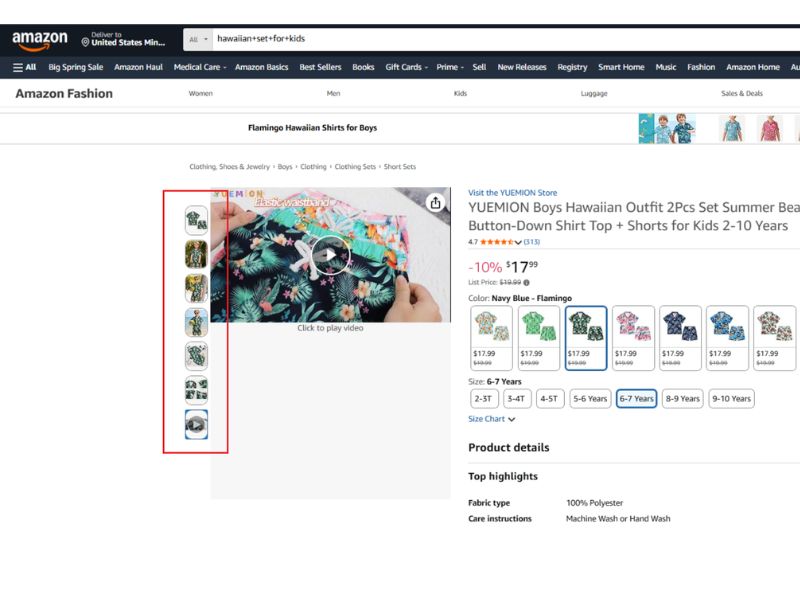
Amazon requires each product to have at least 1 main image. But if you want your listing to be truly competitive, one image is far from enough. To fully meet Amazon product image requirements and stay competitive, you should prepare at least around 6 images along with 1 video to fully communicate your product.
You can upload up to 9 pieces of content (images + video). However, on the interface, customers typically only see the first 7 images, or 6 if there is a video. This means the first images you upload must not only be correct but also “high-impact,” as they largely determine first impressions and conversion rates.
Technical image requirements
- From a technical standpoint, Amazon prefers JPEG format because it is lightweight and optimized for display, although you can still use PNG or TIFF if needed.
- Amazon image size should be large enough to zoom, with a minimum of 500 px and up to 10,000 px on the longest side. Moreover, the file size must not exceed 10 MB.
- In terms of quality, images must be sharp, not pixelated or jagged, because even slightly “low-quality-looking” images can immediately make customers question the product’s value.
- Additionally, file naming should follow a clear structure based on product ID and variants (e.g., B000123456.MAIN.jpg) so the system can easily recognize and manage them.
- Amazon also has specific requirements for aspect ratio and layout. The maximum aspect ratio is 5:1, and the minimum resolution is 72 dpi.
- Importantly, the product should occupy at least 85% of the image to ensure visibility. Too much empty space reduces your “selling area.”
Amazon main image requirements
The main image is the most critical element of your entire image set, as it appears both on the product detail page and in search results. In other words, it acts as the “sales thumbnail” that determines whether customers click on your product.
First, the image must represent the product truthfully and accurately. Size, color, and quantity must match reality, as any discrepancy can lead to negative reviews or returns. You should also avoid using placeholder images, since Amazon uses the first image as the product’s primary representation, and replacing it later may involve technical limitations.
A distinctive requirement on Amazon is a pure white background (RGB 255,255,255). This not only ensures consistency across the platform but also helps your product stand out against competitors. The product must still occupy at least 85% of the frame and be fully visible without cutting off important details.
Amazon is also very strict about keeping the main image “clean.” You must not add text, logos, watermarks, borders, or any graphic elements. If the product includes multiple components, show all components in accurate proportion without misleading scaling. Additionally, you should display only one product (including included accessories if applicable). Avoid showing multiple angles within the same image, as this can create confusion.
A common mistake among sellers is adding props or extra accessories that are not included, simply to make the image more visually appealing. However, this can mislead customers about what they will receive. Similarly, packaging should not appear unless it is a core part of the product value (e.g., a gift box).
For the fashion category, Amazon image guidelines have additional points. No part of a mannequin should be visible, including transparent ones. Adult clothing should be photographed on a standing model (without overly complex poses), while accessories or multi-item sets should be presented in a flat lay format. Footwear is typically required to be shown as a single shoe, facing left at about a 45-degree angle to maintain consistency across the platform.
Requirements for all product images
Whether it’s the main image or secondary images, all Amazon product images in your listing must follow one core principle: help customers understand the product accurately and completely at first glance. This not only ensures compliance with Amazon’s policies but also directly impacts conversion rates and post-purchase reviews.
First, images must accurately represent the product you are selling and fully match the product title. If the title says one thing but the images show another, customers will immediately lose trust, and Amazon may limit your listing’s visibility due to an inconsistent experience.
Amazon also strictly regulates sensitive and misleading content. All images must not contain nudity or sexually suggestive content, even in illustrative form. For products such as children’s underwear, swimwear, or tight-fitting items, it is mandatory to use flat lay photography without models.
A common mistake among sellers is trying to “stuff” marketing information into images. However, Amazon does not allow the use of review images. 5-star ratings, promotional messages (such as free shipping), or any form of direct advertising content is not accepted. Similarly, adding text or pricing onto images is often not accepted, as it can create clutter and distort the shopping experience.
Additionally, you must not use any logos, trademarks, or elements related to Amazon such as “Amazon,” “Prime,” “Alexa,” or similar variations. This also includes mimicking badges like “Best Seller” or “Amazon’s Choice.” Misuse of these elements can not only result in listing removal but also negatively affect your entire seller account.
Requirements for multi-pack products
If you sell products as bundles or multi-unit packs, your images and content must clearly communicate exactly how many items the customer will receive.
In this case, the main image should display the full quantity included. For example, if you are selling a 3-pack including shirt + short + hat, the image should show all these three items. Showing the product in its packaging is also recommended, as it helps customers better visualize how the product is delivered.
More importantly, the product title must align with the images. If the title says “3-pack” but the image shows only one item, or vice versa, customers are likely to misunderstand, leading to returns and negative reviews.
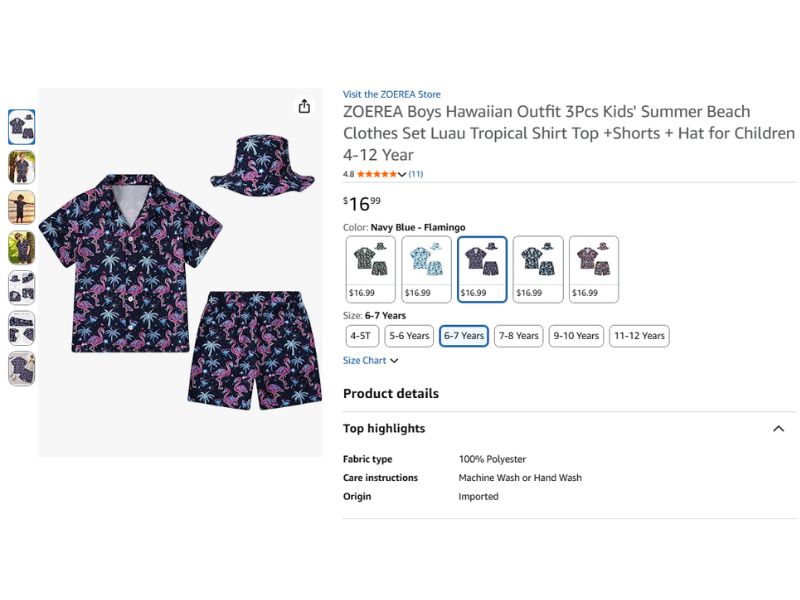
Image order strategy
Having multiple images is an advantage, but the display order determines how customers “consume” the information. Avoid uploading images randomly; plan them according to the customer’s decision-making journey.
After the main image, prioritize visuals that clearly communicate the product’s core value what matters most to customers (e.g., key features, unique selling points, primary benefits). Then follow with detailed shots, close-ups, or additional information.
Lifestyle images (showing the product in real-life use) are especially important in the middle stage. They help customers visualize how the product fits into their lives, thereby shortening the decision-making process.
Common mistakes to avoid when uploading images to Amazon
Uploading images to Amazon is not as simple as “upload and done.” If your images do not meet the required standards, the system may reject them or even directly impact your ability to sell.
Actually, Amazon has 2 layers of control: technical requirements and content policies. If an image fails to meet technical standards (size, format, quality, etc.), it will be rejected immediately. On the other hand, if it violates content policies (e.g., misleading visuals, promotional content, inaccurate representation), it may be removed after being published.
More seriously, if you do not have a compliant main image, Amazon may temporarily suppress your product from search results until it is updated. This means losing all traffic during that time.
Adding promotional text
Some common mistakes sellers should avoid include adding promotional text such as “Best Seller” or “50% Off,” using colored or patterned backgrounds for the main image, or uploading images with poor lighting and heavy shadows that make the product unclear.
Ignoring variant images
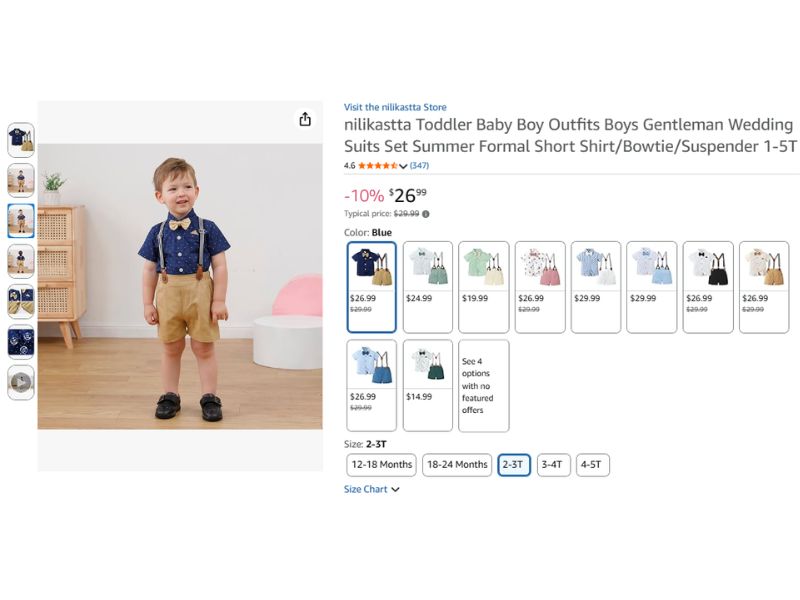
Customers don’t want to see just one angle, they want to view the product from multiple perspectives, examine close-up details, and understand how it works in real life. By providing a variety of images, you allow customers to “experience” the product directly on their screen. This is especially important for products with multiple features or those that require visual understanding.
Lifestyle images (showing the product in real-life contexts) are particularly powerful. When customers see the product being used in real situations, they can more easily imagine themselves using it and that’s when purchase intent becomes strongest.
Ignoring mobile optimization
Most Amazon users today shop on mobile devices, so if your images are not optimized for mobile, you are losing a significant number of potential customers.
Images that are too heavy or have excessively high resolution can slow down page loading speed, causing users to lose patience and leave before even viewing the product. On the other hand, images that are too small or lack detail do not provide enough information for customers to make a decision.
The key is to balance image quality and file size. Images should be sharp enough to support zoom, while still loading quickly on mobile networks.
In addition, image composition should be optimized for smaller screens. Center important details to avoid cases where they get cropped or become hard to see on mobile devices. An image that looks great on desktop is not necessarily effective on mobile if it hasn’t been optimized properly.
Tips for choosing images for different product types
Not every product can use the same type of imagery. Each category requires its own way of “presenting” visuals to highlight value and help customers easily understand the product.
For clothing and apparel
When selling clothing, customers don’t just care about the design; they want to know how the item fits and looks when worn. That’s why images with models (or mannequins in certain appropriate cases) are essential to showcase shape, fit, and styling.
However, model images alone are not enough. You should also include flat lay images to clearly show details such as fabric, stitching, collars, sleeves, or unique design elements. A small but impactful detail: clothing should always be properly steamed or ironed before shooting, even slight wrinkles can make the product appear lower quality in the eyes of customers.
Read also: How to find trending products on Amazon for quick wins
For accessories and footwear
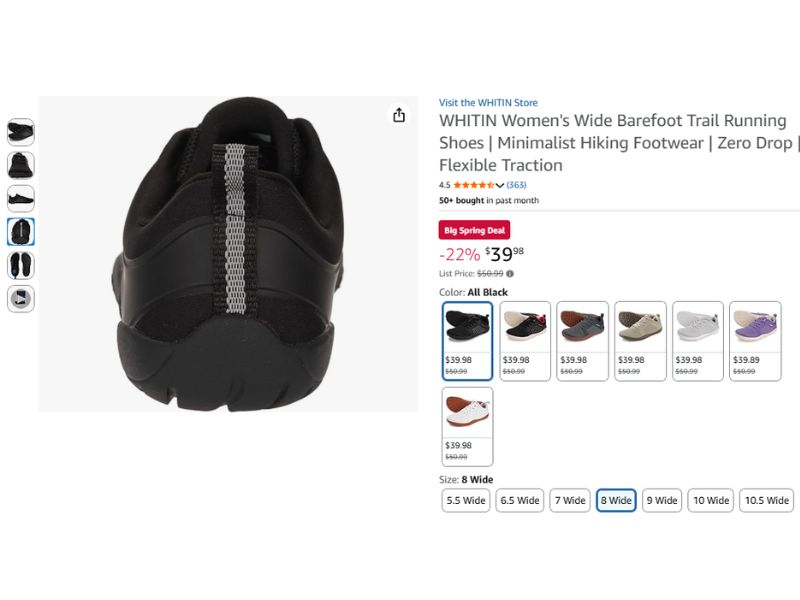
For products like shoes, bags, or jewelry, customers tend to closely examine every detail before making a purchase. Therefore, you need to provide multiple angles to give them a complete view.
For footwear in particular, the sole is often overlooked but is actually very important, especially if it highlights key features such as anti-slip properties or grip. Meanwhile, for jewelry and handbags, close-up images are crucial to showcase craftsmanship, materials, and fine details, which strongly influence the perceived “premium” quality of the product.
For packaging and bundled products
If you sell products with dedicated packaging or as multi-item bundles, your images should clearly communicate what customers will receive. Showing packaging builds trust, especially for gift items or branded products.
Additionally, if there are product codes, variant labels, or tags, you should display them clearly in the images. This helps reduce confusion and minimizes return-related issues.
Optimizing product images on Amazon
Complying with Amazon image requirements only ensures that you are “allowed to sell.” To sell effectively, you need to optimize your images based on customer buying behavior.
- Image quality is the foundation. High-resolution images allow buyers to zoom in and inspect details such as materials, stitching, and surface texture. This is extremely important because it replaces the real-life “touch and feel” experience.
- How you place your product in context significantly impacts purchase decisions. Lifestyle images help customers visualize how the product fits into their daily lives. For example, a camping chair becomes far more appealing when shown in an outdoor setting rather than just on a plain white background.
- The use of infographics. Instead of making customers read long descriptions, you can visualize information such as size, features, and key benefits directly on the image (note: only for secondary images, not the main image). These visuals act as a quick summary, helping customers understand the product within seconds—especially effective on mobile devices.
- If you are building a long-term brand, maintaining visual consistency is crucial. From color palette, lighting, and composition to infographic design, everything should be aligned across your products. This helps customers recognize your brand even before they see your name.
Understanding and complying with Amazon image requirements is just the foundation, but what truly drives results is how you optimize your images for buying behavior. High-quality visuals don’t just help your product get listed; they directly impact your click-through rate, conversion rate, and return rate.


