
Contents
A successful animal brand doesn’t start with the animal itself, but with how the brand tells its story and expresses its personality. In the POD space, many brands have used animal symbols to build strong identities, create emotional connections, and foster long-term customer loyalty.
This article highlights 8 animal brand success stories, breaking down how these brands approach branding and the practical lessons POD sellers can apply to build a brand with depth and scalable potential.
Why is building an animal brand a high-potential opportunity in 2026?
By 2026, the animal and pet industry is no longer growing simply because the role of animals in people’s lives has fundamentally changed and that shift creates a rare branding opportunity.
Animal brands sit at the intersection of emotion, identity, and long-term spending. Few industries offer that combination at this scale.
1. Animals have moved to “relationships”
In 2026, animals are not treated as accessories or secondary purchases:
- Pets are family members.
- Wildlife causes are personal values.
- Animal-inspired products often signal lifestyle and beliefs.
Then when customers buy for animals (or buy because of animals), they are less price-sensitive, more emotionally invested, and more likely to stay loyal to brands that align with how they feel about animals. That emotional depth gives animal brands a structural advantage over generic consumer goods.
2. Demand is rising, but meaning is what’s scarce
Yes, the animal economy is expanding rapidly. But growth alone doesn’t explain why this space holds such strong potential in 2026. The real issue isn’t demand; it’s sameness.
From animal-printed t-shirts to cute animal mugs and everyday pet accessories, customers are surrounded by products that look similar, use familiar visuals, and make nearly identical claims. Cute designs are everywhere. Features are easy to copy. As a result, most products blur together, and very few brands leave a lasting impression.
What actually makes a brand stand out isn’t having a completely different product. It’s having a clear reason to exist. Brands that grow are able to communicate what they believe about animals, why they were created, and what they represent in the customer’s life.
Animal brands have a natural advantage here. Animals already carry emotional weight: empathy, care, responsibility, and memory. When a brand builds on that emotional foundation with a clear point of view, customers don’t just notice it. They remember it, trust it, and choose it over interchangeable alternatives.

3. Trust is not optional in animal categories
Purchases related to animals carry more emotional weight than most consumer goods. Customers worry about safety, ethics, real impact, and whether a brand is genuinely doing what it claims. Without trust, hesitation comes first and hesitation kills conversion.
That’s why branding matters more in this space. In 2026, trust is built through clear positioning, consistent storytelling, and values that show up repeatedly over time. Brands that earn trust don’t have to rely on constant promotions and customers choose them because they believe in them.
4. Animal brands have stronger pricing power
One of the most advantages of animal branding is perceived value. In crowded markets, unbranded sellers compete on price. Strong brands compete on meaning.
Animal brands that communicate purpose and identity can command higher prices because the brand frames the purchase as care, responsibility, or self-expression.
This is why two nearly identical products can perform very differently. The one with a clear animal brand story sells margin. The other sells volume and discounts.
5. 2026 rewards brands that think long-term
With U.S. consumers spending over $157 billion on pets in 2025 alone (Forbes), the question is no longer whether demand exists. The real opportunity in 2026 is capturing durable profit.
Animal brands are especially suited for long-term brand building because:
-
Emotional attachment compounds over time
-
Customers grow with their animals and repurchase for years
-
Brand trust reduces churn and acquisition costs
For businesses willing to invest in clarity, consistency, and values, building an animal brand in 2026 is a strategic advantage.
8 animal brands to learn when scaling a POD business
1. Artist Chad Killoran – Bringing wildlife art into purpose-driven products
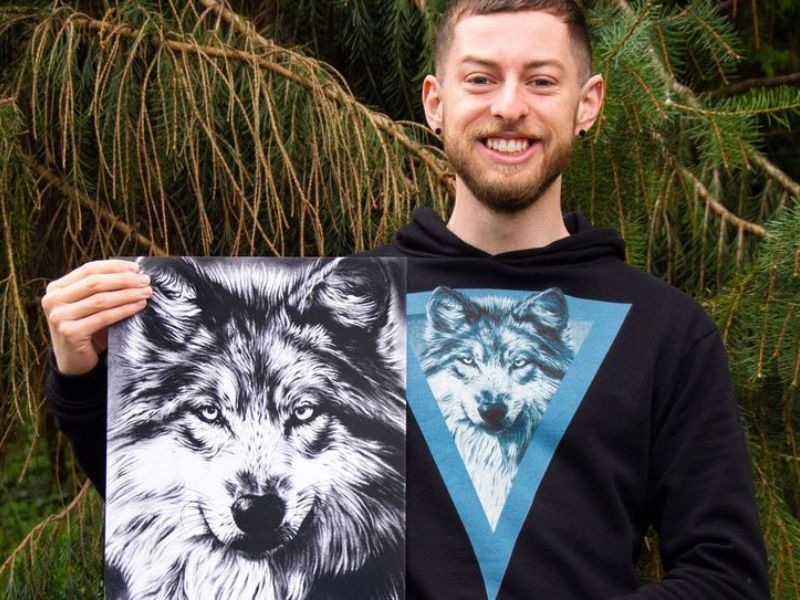
Chad Killoran transforms vibrant wildlife illustrations into wearable art, using fashion as a way to spark conversations about endangered species and human impact on nature. Each order sold supports global wildlife conservation efforts.
Beyond the products themselves, Chad’s strength lies in how he communicates his mission. His Instagram content regularly pulls audiences behind the scenes of his creative process, shares educational facts about the animals he illustrates, and connects designs to meaningful moments like World Tiger Day.
>> For POD brands, this shows how storytelling and transparency can elevate artwork into a value-driven brand customers want to support long term.
2. Merle Goll Illustration – Building a brand around a single character
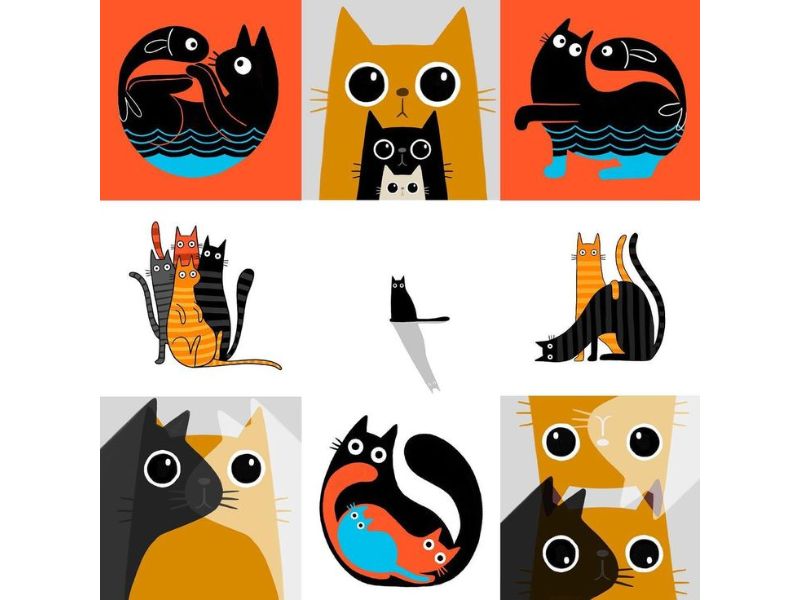
Merle Goll’s store revolves around a mischievous black cat with oversized eyes, placed in playful, often unexpected situations (it can be from coffee cups to “do not enter” signs). The character acts as a consistent visual anchor across all designs, giving the brand a strong and recognizable identity.
Rather than limiting herself to apparel, Merle expands her illustrations across puzzles, mugs, prints, and more. This approach gives fans multiple entry points to purchase while naturally increasing average order value.
>> By extending the same illustration into different product types and pairing launches with timely moments, the brand grows revenue without increasing creative complexity.
3. The Wildlife Trusts – Consistency
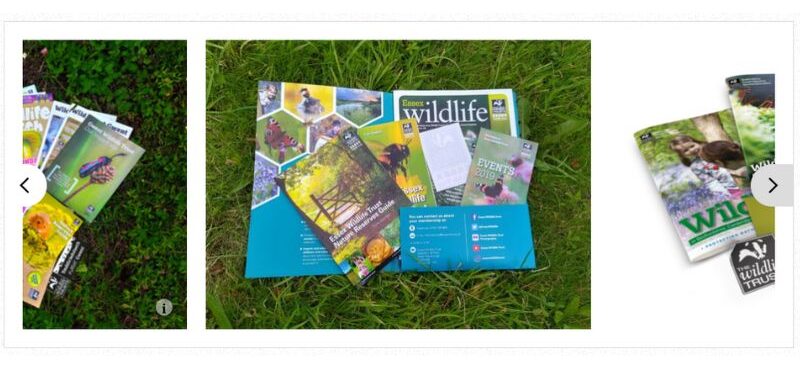
The Wildlife Trusts is a UK-based charity dedicated to protecting wildlife and natural habitats, with all store profits funding conservation initiatives.
What stands out is the brand’s purpose translates clearly into its ecommerce experience. From homepage to checkout, messaging, visuals, and products work together. Events, education, and merchandise are woven into one cohesive journey, guiding visitors smoothly toward conversion.
>> For POD sellers, a website that only shows products is not enough. It needs to explain who the brand is and why customers should care.
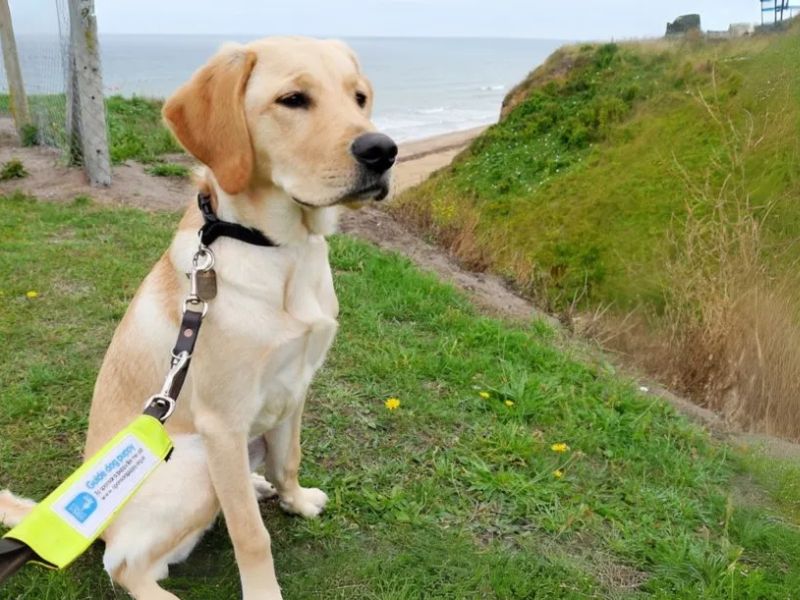
4. Guide Dogs – Integrating products into the journey
Guide Dogs UK doesn’t treat merchandise as a separate sales channel. Instead, products are woven naturally into the supporter’s journey.
After someone donates, reads an email, or receives a thank-you message, they’re introduced to the Sponsor-A-Puppy collection at a moment when emotional connection and trust are already high. The product feels like a continuation of support, not a sales push.
>> This approach led to a significant increase in traffic and conversion, showing that in brands, when and where a product appears can matter just as much as what is being sold.
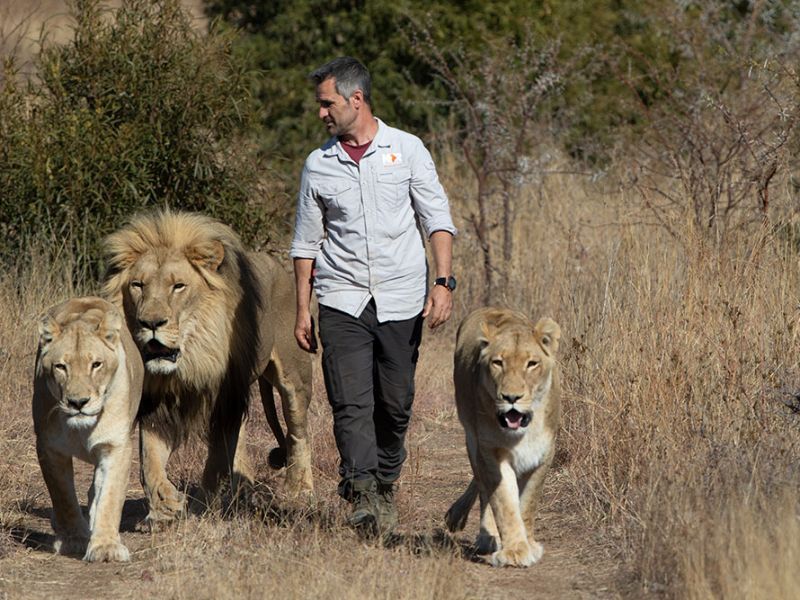
5. The Lion Whisperer – When content and merch work together
Kevin Richardson, widely known as “The Lion Whisperer,” built a global audience through intimate storytelling and real-life interactions with lions. His content centers on conservation, education, and emotional connection, with all merchandise profits supporting his self-run African carnivore sanctuary.
A subtle but effective tactic runs throughout his videos: Kevin regularly wears his own merchandise on camera. The products appear naturally within the content, reinforcing brand visibility without interrupting the story. Combined with YouTube’s Merch Shelf, this seamless integration helped merchandise account for 10% of total revenue and contributed to a 118% increase in overall sales.
6. Silhouettes – Letting authenticity lead the brand
Silhouettes is built by wildlife filmmaker James Stevens, whose bird silhouette designs are inspired by the species and landscapes he encounters while working in the field.
What makes Silhouettes effective isn’t polished production or studio visuals, but authenticity. Seeing the products used by the creator himself, in real outdoor environments, helps the brand feel credible and trustworthy. This kind of real-world context builds confidence faster than highly produced marketing ever could.

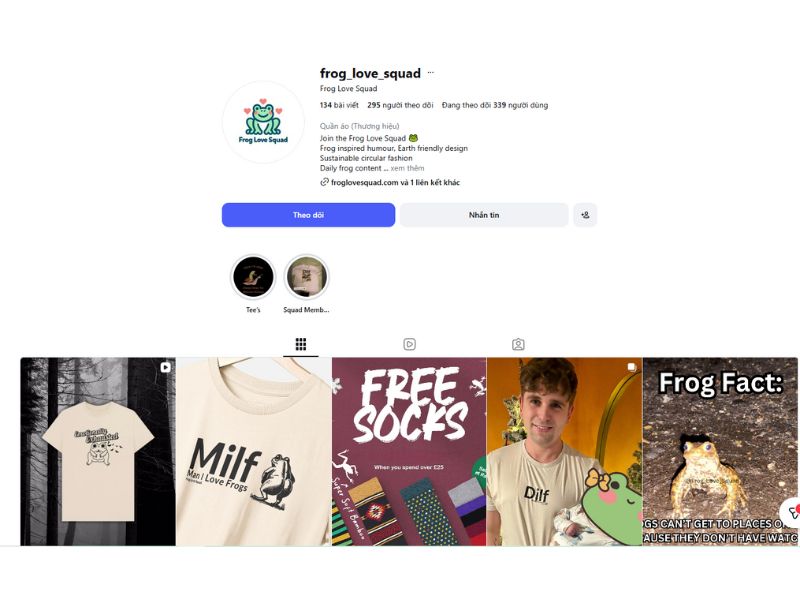
7. Frog Love Squad – Using Internet to drive engagement
Frog Love Squad is built for frog lovers and meme fans, combining amphibian humor with internet culture. The brand grows by responding quickly to trends that already resonate with Gen Z audiences. From cowboy-hat frogs to “frog-ified” viral phrases, the designs feel timely, relatable, and easy to share.
By speaking the “same language" as its community, the brand increases visibility organically. This works because it taps into cultural moments the audience already cares about, rather than forcing generic or irrelevant trends.
8. BBC Earth – Selling through memories
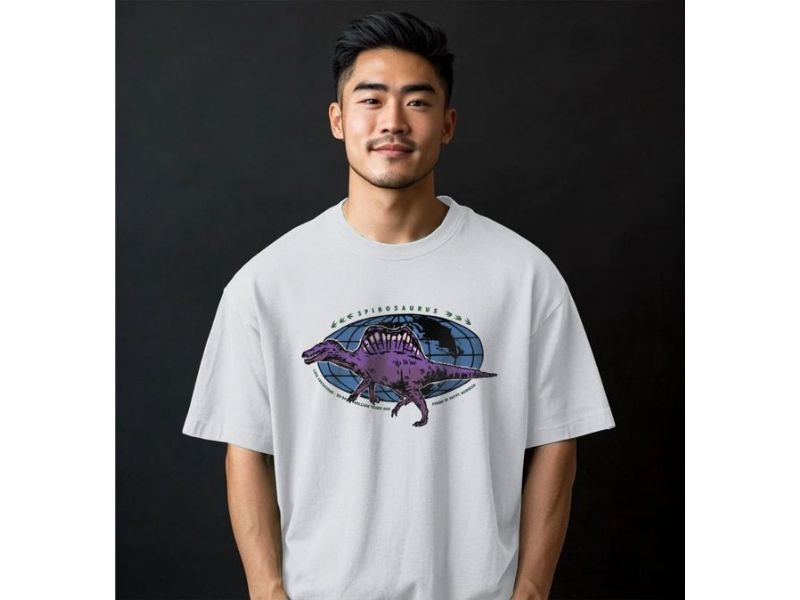
A standout example came with the 25th anniversary of Walking With Dinosaurs.
BBC Earth approached this collection as a way to activate existing brand assets rather than creating a new concept from scratch. Walking With Dinosaurs already carried strong brand recognition and a built-in audience, so relaunching it around the 25th anniversary provided a clear commercial and marketing anchor. From a product perspective, the brand kept designs simple, recognizable, and tied to familiar imagery. The vintage style and well-known dinosaur species lowered buying friction and accelerated decision-making.
This case shows that commercial success doesn’t always come from novelty, but from leveraging established “property", packaging it into a limited collection, and launching it at the right moment.
Key takeaways for POD sellers
1. Strong brands start with a point of view
The most effective animal brands don’t rely on aesthetics alone. When a brand knows what it believes and communicates that clearly, designs stop being decorative and start feeling meaningful.
Read: How to create brand identity for your print on demand business?
2. Products sell better when they’re part of a story
From wildlife protection to internet culture, these brands consistently embed products within narratives. Instead of uploading standalone designs, POD sellers should explain the inspiration, tie collections to specific moments, or connect designs to cultural or seasonal themes. This gives customers a reason to care.
3. Scaling isn’t about more designs
Scaling doesn’t always mean creating more; it often means using what already works more intelligently. Reusing designs across products, launching in focused drops, or integrating merch into content can unlock growth without adding operational strain.
4. Authentic content builds trust faster
Authenticity builds trust faster than polish. Content that fits naturally into the audience’s lifestyle often resonates more than perfectly staged campaigns.
5. The website is a conversion tool
Clear messaging, consistent branding, and a logical journey from discovery to checkout make a difference. These examples show that when values, products, and layout work together, conversion is better.
6. Niche focus
Instead of trying to appeal to everyone, your brand should commit fully to specific audiences: wildlife supporters, meme-driven Gen Z users, outdoor enthusiasts. Going deeper into a niche often unlocks stronger loyalty, clearer messaging, and more predictable growth.
Check out the best tips to find a profitable print on demand niches for your store.
Successful animal brands don’t win by chasing trends or flooding stores with designs. They win by being intentional. Across these examples, one pattern is clear: animals are not the product; they are the emotional anchor. When brands use animals to tell stories, express values, and build community, products stop feeling interchangeable.


