Contents
Halloween is a time when shoppers easily make impulse purchases. However, are you still trying to reach them with the same old discount banners? If so, you need to change your approach right away. Using creative Halloween marketing ideas that spark customers’ curiosity is the real key to boosting your sales. Let’s discover the most practical marketing tactics in the post below.
Why old-school Halloween marketing is making you “sinking"?
Most brands nowadays follow the exact same formula every Halloween: changing their logo to orange, adding a few creepy pumpkin images, and offering a 10% to 30% discount.
The result? Your Halloween campaign ideas completely blends into the “trend-following ocean" out there. Customers just scroll past without remembering a single thing about you.
Market reality: What are customers actually spending on?
The Halloween market is huge and much more competitive than you think. In 2025, Halloween spending hit a record 13.1 billion USD. Of this, decorations reached 4.2 billion USD, almost matching costumes at 4.3 billion USD (according to the National Retail Federation).
Read more: Top 20 Creative Halloween Shirt Ideas To Outrank Big Brands
However, the challenge here is that consumers are becoming more demanding. They are willing to spend big on products that have aesthetic depth and offer an experience, while completely ignoring mass-market, uncreative items. This means if you only rely on price wars or basic products, you will fail. You need different Halloween promotional ideas.
Big shift: The Halloween shopping journey starts in the summer
The concept of “waiting until October to sell Halloween items" is gone. Consumer shopping habits have shifted.
- “Summerween" phenomenon and the power of Gen Z / Gen Alpha
The rise of younger generations (Gen Z and Gen Alpha) on social media has created the “Summerween" trend. Yes, you heard that right – celebrating Halloween right in the middle of summer.
Consumers no longer want to wait. They start looking for ideas and buying decorations very early to make the festive vibe last longer.
Specifically, up to 16% of consumers start shopping in July and August. And nearly 49% of Halloween shoppers make their purchases in September or even earlier.
This is not just a calendar change; it creates a much longer wave of competition. The earlier your brand appears, builds good awareness, and rolls out early Halloween sale ideas, the bigger advantage you have.
- Rise of “Discovery" over “Searching"
In the past, customers usually had an idea in mind first, then went online to type it into the search bar. Today, that process is reversed: they scroll through social media to find inspiration first, and only then does the desire to buy arise.
Data shows that 32% of Gen Z shoppers look for decor and costume ideas directly on TikTok. This means their shopping journey begins with being inspired. For your campaign to succeed, your content must turn those ideas into a strong desire to own products.
Best 15 Halloween marketing ideas – conversion optimization weapons
Instead of following the old path of boring discount campaigns, you need sharper marketing weapons to trigger customer buying behaviors.
1. Trigger flash sales to create urgency
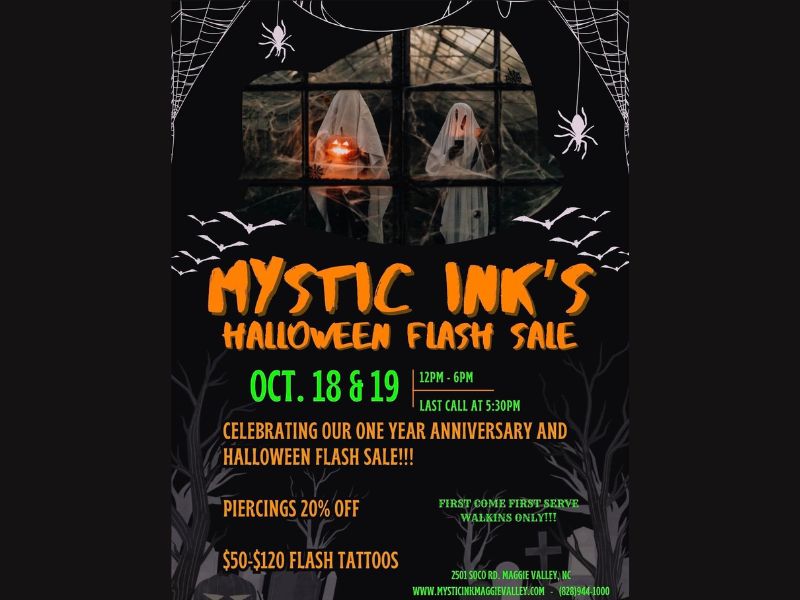
Customers always tend to delay their purchases when shopping for seasonal items. To break this mindset, you need to launch deep discounts combined with tight time limits through flash sales.
For example, offering a big 30% discount strictly limited to 24 hours will convince buyers to make a decision immediately. This time limit is the strongest catalyst to speed up customer checkouts.
2. “Halloween countdown" social media campaign
Don’t wait until right before the holiday to start posting sales. Build a countdown content series 10 to 20 days before Halloween on social media to remind customers of the time and prepare them mentally for shopping.
The formula here is “give value first, pitch products later." Every day, you just need to share a simple, easy-to-do tip. For example, make a short video showing how to decorate a workspace with a spooky vibe, and subtly place your shop’s Halloween-themed ceramic mug or throw pillow in the frame to spark natural curiosity.
Alternatively, you can use the poll feature on Facebook or Instagram Stories with quick questions like: “Do you choose the Vampire or the Witch design?". At the same time, create a unique hashtag for your campaign to encourage customers to post photos of themselves with your products to win small gifts.
3. Match products with spooky vibes
This means we won’t sell products by saying: “Buy this wallet, it’s black and perfect for Halloween!". Instead, turn shopping into an exciting personality quiz through email marketing or interactive social media posts.
The way to do this is to create a fun, short quiz like: “Which horror movie villain are you?" or “Which monster represents your hidden energy?". On the results page, subtly match their personality with a specific product line. If their result is an “aristocratic vampire", suggest a minimalist black leather wallet or a bold red lipstick right away.
This method completely lowers the buyers’ guard because it makes them feel like the item represents their own unique style.
4. Create FOMO with limited-edition items
The personal care brand Function of Beauty’s story is a prime example of using the fear of missing out (FOMO) when they launched a limited-edition black shampoo for Halloween. Instead of just offering a discount, they brought in a unique, mysterious formula and announced that the product would disappear as soon as the holiday ended, forcing beauty lovers to buy it before the opportunity closed completely.
Theoretically, this tactic targets the psychology of “the rarer something is, the more people want it." Basically, you don’t need to create a brand new product; just take your best-selling item and slightly tweak it with Gothic colors, scents, or packaging. When a familiar product gets a unique look, it instantly triggers customer demand.
Additionally, limiting the sale period will push customers to buy immediately. This method not only helps you close deals faster but also allows you to sell at a higher price than usual.
5. Paid ads and retargeting
Retargeting is a secret weapon that helps Halloween campaigns rescue abandoned carts. In reality, many customers browse products, even add them to their shopping carts, but leave and forget to pay for some reason. Do not lose this customer group.
You need to set up paid ad campaigns (on Facebook, Google, or Instagram) to follow their exact behaviors. Show them the exact products they left in their carts, along with messages urging them to complete their payment before the holiday ends.
For content of Halloween ad ideas, use short videos or GIFs that change messages daily to build curiosity (for example: “The discount night is getting darker…" or “Your Halloween cart is waiting…"). Split your audience to test two types of messages: one emphasizing urgency (products are running out of stock) and the other focusing on emotions (turning their home into the perfect Halloween space).
6. Send Halloween-themed emails to customers
Email is always an extremely effective direct channel to connect with existing customers. Most email marketing tools today offer eye-catching, ready-to-use Halloween templates where you just need to fill in your shop’s information.
Before sending, segment your email list (loyal customers, inactive customers, potential customers) to send personalized messages. For example, you can send to past buyers: “We miss you — here is a special Halloween gift just for you." Additionally, using urgent subject lines like “This offer vanishes at midnight" or “Don’t ghost us — 30% off is ending soon!" will also be highly effective.
7. Interactive SMS marketing
This is a conversational marketing tactic combined with a gaming element to engage customers. Instead of blasting mass promotions, invite them to join a live interactive game directly through text messages.
For example, send an automated text message with a “trick or treat" choice. If customers reply with “treat", they will instantly get a surprise discount code. If they choose “trick", the system will send a fun riddle, and answering correctly earns them an exclusive gift.
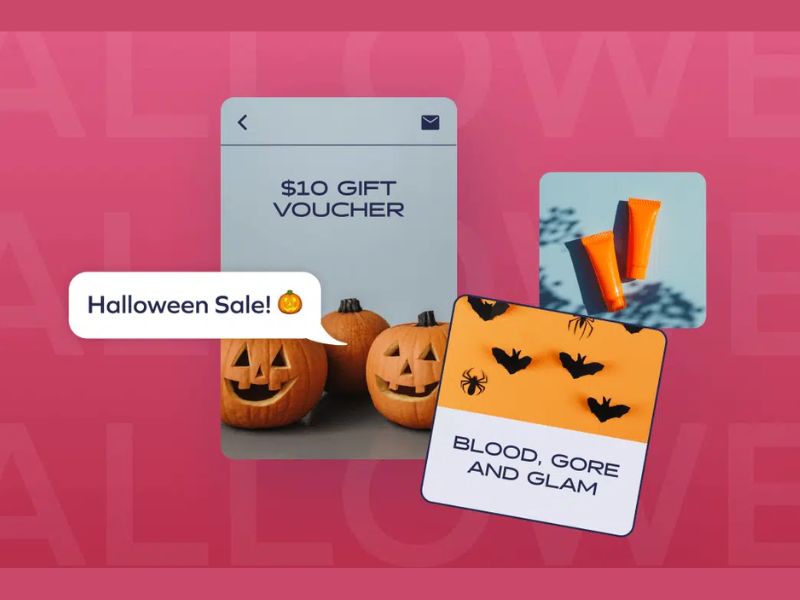
Alternatively, show an image of three witch hats for customers to tap and randomly receive a 10%, 20%, or 30% discount. You can even add a share button so recipients can easily forward this to friends with an offer like: “Get an extra 5% off for both you and your friend."
Through their interactions, you will gain a deep understanding of each group’s preferences, making it easier to personalize your ad messages more accurately for the next big shopping seasons like Black Friday or Christmas.
8. Boost conversion rates with free offers
The general mindset when shopping is that everyone loves getting free gifts, right? Giving a free gift for a limited time is a great strategy to drive customer loyalty, and it is especially suitable if your brand leans toward the premium segment and wants to avoid deep discounts.
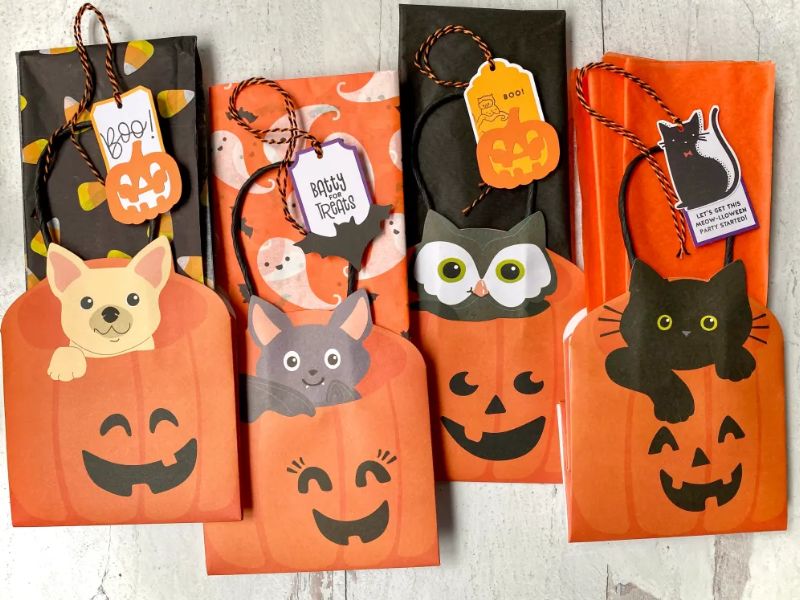
Instead of just giving away candy, upgrade your gifts to exclusive, branded items. For example: glow-in-the-dark stickers, temporary tattoos, Halloween masks, reusable candy bags, or cute accessories like keychains and stress balls printed with your shop’s logo.
To optimize results, hand them out in two ways: include them with online orders, or hand them out directly at local events and pop-up stores. To create a natural viral effect, encourage recipients to post a photo of themselves with the gift on social media, tagging your shop’s name to enter a photo contest with a bigger prize.
9. Host online or offline events
Halloween is a season of gatherings and festivals. Using this wave to host events that fit your business scale is a great opportunity to reach potential customers in the most natural and fun way.
If you have a physical store, create interactive activities to attract the local community. Host a spooky festival, hand out free candy to kids, and run small workshops like pumpkin carving or face painting. Or, you can host a small costume contest with fun prizes to draw in crowds. You can even actively partner with nearby shops to organize a trunk-or-treat event in a shared parking lot, doubling your marketing reach and sharing customer bases.
On the other hand, if you run an online business, virtual events will help you break geographical limits and connect deeply with buyers. Host live streams on social media or Zoom to guide viewers on how to make DIY crafts related to your products. For example, if you sell cosmetics, teach spooky makeup tutorials; if you sell crafts, teach how to make DIY spooky candles.
10. Redesign your website with a Halloween theme
Your website is your digital storefront. To bring customers into the holiday shopping spirit, you need to dress up your website with a proper Halloween theme.
-
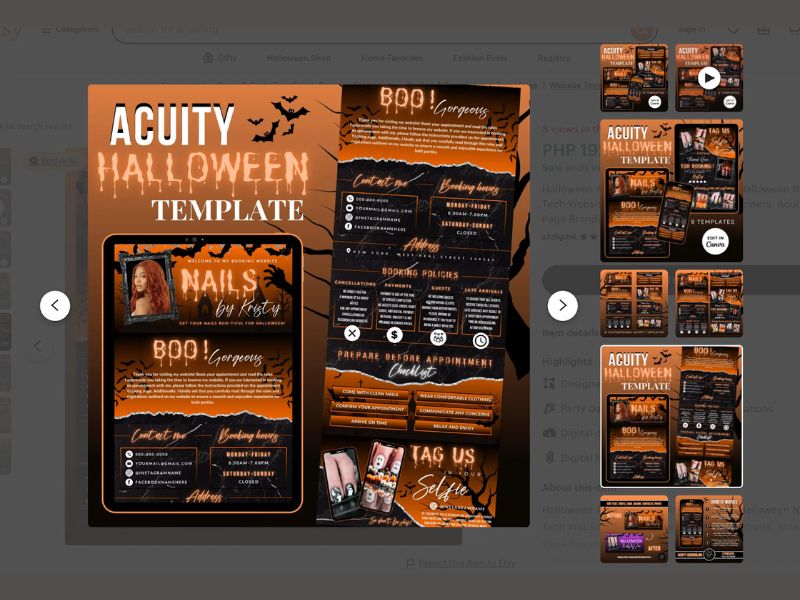
Update your temporary brand identity: Change your homepage’s main colors to dark autumn tones like black, orange, and white. Depending on your brand positioning, choose a suitable design style: opt for a luxurious black-and-gold look if you sell premium goods, or add cute drawings of bats, spiderwebs, and little ghosts if you target a younger customer base.
-
Subtle animation effects: Add small moving details to increase interaction, such as bats flapping their wings when the page loads or a mysterious dark mode toggle button.
-
Banners and lead-capture pop-ups: Design prominent banners on the homepage to showcase “limited-time Halloween offers." At the same time, gamify your email-capture pop-ups, for example: “Enter your email and spin the witch’s cauldron to get a special discount.
11. Customer reviews and referrals
Genuine reviews from past users are the strongest trust levers that help new customers decide to spend money. This Halloween season is the golden time for you to collect high-quality reviews on Google and drive natural referrals from your own customers.
-
Create a user-generated content (UGC) campaign: Encourage customers to post photos or videos on social media showing them wearing costumes or decorating their homes with your shop’s products. To motivate them, offer an attractive prize like a $50 USD shopping voucher for the most creative entry.
-
Lucky wheel for reviewers: Give all customers who leave a review (with a photo of their Halloween-themed product) in October a chance to join a lucky draw to win your shop’s special “Halloween gift package".
-
“Spooky rewards" referral program: Offer a win-win deal throughout October. For example: “Refer a friend to make a purchase, and both of you will get $10 USD off your next order or receive a free Halloween decor item."
Read: Grab Best-Selling Halloween Decorating Ideas This 2026
12. Host contests or giveaways
Everyone loves the feeling of getting free gifts. Running small contests on social media both creates engagement and promotes your products to new customers. However, you need to set clear goals (such as increasing followers, collecting customer data, or boosting sales) along with simple and transparent rules.
Depending on your marketing goals, you can choose one of the following formats:
-
Decor or costume photo challenge: Invite customers to post photos of their most impressive Halloween decor spaces or costumes along with your shop’s unique hashtag to win valuable prizes (like free products or gift cards). Especially for decor services, you can offer a grand prize of a free “haunted-themed home makeover" to turn the winner’s home into a work of art.
-
Spooky photo captioning: Post a mysterious or funny photo and ask viewers to leave their best caption ideas in the comments to receive a discount code or a gift.
-
Digital treasure hunt game: Hide small clues (in the form of images or special characters) scattered across your website. Patients customers who find all the clues will receive an exclusive promo code.
-
Participation rules aimed at going viral: To qualify for prizes, ask players to perform actions that help boost brand awareness, such as: following your page, sharing the post publicly, tagging friends, or sharing the reason why they love the Halloween season in the comments.
13. Interactive social media posts
As mentioned above, today’s customers love to find ideas through social media, and you need to take advantage of this. Instead of just posting one-way sales pitches that easily get boring, turn your social media page into a lively playground.
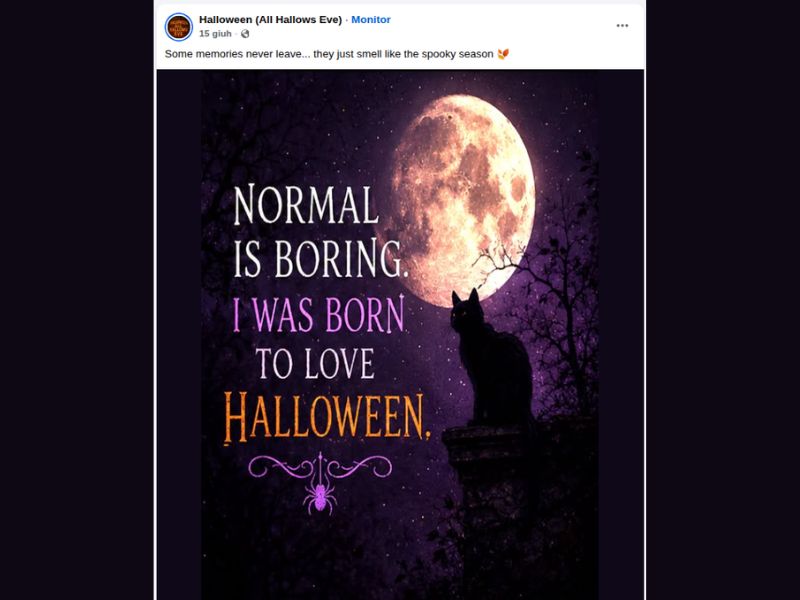
You can create polls on Facebook/Instagram Stories with fun questions like “Are you team pumpkin spice or candy corn?" or a “Rate this costume" game series. Use short videos to launch creative challenges with hashtags like #MySpookyStyle or share shopping hauls via #TrickOrTreatHaul. Encourage participants by giving out small discount codes or choosing their best posts to repost on your shop’s page.
14. Influencer collaboration
Today’s consumers often trust advice from real users more than direct ads from brands. Partnering with content creators will help your products appear in the most natural and credible way.
Allow creators the freedom to express their own style, but make sure your products are smoothly integrated into real holiday prep activities.
Real data shows that short videos bring the best conversion rates. To measure exact results, provide each influencer with an affiliate link or an exclusive discount code for their followers. This approach not only helps expand your campaign’s reach beyond your core customer group but also builds a strong emotional connection with your brand.
15. Promote Halloween offers with direct mail
It sounds a bit unusual, but this method is highly effective. In the digital age, direct mail marketing (sending physical postcards or handwritten letters) is a very unique and personalized approach. This method helps your brand stand out completely from hundreds of promotional emails.
Send creative envelopes or postcards shaped like pumpkins, little ghosts, or bat wings. Add a mysterious silver scratch-off layer so customers can manually scratch it to discover their own special discount code. You should send these cards one to two weeks before October 31st to build curiosity and excitement for the holiday.
Timeline of a successful Halloween marketing campaign
To optimize your budget and marketing messages, your campaign should not be spread out passively. Instead, it needs to be strategically planned according to a tight timeline below:
Phase 1: Launch & Build momentum (May – August)
-
Goal: Reach early birds who embrace the “Summerween" trend and those who love exploring new ideas.
-
Action: Launch early collections through limited product drops and run teaser campaigns to build curiosity. This is the golden time to plant your brand in customers’ minds before the market enters the fierce competition phase.
Phase 2: Accelerate brand awareness (Early to mid-September)
-
Goal: Dominate top search results and visibility as soon as market demand and shopping trends begin to soar.
-
Action: Step up the production and distribution of visual, inspiring content on TikTok and Pinterest. Instead of just selling individual products, focus on showing and guiding customers on how to style outfits or decorate based on complete packages (such as a spooky dinner table or a cozy porch) to increase your average order value.
Phase 3: Peak checkout & Trigger FOMO (Late September – October 31st)
-
Goal: Push for quick purchase decisions from last-minute shoppers and those who are still hesitant.
-
Action: Heavily run scarcity campaigns (limited product quantity or limited-time offers) combined with remarketing. Most importantly, offer a clear delivery guarantee to ensure products arrive before the holiday to remove the biggest worry of online buyers, while keeping up a high marketing frequency until the very last day of October.
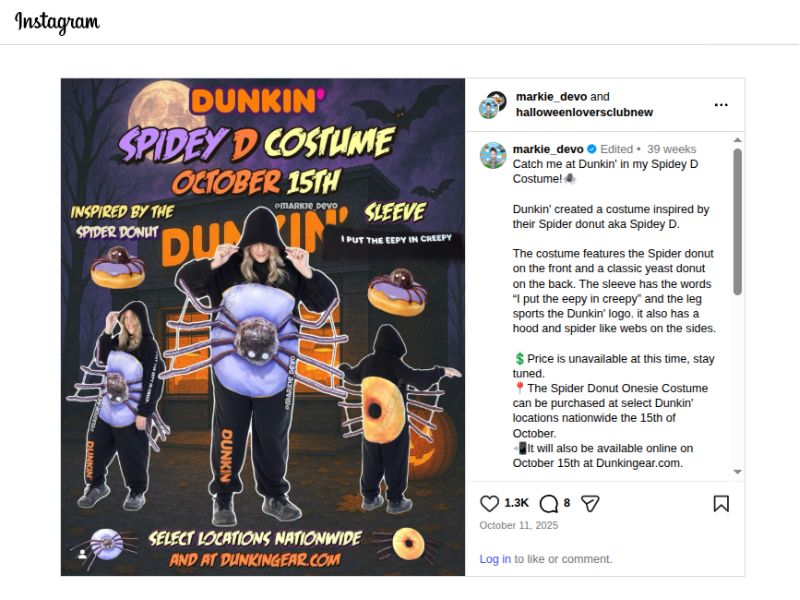
CASE STUDY: The “0-dollar ad" formula from Dunkin’s Spidey D and how to apply it to POD
To boost sales during the Halloween season, most POD stores usually choose to pour money into running ads for outdated pumpkin and witch designs. However, Dunkin’ proved the opposite: the power of unique design combined with humorous storytelling (memes) can generate millions of orders without spending a single dollar on advertising.
Dunkin’s story: Turning a donut into a “rebel"
For the Halloween season, Dunkin’ introduced a spider-shaped donut named “Spidey D". Instead of advertising the donut’s features or flavor, they let this Spidey D character “take over" the brand’s entire Facebook page. The character constantly posted chaotic, funny memes, “leaked" the brand’s Halloween menu on its own, and jokingly bantered with other brands.
The result was a viral sensation on social media. All of the t-shirts and ceramic mugs printed with Spidey D memes completely sold out within just one hour of the official launch.
Why does this tactic work so well for POD?
A key trait of POD customers is that they are extremely sensitive to social media trends and humor (memes/pop-culture). They don’t buy a simple t-shirt just because it’s warm; they buy it because the print on the shirt shows off their sense of humor or their unique style.
Dunkin’s campaign is the clearest proof that a simple design (a donut spider), when given an interesting personality, can become a massive goldmine.
How to “copy" this tactic for your POD store:
-
Create a unique mascot for your store: Instead of just posting boring product mock-up photos, choose an iconic character to represent your store in October (for example: a lazy skeleton, or an introverted ghost who is afraid of social interaction).
-
Design around that character: Design a POD collection (t-shirts, mugs, coasters) that shows the daily life of this character. For example: an image of a skeleton slumping over a desk with the text “Dead inside but still need coffee" printed on a ceramic mug.
-
Tell stories through short-form videos (TikTok/Reels): Use photo templates or short videos of you “talking" to this character (using spooky filters or cartoon drawings). Let this mascot “criticize" your old designs or “demand" that you design new items for them.
-
Keep it fun and natural: This humorous, organic storytelling style will help your videos easily go viral. Once viewers fall in love with the character’s personality, they will automatically visit your store to hunt down products printed with that character to stay on trend.
The shift in customer shopping behavior is reshaping the entire holiday playground. To avoid being left behind, you need to refresh your mindset and give your campaign a completely different look. We hope the Halloween marketing ideas suggested above will be the perfect launchpad to help your store attract massive traffic and optimize conversion rates effectively. Good luck to you!