
Contents
Most sellers jump into crowded platforms like Amazon or eBay, only to struggle with intense competition and rising costs. But there’s another opportunity that many are still overlooking—Walmart.
Unlike other marketplaces, Walmart offers a more controlled seller ecosystem, where quality matters more than quantity. This creates a unique advantage for sellers to build a sustainable business, especially in niches like print-on-demand.
And do you want to tap into millions of massive customers without battling it out in an oversaturated arena? Understanding how to sell on Walmart marketplace will change your game. Keep reading this guide to get more.
Is Walmart really worth selling on?
Let’s take a quick look at some impressive numbers:
- Over 255 million customers and members shop online on Walmart worldwide.
- Every month, Walmart Marketplace gets more than 150 million unique visitors, giving sellers huge traffic opportunities.
- Walmart made $681 billion in revenue in 2025, up 5.07% from 2024. Its global eCommerce sales grew by 20.8%, which is about $1.87 billion per day (Walmart 2025 Annual Report).
- Walmart is growing fast, focusing on big markets like the United States, Canada, Mexico, and Chile, with more countries coming soon.
All these numbers show one clear thing: Walmart is truly a huge opportunity for sellers, especially for those in the POD business.
What requirements do sellers need to meet to sell on Walmart?
Unlike many other eCommerce platforms, Walmart has a strict approval process to ensure seller quality and a good customer experience. This means you can’t just “sign up and start selling” right away, you need to prepare proper documents and have a clear business foundation.
Before applying, make sure you have the following:
- Valid business information: This includes a business tax ID or business license (Walmart does not accept Social Security Numbers for seller registration).
- Clear business verification: You need documents that prove your business name and address are accurate and transparent.
- Online selling experience: Walmart prefers sellers who have already sold on other eCommerce platforms or marketplaces.
- Standard product identifiers (GTIN/UPC from GS1): This is required to ensure product transparency and proper listing management.
- Compliance with product policies: Your products must follow Walmart’s rules, especially not being in restricted or prohibited categories.
- Order fulfillment capability in the U.S.: You need to use Walmart Fulfillment Services (WFS) or have a U.S.-based B2C warehouse that can handle shipping and returns.
Walmart focuses on seller quality and reliability, not quantity. Compared to larger seller ecosystems like Amazon or eBay, Walmart focuses more on everyday consumer products with higher standards for service and delivery.
Because of this selective process, getting approved on Walmart can be more difficult but in return, you enter a less competitive marketplace with higher-quality customers.
How to sell on Walmart marketplace
Once you meet all the requirements, you can start the process of registering and setting up your Walmart seller account. Here’s a step-by-step guide:
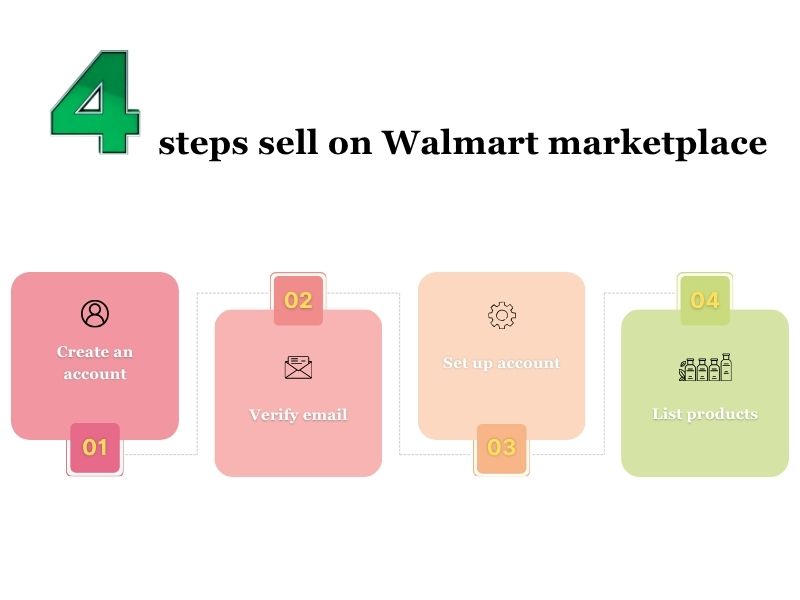
Step 1: Create an account
Go to the Walmart registration page, fill in all required information, review the terms, and create your account. After that, Walmart will send a verification email to your business email address.
Step 2: Verify your email
Check your inbox for the verification email from Walmart. Click the link to confirm your email address. This step is required before you can access and set up your seller account.
Step 3: Set up your account
After verifying your email, log in to Seller Central. To start selling, you need to complete three important parts:
- Business verification
Provide full details such as your legal business name, address, and U.S. tax ID. Complete your seller profile with a display name and customer service information. Make sure your information matches IRS records to speed up approval. Once approved, you will receive a confirmation.
- Payments
Choose a payment provider like Payoneer, Hyperwallet, or Marketplace Wallet, depending on your region. Create or log in to your account and link it to Walmart to receive your sales revenue.
- Shipping
Set up shipping templates to define handling time, delivery regions, and shipping fees. You also need to register and agree to Walmart’s return service. The system will automatically create return labels, so make sure to provide an accurate return address.
Step 4: List your products
After completing setup, you can start adding products in several ways:
- If you have a small number of products, you can add them manually by entering details like SKU, price, shipping method, and weight.
- If you have a large catalog, uploading products in bulk using a spreadsheet can save a lot of time, as long as you follow Walmart’s format and guidelines.
- You can also use integration partners like Channable to sync your store data with Walmart. This is especially useful if you want to automate product updates, inventory, and orders in real time instead of managing everything manually.
Once you complete all these steps, you’re ready to start selling and take advantage of Walmart’s potential.
What can you sell on Walmart?
On Walmart, you can access a very wide range of product categories, suitable for different business models. From common items like home goods, electronics, toys, clothing, and sports equipment to beauty products and pet supplies—most consumer categories have strong potential on this platform.
However, not all products can be listed right away. Walmart applies restrictions to certain categories, which means you need approval before selling items such as fragrances, luxury branded products, software, mobile phones and accessories, seasonal items like Halloween products, customized content, as well as jewelry and precious metals.
If you’re looking for specific high-potential product ideas, you can check this guide: 10 Best Selling Items on Walmart: Find Top Product 2026
What does it cost to sell on Walmart Marketplace?
When starting to sell, one of the biggest concerns for sellers is cost. The good news is that Walmart uses a simple and seller-friendly pricing model, especially for beginners.
Unlike many other platforms, Walmart does not charge a registration fee, monthly subscription fee, or hidden costs. This helps lower the barrier to entry and makes it easier to test the market without a large upfront investment.
Instead, Walmart uses a referral fee model (a commission per order). This means you only pay when you make a sale. The fee is automatically deducted from each transaction and usually ranges from 6% to 15%, depending on the product category and price.
For more details, you can check: How much does it cost to sell items on Walmart
5 tips to increase sales on Walmart marketplace
Millions of potential customers are just one click away. To sell well, you need to optimize your listing quality—this is the key factor that affects both visibility and conversion rates on Walmart.
Walmart evaluates listings based on three main factors: content, offer, and performance. A higher quality score means your products are more likely to appear in search results, leading to more sales opportunities.
1- Write high-converting titles and descriptions
Your product title should be clear and concise (around 50–75 characters) and include key details like keywords, brand, color, or main features.
For fashion products, you can follow this formula:
Brand + Style + Key feature + Material + Size + Quantity
The description should do more than just list information—it should help customers make a decision. Focus on 3–10 key highlights, and write a detailed description (at least 150 words) that explains benefits and solves customer problems. Easy-to-read formatting can significantly improve conversions.
Read more: Walmart SEO: Comprehensive Checklist To Draft a High-Performing, High-Ranking Listing
2- Invest in high-quality images and media
Images directly impact buying decisions. Walmart recommends using at least 4 high-quality images with a minimum resolution of 1000x1000px and a white background.
You can also boost your listing with:
- Product videos
- 360-degree images
- Unboxing or tutorial videos
These help customers better understand the product and increase trust.
3- Use competitive pricing to win the Buy Box
When multiple sellers offer the same product, only one gets featured in the Buy Box—the default option customers use to add items to their cart.
In most cases, the winner offers competitive pricing with strong service. If you don’t win the Buy Box, your product will be less visible, reducing your chances of making sales.
4- Optimize shipping to improve conversions
Fast shipping is critical in eCommerce. Offering options like fast delivery or free shipping can make your listing more attractive.
You can enable programs like TwoDay or ThreeDay delivery to stand out. At the same time, keep standard shipping options for customers who prefer lower costs.
5- Use ads to boost product visibility
If you want to scale faster, advertising is essential. Walmart offers Sponsored Products (CPC ads), helping your listings appear in top positions when customers search.
The advantage is that you reach customers at the exact moment they are ready to buy, which can significantly improve click-through and conversion rates.
Sell on Walmart with Merchize
If you want to maximize your potential on Walmart, working with a fulfillment partner like Merchize can help you save time and scale faster.
Merchize offers Walmart Fulfillment Service, allowing you to focus on design and marketing while production and shipping are handled for you. Instead of managing inventory, packing, and orders yourself, you can run a “sell first – produce later” model. This helps reduce inventory risk and improve cash flow.
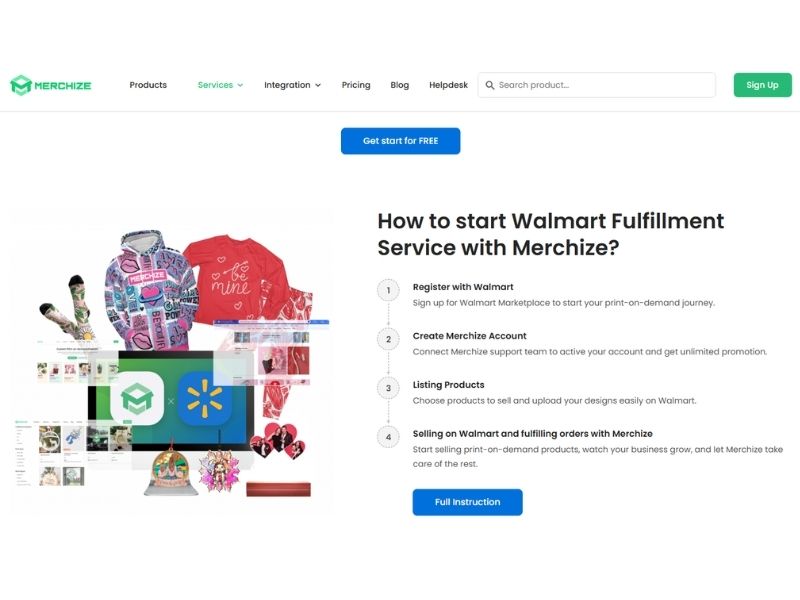
One of Merchize’s biggest advantages is its wide product ecosystem, with over 1,000 products ranging from apparel and accessories to home decor. This makes it easy to expand your catalog and quickly test different POD niches.
In addition, Merchize optimizes the entire fulfillment process to meet Walmart’s standards, including fast production and shipping times. This ensures you can meet strict SLA requirements—an important factor for maintaining account performance and improving product visibility.
Start now with Merchize and launch your Walmart store faster.


