
Contents
- POD Trends 2027: Three Key Shifts Sellers Can’t Afford to Ignore
- Home Decor & Personalization: High-Potential POD Niches for 2027
- Q1/2027 Is Not an Off-Season: Unlocking Early-Year Holiday Opportunities
- 30-Day Action Plan: 5 Steps to Prepare Your POD Catalog for Q1/2027
- MERCHIZE & GOOGLE: BUILDING LONG-TERM VALUE FOR SELLERS BEYOND THE EVENT
- Merchize Continues to Support Sellers on Their Growth Journey
Key Takeaways
- Three major POD shifts in 2027: Move beyond mass-market 2D apparel toward higher-value products, adopt multi-market fulfillment strategies, and prioritize sustainable growth through better products and customer experiences.
- Home Decor & personalization are growth opportunities: Expand into Blankets, Wooden Blocks, Suncatchers, AOP, and embroidered products to reach new niches, increase AOV, and improve profit margins.
- Q1 is a key selling opportunity: Prepare product catalogs early for Valentine’s Day, Super Bowl, St. Patrick’s Day, Easter, and Mother’s Day instead of waiting until peak shopping periods.
- Test before scaling: Use a focused 30-day plan to identify promising niches, test new product categories, evaluate AOV, profit margins, and fulfillment performance, then scale proven winners.
- Build for long-term success: Combine product diversification, multi-market fulfillment, Google Merchant Center compliance, and brand development to create a more competitive and sustainable POD business.
The Print on Demand (POD) market in 2027 is undergoing significant changes in product trends, consumer behavior, and how sellers build their competitive edge. As AI makes design creation more accessible than ever, the ability to identify profitable niches, diversify product catalogs, and optimize fulfillment operations will play an increasingly important role in long-term growth strategies.
So, what are the key POD trends to watch in 2027? Which products should sellers focus on, and how can they prepare to capitalize on new opportunities from Q1 onward?
These were among the key topics discussed by Nguyen Ngoc Tuan, CEO of Merchize, at the Vietnam Cross-Border Business Summit 2026, one of Q4’s major eCommerce events organized by Google.
POD Trends 2027: Three Key Shifts Sellers Can’t Afford to Ignore

According to Tuan, the Print on Demand market is evolving under the influence of AI, changing tax policies, and increasingly stringent requirements for business transparency.
With AI making it easier than ever for sellers to generate new designs at scale, design volume is no longer a sufficient competitive advantage. Instead, identifying the right niches, developing higher-value products, and building a strong brand are becoming the key drivers of long-term business success.
Based on these market shifts, Merchize highlighted three major POD trends sellers should pay attention to in 2027:
- From mass-market 2D apparel to higher-value products: Expand into AOP, embroidered products, Home Decor bundles, and personalized items to increase AOV and profit margins.
- From single-location production to multi-market fulfillment: Prioritize production networks closer to customers, transparent product origins, and accurate shipping and manufacturing information in Google Merchant Center (GMC).
- From short-term sales to sustainable growth: Focus on product quality, reliable delivery experiences, and brand building to improve customer retention and lifetime value (LTV).
Home Decor & Personalization: High-Potential POD Niches for 2027
One of the most notable Print on Demand trends is the shift from traditional Apparel products toward Home Decor and Personalized Products.
According to Tuan, Apparel currently accounts for approximately 40.2% of the POD market, but it is also one of the most price-competitive categories. Meanwhile, Home Decor and personalized products are opening up new opportunities for sellers.
Here are some noteworthy figures:
- 26.74%: Projected CAGR of the Home Decor market through 2031.
- 46%: Percentage of Mother’s Day gift shoppers who prioritize unique gifts.
- 30%: Share of Etsy sales generated by custom products, according to the figures presented at the event.
(Sources: Mordor Intelligence 2026–2031; NRF & Prosper Insights 2026; Etsy Form 10-K FY2025; Merchize internal data.)
These figures highlight why sellers should consider expanding beyond traditional products into categories such as Blankets, Wooden Blocks, Suncatchers, home accessories, and personalized embroidered products.
Case Study: Increasing AOV and Profit Margins Through Product Diversification
During the event, Tuan also shared a real-world case study of a Hanoi-based seller operating through Google Shopping.
Initially, the seller focused primarily on traditional 2D apparel. With Merchize’s support in niche research, product development, and access to competitive Private Base Cost pricing, the seller gradually shifted toward AOP apparel, Blankets, and Home Decor.
After six months, the results were impressive:
- AOV: Increased from $25–35 to $50–55, representing an approximately 75% increase based on the midpoints of both ranges.
- Profit margin: Improved from 9–12% to 19%.
This case study demonstrates how diversifying a product catalog and choosing the right niches can significantly improve business performance. Rather than competing solely on price in saturated product categories, sellers can gain an edge by offering higher-value products with greater personalization potential.

Q1/2027 Is Not an Off-Season: Unlocking Early-Year Holiday Opportunities
According to Tuan, major shopping occasions in Q1 generated an estimated $82 billion in consumer spending in 2026. Key events included Valentine’s Day (29.1billion),SuperBowl(20.2 billion), and St. Patrick’s Day ($7.7 billion).
Mother’s Day in May is another major shopping occasion, with approximately $38 billion in consumer spending. This means sellers should start preparing their listings in Q1 rather than waiting until the holidays are just around the corner.
To help sellers make the most of these opportunities, Merchize highlighted several promising niches and product categories:
- Valentine’s Day & Game Day: Personalized pet gifts, Photo Night Lights, Wooden Blocks, Satin AOP Pajamas, AOP Jerseys, Blankets, and embroidered products.
- St. Patrick’s Day & Easter: Spring-themed decorations, flags, and Home Decor featuring designs tailored to each holiday.
- Mother’s Day: Expand into niches such as Mama, Grandma, Dog Mom, Plant Mom, New Mom, and Bonus Mom. Sellers can also adapt successful Father’s Day designs for Mother’s Day.
- Evergreen seasonal products: Prioritize Suncatchers, decorative flags, and other products that can be refreshed with new designs and sold continuously from January through May.
Important: Sellers should review their entire product catalog for potential trademark conflicts before January 3, 2027, to minimize intellectual property risks.
30-Day Action Plan: 5 Steps to Prepare Your POD Catalog for Q1/2027
To turn these insights into actionable strategies, Merchize recommends a 30-day testing plan:
- Identify 1–3 niches that performed well during Q4.
- Expand each niche into 2–3 new product categories, such as AOP, embroidery, and Home Decor.
- Compare AOV, profit margins, and fulfillment performance against existing products.
- Keep the best-performing products and scale them for Valentine’s Day and Mother’s Day.
- Optimize product listings and prepare to scale.
Rather than expanding their catalogs indiscriminately, sellers should focus on strategic testing, leverage existing sales data, and prioritize products with the potential to perform across multiple holiday seasons.
MERCHIZE & GOOGLE: BUILDING LONG-TERM VALUE FOR SELLERS BEYOND THE EVENT
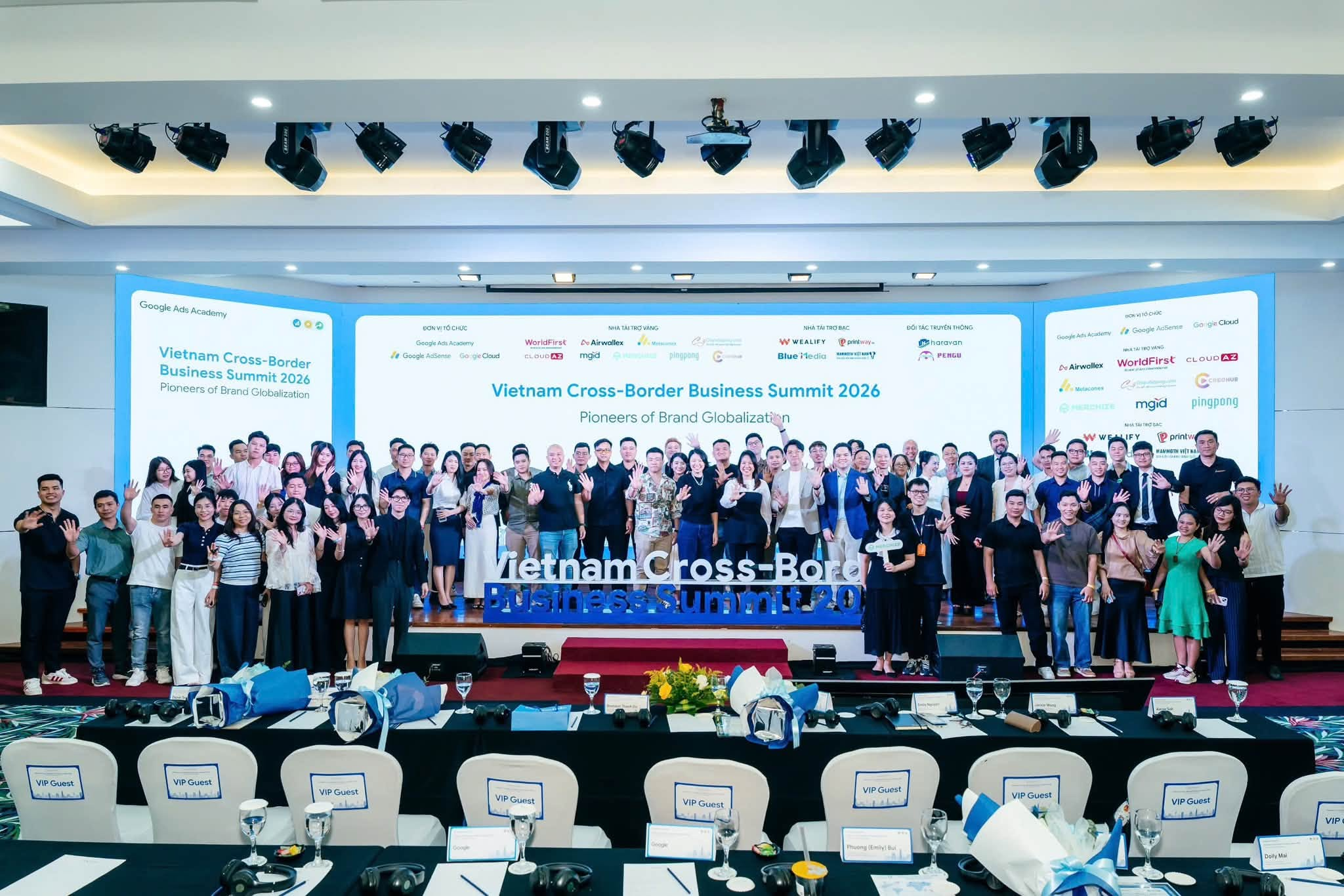
Partnering with Google at the Vietnam Cross-Border Business Summit 2026 was more than an opportunity for Merchize to share its hands-on POD industry experience. It also reflected our commitment to working with leading technology partners to bring greater value to the seller community.
Recently, Merchize and Google collaborated on the Google Premium Training Program for Export Category 2026, a dedicated program designed to help promising sellers stay up to date with emerging trends, policy changes, and new selling opportunities.
One of the program’s key differentiators was its personalized post-workshop support, through which a team of experts continued working directly with individual sellers to address their specific business needs.
In addition, Merchize introduced several exclusive benefits for Google’s seller community at the Vietnam Cross-Border Business Summit 2026, including:
- $50 fulfillment voucher.
- Competitive Private Base Cost pricing.
- Customized product research and development (R&D) support.
- One-on-one consultations and 24/7 support throughout the selling journey.
By combining Google’s technology, advertising ecosystem, and market insights with Merchize’s production, fulfillment, and product development capabilities, both partners aim to deliver more comprehensive solutions for sellers.
Looking ahead, Merchize hopes to expand this collaboration through expert knowledge-sharing sessions, strategic consultations, and hands-on support programs that help sellers optimize advertising, diversify their product catalogs, and improve operational efficiency.
Merchize Continues to Support Sellers on Their Growth Journey
Merchize’s partnership with Google at the Vietnam Cross-Border Business Summit 2026 reaffirms our commitment to working alongside leading technology partners to create meaningful value for the seller community.
More than just a fulfillment provider, Merchize aims to build a comprehensive support ecosystem that helps sellers streamline operations, strengthen their advertising capabilities, expand into new markets, and capture growth opportunities throughout Q1 2027 and beyond.
With the right strategy, products, and fulfillment partner, sellers can turn every new selling season into an opportunity for sustainable growth.