

Contents
Many sellers start with Printify but soon realize it is not always the best option. Costs, product quality, and shipping time can all affect your customer experience and profit. That’s why more sellers are looking for Printify alternatives to improve their business. In this article, you will discover other POD platforms that can help you scale and run your store more efficiently.
About Printify
Printify is one of the most popular POD platforms today, allowing sellers to connect with a global network of print providers. Instead of handling production yourself, Printify works like a marketplace where you can choose suppliers based on pricing, location, and reviews to optimize costs and shipping.
Printify does not own any printing facilities. Instead, it connects you with over 90 print providers across more than 140 production locations worldwide, including the US, UK, Canada, Australia, Europe, and China. This global network helps support international shipping and flexible fulfillment options.
The platform offers over 1,300 products, from apparel and accessories to home décor, and integrates easily with major sales channels like Shopify, Etsy, and WooCommerce. This makes it easy for sellers to start and scale their business without managing inventory or production.
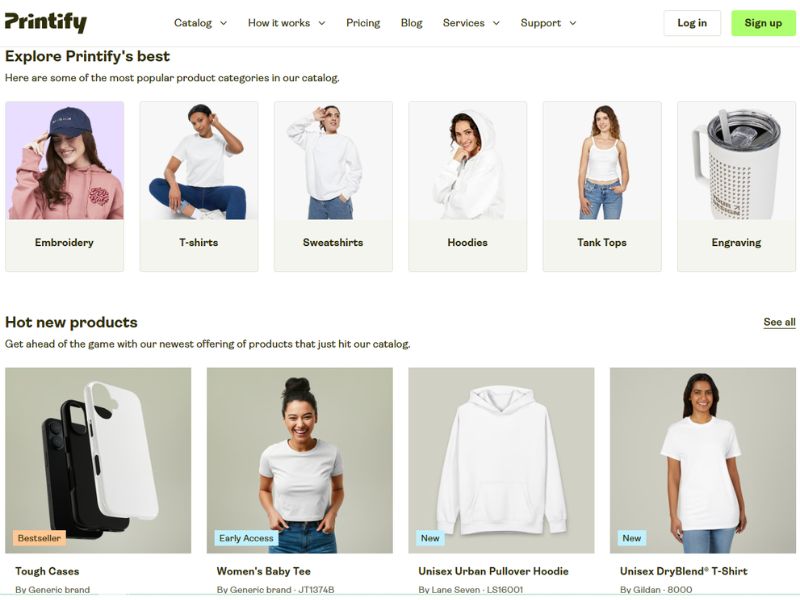
Printify also provides several useful features. Printify Choice automatically routes orders to the best-performing provider closest to your customer to improve delivery speed. The Mockup Generator with AI helps you create product images and edit designs quickly. In addition, each print provider has a rating score based on production speed, print quality, and reliability, making it easier to choose a trusted partner.
However, because it relies on multiple print providers, product quality and shipping times can vary. This is one of the main reasons why more sellers are searching for Printify alternatives to gain better control and improve long-term profits.
10 potential Printify alternatives in 2026
1. Printful
Printful is one of the most popular and reliable Printify alternatives. Unlike Printify’s model, Printful handles the entire production process in-house, from printing to packaging and shipping. This allows for better quality control and a more consistent customer experience.
One of Printful’s biggest strengths is its branding capability. You can ship products with your brand name on the sender label and customize packaging, inside labels, and inserts. This is a key advantage if you want to build a professional brand instead of just selling products. And Printful’s global fulfillment network includes facilities in the US, Europe, Canada, Japan, and Australia. Most orders are produced within 2–5 business days and shipped quickly to customers.
In terms of products, Printful offers nearly 500 items, focusing on high-quality categories like apparel, accessories, and home décor. It also emphasizes eco-friendly products made from organic or recycled materials, along with certified safe inks, helping your brand appeal to conscious consumers.
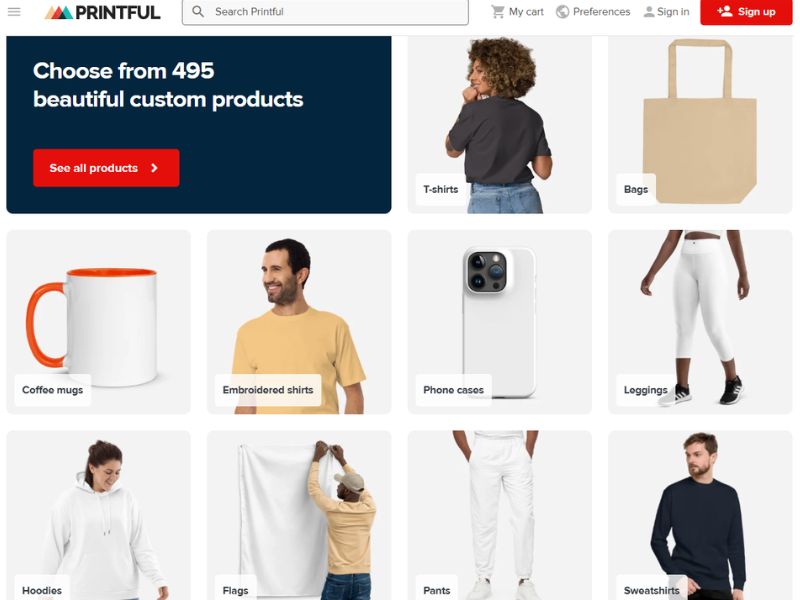
For printing methods, Printful supports DTG, all-over print (AOP), embroidery, and heat transfer. It also offers its own technology like DTFlex, which provides smoother finishes and more durable results compared to standard methods.
However, this quality comes at a higher cost. Printful’s base prices are generally higher than competitors, especially compared to Printify. Its product catalog is also smaller, which may limit sellers who want to scale quickly with a wide range of products.
Quick comparison: Printful vs Printify
| Criteria | Printful | Printify |
|---|---|---|
| Model | In-house production | Multiple providers |
| Quality control | High and consistent | Varies by provider |
| Pricing | Higher | More competitive |
| Product range | ~500 products | 1,300+ products |
| Shipping speed | Stable and consistent | Flexible but less consistent |
| Branding | Strong | More limited |
Who is most suitable to use Printful?
Printful is best suited for sellers who want to build a strong and long-term brand. If you are targeting a mid-to-high-end market and care about product quality, customer experience, and brand image, Printful is a solid choice.
2. Merchize
Merchize is also a leading alternative with strong production capabilities and competitive costs. It offers both standard apparel and unique custom products, making it ideal for targeting niche markets and selling distinctive items.
Merchize combines in-house production with a global fulfillment network. With modern manufacturing facilities in Vietnam and fulfillment centers across the US, EU, UK, Australia, and China, Merchize both helps optimize shipping costs and maintains stable delivery times.
The platform provides access to nearly 1,000 products, including apparel, accessories, and home décor, along with unique items such as custom-shaped window hangings and personalized night lights. Merchize’s product catalog is continuously updated to keep up with market trends.
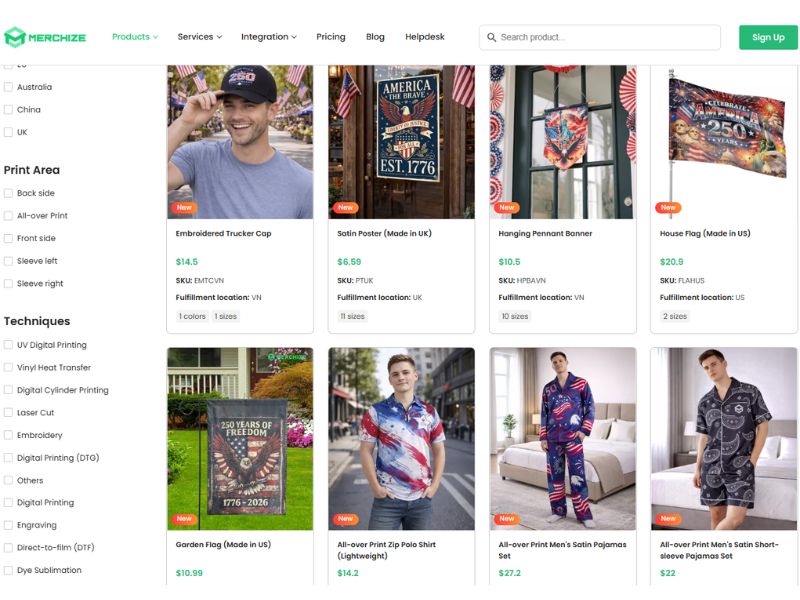
Merchize supports a wide range of printing methods, including UV printing, DTG, heat transfer, embroidery, engraving, sublimation, and laser cutting, allowing sellers to create diverse product lines.
Key strengths of Merchize:
- Production capacity of over 100,000 items per day, supporting global-scale sellers
- Fast production time starting from just 1 business day
- Stable shipping to 180+ countries with multiple shipping lines
- High fulfillment rate of up to 99.5%, ensuring reliable order processing
- Nearly 1,000 products (public & private), with 15–20 new items added monthly
- Modern factory system (~70,000m²) in Vietnam, ready for peak seasons
In terms of pricing, Merchize offers free access to its core POD platform, including multi-channel integrations, order management, mockup tools, and production tracking. Fulfillment costs are charged per order. Optional online store plans with advanced features start at $79 per month per store.
Merchize integrates with major platforms like Shopify, Etsy, Amazon, eBay, WooCommerce, TikTok Shop, and Walmart, making it easy to scale across channels.
Beyond POD, Merchize also offers services like storefront solutions, FBA support, and SWAG production, making it a comprehensive partner for long-term business growth.
Quick comparison: Merchize vs Printify
| Criteria | Merchize | Printify |
|---|---|---|
| Model | In-house + global fulfillment | Multiple providers |
| Quality control | Stable and controlled | Varies by provider |
| Pricing | Competitive | Flexible but varies |
| Product range | ~1,000 products | 1,300+ products |
| Shipping coverage | 180+ countries | Global |
| Branding | Strong | Limited |
Who is most suitable to use Merchize?
Merchize is best suited for sellers who want a balance between cost efficiency and operational stability. It works especially well for those who are scaling their business, targeting niche products, or looking for a reliable fulfillment partner with strong production capacity.
3. CustomCat
A strong Printify alternative worth mentioning is CustomCat. They also focuses on standardized in-house production, offering a more controlled and predictable fulfillment process.
Based in Detroit, CustomCat is known for having some of the lowest base prices in the POD industry. Its product catalog includes over 500 items, with a strong focus on apparel and drinkware such as t-shirts, hoodies, and mugs.
One of CustomCat’s biggest advantages is its fast production time. By using its proprietary DIGISOFT® printing technology, the company can produce and ship most orders within 2–3 business days. This ensures consistent quality and quick turnaround.
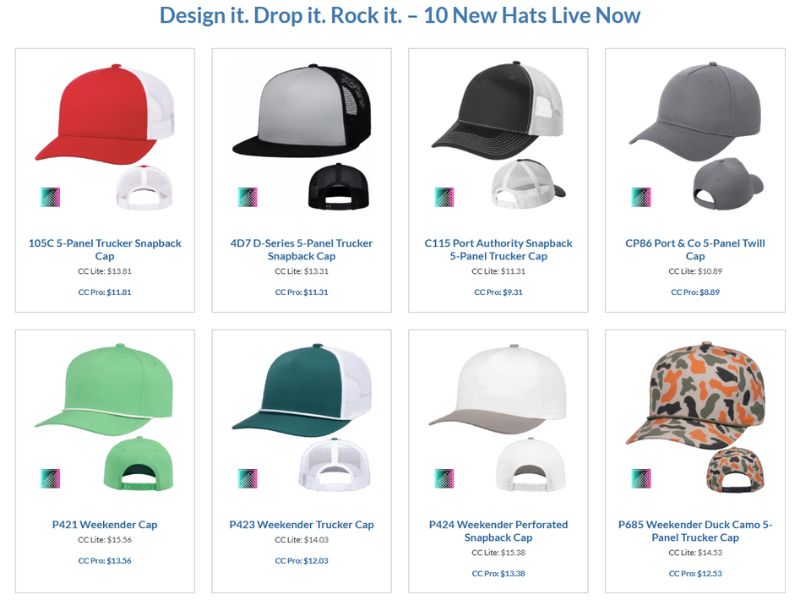
In terms of pricing, CustomCat offers a free plan (CustomCat Lite) that gives access to the full product catalog at standard wholesale prices. And the CustomCat Pro plan costs $30 per month (or $25/month annually) and provides discounts of 20–40% across products.
However, CustomCat does come with some limitations. Its product range is more focused and less diverse compared to platforms like Printify, especially when it comes to wall art and posters. Branding options are also limited, with fewer customization features such as custom labels or packaging inserts. Additionally, while global shipping is available, its logistics are strongest in the US market, making it more suitable for North America-focused businesses.
Quick comparison: CustomCat vs Printify
| Criteria | CustomCat | Printify |
|---|---|---|
| Model | In-house production | Multiple providers |
| Pricing | Very competitive | Flexible |
| Production speed | Very fast (2–3 days) | Varies by provider |
| Product range | ~500 products (apparel-focused) | 1,300+ products |
| Quality control | Stable | Varies |
Who is most suitable to use CustomCat?
CustomCat is best suited for sellers who focus on high-volume apparel sales and want to maximize profit margins. It works particularly well for those targeting the US market, where fast production and delivery can create a strong competitive advantage.
4. Vistaprint
Vistaprint is a practical option for businesses that focus on branding materials and printed marketing products at scale. It is widely known for products like business cards, stationery, and promotional items.
The platform offers affordable pricing and frequently runs promotions and discounts, which helps reduce costs for bulk orders. One of its strengths is its user-friendly design tools, allowing users to easily create and customize products.
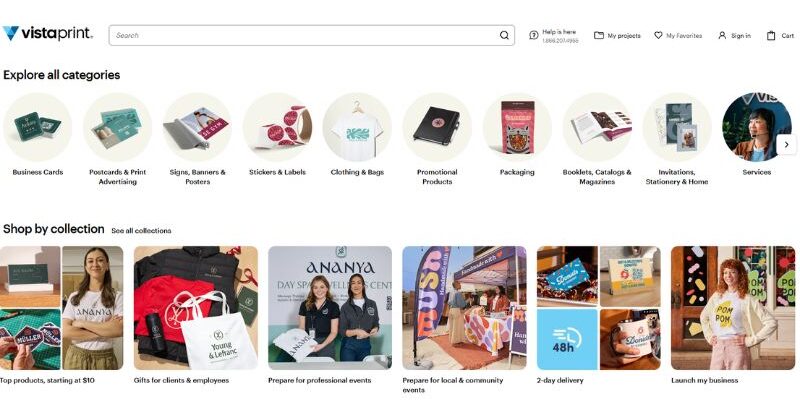
Vistaprint performs particularly well in paper-based products such as business cards, flyers, and posters, which are generally well-reviewed by customers. However, when it comes to apparel and other custom items, feedback tends to be more mixed. Some users report issues with color accuracy and inconsistent product quality.
Quick comparison: Vistaprint vs Printify
| Criteria | Vistaprint | Printify |
|---|---|---|
| Model | In-house production | Multiple providers |
| Main focus | Branding materials & print products | General POD products |
| Product range | Strong in paper goods | 1,300+ diverse products |
| Branding | Strong for business materials | Limited |
Who is most suitable to use Vistaprint?
Overall, Vistaprint is a good option if your business focuses on branded materials and marketing assets.
5. Gelato
Gelato is a fast-growing Printify alternative, known for its eco-friendly production model and strong global fulfillment network. Instead of centralized manufacturing, Gelato focuses on local production in over 30 countries, helping reduce shipping time and carbon emissions.
The platform offers a wide range of products, including apparel, mugs, wall art, photo books, calendars, and more. It is especially strong in paper-based and wall art categories like posters, canvas prints, and framed artwork.
Gelato partners with more than 140 production facilities worldwide across the US, UK, Europe, Canada, Brazil, Australia, and New Zealand. This distributed model allows products to be produced closer to the end customer, typically resulting in delivery times of 3–6 business days.
In terms of pricing, Gelato offers a free plan with access to its global network, two store integrations, and 24/7 support. Paid plans like Gelato+ (starting at $23.99/month or $19.99/month annually) provide up to 25% product discounts, unlimited store connections, and access to premium mockups. Higher-tier plans like Gelato Platinum are designed for high-volume sellers with custom pricing and dedicated support.
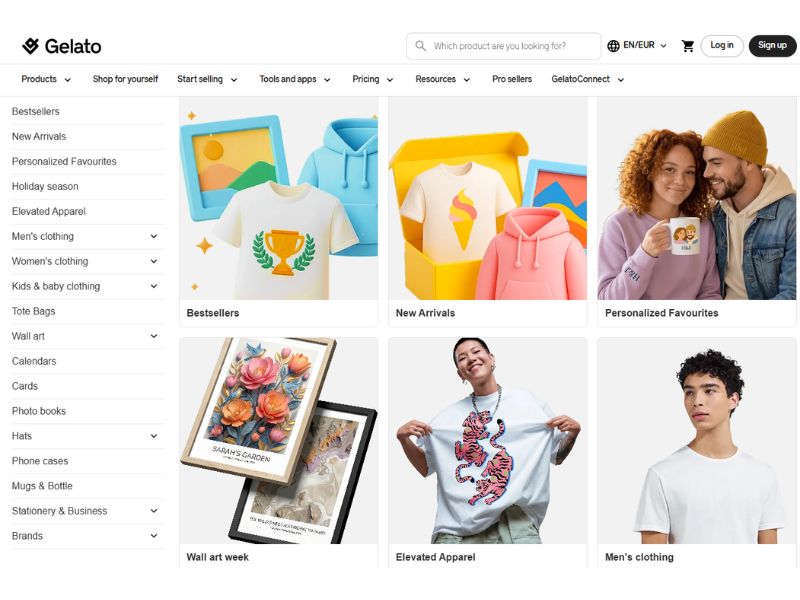
One of Gelato’s biggest advantages is its sustainability-focused model. By producing items locally, it reduces shipping distances, lowers costs, and minimizes environmental impact. This makes it an attractive choice for brands that prioritize eco-conscious values.
However, since Gelato relies on third-party production partners, product quality can vary between locations. Additionally, base prices for certain products—especially posters—can be relatively high, and shipping fees are not always included upfront.
Quick comparison: Gelato vs Printify
| Criteria | Gelato | Printify |
|---|---|---|
| Model | Global distributed production | Marketplace (multiple providers) |
| Sustainability | Strong focus | Limited |
| Shipping speed | Fast (local production) | Depends on provider |
| Quality control | Varies by partner | Varies by provider |
| Product focus | Wall art, paper goods | Wide range (1,300+ products) |
| Pricing | Medium to high | Flexible |
Who is most suitable to use Gelato?
Gelato is best suited for sellers who target international markets and want faster, more efficient global shipping. It is especially ideal for brands that prioritize sustainability and want to reduce their environmental impact through local production.
6. Teelaunch
One of Teelaunch’s biggest advantages is its pricing model. There are no subscription fees, you only pay for products after you make a sale. This makes it a low-risk option to test new products without upfront costs. The platform also offers competitive base prices, helping maintain healthy profit margins.
Teelaunch works as a middleman, outsourcing production to third-party manufacturers. This allows it to offer a wide variety of products, including unique items like Bluetooth speakers and laser-engraved cutting boards. However, because it relies on multiple specialized partners, product quality and shipping times can vary depending on the item.
The platform also supports popular product categories such as apparel, wall art, drinkware, electronics, and stationery with multiple printing methods, including DTG, heat transfer, UV printing, and laser engraving.
In terms of fulfillment, Teelaunch processes orders in the US, UK, Czech Republic, and Australia. Production typically takes between 3–14 business days, followed by shipping time depending on the destination.
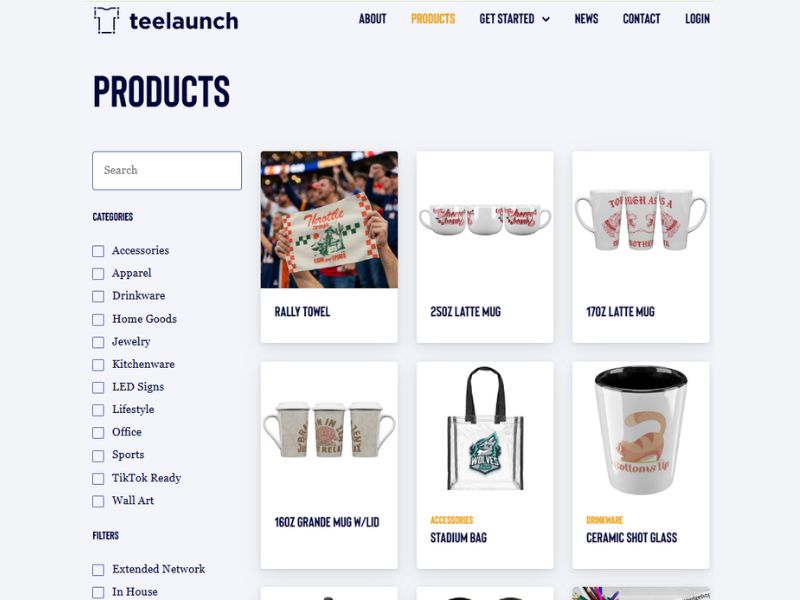
Teelaunch integrates with platforms like Shopify, Etsy, TikTok, and WooCommerce. For branding, it offers basic options such as custom packing slips. Additionally, sellers can track order processing and production status in real time directly from the dashboard.
However, Teelaunch has some limitations. It does not offer strong branding features like custom labels or inserts, only supports USD for transactions, and integrates with fewer eCommerce platforms compared to competitors.
Quick comparison: Teelaunch vs Printify
| Criteria | Teelaunch | Printify |
|---|---|---|
| Model | Third-party fulfillment | Multiple providers |
| Pricing | No subscription | Free + paid plans |
| Quality control | Varies by partner | Varies by provider |
| Branding | Limited | Moderate |
| Integrations | Fewer platforms | More extensive |
Who is most suitable to use Teelaunch?
Teelaunch is best suited for sellers who want to stand out by offering unique or less common products. It works well for those testing new niches or adding special items to an existing store without increasing upfront costs. If you are focused on building a strong brand with consistent quality and advanced customization, Teelaunch may not be the most ideal long-term solution.
7. Spreadshirt
Spreadshirt offers 2 different ways to sell: you can either sell through the Spreadshirt marketplace to access built-in traffic or create your own branded store using Spreadshop for full control over your business.
One of Spreadshirt’s key strengths is its flexibility. With no subscription fees, you can launch your own store for free, set your own retail prices, and keep the profit margin. Alternatively, you can upload designs to the marketplace and earn a fixed commission for each sale.
Spreadshirt manages its own production through 5 global facilities and delivers to over 150 countries. This in-house model ensures better quality control and more consistent shipping times compared to platforms that rely entirely on third-party providers.
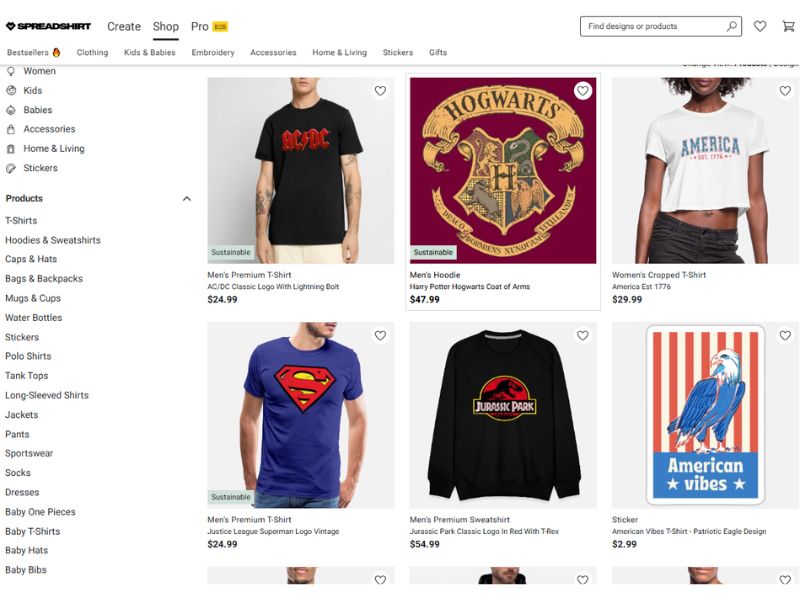
The platform offers over 200 products with standardized pricing, with basic apparel items like t-shirts starting at around $12.99. High-performing store owners can also earn additional commissions of up to 40%, helping increase overall profitability.
Spreadshirt supports multiple currencies (up to 10), making it easier to sell internationally. However, customization of storefront design can be time-consuming, and the platform has strict design approval processes, which may slow down product launches.
Quick comparison: Spreadshirt vs Printify
| Criteria | Spreadshirt | Printify |
|---|---|---|
| Model | In-house production + marketplace | Marketplace (multiple providers) |
| Pricing | No subscription | Free + paid plans |
| Quality control | High | Varies by provider |
| Product range | ~200 products | 1,300+ products |
| Global reach | 150+ countries | Global |
| Branding | Moderate | Moderate |
Who is most suitable to use Spreadshirt?
Spreadshirt is ideal for creators who want flexibility in how they sell, whether through a built-in marketplace or their own branded store. It is especially suitable for beginners who want to start without upfront costs, as well as sellers targeting international markets.
8. Gooten
Gooten is designed for scalability and automation – a strong choice for growing businesses and enterprise-level sellers. The platform focuses on streamlining operations through advanced order routing, tracking systems, and API integrations.
Gooten offers over 150 customizable products, including apparel, home décor, and lifestyle items such as doormats, pillows, and coasters. It supports a wide range of printing methods like DTG, DTF, UV printing, embroidery, laser engraving, and more, giving sellers flexibility in product creation.
In terms of fulfillment, most products are ready for production within 3–4 business days, followed by 6–9 business days for shipping (depending on the destination). While many items are produced in the US, Gooten also leverages global fulfillment centers in the UK, Spain, Canada, and Australia to improve international delivery times.
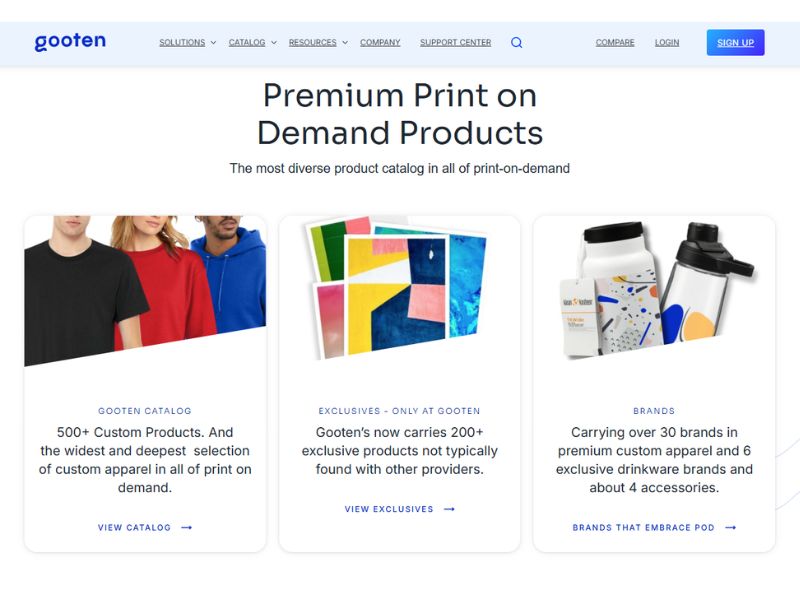
Gooten integrates with major platforms like Shopify, Etsy, Amazon, BigCommerce, Squarespace, and Ecwid. It also provides branding options such as custom packing slips and product labeling.
One of its standout features is the “Vetted Vendor Program,” which offers priority support, exclusive resources, and discounts for high-performing sellers. This makes Gooten especially appealing for businesses that are scaling quickly.
Quick comparison: Gooten vs Printify
| Criteria | Gooten | Printify |
|---|---|---|
| Model | Automated fulfillment network | Multiple providers |
| Automation | Advanced | Moderate |
| Ease of use | Moderate to complex | Beginner-friendly |
| Product range | 150+ products | 1,300+ products |
| Quality control | More standardized | Varies by provider |
| Pricing | Medium to high | Flexible |
Who is most suitable to use Gooten?
Gooten is best suited for developers, scaling brands, or sellers who need advanced automation and operational efficiency.
9. PrintAura
PrintAura offers a simple and cost-effective POD solution, especially for small businesses and beginner sellers. It provides about 300 customizable products, mainly focused on apparel and accessories.
The platform operates on a no-subscription model—you can start for free and only pay for the base product and printing costs. For example, a basic t-shirt starts at around $7.25. Additional branding options such as neck labels and custom packaging are available at an extra cost, typically ranging from $0.50 to $1 per item.
Shipping fees start at around $5.50 for domestic US orders, with additional charges for international shipping. This makes pricing relatively predictable for sellers targeting the US market.
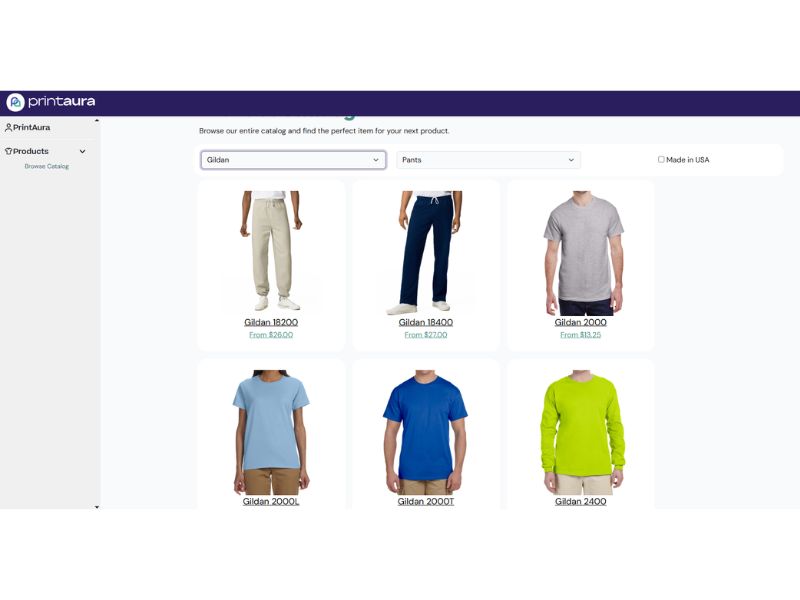
PrintAura outsources production to third-party providers. While this allows for product variety, it can also lead to inconsistent quality across different product categories.
Quick comparison: PrintAura vs Printify
| Criteria | PrintAura | Printify |
|---|---|---|
| Model | Third-party fulfillment | Multiple providers |
| Pricing | No subscription | Free + paid plans |
| Product range | 300+ products | 1,300+ products |
| Quality control | Varies | Varies |
| Branding | Moderate | Moderate |
| Integrations | Limited | Extensive |
Who is most suitable to use Print Aura?
Print Aura is best suited for beginners and small businesses that want a low-cost entry into print-on-demand. It works well for sellers focusing on the US market.
10. Redbubble/ Society6/ Zazzle
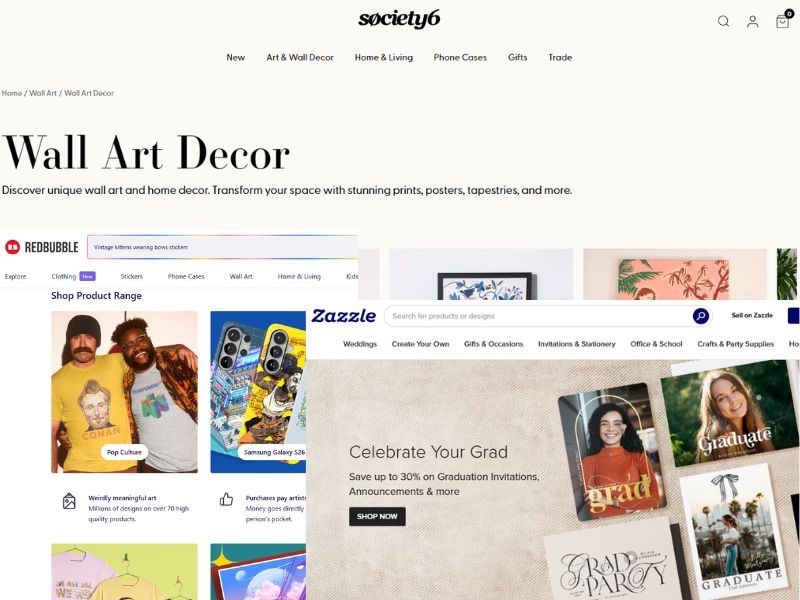
Platforms like Redbubble, Society6, and Zazzle are not traditional POD providers but online marketplaces where you upload your designs, and they handle everything from production to shipping and customer service.
The biggest advantage of these platforms is built-in traffic. You don’t need to create your own store or invest in marketing, as millions of users already browse these marketplaces daily. This makes them a great starting point for beginners who want to test designs quickly.
However, this convenience comes with trade-offs. You will face intense competition from thousands of other sellers, profit margins are relatively low (typically around 10–15%), and you have very limited control over branding, pricing, or customer data.
Who is most suitable to use these platforms?
These platforms are best suited for beginners who want to explore print-on-demand without building a full eCommerce store. They are useful for testing ideas and gaining initial traction.
Printify competitors comparison chart
1. Turnaround time comparison
| Platform | Production time | Shipping time |
|---|---|---|
| Printify | 2–7 days | 2–7 days |
| Printful | 2–7 days | 3–5 days |
| Merchize | 4–7 days | 5–7 days |
| CustomCat | 3–7 days | 2–6 days (Economy), 1–4 weeks (International) |
| Gooten | 1–6 days | 2–6 days |
| Teespring | — | 9–12 days (US), 12–15 days (International) |
| Print Aura | 3–5 days | 3–5 days (Standard), 5–12 days (Canada) |
| Spreadshirt | 3–8 days | 1–3 days (Express) |
| Zazzle | 1–3 days | 1–2 days (Express), 4–7 days (Standard) |
| Society6 | 3–7 days | 5–10 days (US), 7–18 days (International) |
| Redbubble | 2–7 days | — |
| Teelaunch | 4–7 days | 3–6 days |
2. Printing options
| Platform | DTG | Sublimation | Embroidery | Cut & Sew |
|---|---|---|---|---|
| Printify | Y | Y | Y | Y |
| Printful | Y | Y | Y | Y |
| Merchize | Y | Y | — | Y |
| CustomCat | Y | Y | Y | Y |
| Gooten | Y | Y | Y | — |
| Teespring | Y | Y | Y | — |
| Print Aura | Y | — | Y | — |
| Spreadshirt | Y | Y | Y | — |
| Zazzle | Y | — | Y | — |
| Society6 | Y | Y | — | — |
| Redbubble | Y | Y | — | — |
| Teelaunch | Y | Y | — | — |
3. Facilities (Production locations)
| Platform | Facilities |
|---|---|
| Printify | USA, Europe, China, UK, Australia, Canada |
| Printful | USA, Mexico, Latvia, Spain, Japan, Australia, Canada |
| Merchize | Vietnam, China, USA |
| CustomCat | USA |
| Gooten | USA, UK, Canada, Mexico, Korea, Italy, Czech Republic |
| Teespring | USA |
| Print Aura | USA |
| Spreadshirt | USA, Germany, Poland, Czech Republic |
| Zazzle | USA |
| Society6 | USA |
| Redbubble | USA, UK, Netherlands, Australia, Canada, France, Germany, Spain, Czech Republic |
| Teelaunch | USA, UK, Canada, Australia, Spain |
4. Integrations
| Platform | Shopify | Etsy | WooCommerce | Amazon | eBay | API |
|---|---|---|---|---|---|---|
| Printify | Y | Y | Y | Y | Y | Y |
| Printful | Y | Y | Y | Y | Y | Y |
| Merchize | Y | Y | Y | Y | Y | Y |
| CustomCat | Y | Y | Y | — | — | Y |
| Gooten | Y | Y | Y | — | — | Y |
| Teespring | — | — | — | — | — | — |
| Print Aura | Y | Y | Y | — | — | — |
| Spreadshirt | Y | — | — | — | — | — |
| Zazzle | — | — | — | — | — | — |
| Society6 | — | — | — | — | — | — |
| Redbubble | — | — | — | — | — | — |
| Teelaunch | Y | Y | — | — | — | — |
5. Branding options
| Platform | White-label packaging | Labels | Others |
|---|---|---|---|
| Printify | Y | Y | Shipping labels |
| Printful | Y | Y | Sleeve printing, pack-ins, custom packing slip |
| Merchize | Y | — | — |
| CustomCat | Y | — | — |
| Gooten | — | Y | Pack slips |
| Teespring | — | — | — |
| Print Aura | Y | Y | Hangtags, pack-ins, custom packaging |
| Spreadshirt | — | — | Sleeve printing |
| Zazzle | — | — | — |
| Society6 | — | — | — |
| Redbubble | — | — | — |
| Teelaunch | Y | — | Brand logo |
6. Pricing
| Platform | Sign-up | Paid plan |
|---|---|---|
| Printify | Free | $29/month |
| Printful | Free | $49/month |
| Merchize | Free | $0 |
| CustomCat | Free | $30/month |
| Gooten | Free | $0 |
| Teespring | Free | $0 |
| Print Aura | Free | $0 |
| Spreadshirt | Free | $0 |
| Zazzle | Free | $9.95/month |
| Society6 | Free | $0 |
| Redbubble | Free | $0 |
| Teelaunch | Free | $0 |
Factors to consider when choosing the right Printify alternative
Choosing the best Printify alternative is not just about comparing prices or product variety. More importantly, you need to evaluate how well a platform fits your business model and long-term goals. A platform may offer a wide range of products, but without operational stability, it can still negatively impact your customer experience and brand reputation.
Product range
Each POD platform has its own strengths in product categories. You should prioritize providers that align with your niche. If you focus on apparel, choose a platform with strong fabric quality and printing standards. If you sell home décor or personalized products, make sure the provider has proven experience and a solid product range in those categories.
Production model
You need to decide whether you prefer flexibility or consistency. Platforms with in-house production usually offer better quality control and more stable operations. On the other hand, marketplace or third-party models provide more options but may come with risks of inconsistent quality and shipping times.
Pricing and profit
Do not look at base product costs alone. Consider the total cost, including shipping fees, platform fees (if any), and branding costs. Some platforms offer paid plans that reduce product prices significantly, this can help increase your profit margins as you scale.
eCommerce integrations
Integration is a critical factor. A good platform should connect smoothly with your sales channels such as Shopify, Etsy, or WooCommerce. Seamless synchronization helps automate order processing, reduce errors, and save operational time.
Global shipping
If you sell internationally, prioritize platforms with a strong fulfillment network or local production in multiple regions. Producing closer to your customers helps reduce shipping costs and delivery times.
Customer support
In print-on-demand, production or shipping issues are sometimes unavoidable. That’s why choosing a platform with responsive and reliable customer support is essential. A strong support system helps you resolve issues quickly and maintain a high level of customer satisfaction over time.
Choosing the right platform depends on your business goals and growth plan. While Printify is a strong starting point, it may not fit every stage of your business. Exploring different Printify alternatives helps you find better pricing, more stable quality, and stronger branding options.
Focus on what matters most to you and pick a partner that can support your growth long term.


