
Contents
Shopify has long been the “king" of e-commerce, but is it the perfect launchpad for every brand? The answer is no. Sometimes, being limited by customization features or facing barriers from paid apps can hold your business back. That is why the trend of moving to Shopify alternatives is growing very strongly. Let’s explore the top alternative platforms that you might not know yet.
About Shopify
Shopify is one of the world’s leading all-in-one e-commerce platforms, accompanying sellers from start-up to global scale. This platform provides a unified ecosystem that helps optimize all activities: building websites, managing inventory, processing payments, shipping, and marketing on a single interface.
Currently, Shopify runs about 12% of the e-commerce market in the US, processes over 1,400 billion USD in total sales, and is the launchpad for millions of famous global brands like Mattel, Gymshark, Heinz, Netflix, and SKIMS. This growth is proven by impressive financial figures:
-
Shopify reached 11.6 billion USD in revenue in 2025 (with Q4 revenue jumping by 31%).
-
Continuing the breakthrough momentum, in the Q1/2026 financial report, revenue growth reached 34% and the free cash flow margin hit 15% (Shopify report).
In addition, Shopify has many outstanding advantages:
-
Build stores fast with AI: Design professional websites in minutes with a drag-and-drop builder, a library of over 900 mobile-optimized templates, combined with a smart AI assistant to write product descriptions and create exclusive content.
-
Unlimited multi-channel selling: Sync products and orders from the website to social networks (TikTok, Instagram, Facebook, YouTube), large marketplaces (Amazon, Etsy, eBay), to physical stores (Shopify POS).
-
Optimized Checkout system: The secure and fastest Shop Pay feature in the world helps increase the conversion rate up to 3.5% with just one touch.
-
Lean product sourcing & shipping: Easily do Dropshipping, Print-on-Demand, or connect with suppliers via Faire and Shopify Collective. Get shipping fee discounts up to 88% along with a reliable fulfillment partner network (3PL).
-
Ecosystem of 8,000+ apps: Easily expand features through the Shopify App Store, from customer care using AI to advanced SEO and Marketing tools.
So is it really necessary to consider Shopify alternatives?
The total revenue of the e-commerce industry in 2026 is projected to reach 3.88 trillion USD. It will continue to grow steadily at a rate of 6.84% each year (CAGR 2026–2030), heading toward a huge scale of 5.05 trillion USD by 2030 (Statista). In this era, Shopify has a big advantage thanks to two decades of experience and its sharpness with AI.
However, to truly dominate the market and run complex models, sellers need high customization and unlimited scalability. They also need to “satisfy" the changing behavior of consumers in the digital environment. That is when many businesses realize Shopify is no longer a perfect fit.
-
Bulky ecosystem & rising costs: To get essential features, Shopify forces sellers to install many third-party apps. This makes the management system disconnected, complicates inventory management, and pushes monthly operating costs very high.
-
Limits on customization and SEO: Many sellers feel restricted within the available template architecture. Making deep changes to optimize SEO, customizing the checkout page to match the brand identity, or integrating backend systems (ERP/CRM) faces many challenges.
-
Pressure from hidden transaction fees: If your business does not use the exclusive Shopify Payments gateway (which does not support all countries yet), you will have to pay a significant extra transaction fee on each order, depending on the third-party payment gateway you choose.
When a business grows beyond normal levels and requires absolute control to make a breakthrough, considering Shopify alternatives is a completely logical strategic move.
Top 10 rated Shopify alternatives
1. WooCommerce
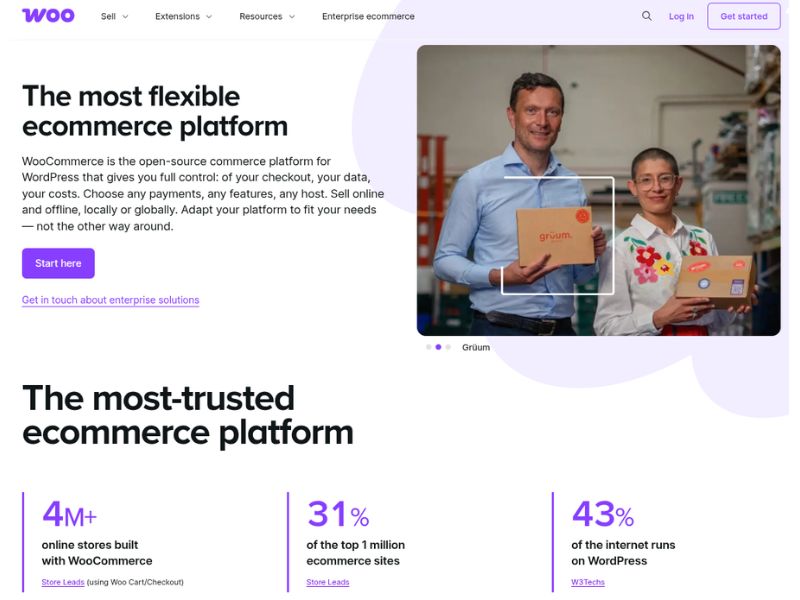
If you want to fully own your store without depending on anyone else’s rules, WooCommerce is the top choice. This is a free tool that helps turn your WordPress website into a professional online shop. As proof of this power, WooCommerce currently runs over 4 million online stores and accounts for 31% of the top 1 million largest e-commerce websites in the world.
-
100% data ownership & No hidden transaction fees: You have full control over customer data, the freedom to choose any payment gateway, and especially do not have to share any percentage of your revenue with the platform on each successful order.
-
No growth “ceiling": As an open-source platform, WooCommerce allows you to unlimitedly customize every feature, checkout interface, and easily integrate deeply with backend systems (ERP/CRM).
-
Powerful multi-channel selling: Automatically sync products and orders between your website and today’s hottest social media channels (TikTok, Instagram), large e-commerce marketplaces (Amazon), to physical retail systems.
-
Top-notch SEO optimization & Huge plugin library: Inheriting the outstanding SEO optimization strengths from WordPress helps products easily rank high on Google, along with a huge ecosystem of over 55,000 apps/extensions to meet all scale needs.
Real cost problem (First-year budget estimate):
The WooCommerce plugin itself is completely free. To set up a basic professional store in the first year, your budget will be much more optimized with the following core investments:
| Investment Item | Estimated Cost (First Year) |
| Hosting server (Good quality hosting) | ~ $250 / year |
| Domain name | < $20 / year |
| Premium theme | $50 – $100 (One-time payment) |
| Total expected budget | $310 – $500 |
However, you need to note to choose a good server and compress images neatly so that the website always runs smoothly, avoiding slow loading that makes customers annoyed and leave, causing lost revenue.
2. BigCommerce
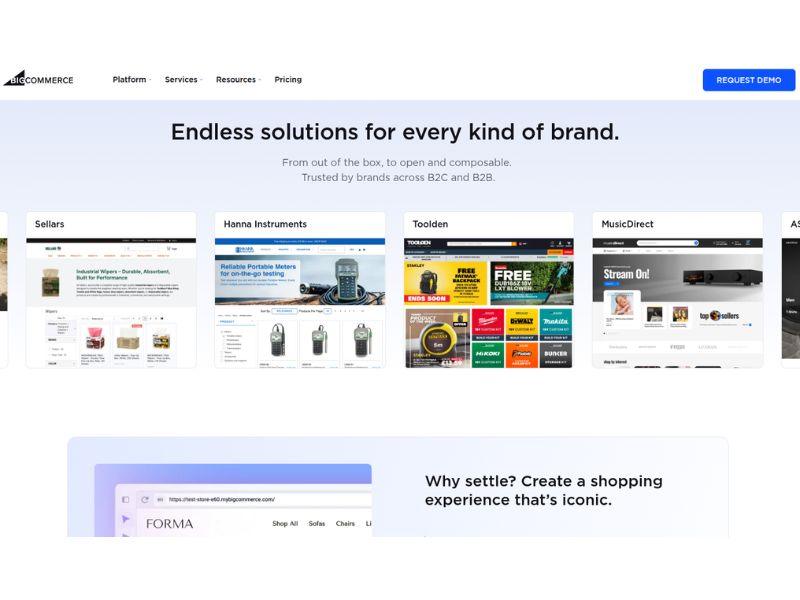
A solution that helps optimize cash flow is named BigCommerce. Honored in the prestigious 2025 Gartner® Magic Quadrant™ report, BigCommerce is the number one platform for return on investment (ROI) optimization with an ROI reaching 211% in just less than 8 months and helping businesses save an average of 700,000 USD by eliminating bulky old systems.
The advantages:
-
No transaction fees: BigCommerce integrates more than 20 payment providers and connects 130+ global solutions without charging any additional surcharge fees.
-
Built-in premium features: BigCommerce completely solves Shopify’s bulky system problem by building in powerful tools: smart product filters, automatic real-time shipping fee calculation, cart recovery, customer segmentation, and quote management. Switching from Shopify to BigCommerce helps sellers immediately save $50 to $150/month on third-party app license fees.
-
Multi-Storefront: Unlike competitors, BigCommerce allows you to simultaneously manage retail shops (B2C), wholesale shops (B2B), multiple brands, or multiple national regions on a single dashboard without extra effort.
-
Embracing the AI Commerce era: The platform owns the Companion AI assistant to handle operations smoothly, while optimizing catalog data so your products display naturally and allow customers to buy right inside chat/search portals using AI.
However, there are two practical points that sellers need to note. First, BigCommerce applies annual revenue limits for each plan; if your shop grows past the threshold, the system will ask you to upgrade to a higher plan. Second, the template library here is a bit smaller than competitors, and the design toolkit also requires you to spend more time getting used to it.
3. Adobe Commerce
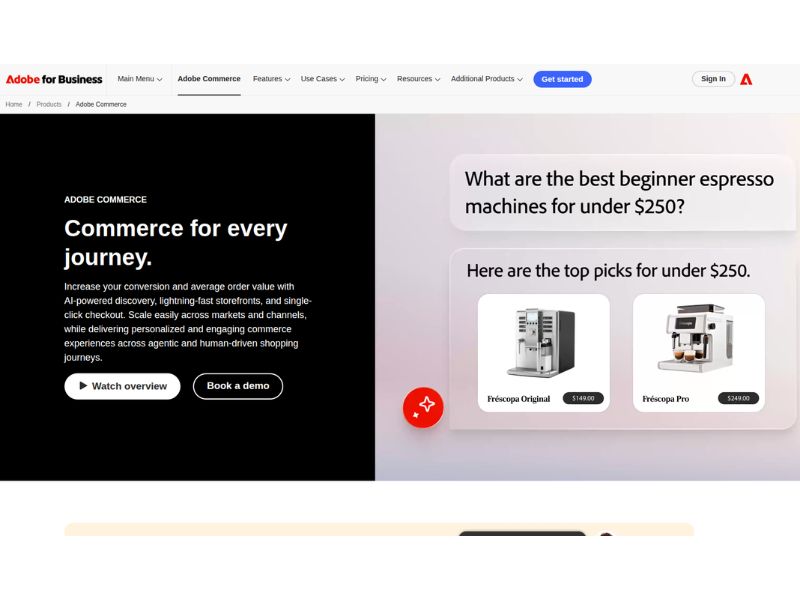
If you are a large business with strong financial resources and want to own a custom-tailored sales system, Magento (now owned by Adobe under the name Adobe Commerce) is the answer.
The advantages:
-
Absolute 100% customization: The open-source nature combined with a huge ecosystem of over 260,000 global developers allows you to change everything deep inside the system. You can freely create any feature, interface, and simultaneously manage a series of websites, multiple brands, and multiple countries from a single control center.
-
Breakthrough with the AI era: The best feature of Adobe Commerce is its ability to optimize the product catalog directly for Large Language Models (LLMs like ChatGPT, Gemini), helping your brand always show up first when customers search using AI. The platform integrates the Adobe Brand Concierge assistant to text with customers naturally, and uses Adobe Firefly AI to automatically produce many image variations, personalized to each buyer’s taste.
-
B2B self-service portal: Simplify the whole process of bulk purchasing, price quotes, and complex approvals of the B2B model, opening up huge revenue streams that pre-packaged platforms cannot handle smoothly.
-
Premium cloud infrastructure: Comes with an enterprise-standard cloud hosting solution (Managed Cloud on AWS/Azure), ensuring the website runs smoothly and maintains fast loading speed even during big promotion campaigns with huge traffic at the same time.
However, the game with Magento is absolutely not for individuals or small startups. The setup process is extremely complex and expensive, requiring you to have a professional IT team or hire outside agencies to build and maintain it continuously. Additionally, to run smoothly, a standard Adobe Commerce store needs about 30 days to configure, and complex B2B portals can take 60 to 90 days to officially go live.
4. Wix
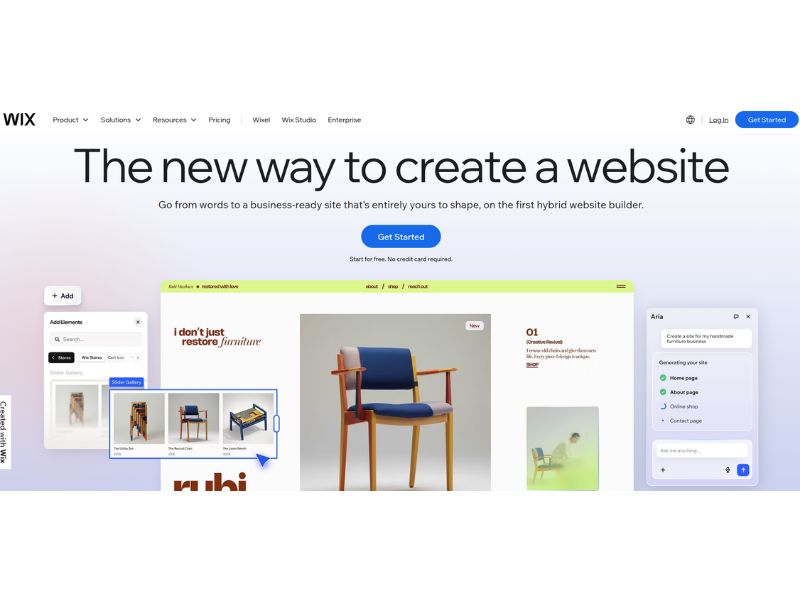
If you are a solo seller who wants to build an online store fast by yourself, Wix is your lifesaver. Starting as a drag-and-drop web builder, Wix has now upgraded into a hybrid e-commerce platform that handles over 15,000 websites going live every day.
The advantages:
-
No platform transaction fees: Wix charges absolutely no hidden transaction fees on its E-commerce plans. You only pay the standard processing fee for the payment gateway (about 2.9% + $0.3 per transaction).
-
Next-generation AI assistant: The outstanding point of Wix is its advanced AI website builder. Just describe what you want with a few prompts, and the AI will automatically build the entire store interface from layout and images to text content. You are also accompanied by Aria – a personal AI assistant that acts as a business and design expert right on your Dashboard.
-
Design freedom at the Pixel level (Fluid Canvas): Wix allows you to move, adjust, and layer any element with pixel-perfect accuracy on a free canvas. In addition, Wix provides a huge library of over 2,000 template designs completely for free.
-
Multi-Cloud infrastructure: The multi-cloud hosting system ensures your website reaches up to 99.99% Uptime even when traffic spikes suddenly. In particular, Wix’s SEO toolkit is not only optimized for Google but also optimizes data structures so your products display prominently on artificial intelligence models like ChatGPT.
However, this platform is very hard for data migration. If your shop grows too big later and you want to move to another platform, you cannot export your website design and will almost have to rebuild from scratch. In addition, Wix’s app store is smaller than Shopify’s, and if you want to unlock advanced selling features, you must upgrade to higher plans.
5. Squarespace
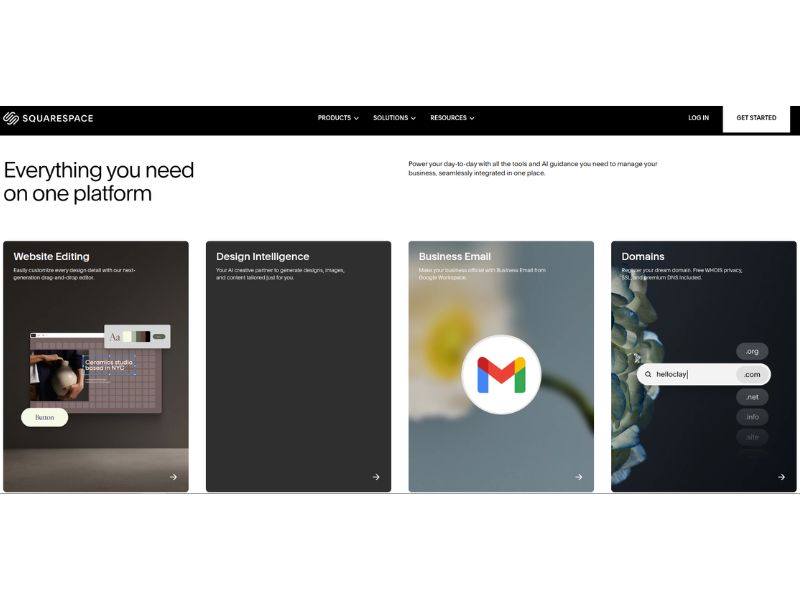
If you are selling products related to beauty, art, fashion, or high-end handmade crafts, Squarespace is the perfect launchpad. Trusted by more than 14 million sellers globally, Squarespace is famous for having templates with a luxurious and delicate artistic taste, helping raise product value in the eyes of middle and high-class customers.
The advantages:
-
Standard design ecosystem: Without needing complex graphic design thinking, Squarespace’s pre-made templates help your products display in a very prominent, eye-catching, and professional way.
-
Smart AI duo: Squarespace deeply integrates AI guidance tools, highlighted by the technology duo Blueprint AI and Squarespace Beacon AI. For busy or non-technical sellers, this AI assistant will automatically suggest content, guide a consistent art style for the whole website, and provide a detailed roadmap.
-
Multi-country and currency support: The system operates smoothly in more than 100 countries and supports displaying local currencies (including ₫ VND), helping sellers easily reach both local and international customers.
However, the Business plan (priced around $16/month) applies a transaction fee of up to 3% on each successful order. Let’s do the math: if your shop reaches $10,000/month in revenue, this 3% fee will cost you up to $300/month (equal to $3,600/year).
>> Upgrade straight to the Core plan (about $23/month) or higher Commerce plans to bring the platform transaction fee down to 0%, and you will only pay the normal processing fee for the payment gateway.
It is true that Squarespace is strongest in visuals and branding. But when compared with Shopify on advanced inventory management features, automated logistics systems, or complex reporting systems for shops with thousands of product codes, Squarespace will be a bit weaker and “overwhelmed".
6. Square Online
Square Online is a great fit for those who already have an offline store and want to step into the online market with a fixed cost of $0/month.

The advantages:
-
Only pay when you have an order: The free plan of Square Online allows you to register, design, and publish your online shop without setup or maintenance costs. You only pay the standard payment processing fee when a successful order occurs.
-
Absolute sync: The system automatically syncs 100% of data between your website and the checkout register at the counter (Square POS). When a product is sold at the store, the stock amount on the website immediately goes down in real time, helping you manage stock correctly without effort.
-
Diverse selling methods: The system fully supports trending commerce forms: traditional shipping, curbside pickup, or local delivery near the store. The feature that allows customers to order on the web and pick up at the shop helps sellers save shipping costs and make the most of their physical store location to increase customer experience.
-
Unified ecosystem: All sales data from the counter, social media (Instagram, Facebook), or the website are gathered into a single Dashboard. According to actual data, businesses using Square’s solutions have reached an impressive average sales growth of up to 38%.
Real cost problem:
| Service Plan | Fixed Cost | Cost Characteristics |
| Free Plan | $0 / month | Only pay a fixed payment processing fee on each successful order. |
| Plus Plan | $36 / month | Unlock advanced selling and delivery features. |
| Premium Plan | $99 / month | A fully optimized solution for larger retail chains. |
However, all the strengths in stock syncing and multi-channel management mentioned above only work if you are using a Square POS machine. If you are using another company’s checkout system at the counter, Square Online will only act like a regular online store website.
7. Shift4Shop
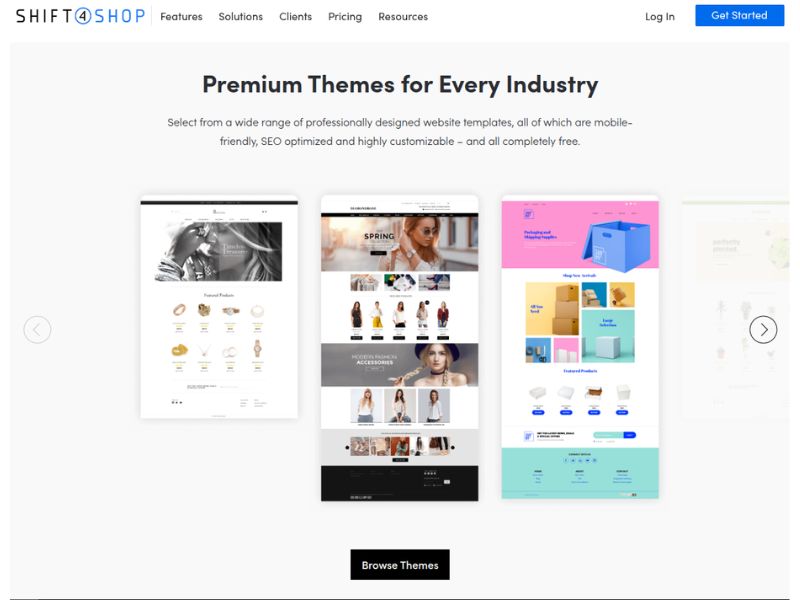
For sellers who want to build a natural and sustainable customer base from Google, Shift4Shop is a strong name. This platform currently serves more than 200,000 global customers and processes over 200 billion USD in annual sales by providing Enterprise-level features at an affordable price.
The advantages:
-
Low cost: While the Enterprise plans of other platforms cost from $2,000/month, Shift4Shop’s Unlimited plan, which includes all premium features, only costs $41/month. Sellers also get a free Domain name and a PCI-standard SSL security certificate.
-
In-depth SEO toolkit: As a platform optimized for SEO, Shift4Shop builds in features from mobile page loading speed acceleration (Google AMP), a link redirection system (301 redirect), to data structure optimization and a professional blogging platform. Your products will have a huge advantage to rank high on Google naturally.
-
Built-in features: Shift4Shop pre-installs more than 100 core features into the native software: stackable promotions, a 1-page checkout gateway, email marketing, and advanced inventory management.
-
Global payment connection & AI security: The platform integrates over 100 online payment solutions (notably the secure PayPal gateway). In particular, the system has e-commerce fraud protection technology run by AI from Kount, fully protecting the seller’s cash flow.
However, Shift4Shop’s admin interface is relatively complex and hard to get used to, which will take you quite a bit of time at first to find the necessary tools. The free template library here is also rated as quite plain and lacks a modern feel compared to Shopify or BigCommerce. Finally, if you have a team with many staff members managing the shop together, please note that the system limits the number of staff accounts, and you will have to pay an extra 10 USD/month for each additional person".
8. Ecwid
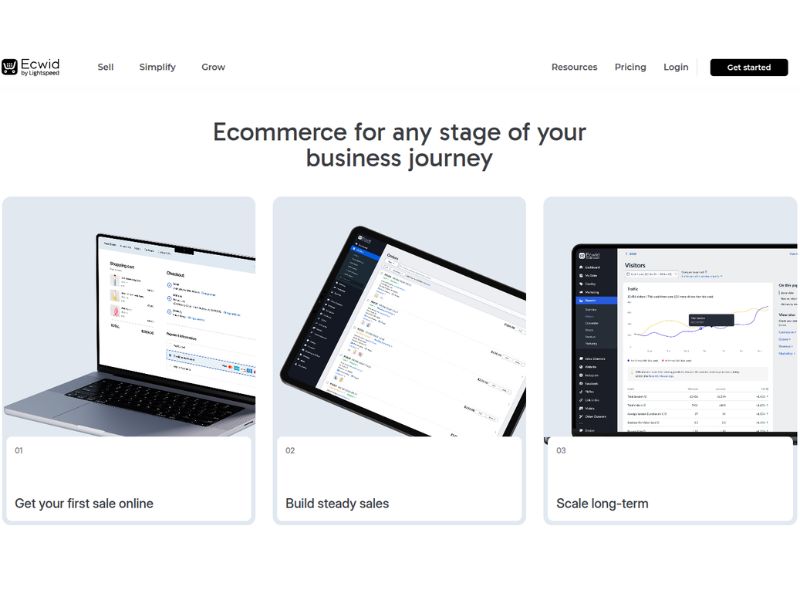
If you already have a website or a personal blog with good traffic and just want to add a selling feature, Ecwid is the perfect choice trusted in 175 countries. Instead of spending money to rebuild everything from scratch, you only need to embed a short code to turn your current website into a professional online shop, fully equipped with a shopping cart and a “Buy Now" button.
The advantages:
-
0% Transaction fees: Ecwid does not charge transaction fees on any successful orders, helping sellers keep every single penny of profit without worrying about hidden fees eating into their cash flow.
-
Automated operations: Even though it is an integration solution, Ecwid still owns powerful AI technology. With just one click, the AI will automatically remove the background and upgrade product photos to studio quality. The system also builds in automated Email campaigns (following up on abandoned carts, post-purchase care) and automatically calculates tax rates and shipping costs in real-time at the checkout page based on the customer’s location.
-
Multi-channel sales network: Manage stock and prices centrally from a single Dashboard but allow you to place your sales channels everywhere: from websites and large marketplaces like Amazon, to all the hottest social networks (TikTok, Instagram, Facebook, WhatsApp, YouTube).
However, sellers need to note that Ecwid is designed purely for “quick integration". Therefore, the system cuts down on advanced management features; you will not find advanced marketing automation tools or a huge third-party app store like Shopify.
9. Shopware
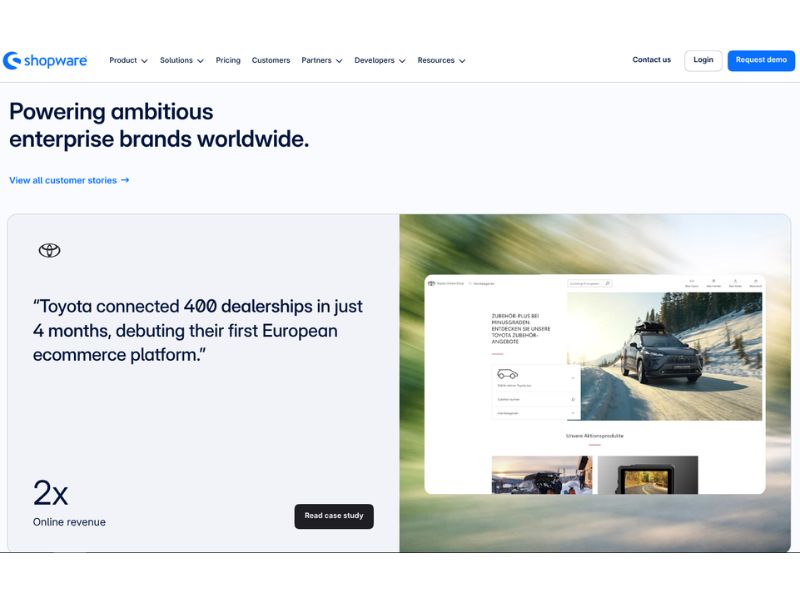
When pursuing the goal of expanding your brand to international markets, especially the European region, Shopware is highly worth considering. Coming from Germany, this open-source platform was honored as a Visionary in the 2025 Gartner® Magic Quadrant™ report, famous for its ability to handle super complex wholesale (B2B Wholesale) and is a pioneer system applying autonomous artificial intelligence (Agentic Commerce).
The advantages:
-
Modern Headless & API-First structure: Shopware allows flexible connection and smooth sync with any internal ERP or CRM system of the business. The platform can handle complex wholesale pricing structures for hundreds of thousands of product codes (SKUs).
-
Generative Commerce (AI Search): Seeing that shopping behavior is moving from Google to AI engines, Shopware builds in a data optimization feature so your products always display prominently in the answers of ChatGPT, Perplexity, or Gemini. The system owns the Shopware Intelligence Copilot to automatically create SEO-standard product descriptions and mass-produce images using AI for thousands of product codes (SKUs).
-
Marketing: Even though it is a high-tech platform, Shopware builds in a content manager with an intuitive drag-and-drop toolset. The Marketing team can manually change layouts, set up seasonal campaigns, or create automation scenarios without waiting for developers.
-
Security: Ready for international scale with support for more than 30 languages and management of dozens of localized websites. The system achieves the highest global security certificates with AI servers.
However, the game with Shopware is only suitable for businesses with strong financial resources. Although the platform has a free Community version with basic features, their professional paid plans are very expensive to optimize operations (starting from the Rise plan at around 600 Euros/month to the Beyond plan up to over 6,500 Euros/month). Besides, you also need to budget for hosting server costs (if you choose self-hosting) and fees to buy extra apps from Shopware’s extension store to complete your system.
10. PinnacleCart
If your top priority is to bring products to the top of Google search without depending completely on paid ads, PinnacleCart is a choice highly worth considering. This platform operates with over 15 years of experience serving more than 30,000 online stores.
The advantages:
-
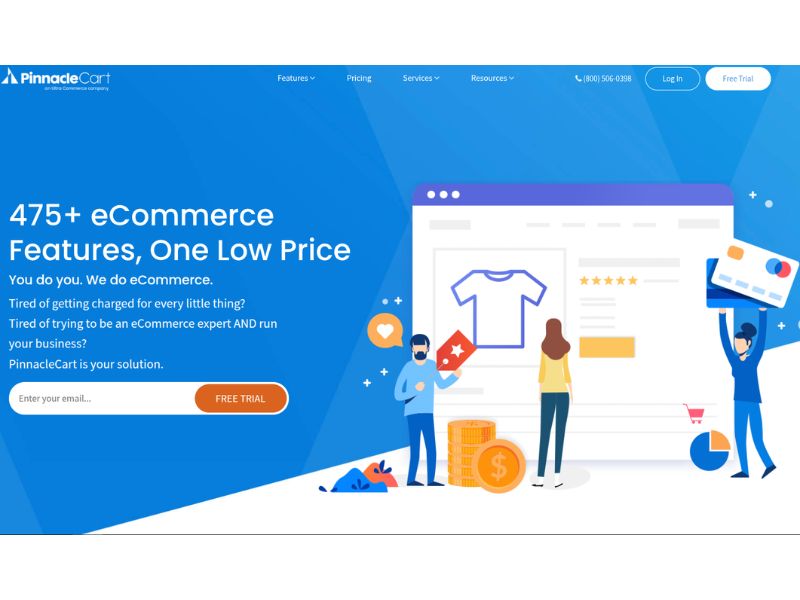
Say no to hidden costs: PinnacleCart claims to charge zero transaction fees (0% Transaction Fees) and does not charge extra money for premium features. Buying one service plan means you already own over 475 essential e-commerce features without spending extra money to buy third-party apps.
-
In-depth SEO optimization & Multi-channel: The platform is designed to optimize with built-in heavy-duty SEO tools (such as schema.org data structure and flexible URL customization). The system supports multi-channel selling from websites and mobile devices to social networks (Facebook), along with a very powerful Recurring Payment (Subscription) processing feature.
-
Unlimited product uploads: A big plus for shops with diverse product sources is that the system completely does not limit the number of products, categories, and images/videos on all service plans.
-
“Point and Click" web builder & Tailored service: The intuitive point-and-click designer helps you build your shop quickly without knowing code. If you want personalization, PinnacleCart provides a free data migration service (Switch for Free) along with a team of experts to design and code custom features on request.
However, sellers need to note some practical barriers when operating on this platform. If you choose PinnacleCart’s available hosting plan (starting from about $79.95/month), the system will be limited in bandwidth and storage disk space; when visitors spike, you will have to pay extra fees or be forced to upgrade to a more expensive plan. In addition, the template library here is quite limited with only 12 designs to choose from, and the app connection network is also very small (only integrating with 64 third-party apps), which is much less than Shopify’s huge ecosystem.
Shopify alternatives comparison chart
| Platform | Cost | Core Features | Multi-channel | SEO | AI Use | Important Note |
| Shopify | High | All-in-one, smoothest checkout | Social + Marketplaces + POS | Good, but hard to customize deeply | Good | Heavily depends on paid third-party apps |
| WooCommerce | Very low | Open-source, 100% full freedom | Syncs with hot channels | Top-notch (Inherited from WordPress) | Basic | Must handle own security; slows down if images are heavy |
| BigCommerce | Medium | Many VIP features built-in | B2C, B2B, Multi-store | Very good | Good | Has annual revenue limits on plans |
| Adobe Commerce | Extremely expensive | Absolute customization, advanced B2B | Perfect for large systems | Very powerful | Breakthrough | Very complex; requires an IT team to run |
| Wix | Low to Medium | Free drag-and-drop (Fluid Canvas) | Web + Social media | Good (Optimized for AI Search too) | Excellent | Hard to migrate data to another platform later |
| Squarespace | Medium | Artistic, luxurious templates | Basic to Fair | Fair | Good | Weak at managing huge inventories |
| Square Online | $0 ffixed | POS counter synchronization | Strongest at Online + Offline sync | Basic | Basic | Only works best if using Square POS hardware |
| Ecwid | Low | Embeds shopping features into existing sites | Wide channel distribution | Basic | Good | Lacks advanced management features |
| Shopware | Very expensive | Headless & API-First, complex wholesale | Focused on Europe market | Fair | Pioneer | Extremely high operation costs |
| PinnacleCart | Medium | Unlimited product uploads | Web + Mobile + Facebook | In-depth (Built-in heavy-duty tools) | Not outstanding yet | Very few templates; low plans have bandwidth limits |
Which Shopify alternatives should you choose?
To find a suitable Shopify alternative, you need to compare three core factors: your current growth stage, your team’s technical ability, and how deep your system customization needs are.
If your top priority is time-to-market speed and lean operations, names like Wix, Squarespace, or Big Cartel will be the brightest candidates. These platforms allow you to quickly set up and get an online store running.
For problems of tight budgets and net profit optimization, WooCommerce is a classic choice that helps you reduce recurring operating costs. In a smaller segment, Big Cartel provides an extremely economic solution with a $9.99/month plan for 50 products and says no to platform fees. Meanwhile, the free plan of Square Online is a “weapon" you cannot ignore for traditional retailers who want to step into the digital space.
When a business enters a hot growth stage and needs to scale up fast, BigCommerce will be the name that guarantees long-term development. In case your business has specific “custom-tailored" requirements that go beyond what pre-packaged templates can offer, Lovable will be the answer.
Finally, if your business already owns a website or a blog with stable traffic, Ecwid will be a smart solution to fully add e-commerce features.
Shopify has certainly built a solid empire and confirmed its leading position in the e-commerce era. However, in a volatile business world, there is no single solution that can fit everyone perfectly. Bravely stepping out of Shopify’s “comfort zone" to choose a platform that truly understands your business’s pain points and strategic goals is the key to help you optimize cash flow, free up operating resources, and make a sustainable revenue breakthrough.
Conclusion
Shopify has certainly built a solid empire and confirmed its leading position in the e-commerce era. However, in a volatile business world, there is no single solution that can fit everyone perfectly. Bravely stepping out of Shopify’s “comfort zone" to choose a platform that truly understands your business’s pain points and strategic goals is the key to help you optimize cash flow, free up operating resources, and make a sustainable revenue breakthrough.