

Shopify-SEO

Shopify SEO: Roadmap for Sellers to Scale Store Traffic

In the highly competitive world of Shopify ecommerce, having a visually appealing store is no longer enough to drive real growth. To attract organic traffic without relying heavily on paid advertising, mastering Shopify SEO is a core strategy that every seller needs to invest in. It goes beyond simply adding keywords to product descriptions, focusing instead on optimizing the overall user experience, building trust with Google, and ultimately turning potential clicks into actual sales. Keep reading to get more.

Is SEO really important for Shopify in 2026?

The answer is yes. If you’re running an online business, you need to be able to answer one key question: how will customers find your store? Appearing at the top positions on search engines is almost a must if you want to grow sustainably. That’s why Shopify SEO has become an essential part of any growth strategy (and one of the most effective ways to get sales on Shopify).

Although it may sound complex, its core is built on fairly straightforward principles. Basically, you need to optimize 3 main areas:

  • On-page SEO: the content on your website
  • Technical SEO: the settings and structure of your site
  • Off-page SEO: which is important for building and strengthening your website’s reputation

You just need to understand and optimize these areas properly.

SEO-is-really-important-for-Shopify-in-2026

When implemented correctly, Shopify SEO brings significant value:

  • Drives high-quality traffic: users coming from search already have specific intent. When your store appears at the top of results, the chances of them clicking and making a purchase increase significantly.
  • Creates long-term advantages: unlike paid ads that only deliver short-term results, a well-optimized SEO system can maintain a steady flow of customers over time without constantly increasing your marketing budget.
  • Improves market visibility: this helps your brand stand out compared to competitors who haven’t invested seriously in SEO. Even if your website already has stable traffic, continued SEO optimization helps expand your potential customer base and strengthen your position on search engines.

However, to achieve the best results, building your SEO foundation should start early before your store officially launches so that your website can be properly crawled and evaluated by Google.

Read: How Much Does it Cost to Sell on Shopify? (Updated)

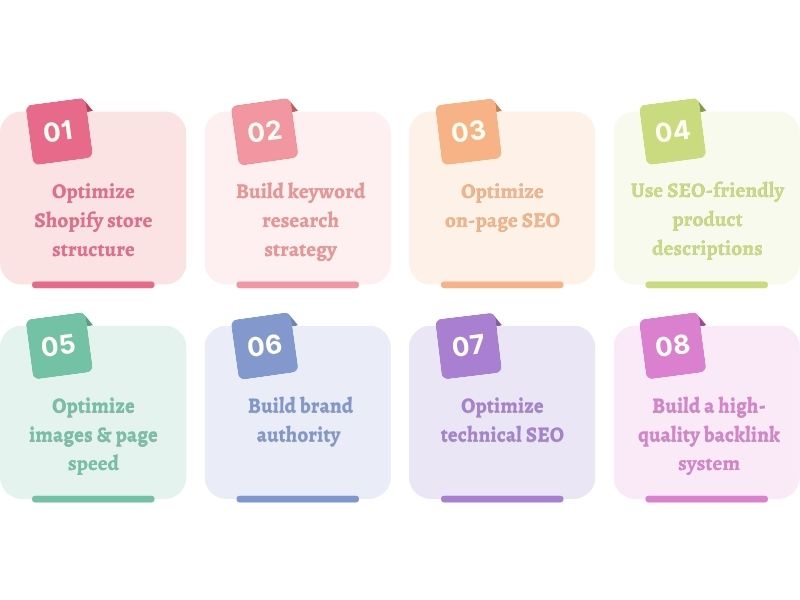
8 “golden" Shopify SEO strategies to increase your sales
8-Shopify-SEO-strategies

1. Optimize your Shopify store structure

A well-organized store structure is a critical foundation for both SEO and user experience. If your category system is too complex, Google will struggle to crawl your site, and customers may feel lost when trying to find products.

You should keep the structure simple and logical, for example: Homepage → Collections → Products. This helps distribute SEO value more effectively and allows both users and search engines to clearly understand how your website is organized.

For collections and product filters, avoid creating duplicate content pages. You should also use canonical tags to define the original page, helping Google avoid misinterpreting your content.

Add internal links to guide users to important pages. Make sure your anchor text is clear, relevant, and helps Google understand the relationships between pages.

Finally, your navigation system should be simple and intuitive, combined with a search bar, contact page, and about page to improve user experience and build trust in your store.

Learn more about what to sell on Shopify : 20 Best Selling Items on Shopify 2026 for Long-Term Wins

2. Build an effective keyword research strategy

Keywords determine whether your store appears in front of the right audience. That’s why keyword selection should never be based on guesswork.

For product pages, prioritize long-tail keywords because they are more specific and reflect clearer purchase intent. For example, instead of just using “graphic t-shirt”, you can optimize for “funny cat graphic t-shirt for women”. Meanwhile, collection pages should target broader keywords to attract higher traffic volume and build a strong SEO foundation.

Keyword research can be done in several ways:

  • Put yourself in the customer’s position. Ask what they would search for when looking for your product. If that’s difficult, talk directly to your target customers or run surveys to uncover real insights and keyword ideas.
  • Leverage social media. Platforms like social networks are rich data sources for search behavior. By analyzing posts, similar products, hashtags, and user comments, you can discover how people actually describe products.
  • Analyze competitors. This is highly effective because competitors reveal valuable insights through how they use keywords in titles, product descriptions, meta tags, and on-page content.
  • Use tools like Google Trends, Google Analytics, and Bing Webmaster Tools to understand real search trends. Paid platforms like Semrush can also provide detailed data on keywords, competition levels, and market trends.

3. Optimize on-page SEO for every page

Every page in your Shopify store needs proper optimization. Core SEO elements include title tags, meta descriptions, and H1 tags.

  • Your page title should include the main keyword while remaining natural and easy to read.
  • The meta description should be concise, compelling, and designed to encourage users to click on your search result.
  • The H1 tag must be clear and should not duplicate the page title to avoid confusion for both users and search engines.

4. Write SEO-optimized and unique product descriptions

Avoid copying product descriptions from manufacturers. This leads to duplicate content and reduces your SEO value. Instead, rewrite each product description in your own way, focusing on customer needs. Keywords should be included naturally, without keyword stuffing.

Also, structure your content clearly using short paragraphs, subheadings, and bullet points to make it easy to read. This not only improves user experience but also helps search engines better understand your content.
5. Optimize images and improve page speed

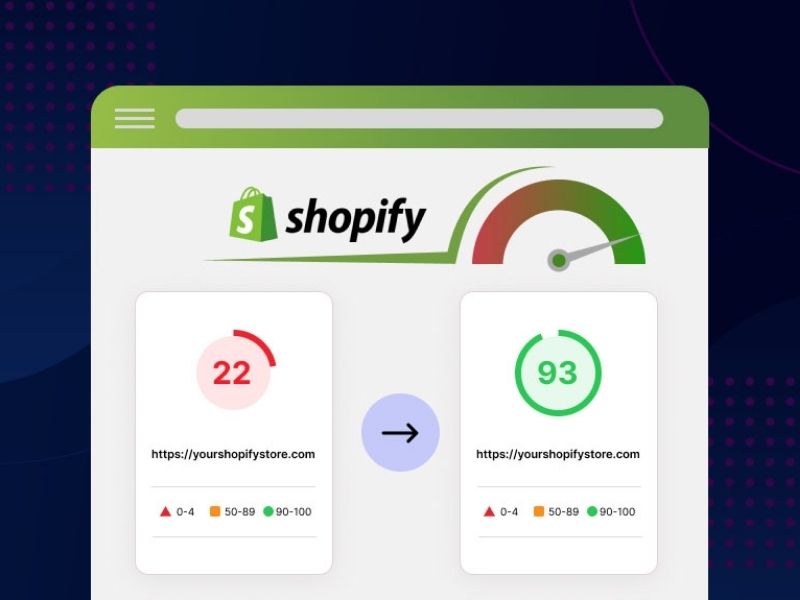
Attractive visuals can significantly influence purchase decisions, but if they’re not optimized properly, they can slow down your website and hurt performance.

So what can you do?

You need to balance image quality and file size. Use tools like TinyPNG or built-in Shopify optimization apps to compress images without sacrificing visual quality. Additionally, every image should include clear alt text with relevant keywords. This helps Google understand the image content and increases your chances of appearing on Google Images.

From a technical perspective, prioritize modern formats like WebP instead of traditional JPG or PNG to improve loading speed. Finally, regularly check your website performance using tools like Google PageSpeed Insights. Even a few seconds of delay can increase bounce rates and directly impact your revenue.

6. Build brand authority through content marketing

Google prioritizes websites that demonstrate expertise and deliver real value. For Shopify stores, building a blog is an effective way to share knowledge and support customers with useful content.

Don’t focus only on selling. You should create guides, problem-solving articles, and content that answers common customer questions. Your content should revolve around high-value keywords in your niche to both attract traffic and support SEO.

An important strategy is using blog content to strengthen internal linking. You can then guide readers from articles to relevant products or collections, which helps improve conversion rates.

Strong content marketing builds brand trust. This is especially important for products with longer buying journeys or those that require careful consideration before purchase.

7. Optimize technical SEO for Shopify

“Technical” may sound complicated, but it’s actually the foundation that allows Google to properly crawl and evaluate your website. Make sure your XML sitemap is generated and submitted to Google Search Console to support indexing.

At the same time, your robots.txt file should be configured correctly to exclude unnecessary pages from search results. And to avoid duplicate content issues, using canonical tags is essential, especially for product or collection pages with similar structures.

You should also implement schema markup to provide structured data such as pricing, reviews, and product availability. This increases your chances of appearing more prominently in search results through rich snippets.

8. Build a high-quality backlink system for Shopify SEO

In addition to internal links, external links play a major role in improving your website’s authority and rankings on Google. However, quality matters far more than quantity.

Some effective ways to build natural backlinks include:

  • Creating high-value content that encourages other websites to link to you organically
  • Writing guest posts on reputable blogs or industry websites
  • Collaborating with partners, suppliers, or influencers to earn brand mentions with backlinks
  • Tracking brand mentions without links and requesting backlink updates
  • Leveraging broken link building by replacing dead links with your own content

Beyond tactics, building strong relationships within your industry can open up more opportunities to earn natural backlinks from trusted sources.

Common Shopify SEO mistakes sellers should avoid

Using duplicate or auto-generated titles and meta descriptions

A common mistake is letting Shopify auto-generate or copying titles and descriptions across multiple pages. This makes it harder for Google to understand each page and reduces relevance in rankings.

Duplicate content across product variants

For stores with multiple variants (colors, sizes), improper handling can cause Google to treat pages as duplicate content, hurting SEO performance. The solution is to use canonical URLs to define the main page and avoid copying identical descriptions across all variants.

Ignoring page speed

Imagine visiting a store, clicking on a product, and waiting too long for it to load. By the time it appears, you probably don’t want to buy anymore.

Shopify-SEO-mistakes-sellers-should-avoid

Poor URL structure

Long, messy URLs or those with unnecessary characters make it harder for both users and search engines. A good URL should be short, readable, and include the main keyword to improve both SEO and click-through rate.

Keyword misuse (overuse or neglect)

Two common mistakes:

  • Not using keywords → missing visibility opportunities
  • Keyword stuffing → unnatural, low-quality content

Effective SEO is about balance. Keywords should be placed naturally and contextually without harming readability.

Not optimizing product images

Many sellers keep default image names like “IMG_1234.jpg,” which gives Google no context. To optimize properly, use descriptive file names with keywords, add clear alt text, and compress images to improve loading speed.

Lack of internal linking

Without linking between products, blogs, and collections, your website becomes fragmented, reducing both user experience and SEO effectiveness.

Using too many unnecessary plugins

Installing too many SEO or support apps can slow down your website and cause technical conflicts. You should only keep tools that are truly necessary and aligned with your overall SEO strategy.

Proven tips to keep your Shopify SEO consistently strong

(1) Run regular SEO audits to avoid losing traffic

SEO isn’t a one-time task. Sellers need to check their website regularly to avoid “losing revenue without knowing why.”

In detail, you should frequently review issues such as:

  • Duplicate content pages
  • Meta tag errors or missing product descriptions
  • Slow page loading speed
  • Pages not indexed by Google

You can use tools like Ahrefs, Semrush, or Screaming Frog to quickly assess your store’s condition. Ideally, you should run a full SEO audit every 3 months to make timely adjustments.

(2) Use AI as an assistant, not a replacement

The rise of AI has opened up new opportunities for creating SEO content. You can use it to:

  • Find keyword variations for products
  • Write product descriptions faster
  • Generate blog outlines
  • Suggest content directions based on customer behavior

However, you shouldn’t rely on AI 100%. AI-generated content is often generic and lacks a unique voice, which reduces trust from customers and limits how Google evaluates your content.

(3) Fix broken links

Every broken link is a lost sales opportunity. It not only causes users to leave your site but also reduces Google’s trust in your store.

That’s why you should regularly check for broken links and fix them or redirect them (using 302 redirects) to relevant pages.

(4) Mobile SEO is mandatory

Most customers access Shopify stores via mobile devices, which makes mobile optimization essential. You need to ensure:

  • Fast loading speed on mobile
  • Easy-to-read fonts and clear buttons
  • A simple checkout process with as few steps as possible
  • No intrusive pop-ups

To build an effective Shopify SEO strategy, sellers need more than just optimizing individual elements. It requires a synchronized approach across site structure, content, technical setup, and user experience.

When done correctly and maintained consistently, Shopify SEO not only improves your Google rankings but also creates a stable traffic source and sustainable revenue for your store.

Ngan Nguyen is an SEO Writer experienced in producing engaging, trustworthy, and high-quality content at Merchize. Her work centers on delivering value-led content that strengthens brand identity, supports long-term SEO performance, and empowers sellers to make confident decisions.