
Contents
In the era of personalized branding, Vistaprint is no longer the only option for bringing printing ideas to life. To meet increasingly high demands for print quality, long-term cost optimization, and business scalability, many companies are gradually shifting toward exploring Vistaprint alternatives. This article will help you discover notable alternative platforms that may better align with your growth strategy this year.
About Vistaprint
VistaPrint is one of the pioneering brands in online printing. Today, it is headquartered in the Netherlands with a major office in the United States. With more than 25 years of experience, VistaPrint focuses on serving small businesses, startups, and individual entrepreneurs.
In addition, VistaPrint operates a number of large-scale manufacturing facilities in Canada, the Netherlands, and Australia, which helps optimize fast delivery times for customers worldwide.
It is also quite surprising that VistaPrint was one of the first companies to bring design and print ordering online back in 1999, completely transforming the way small businesses access traditional printing services.
Products & Services
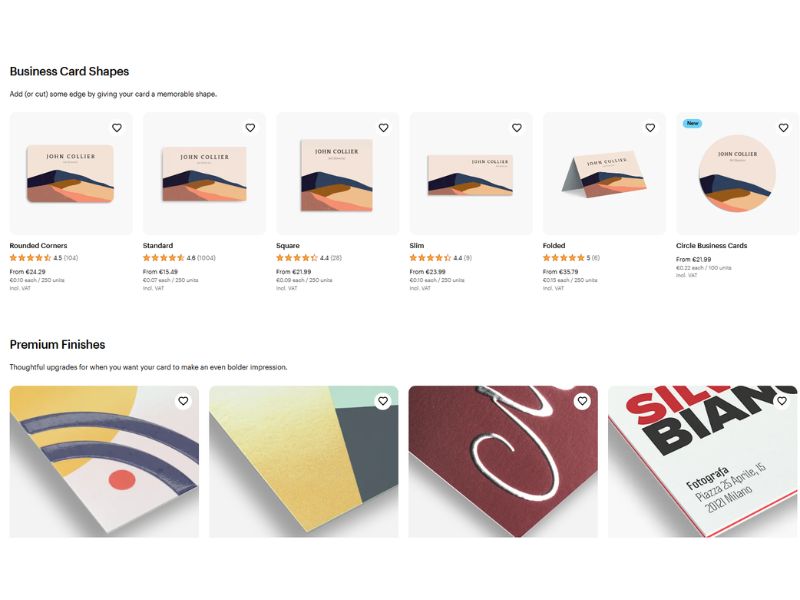
VistaPrint’s product catalog is extremely diverse, with a strong focus on brand-building materials: premium business cards in various finishes (matte, glossy, linen, plastic, recycled paper), postcards, flyers, brochures, menus, banners, standees, decals, stickers, packaging, and more.
Technology & Design Services
At VistaPrint, users are supported from the design stage with tools such as AI Logomaker (an AI-powered logo generator), VistaCreate (an online design tool similar to Canva), professional design services, and partnerships with Wix to create websites, purchase domains, and set up business email.
So, is it necessary to consider Vistaprint alternatives?
Although VistaPrint is quite popular, when you aim to build and scale a brand to a larger level, it still has some limitations.
It is not yet the most optimal choice for online sellers who need deep integration with e-commerce platforms, print-on-demand (POD) services, or highly customized printing products with more complex requirements.
Additionally, when the goal is to build a truly differentiated brand in a competitive market, or to prioritize more eco-friendly solutions, VistaPrint’s ecosystem still has certain gaps.
Furthermore, exploring alternative options also helps businesses compare and optimize costs, potentially achieving more competitive pricing for the same or even higher quality.
Therefore, looking into Vistaprint alternatives is completely a good strategy.
Top 15 potential Vistaprint alternatives in 2026
Of course, there is no single solution that is the best for everyone. The right choice depends on many different factors such as product catalog, pricing, order processing speed, eCommerce integration capabilities, and the level of brand control.
1. Printful
Anyone working in POD has probably heard of Printful. It is one of the most popular print-on-demand platforms globally, with partners ranging from eCommerce businesses to sellers aiming to build their own private brands.
It can be said that Printful is one of the options that feels the most “stable and easiest to scale.” Why is that? Because Printful operates an end-to-end print-on-demand model: you upload your design → when an order comes in → Printful handles printing, packing, and shipping under your brand, with almost no operational involvement required from you.
A quick overview:
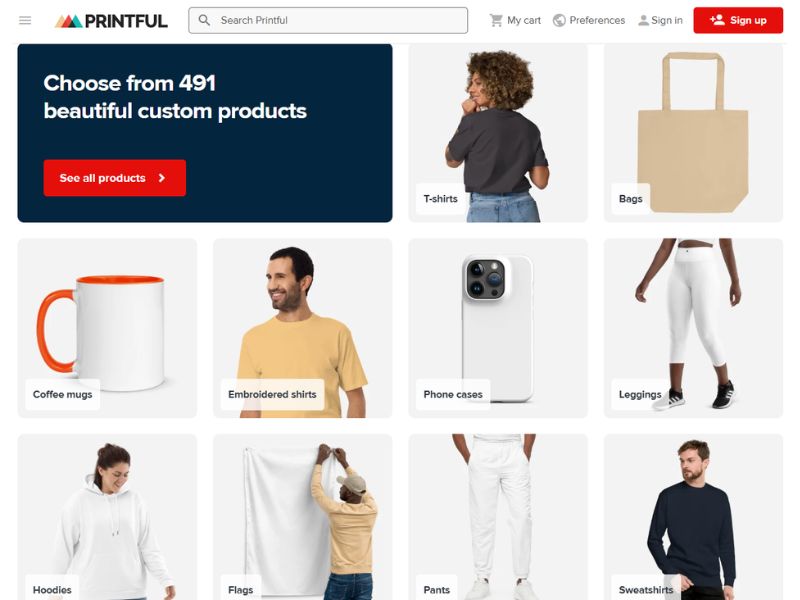
- Product catalog: ~500+ SKUs (apparel, accessories, home goods, etc.)
- Order processing time: on average 2–5 business days
- Fulfillment network: US, EU, Canada, Japan, Australia
- Integrations: 20+ eCommerce platforms (Shopify, Etsy, WooCommerce, etc.)
Print quality is generally considered stable, especially for DTG printing and embroidery. It also offers other methods such as DTF, all-over print, and heat transfer. Its in-house production system helps Printful maintain consistent output quality and reduce errors during order fulfillment.
Additionally, Printful allows branding customization such as inside neck labels, custom packaging, and branded inserts in shipment packages.
However, there are a few points you should be aware of:
- Base prices are about 10–30% higher compared to some other POD platforms
- You cannot directly choose the fulfillment center (the system auto-allocates it)
- Some custom product lines are still limited (especially for niche-specific requirements)
Quick comparison: Printful vs Vistaprint
| Criteria | Printful | Vistaprint |
| Model | POD | Traditional print service |
| Products | ~500+ items | Marketing + print products |
| Quality | Consisten | Consistent |
| Pricing | Higher for small orders | Competitive for small-volume printing |
| Shipping | Fast & stable | Stable but depends on product type & region |
| Branding | Limited but strong POD branding options | Limited |
| Integrations | Shopify, Etsy, WooCommerce, etc. | Limited |
Who is Printful best for?
Printful is best for e-commerce sellers who want to build scalable print-on-demand businesses.
2. Printify
Another well-known name in the POD space is Printify. Unlike Printful, they do not operate its own production facilities. Instead, it functions as a global network that connects you with printing partners worldwide.
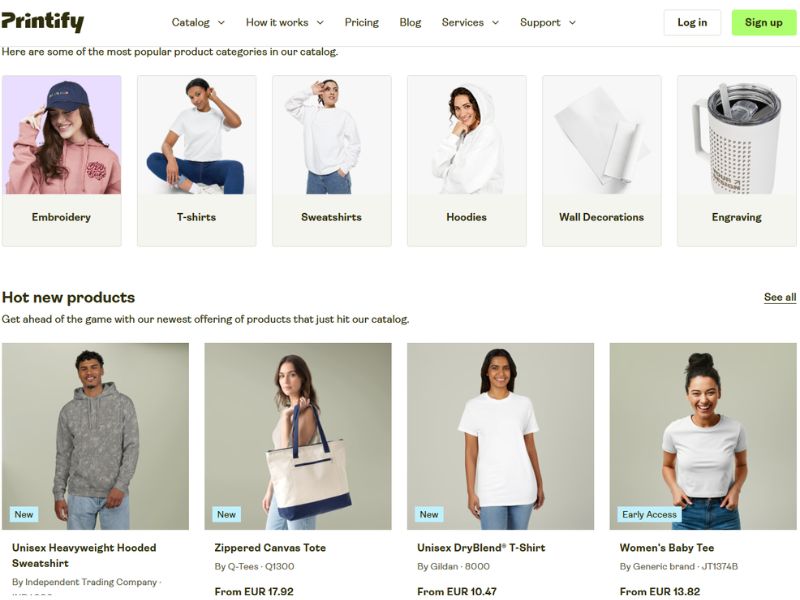
Printify now works with 90+ print providers across multiple regions, helping ensure faster delivery to end customers. In addition, its product catalog is significantly larger, with 1,300+ items ranging from apparel and accessories to niche products like scented candles, yoga mats, and tech accessories.
How Printify works
Printify’s model is built around flexibility. You choose a product → select a suitable print provider → when an order comes in, that provider handles printing and shipping directly to your customer.
With this approach, you can:
- Select providers closer to your target market to reduce shipping time
- Compare pricing across providers to optimize costs
- Balance price, quality, and delivery speed based on your strategy
Because you can choose from multiple providers, Printify often offers lower base prices compared to many other POD platforms.
However, since Printify does not control production in-house, product quality may vary between providers. Therefore, we recommend you should order samples before scaling, especially if you aim to build a serious brand.
Printify offers a free plan, along with a Premium plan priced at $29/month, which includes discounts of up to 20% on product costs. At this pricing level, even a moderate sales volume can offset the subscription cost and help improve profit margins.
Quick comparison: Printify vs Vistaprint
| Criteria | Printify | Vistaprint |
|---|---|---|
| Model | POD marketplace | Traditional online printing service |
| Products | 1,300+ products | Marketing materials + printed gifts |
| Quality | Varies by provider | Consistent |
| Pricing | Competitive | Good for small-volume orders |
| Shipping | Flexible by provider and location | Stable but less customizable |
| Branding | Limited, depends on providers | Limited |
| Integrations | Strong integrations | Limited |
Who is Printify best for?
Printify is best suited for sellers who want to minimize costs and quickly test a wide range of products within the print-on-demand model. If you are in the scaling or market-testing phase and need a large product catalog, Printify is a highly practical option.
3. Merchize
Another name that cannot be overlooked when discussing standout Vistaprint alternatives is Merchize. They stands out not just as a printing service, but as a comprehensive production and fulfillment platform, helping businesses better control costs, product quality, and scalability.
With a modern manufacturing facility in Vietnam (~70,000m²) and fulfillment centers across the US, EU, UK, Australia, and China, the platform ensures both speed and consistency when scaling — a factor highly valued by many sellers.
Production capacity & operations
Merchize is designed to support sellers of all sizes, with a production capacity of up to 100,000+ items per day. Production time can start from just 1 business day, significantly shortening the order lifecycle.
Its shipping network covers 180+ countries, utilizing multiple shipping lines to optimize both cost and delivery time. At the same time, a 99.5% fulfillment rate ensures stable order processing even during peak seasons.
Product catalog & customization
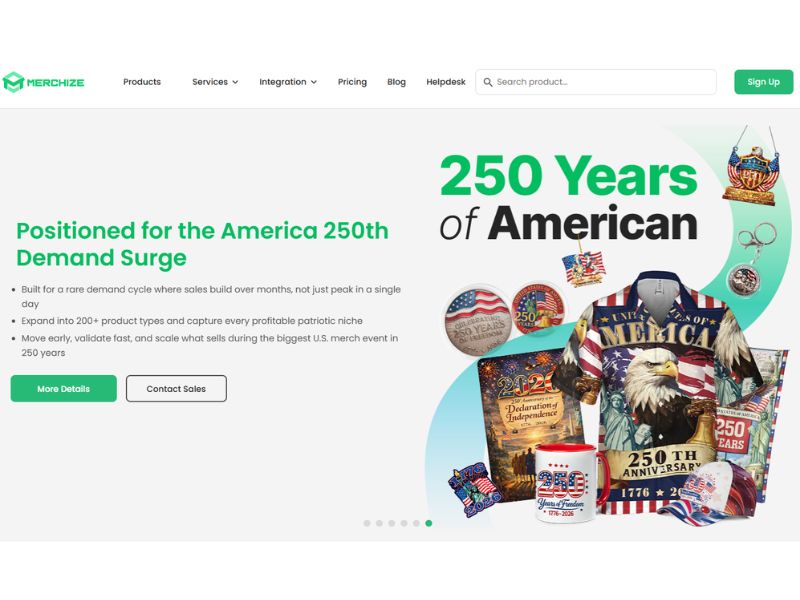
Merchize offers a large catalog of nearly 1,000 products, including apparel, accessories, home décor, as well as niche items like custom-shaped window hangings and personalized night lights. The catalog is continuously updated with 15–20 new products each month, allowing sellers to quickly catch trends and test new markets.
In terms of production capabilities, the platform supports a wide range of printing methods:
- UV printing
- DTG
- Sublimation
- Embroidery
- Laser cutting & engraving
- Heat transfer
This enables sellers to build more distinctive product lines instead of relying solely on standard items.
Ecosystem
Merchize provides free access to its core POD platform, including:
- Multi-channel integrations
- Order management
- Mockup generator
- Production tracking
The platform integrates with major channels such as Shopify, Etsy, Amazon, eBay, WooCommerce, TikTok Shop, and Walmart, making it easy to scale across multiple sales channels.
Beyond POD, Merchize also offers additional services such as:
- Storefront solutions
- FBA support
- SWAG production
Taht forms a complete ecosystem for long-term business growth.
Quick comparison: Merchize vs Vistaprint
| Criteria | Merchize | Vistaprint |
|---|---|---|
| Model | POD | Traditional online printing service |
| Products | ~1,000 products | Marketing materials + printed gifts |
| Quality | Stable, well-controlled through in-house production | Good for standard print products |
| Pricing | Competitive | Suitable for small-volume orders |
| Shipping | 180+ countries, multiple flexible shipping lines | Stable but less customizable |
| Branding | Flexible, supports long-term brand building | Limited customization |
| Integrations | Strong | Limited |
Who is Merchize best for?
If you need a platform that can:
- Handle large order volumes with high stability
- Give you better cost control and profit optimization when scaling
- Enable you to develop unique products in a saturated market
- Support multi-channel and global expansion
Then Merchize is a strong option to consider for building a long-term competitive advantage.
4. Gelato
As shipping speed becomes increasingly important in eCommerce, Gelato leverages a global local-production model to solve this challenge efficiently.
Similar to Printify, Gelato does not operate its own manufacturing facilities. Instead, it connects with a network of 140+ production partners across 30+ countries, including the US, UK, Europe, Canada, Brazil, Australia, and New Zealand. Each order is automatically routed to the nearest production facility, helping reduce both delivery time and shipping costs.
By producing closer to the end customer, average delivery times are typically 3–6 business days, significantly reducing “Where is my order?” inquiries and improving the post-purchase experience.
Product catalog
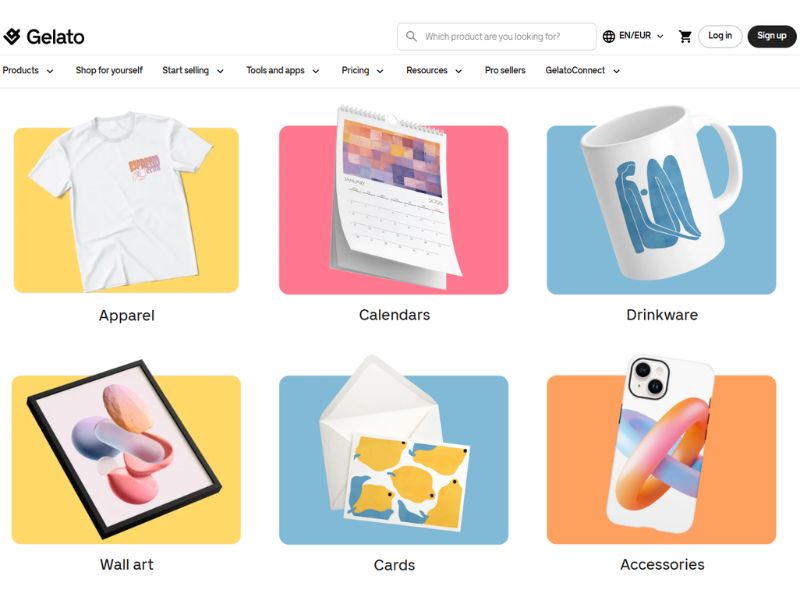
The product range covers apparel, accessories, mugs, photo products, wall art (posters, canvas, framed art), as well as photo books and calendars. Strength is particularly evident in print-based categories, especially wall art and paper products.
Pricing & plans
A free plan is available, including access to the global production network, up to two store integrations, and 24/7 support.
Paid plans include:
- Gelato+: starting at $23.99/month (or ~$19.99/month billed annually), offering up to 25% product discounts, more store connections, and advanced mockups
- Gelato Platinum: designed for high-volume sellers, with custom pricing and dedicated support
Gelato also follows an eco-friendly approach. By producing items locally, it reduces shipping distances and carbon emissions, making it a strong fit for brands targeting environmentally conscious consumers.
Because production is handled by third-party partners, product quality may vary between locations. Some items—especially posters—also come with relatively higher base costs, and shipping fees are not always included upfront.
Quick comparison: Gelato vs Vistaprint
| Criteria | Gelato | Vistaprint |
|---|---|---|
| Model | POD | Traditional online printing service |
| Products | Apparel, mugs, wall art, photo books, calendars | Marketing materials + printed gifts |
| Quality | Varies | Consistent |
| Pricing | Mid-range | Competitive |
| Shipping | Fast (3–6 days), location-optimized | Stable but less flexible |
| Branding | Limited | Limited |
| Integrations | Shopify, Etsy, WooCommerce | Limited |
Who is Gelato best for?
Gelato is best suited for sellers targeting international markets who want to optimize delivery speed without building their own fulfillment infrastructure.
5. Zazzle
If you want to monetize your designs without managing your own sales system, Zazzle offers a completely different approach. Instead of focusing on building your own brand, it operates as a large-scale marketplace that connects buyers with independent designers worldwide.
On this platform, you simply upload your designs, set your desired profit margin, and Zazzle handles everything else from production and shipping to customer service. One key difference is that customers can directly customize your designs before purchasing, such as adding names or modifying content, creating a more personalized buying experience.
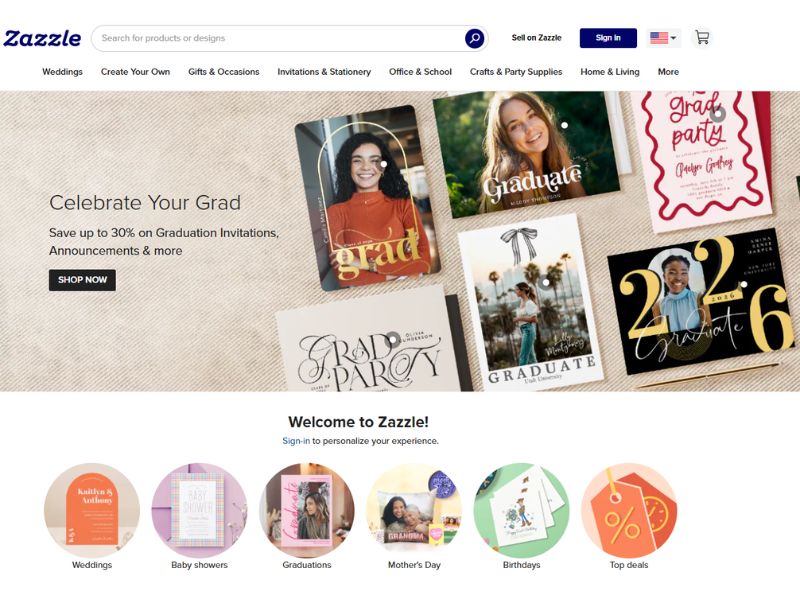
In terms of product range, Zazzle offers thousands of options, with a strong focus on highly customizable items like gifts, event supplies, stationery, and everyday printed products. This makes it particularly suitable for occasion-based needs such as weddings, holidays, or personalized gifts.
In addition, its monetization model is based on royalties, meaning you can set your own profit margin for each product. However, since you are operating within a shared marketplace, you will face competition from a large number of other designs, while also having limited control over customer data and brand experience.
Quick comparison: Zazzle vs Vistaprint
| Criteria | Zazzle | Vistaprint |
|---|---|---|
| Model | POD | Traditional online printing service |
| Products | Thousands of customizable products | Marketing materials + printed gifts |
| Quality | Varies by product | Consistent for standard print products |
| Pricing | Flexible (seller-defined royalties) | Fixed pricing |
| Shipping | Handled by platform | Stable |
| Branding | Minimal (marketplace-owned) | Limited |
| Integrations | Not focused on e-commerce | Limited |
Who is Zazzle best for?
Zazzle is best suited for creators who want to earn from their designs without handling operations such as production, logistics, or customer support. It is a practical option if your goal is to leverage an existing ecosystem to generate income from your artwork.
6. MOO
If your goal isn’t to scale a POD business but to create a strong brand impression, MOO completely stands out. The platform focuses on premium printed products such as business cards, flyers, and stationery.
What sets MOO apart is its approach to design. Instead of offering a large number of generic templates, MOO curates high-quality designs which are suitable for creative brands. One standout feature is the ability to print multiple designs within the same set of business cards, turning each card into a unique brand touchpoint.
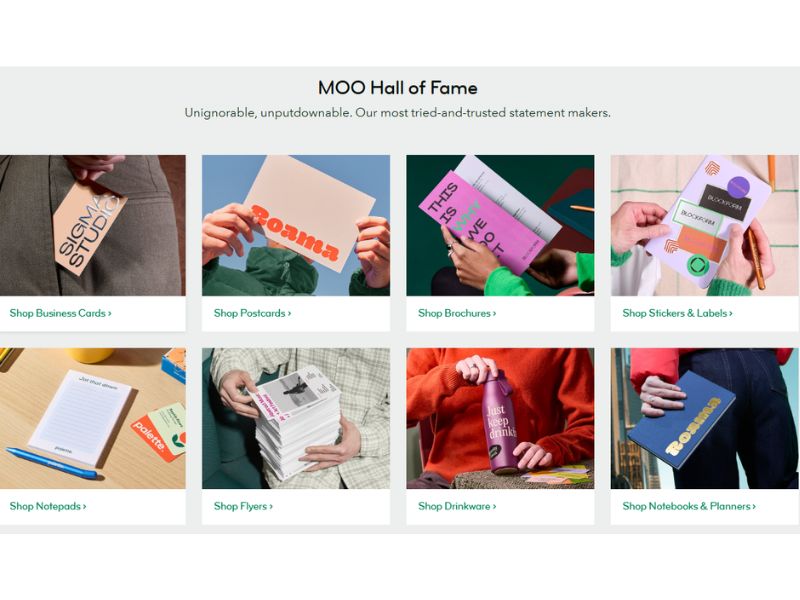
MOO primarily uses relatively thick paper, resulting in a solid finish and a range of premium options. As a result, the products feel sturdy and well-crafted in hand. This makes it particularly suitable for service-based businesses, agencies, or creative professionals who use physical materials to represent their brand image.
However, MOO is not built for eCommerce or POD models. It does not also support integration with online sales channels and lacks an automated fulfillment system.
About pricing, MOO sits in the premium segment. Business cards start at around $20 for 50 cards. Flyers or postcards begin at approximately $40 for 100 units. The pricing is higher, but it reflects the level of quality and brand experience delivered.
Quick comparison: MOO vs Vistaprint
| Criteria | MOO | Vistaprint |
|---|---|---|
| Model | Premium printing service | Traditional online printing service |
| Products | Business cards, stationery, premium prints | Marketing materials + printed gifts |
| Quality | Very high, focused on finish | Good for standard needs |
| Pricing | Higher | Budget-friendly |
| Shipping | Fast (especially in the US) | Stable |
| Branding | Highly customizable design | More limited |
| Integrations | No eCommerce support | Limited |
Who is MOO best for?
MOO is best suited for businesses that prioritize brand image and customer experience down to the smallest details.
7. Teelaunch
Teelaunch is a familiar name in the POD ecosystem, but it takes a slightly different approach. Instead of competing with major platforms on sheer product volume, Teelaunch focuses on offering more unique and niche items to stand out.
Alongside common products like t-shirts and wall art, you can also see a variety of items such as home decor, personalized accessories, and unconventional gift products.
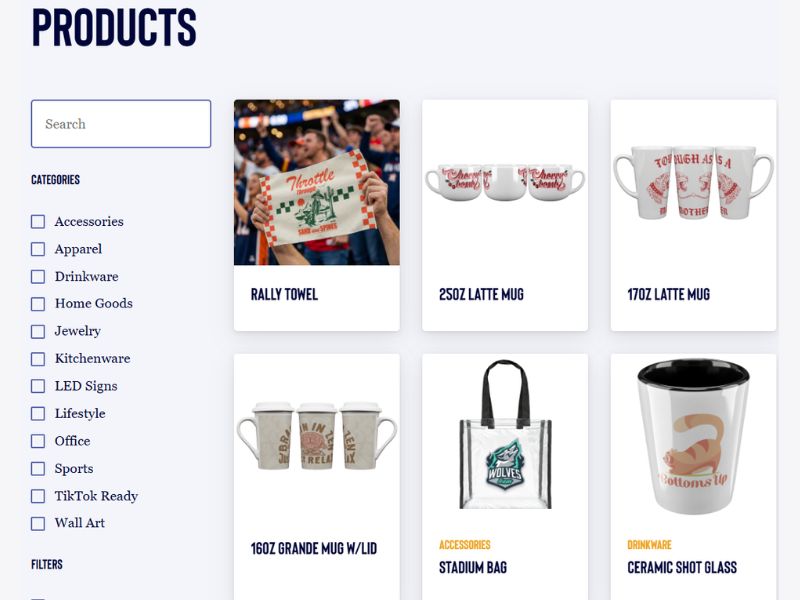
From an operational standpoint, Teelaunch integrates directly with platforms like Shopify, allowing for relatively smooth order processing. Shipping times in key markets such as the US, UK, and Canada are generally fast, averaging around 3–6 business days.
The platform also provides basic mockup and personalization tools to help you visualize products before listing them. However, Teelaunch still has limitations in design tools and overall user experience. Customer support quality can be inconsistent based on user feedback.
Quick comparison: Teelaunch vs Vistaprint
| Criteria | Teelaunch | Vistaprint |
|---|---|---|
| Model | Print-on-demand (POD) | Traditional online printing service |
| Products | Apparel + unique niche items | Marketing materials + printed gifts |
| Quality | Middle, depends on product | Consistent for standard printing |
| Pricing | Competitive | Suitable for small orders |
| Shipping | 3–6 days (US, UK, CA) | Stable |
| Branding | Basic support | Limited |
| Integrations | Shopify | Limited |
Who is Teelaunch best for?
If you’re looking for a POD platform with more “distinctive” products, Teelaunch is completely worth trying.
8. Custom Ink
Custom Ink is a reliable printing solution for marketing campaigns or bulk orders. Unlike POD platforms, it operates on a bulk printing model – suitable for businesses wanting to manage inventory and distribution on their own.
The platform focuses heavily on apparel such as t-shirts, hoodies, and hats, while also offering products like bags, drinkware, and office supplies. Its primary printing methods include screen printing and embroidery.
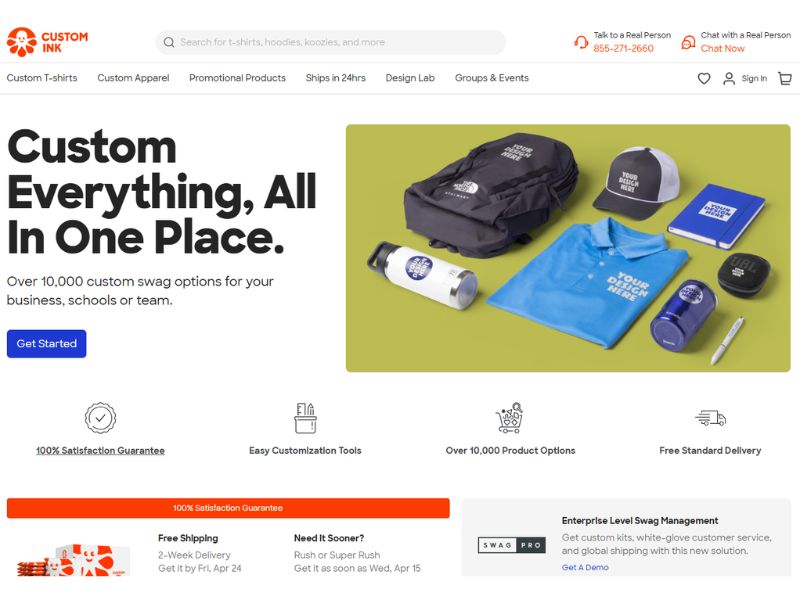
One of Custom Ink’s strengths is its design experience. The platform provides an intuitive design tool along with a rich library of fonts, images, and templates, so you can create products easily without advanced design skills.
However, since this is not a POD model, Custom Ink requires minimum order quantities. You’ll also need to handle inventory and shipping yourself.
Quick comparison: Custom Ink vs Vistaprint
| Criteria | Custom Ink | Vistaprint |
|---|---|---|
| Model | Bulk printing (order in volume) | Traditional online printing service |
| Products | Apparel + promotional items | Marketing materials + printed gifts |
| Quality | Consistent, strong for bulk orders | Good for standard needs |
| Pricing | Optimized for large quantities | Suitable for small orders |
| Shipping | Depends on order size | Stable |
| Branding | Strong customization in bulk | Limited |
| Integrations | Not focused on eCommerce | Limited |
Who is Custom Ink best for?
Custom Ink is best suited for businesses, organizations, or teams that need large-volume printing for events, uniforms, or marketing campaigns.
9. CustomCat
CustomCat is a strong fit for sellers who prioritize efficiency and cost optimization, especially in the apparel segment. With a catalog of hundreds of products, the platform offers a wide range of options, from clothing to home goods and accessories.
All production is handled in-house, so you can be confident in the overall product quality. Printing methods include DTG, heat transfer, embroidery, and even 3D printing in certain cases.
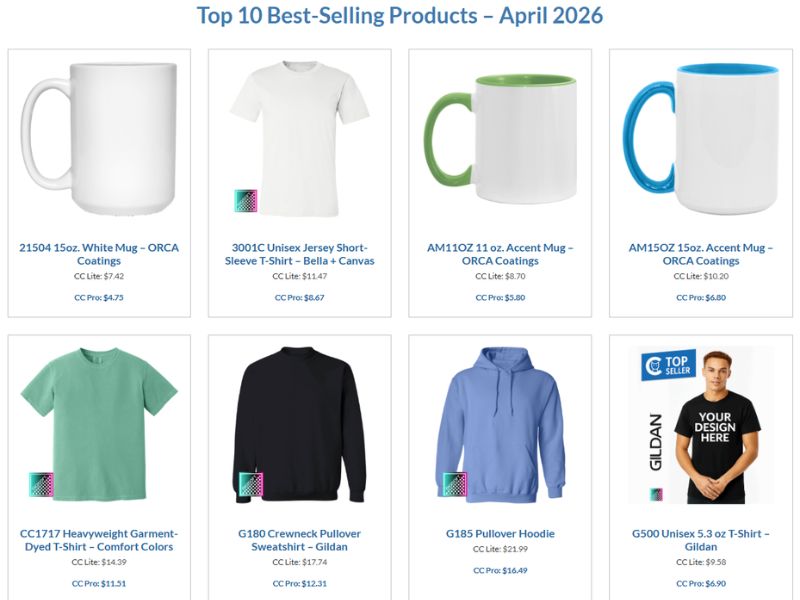
CustomCat also stands out for its pricing strategy, particularly through its premium plan, which helps reduce product costs. However, the trade-off comes in shipping speed, especially for international orders, which can be slower.
Another limitation is the lack of built-in design tools, meaning you’ll need to prepare your design files before uploading.
Quick comparison: CustomCat vs Vistaprint
| Criteria | CustomCat | Vistaprint |
|---|---|---|
| Model | POD (in-house production) | Traditional printing service |
| Products | Apparel + home goods + accessories | Marketing materials + printed gifts |
| Quality | Consistent, internally controlled | Good for standard printing |
| Pricing | Competitive, strong discounts available | Suitable for small orders |
| Shipping | Slower for international orders | Stable |
| Branding | Better control | Limited |
| Integrations | eCommerce integrations supported | Limited |
Who is CustomCat best for?
CustomCat is best suited for sellers who want to optimize costs while maintaining solid quality control in a POD model, especially those focused on apparel.
10. AOP+
AOP+ is a UK-based POD platform. True to its name, it stands out for its all-over print (AOP) capabilities across a wide range of products. The platform operates with in-house production facilities in the UK, the US, and Europe, making it a strong option for sellers targeting these regions.
AOP+ integrates with platforms such as Shopify, Etsy, and BigCommerce, allowing you to build and manage your store relatively easily.
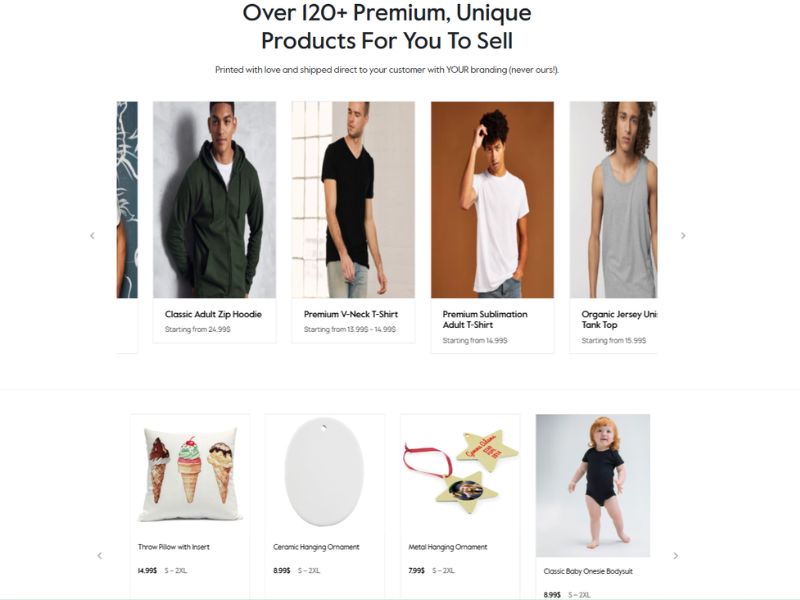
Production times for AOP products are typically longer, ranging from 7–10 business days due to the more complex printing process. In return, you get highly distinctive products with full design coverage that are harder to replicate with standard printing methods.
The platform also supports branding features, including custom labels, stickers, and packing slips, which are available through paid plans.
Quick comparison: AOP+ vs Vistaprint
| Criteria | AOP+ | Vistaprint |
|---|---|---|
| Model | POD (AOP-focused) | Traditional printing service |
| Products | Apparel + full-print items | Marketing materials + printed gifts |
| Quality | Strong for AOP products | Good for standard printing |
| Pricing | Mid-range | Suitable for small orders |
| Shipping | Slower (7–10 days production) | Stable |
| Branding | Supported | Limited |
| Integrations | Shopify, Etsy, BigCommerce | Limited |
Who is AOP+ best for?
AOP+ is best suited for brands that want to create highly distinctive, design-driven products, especially full-print items.
11. Spring
Spring (formerly Teespring) is built specifically for the creator economy. Instead of focusing on traditional eCommerce, it integrates directly with platforms like YouTube, TikTok, and Twitch, allowing you to sell products seamlessly within your content.
The biggest advantage of Spring is its social commerce capability—creators can convert viewers into customers without needing to build a separate website. The platform handles everything from production to fulfillment, minimizing the barrier to entry.
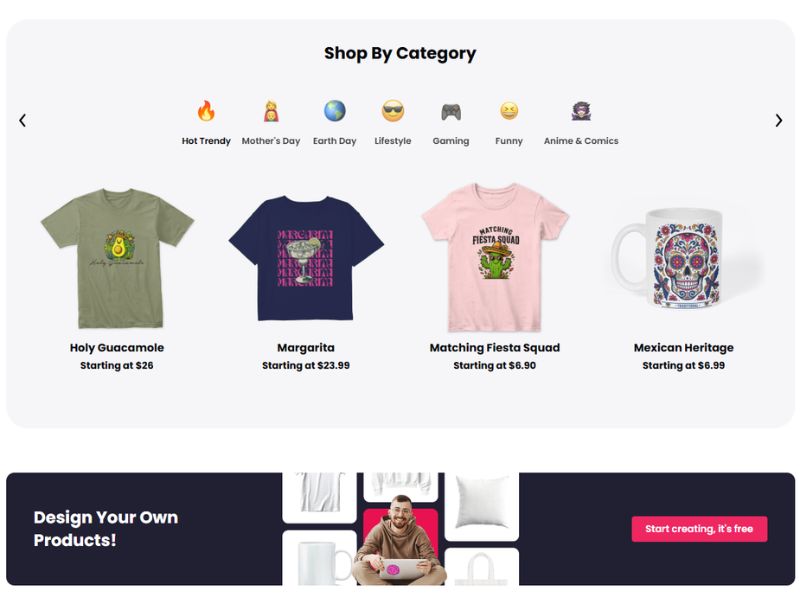
However, Spring’s product range is relatively limited compared to other POD platforms, and its branding capabilities remain fairly basic.
Quick comparison: Spring vs Vistaprint
| Criteria | Spring | Vistaprint |
|---|---|---|
| Model | POD + social commerce | Traditional printing service |
| Products | Basic apparel | Marketing materials + gifts |
| Quality | Moderate to good | Good for standard printing |
| Pricing | Competitive | Suitable for small orders |
| Shipping | Platform-handled | Stable |
| Branding | Limited | Limited |
| Integrations | YouTube, TikTok, Twitch | Limited |
Who is Spring best for?
Spring is ideal for content creators who want to monetize their audience quickly without building a separate storefront. If you’re active on social media and want to leverage existing traffic, Spring is an effective option.
12. JetPrint
If you’re looking for a different way in the POD market, especially for more complex products like footwear, JetPrint is worth exploring. The platform focuses heavily on custom shoes from sneakers to boots, allowing you to create highly distinctive products with less competition.
JetPrint integrates with Shopify, Etsy, WooCommerce, and Wix, so you can run an online store similarly to other POD platforms. In addition to footwear, it also offers a selection of products like watches and accessories, though its core strength clearly lies in shoes.
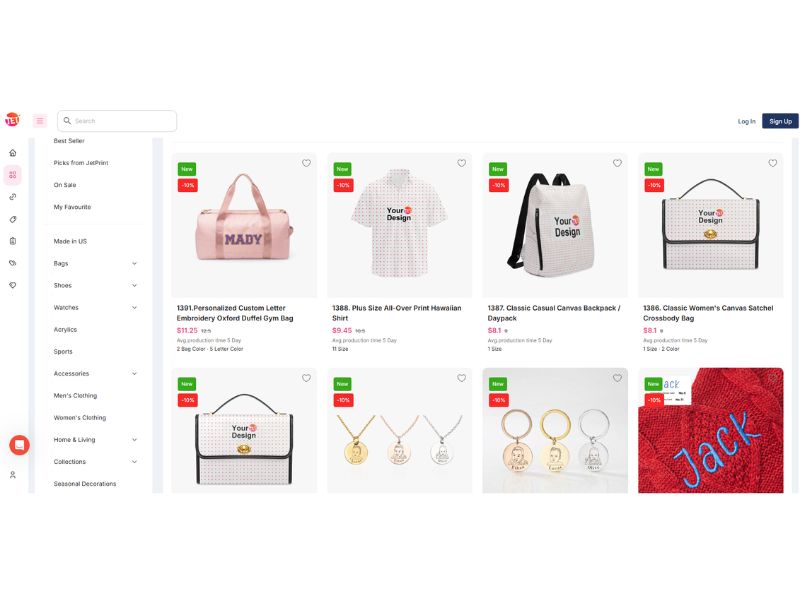
You don’t need to worry too much about pricing, as JetPrint remains competitive within its niche, helping you maintain solid profit margins with the right positioning. However, due to the nature of the products, production and shipping times are typically longer.
Quick comparison: JetPrint vs Vistaprint
| Criteria | JetPrint | Vistaprint |
|---|---|---|
| Model | POD (specialized products) | Traditional printing service |
| Products | Custom shoes + some accessories | Marketing materials + printed gifts |
| Quality | Strong within footwear niche | Consistent for standard printing |
| Pricing | Competitive within niche | Suitable for small orders |
| Shipping | Slower due to product complexity | Stable |
| Branding | Supported | Limited |
| Integrations | Shopify, Etsy, WooCommerce, Wix | Limited |
Who is JetPrint best for?
JetPrint is a great option if you want to avoid the “red ocean” of t-shirts and explore a more unique niche like custom footwear.
13. Apliiq
Is there a POD platform that targets the premium segment? Yes – Apliiq, where brand identity is the top priority. Rather than simply printing designs on products, Apliiq focuses on helping you build a true private label.
Its biggest differentiator lies in features like woven labels, custom patches, and custom hoodie linings which are typically found in professional fashion brands. These elements help your products move beyond the typical “POD look” and feel closer to retail-ready items.
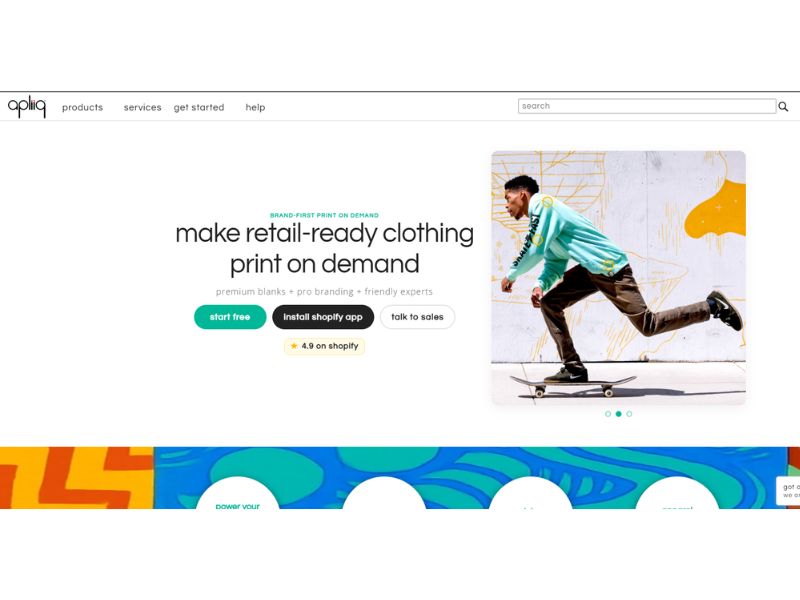
The platform also integrates with Shopify and WooCommerce, which is sufficient for running a professional online store. However, Apliiq comes with higher costs compared to standard POD platforms, as it emphasizes premium finishing and advanced branding capabilities.
Quick comparison: Apliiq vs Vistaprint
| Criteria | Apliiq | Vistaprint |
|---|---|---|
| Model | POD (premium apparel focus) | Traditional printing service |
| Products | Apparel with advanced custom branding | Marketing materials + printed gifts |
| Quality | High, retail-oriented | Consistent |
| Pricing | Higher | Budget-friendly |
| Shipping | Middle | Stable |
| Branding | Very strong (private label) | Limited |
| Integrations | Shopify, WooCommerce | Limited |
Who is Apliiq best for?
Apliiq is best suited for fashion brands that want to build deeper brand identity. If you’re targeting the mid-to-high-end segment or aiming to build a long-term brand, Apliiq is a choice.
14. GotPrint
In contrast to Apliiq, GotPrint focuses on affordability and high-volume production, particularly for items like business cards, flyers, labels, and marketing materials.
Unlike POD platforms, GotPrint does not support per-order fulfillment and instead operates on a bulk printing model. This makes it more suitable for businesses that focus on offline marketing or direct sales.
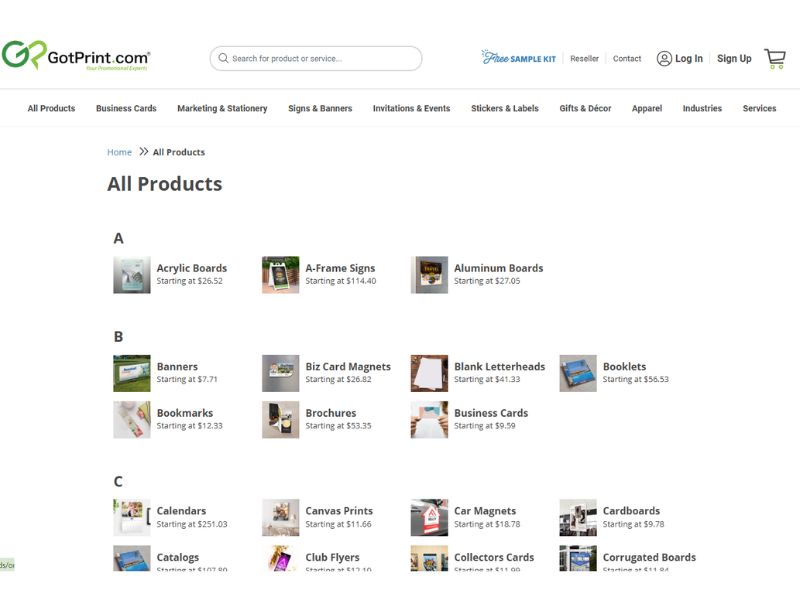
Its biggest advantage is pricing. For large-volume orders, costs are typically lower while still maintaining reliable quality. The platform also offers various finishing options such as gloss, matte, and UV coating, helping enhance the final product experience.
Quick comparison: GotPrint vs Vistaprint
| Criteria | GotPrint | Vistaprint |
|---|---|---|
| Model | Bulk printing | Traditional printing service |
| Products | Marketing materials, packaging | Marketing materials + printed gifts |
| Quality | Consistent | Consistent |
| Pricing | Lower for bulk orders | Suitable for small orders |
| Shipping | Batch-based | Stable |
| Branding | Strong customization for print | Limited |
| Integrations | None | Limited |
Who is GotPrint best for?
GotPrint is ideal for businesses that need large-volume printing for offline marketing or direct sales. If cost efficiency is your priority and you don’t need POD capabilities, it’s a solid choice.
15. UPrinting
The final option is UPrinting, one of the more established online printing services focused on providing comprehensive solutions for small businesses that need high-quality marketing materials.
The platform offers a wide range of products, including business cards, flyers, banners, and packaging, along with finishing options such as matte, gloss, and UV coating. It is also capable of handling large-volume orders with relatively fast turnaround times.
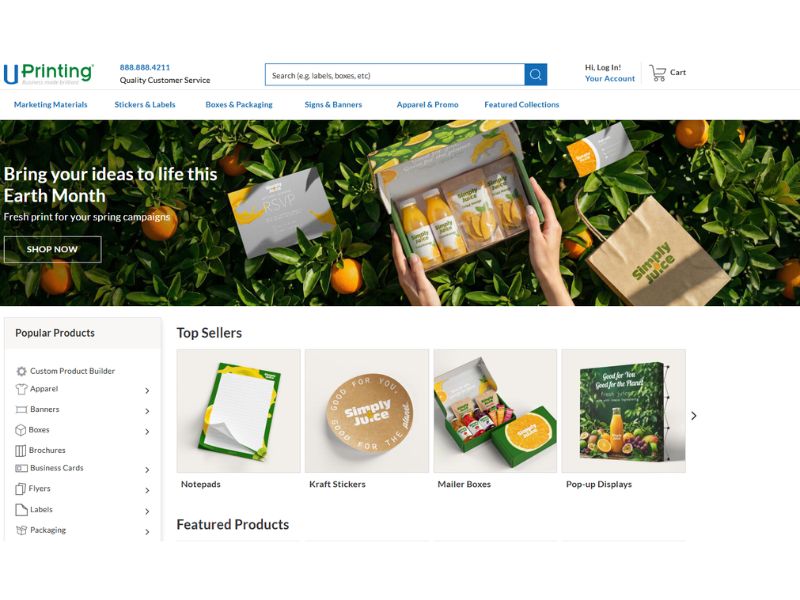
UPrinting provides free file checks before printing and offers design support services, helping reduce errors during production. However, similar to GotPrint, it does not integrate with eCommerce platforms and does not support POD workflows.
Quick comparison: UPrinting vs Vistaprint
| Criteria | UPrinting | Vistaprint |
|---|---|---|
| Model | Bulk printing | Traditional printing service |
| Products | Marketing materials, packaging | Marketing materials + printed gifts |
| Quality | High, multiple finishing options | Consistent |
| Pricing | Good for bulk orders | Suitable for small orders |
| Shipping | Fast | Stable |
| Branding | Strong customization | Limited |
| Integrations | None | Limited |
Who is UPrinting best for?
UPrinting is best suited for businesses that need professional, large-volume printing—especially for marketing campaigns. If you prioritize quality and customization without needing POD, it’s a reliable option.
Vistaprint competitors comparison chart
Quality control
| Platform | Quality control |
|---|---|
| Vistaprint | Consistent for standard printing |
| Printful | Very high, in-house control |
| Printify | Varies by provider |
| Merchize | High and consistent (in-house + 99.5% fulfillment rate) |
| Gelato | Varies by region |
| Zazzle | Inconsistent (marketplace-based) |
| MOO | Very high (premium finishing) |
| Teelaunch | Moderate to good |
| Custom Ink | High (bulk orders) |
| CustomCat | Consistent (in-house) |
| AOP+ | Strong within AOP niche |
| Spring | Moderate |
| JetPrint | Strong within footwear niche |
| Apliiq | High (premium apparel) |
| GotPrint | Consistent |
| UPrinting | High |
Pricing
| Platform | Pricing |
|---|---|
| Vistaprint | Good for small orders |
| Printful | Higher (10–30% more) |
| Printify | Competitive (~20% lower with Premium) |
| Merchize | Competitive, optimized for scaling |
| Gelato | Mid-range (some items priced higher) |
| Zazzle | Flexible (royalty-based) |
| MOO | High (premium segment) |
| Teelaunch | Competitive |
| Custom Ink | Optimized for bulk orders |
| CustomCat | Low (strong discounts available) |
| AOP+ | Mid-range |
| Spring | Competitive |
| JetPrint | Competitive within niche |
| Apliiq | High |
| GotPrint | Cheaper for bulk orders |
| UPrinting | Cost-effective for bulk orders |
Shipping
| Platform | Shipping |
|---|---|
| Vistaprint | Stable |
| Printful | Fast & reliable (2–5 days processing) |
| Printify | Flexible (2–7 days depending on provider) |
| Merchize | Ships to 180+ countries with flexible routes |
| Gelato | Fast (3–6 days, local production) |
| Zazzle | Handled by platform |
| MOO | Fast (especially in the US) |
| Teelaunch | 3–6 days (US, UK, CA) |
| Custom Ink | Depends on order size |
| CustomCat | Slower for international orders |
| AOP+ | Slower (7–10 days production) |
| Spring | Handled by platform |
| JetPrint | Slower (specialized products) |
| Apliiq | Moderate |
| GotPrint | Batch-based |
| UPrinting | Fast |
Branding
| Platform | Branding |
|---|---|
| Vistaprint | Limited |
| Printful | Strong (labels, packaging) |
| Printify | Limited, depends on provider |
| Merchize | Flexible, supports brand building |
| Gelato | Limited |
| Zazzle | Almost none (marketplace-based) |
| MOO | High (design-focused) |
| Teelaunch | Basic |
| Custom Ink | Strong for bulk customization |
| CustomCat | Moderate |
| AOP+ | Supported |
| Spring | Limited |
| JetPrint | Supported |
| Apliiq | Very strong (private label) |
| GotPrint | Strong for print customization |
| UPrinting | Good |
Integrations
| Platform | Shopify | Etsy | WooCommerce | Amazon | eBay | API |
|---|---|---|---|---|---|---|
| Vistaprint | — | — | — | — | — | — |
| Printful | Y | Y | Y | Y | Y | Y |
| Printify | Y | Y | Y | Y | Y | Y |
| Merchize | Y | Y | Y | Y | Y | Y |
| Gelato | Y | Y | Y | — | — | Y |
| Zazzle | — | — | — | — | — | — |
| MOO | — | — | — | — | — | — |
| Teelaunch | Y | — | — | — | — | — |
| Custom Ink | — | — | — | — | — | — |
| CustomCat | Y | Y | Y | — | — | Y |
| AOP+ | Y | Y | — | — | — | — |
| Spring | — | — | — | — | — | — |
| JetPrint | Y | Y | Y | — | — | — |
| Apliiq | Y | — | Y | — | — | — |
| GotPrint | — | — | — | — | — | — |
| UPrinting | — | — | — | — | — | — |
Factors to consider when choosing the right Vistaprint alternative
With so many options on the market, finding the right alternative is not easy. Instead of following trends, you should evaluate platforms based on the core factors below to ensure they can support your growth long term.
(1) Product range and customization capabilities
Not all platforms offer the same catalog. While common items like t-shirts or mugs are widely available, niche products (e.g. custom footwear, pet items, art prints) require a closer look. Also, check supported printing methods like DTG, embroidery, or all-over print to match your product direction.
(2) Pricing and profit margins
Don’t just compare base prices, factor in shipping and additional fees. Subscription models can lower costs if you have stable volume, but if you’re just starting, flexibility is often more important than the lowest price.
(3) Print quality and consistency
Quality is about both output and consistency across orders. In-house production usually offers better control, while provider networks can vary. Ordering samples before scaling is highly recommended.
(4) Production speed and shipping
Fast processing and delivery are critical, especially for international markets. Platforms with local fulfillment networks can significantly reduce shipping time.
(5) eCommerce integrations
Strong integrations with Shopify, Etsy, WooCommerce, or marketplaces like Amazon and eBay help automate order handling and reduce manual errors as you grow.
(6) Design tools and workflow
If you don’t have ready-to-use designs, built-in tools like mockup generators or design editors can save time and cost. Choose based on your current workflow.
(7) Branding and customer experience
Features like custom labels, packaging, and inserts help create a consistent brand experience and improve perceived value.
No platform is “the best” for everyone. While Vistaprint is a strong starting point, it may not fit every stage of your business. Exploring different Vistaprint alternatives helps you find better pricing, more stable quality, and stronger branding options. Focus on what matters most to you and pick a partner that can support your growth long term.


