Contents
Amazon SEO is not a magic trick that gets you to the top overnight. It is a process that combines keyword strategy, listing content optimization, and understanding customer shopping behavior. There’s a well-known saying among sellers: “The perfect place to hide a dead body is page 3 of Amazon search results.” And if you don’t want your product to “disappear” there, you need to understand how Amazon works and learn how to optimize according to the platform’s “language.”
In this article, you will learn how to build a listing that is both friendly to Amazon’s algorithm and compelling enough to make shoppers click the Add to Cart button.
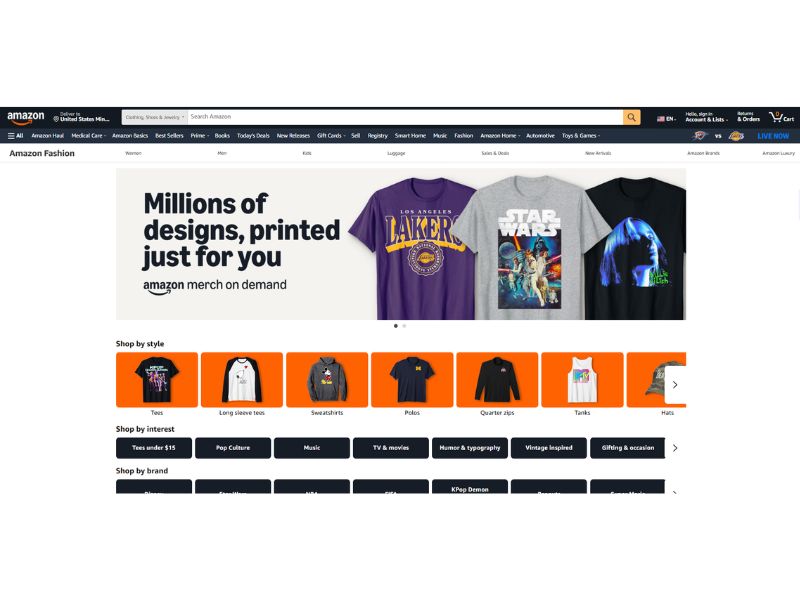
The dramatic shift in Amazon Merch on Demand
There is new information suggesting that Amazon is changing how its Merch on Demand program operates, with a new system expected to take effect starting June 1, 2026. Instead of applying a fixed royalty rate for all products in the US store, the platform will now divide sellers into multiple profit tiers based on the percentage of off-platform traffic they generate.
Specifically, Amazon is introducing 3 main groups:
- The lowest tier is called Creator, for accounts with less than 15% of sales coming from non-organic traffic. This is also the group most heavily affected, as royalty rates are reduced by nearly half. For example, with a t-shirt priced at $19.99, sellers previously earned around $4.88, but now only receive about $2.44.
- The next tier is Plus. To qualify, you need at least 15% of sales coming from externally driven traffic and a minimum of 10 orders per month. At this level, you retain the previous royalty rate, meaning around $4.88 per $19.99 shirt.
- The highest tier is Premium, for sellers who generate at least 35% of sales from external traffic and maintain at least 10 orders per month. Not only do you keep the previous royalty rate, but you also receive an additional bonus of about 8%, bringing earnings to approximately $5.27 per shirt sold.
What has sparked the most discussion in the seller community is how Amazon defines “non-organic traffic.” It does not only include traffic from Facebook Ads, TikTok Ads, Pinterest, or Google Ads, but also Amazon Ads is considered traffic you bring in yourself. In other words, advertising investment becomes essential if you want to maintain your previous profit levels.
This change also leads to a major shift in operational mindset. For those in the Creator tier with no intention of running ads or building external traffic sources, profitability becomes much more challenging. Many sellers may need to pivot their business model or focus entirely on a few strong designs that can drive traffic more effectively.
For sellers in the Plus tier, the main goal is to maintain a stable traffic ratio to avoid dropping back to Creator. Meanwhile, Premium sellers benefit from the additional profit bonus, but they still need to carefully manage advertising costs to ensure that revenue growth does not come at the expense of actual profit.
Given these changes, sellers need to adopt a more proactive marketing strategy mindset. Learning how to run ads, leverage social media, build communities, and drive external traffic will not only help maintain stable profit margins but also improve long-term scaling potential for their stores.
Read more: Amazon’s New Policy in 2026: What POD Sellers Need to Know to Avoid Risks and Maintain Profitability
Key components to pay attention to in Amazon SEO
Amazon SEO is not just about stuffing keywords into a listing. It is about how your product appears and competes across the entire Amazon search ecosystem.
- The Amazon search bar is where customers enter keywords to find products. If you research the right keywords, your listing has a much higher chance of being displayed in relevant searches.
- The search filters help shoppers narrow down their options by price, ratings, Prime shipping, and more. Because of this, reviews, pricing, and the overall shopping experience also have an impact on SEO performance.
- The search results page (SERP) is where your SEO efforts are ultimately reflected. Amazon prioritizes products that are highly relevant and have strong sales potential.
- Best Seller Rank (BSR) reflects how well a product is performing within its category. The better a product sells, the more likely it is to be boosted in visibility by Amazon.
- In addition, Amazon Ads are becoming increasingly important. Advertising not only drives traffic but can also help improve organic rankings more quickly, especially when the listing has a strong conversion rate.
Master 8 Amazon SEO strategies to sell more
1. Keyword research
If you want your product to appear in front of customers, you first need to understand what they are searching for on Amazon. Simply put, if a customer types a keyword but your listing does not include it or is not relevant, Amazon will hardly prioritize showing your product.
That’s why keyword research is always the most important step in Amazon SEO. It is the process of finding the words and phrases customers commonly use when searching for products similar to yours.
There are several effective ways to research keywords:
- Type keywords directly into the Amazon search bar and observe autocomplete suggestions.
- Analyze competitor listings to see which keywords they are optimizing for.
- Use Amazon SEO tools to check search volume, competition level, and search trends.
When doing keyword research, you should combine both short-tail and long-tail keywords. A well-optimized listing usually includes both types to increase visibility while also improving conversion rates.
2. Product title optimization
After building a relevant keyword set, your product title is the first element you need to focus on. This is one of the strongest SEO factors on Amazon because the algorithm reads the title to understand what you are selling. An effective title should include important keywords while still being natural and easy for customers to read and click.
When writing a title, prioritize the information that buyers care about most, such as:
- Brand name
- Product type
- Material
- Color or variation
- Size or quantity
For example, a title like “Good Sleep Premium Pillow Covers – Blue, Set of 2” is much more effective than simply writing “Blue Pillow Covers”, because it clearly provides brand, product line, and specific attributes.
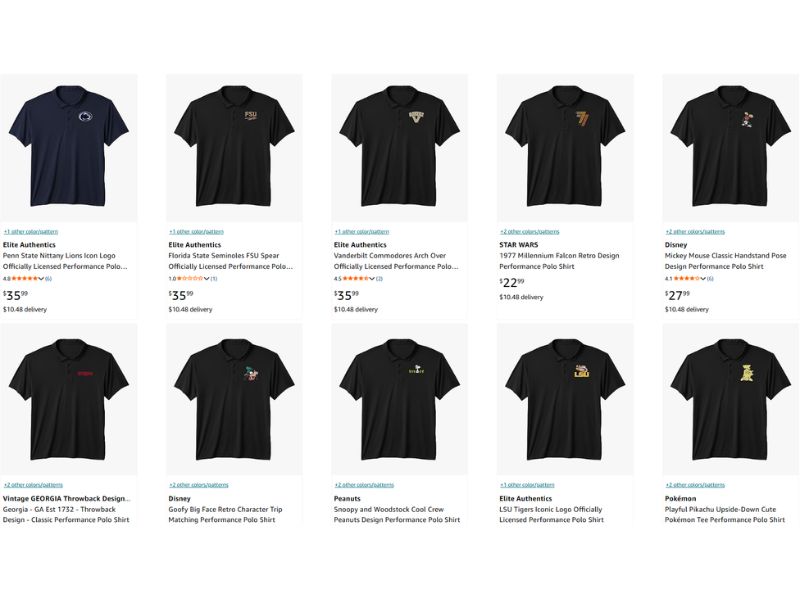
Amazon allows titles up to 200 characters, but in practice, you should keep them around 60–80 characters for better mobile display. If the title is too long, important parts may be cut off on mobile devices. Listings that do not follow guidelines may also be demoted in search rankings.
To make titles more algorithm-friendly, you should:
- Avoid keyword stuffing
- Do not use promotional phrases like “Best”, “100% Quality Guaranteed”, or “Free Shipping”
- Limit distracting special characters
- Always include the main product-identifying keyword
Typically, top-performing Amazon titles follow this structure: Brand + Variation/Color + Material + Product Type
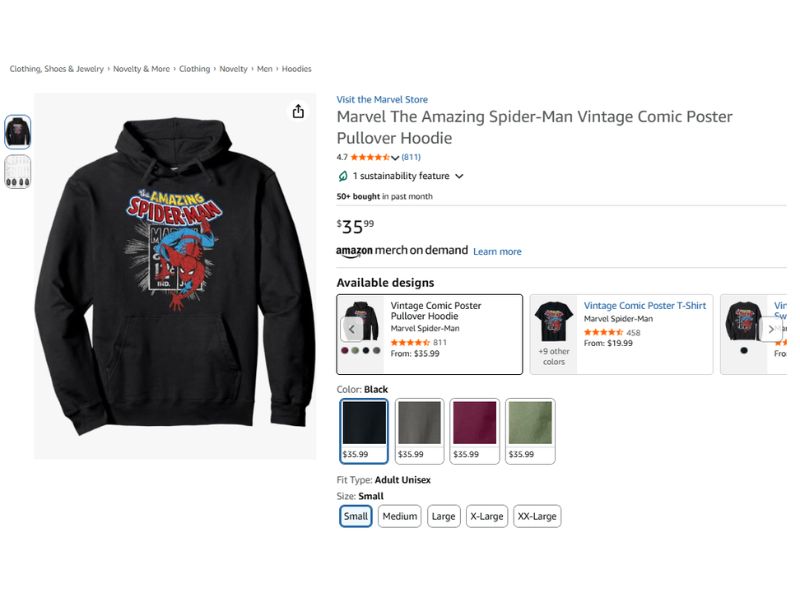
For example, with the keyword “hoodie”, top listings often include:
- Brand name
- Fabric material
- Gender or version
- Hoodie/ sweatshirt type
In addition, sellers often add supporting keywords like “pullover”, “hooded”, or “fleece” to expand visibility across more related search queries.
3. Product description optimization
If the title helps Amazon understand what your product is, the description helps customers understand why they should buy it. This is an ideal section to add secondary keywords while also explaining the product’s features, materials, and benefits in more detail.
A good description not only supports SEO but also helps improve conversion rates when customers read your listing. Key information you should prioritize includes:
- Material
- Color
- Size
- Quantity
- Usage or care instructions
- Warranty policy (if applicable)
However, many sellers make the mistake of “keyword stuffing,” assuming that repeating keywords more often will help them rank higher. In reality, Amazon increasingly prioritizes user experience, so listings that feel unnatural or spammy may actually perform worse. Instead of repeating the same keyword, use related keyword variations to make the content more natural while still expanding search visibility.
In addition to the description, bullet points are also extremely important for Amazon SEO. This is often the first section customers read when deciding whether to continue viewing a product.
When writing bullet points, focus on the most important highlights of the product, such as:
- Unique design
- Main functionality
- Key differences compared to competitors
- Customer experience or benefits
Each bullet should be short, easy to read, and focused on core value. A clear, scannable listing always performs better in both algorithm ranking and customer experience.
4. Using backend search terms in Seller Central
In addition to visible keywords on your listing, Amazon also allows you to add hidden keywords in the backend search terms section of Seller Central. These keywords are not visible to customers, but Amazon still uses them to better understand your product and improve search visibility.
You can include:
- Synonyms
- Abbreviations
- Alternative product names
- Relevant keywords that cannot be naturally included in the title or description
However, backend keywords are not a place for keyword spam. Amazon encourages sellers to avoid repeating keywords already used in the title or bullet points. Instead, use this section to expand search coverage with genuinely relevant additional terms.
A small tip: when entering search terms, use lowercase letters and separate words with spaces only, so Amazon can read the data more effectively.
5. Using high-quality product images
Of course when it comes to selling, visuals are often the first thing that makes customers stop and click on a product, including on Amazon. No matter how strong your SEO is, if your images are not appealing, your conversion rate will still be low. That’s why you should invest in clear, professional images that show the product from multiple angles.
When taking product photos, prioritize:
- Sharp, well-lit images
- Simple white background
- Product filling most of the frame
- Clear visibility of materials, details, and key features
- Multiple angles or lifestyle images when appropriate
For POD products like T-shirts, hoodies, or posters, mockup images are especially important because they help customers visualize how the product looks in real life.
Read now: How to find trending products on Amazon for quick wins
In addition to main images, you should also optimize alt text (alternative text for images). This is not visible to customers, but Amazon uses it to better understand image content and support SEO. An effective alt text should briefly describe the image and include 1–2 relevant keywords, instead of stuffing too many.
6. Answering customer questions
The Q&A section on Amazon does more than just resolve customer concerns, it directly influences purchasing decisions.
When shoppers see that you respond quickly, clearly, and professionally, they are more likely to trust your product and brand. On the other hand, listings with unanswered questions often feel neglected and can reduce conversion rates.
You should regularly monitor and answer questions with specific, easy-to-understand, and relevant information. This is also a great opportunity to naturally include additional keywords, helping your listing expand search visibility without stuffing keywords into the title or description.
7. Ensuring fast shipping
Shipping speed has a major impact on both customer experience and product visibility. Today’s shoppers increasingly prefer listings with fast delivery, especially products eligible for Prime shipping.
Amazon also prioritizes products that offer reliable and fast delivery because this improves conversion rates and keeps customers on the platform.
That’s why many sellers choose to use FBA (Fulfillment by Amazon). With FBA, Amazon handles storage, packaging, and shipping for you, allowing your products to qualify for Prime badges and compete more effectively for the Buy Box as well as search rankings.
Beyond improving customer experience, fast shipping also helps reduce cancellation rates and negative reviews, both of which can directly impact Amazon SEO performance.
8. Building an effective pricing strategy
Pricing is one of the most influential factors in a customer’s buying decision on Amazon. Even with strong SEO and great images, an uncompetitive price can still drive customers away to other listings.
However, this does not mean you should always compete on being the cheapest. A low price is not always the best strategy. The key is finding a price point that is attractive enough for customers while still ensuring healthy profit margins for your business.
Amazon continuously compares prices across listings within the same category. Products with reasonable pricing and strong conversion rates often gain advantages in ranking and the Buy Box.
That’s why you should regularly monitor the market, analyze competitor pricing, and adjust your pricing strategy flexibly at different stages. For POD businesses, pricing should also reflect design value, product quality, and brand experience rather than relying solely on constant discounting.
What helps a product rank higher on Amazon?
Amazon uses a search algorithm to decide which products appear first when customers type in keywords. This system is currently known in its upgraded version as A10.
Although Amazon does not publicly disclose the full mechanics of the algorithm, one thing is very clear: the platform always prioritizes products that deliver a strong shopping experience and generate high revenue potential.
With A10, Amazon has shifted its focus more toward traffic quality and user experience. Some of the most important ranking factors today include:
- Organic sales: Amazon prioritizes products that generate strong natural sales rather than relying solely on ads.
- External traffic: Traffic coming from TikTok, Facebook, Pinterest, Google, or other social platforms signals that a product has real demand outside Amazon.
- Seller authority: Reviews, customer feedback, return rates, and overall store performance all influence ranking.
This also explains why more POD sellers are investing in social media, content marketing, and building their own communities instead of depending only on internal Amazon traffic.
To optimize for A10, you should focus on three main goals:
- Build SEO-optimized listings with relevant keywords
- Increase conversion rate through images, reviews, and high-quality content
- Diversify traffic sources instead of relying only on Amazon Ads
In addition, Amazon PPC is still very important. It not only helps generate initial sales but can also boost organic keyword rankings if the product performs well. Therefore, the most effective strategy today is usually a combination of SEO, external traffic, and PPC to increase trust with the Amazon algorithm.
Top 10 Amazon SEO Tools
| Tool | Monthly Price | Main Features | Simple Review |
| SellerSprite | Free – $79 | Keyword research, Reverse ASIN lookup, AI writing support | A strong choice for Amazon SEO. Easy to use, good research tools, and affordable compared to many competitors. |
| Jungle Scout | $49 – $399 | Keyword research, Reverse ASIN lookup, AI writing support | A well-rounded tool for Amazon sellers with reliable product and keyword research features. |
| ZonGuru | $49 – $79 | Keyword research, Reverse ASIN lookup, AI writing support | Offers useful SEO and product research tools with a simple dashboard and practical features. |
| Helium 10 | $39 – $279 | Keyword research, Reverse ASIN lookup, AI writing support | One of the most complete Amazon seller platforms, but advanced features can become expensive. |
| SmartScout | $29 – $187 | Keyword research, Reverse ASIN lookup | Best suited for sellers focused on arbitrage and market research on Amazon. |
| Hypotenuse AI | $150 – $500 | AI copywriting support | Ideal for sellers with many listings who want faster content creation and product descriptions. |
| DataHawk | Freemium | Content optimization | Helps improve listing content and track SEO performance across marketplaces. |
| Viral Launch | $69 – $199 | Keyword research, Reverse ASIN lookup, AI writing support | Covers the essential SEO tools needed for Amazon listing optimization and keyword tracking. |
| SellerTools | $37/month | Historical listing insights, keyword optimization | Useful for monitoring listing changes and improving keyword performance through its Chrome extension. |
| SellerApp | Starts at $250/month | Content optimization | Mainly built for Amazon PPC management, with some additional SEO support features. |
Tips to maintain strong SEO performance over time
Amazon SEO is a long-term process. Algorithms, buyer behavior, and competition levels change constantly, so without regular monitoring, your listing or store can lose traffic without you even realizing why.
Seasonal optimization
A simple but powerful strategy is adjusting keywords based on seasons. For example, periods like Back to School, Black Friday, or Christmas often see spikes in searches for terms like “gift,” “holiday gift,” or “back to school essentials.”
If used correctly, seasonal optimization can significantly increase traffic without major product changes.
Don’t miss: When is peak season for Amazon? Best Times To Sell on Amazon in 2026
Optimize by product category
Each product category has different search behaviors. Tech buyers often care about specifications, while beauty customers focus more on results and user experience.
This means you cannot apply the same SEO formula to all products. You need to adjust your content and keywords based on how each customer group searches and makes decisions.
Competitor analysis
This is often overlooked but extremely important. You should regularly analyze top-ranking competitors:
- What keywords are they using?
- How are they structuring titles and bullet points?
- How are they positioning their products?
From there, you can identify gaps and optimize more effectively instead of simply copying what others are doing.
Performance tracking
SEO cannot be evaluated based on intuition. You need to track real data such as:
- Keyword ranking over time
- Conversion rate by traffic source
- Performance before and after listing optimization
This helps you clearly understand which changes are improving performance and which ones are hurting it, allowing you to make timely adjustments instead of guessing.
Ultimately, paid advertising (PPC) can bring immediate orders, but it is a well-structured Amazon SEO strategy that serves as a sustainable “money-making engine” for long-term profitability. When you fully understand how the algorithm works and consistently meet what Amazon expects, you no longer need to rely heavily on ads or worry about rising operational costs.