Contents
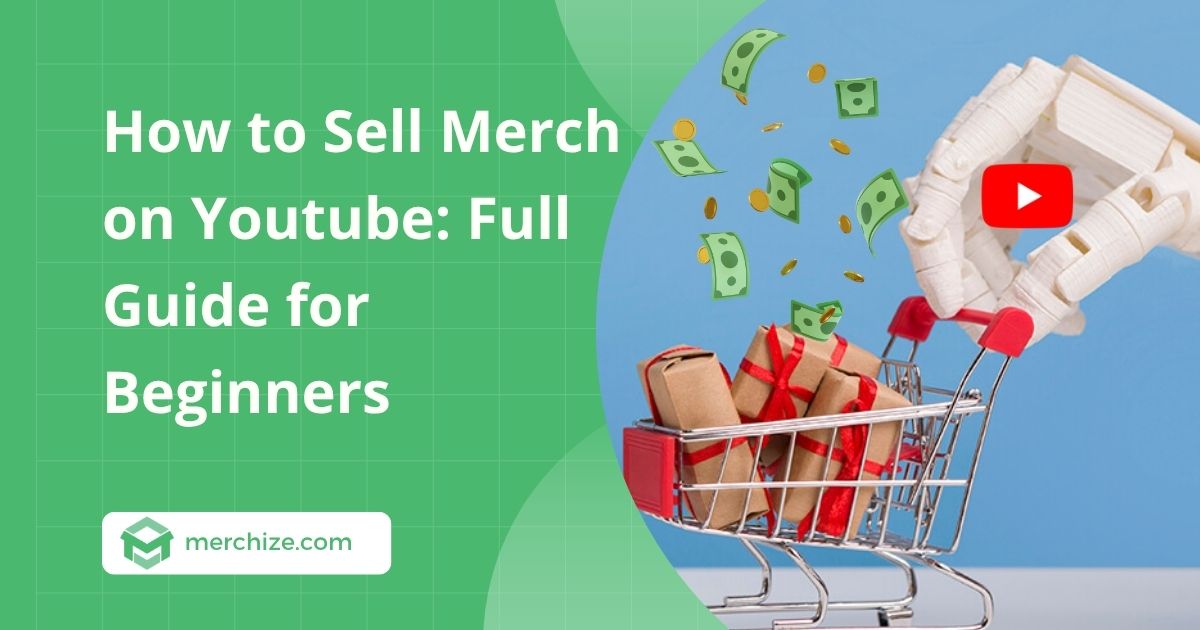
Are you looking for ways to diversify your income when Ads revenue keeps fluctuating? Do you want to turn your loyal viewers into an engaged community that brings in sustainable sales? Mastering the process of how to sell merch on YouTube is the answer to growing your channel in the long run. Read on to learn more.
Key Takeaways
-
The boom of YouTube opens up the opportunity to reach viewers when they are relaxed and most likely to buy.
-
Successful merch design must tap into community culture like inside jokes, catchphrases, or shared values instead of just printing the channel logo on products.
-
Take advantage of POD services so you do not need upfront capital, inventory risks, or complex packing and shipping steps.
-
Instead of launching a huge catalog that scatters attention, sellers should start with a small set of products that fit their content niche.
-
The online store needs to stay fully consistent in visual identity and tone of voice with the YouTube channel to build trust and optimize conversion rates.
-
A huge subscriber count does not guarantee high orders; design quality, usability, and the engagement level of core fans are what decide sustainable revenue.
Why should you use YouTube to sell merch?
YouTube Shopping is exploding as it attracts more than 500,000 content creators and drives a 250% surge in watch time for shopping videos. This platform brings products to viewers at every touchpoint: right below the video player, on the channel homepage, and directly on smart TV screens. At the same time, consumer behavior shows a major shift, with 61% of Gen Z viewers stating they search for and actively discover new brands right on YouTube.
This strong shift in both the platform and viewer behavior makes selling merch on YouTube a great strategy with 3 outstanding advantages:
-
Optimize and control cash flow: AdSense revenue is famous for being unpredictable due to fluctuating RPM rates and the risk of income drops from copyright claims. Selling your own merch creates a stable, predictable income stream and gives you 100% control over pricing, design, and marketing campaigns. In fact, mid-sized channels with around 10,000 followers can easily generate a steady cash flow from core fans, far exceeding simple ad revenue.
-
Create a natural brand effect: Every T-shirt, hat, or mug sold instantly turns a fan into a “walking billboard" for your channel. They wear your brand out on the street, accidentally introduce your channel to people around them, and proudly share the creator they love.
-
Turn casual viewers into a loyal community: Tangible items offer real daily value and a sense of belonging to a community. When viewers wear a product featuring your channel’s identity, the emotional bond between you and them becomes stronger than ever, converting casual views into long-term support for your content career.
When platform barriers are removed and market potential is clear, the only remaining question is: How to sell merch on YouTube most effectively? The answer is right in the next section.
How to sell merch on YouTube: 7 simple steps
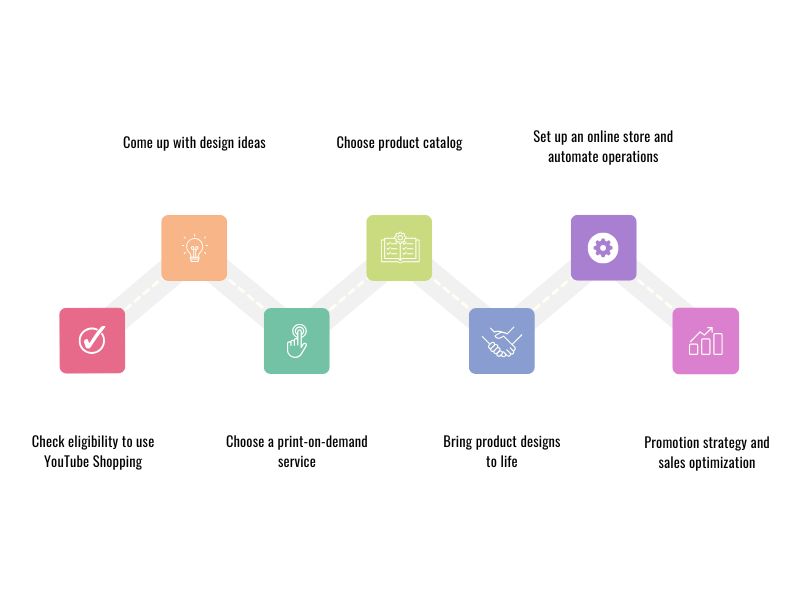
Step 1. Check eligibility to use YouTube Shopping features
Many guides skip this step and go straight into finding product ideas, causing many sellers to run into obstacles halfway through. In fact, the expanded YouTube Partner Program allows you to promote your personal products when you hit at least 500 subscribers, have 3 public video uploads in the last 3 months, and accumulate either 3,000 public watch hours in the past year or 3 million Shorts views in the recent 90 days.
Step 2. Come up with design ideas
Setting an aesthetic direction is the top priority before starting production. Creating designs becomes easier when you look at how other channels do it, combined with analyzing viewer personas to pick a suitable style. The simplest option is to put your logo or signature brand image directly onto products to boost recognition.
You can also turn personal symbols into unique artwork by collaborating with freelance artists. In addition, leveraging familiar catchphrases, inside jokes, or memorable moments within your community will create truly distinct collections. Products with high aesthetic value that grab attention even on their own always offer a huge advantage in reaching a broader customer base.
Step 3. Choose a print-on-demand service
Print-on-demand is an order fulfillment model where products are only printed and produced after a buyer makes a transaction. Partnering with POD providers like Printify or Merchize means you need no upfront capital, no packing, no inventory management, and no shipping logistics. This flexible production model is especially suitable when you want to test market reception and eliminate the risk of unsold stock.
Step 4. Choose your product catalog
Many creators limit their choices to basic T-shirts or hoodies, while the actual custom product ecosystem is far more diverse. The print-on-demand model lets you freely experiment with many item categories without managing inventory at all.
Read more: 50+ Best-Selling Custom Items To Sell Online in 2026
Launching personalized product lines is a sensible step for those who already have an engaged audience and want to expand cash flow. Beyond traditional branded products like T-shirts, mugs, stickers, badges, or pins, you can expand into many other potential segments:
-
Wall art from posters to canvas prints helps make the most of existing designs.
-
Accessories like tote bags or hats offer a subtle choice for fans who do not want to wear logo-printed clothes.
-
Embroidery on denim jackets or tie-dye hoodies creates a premium touch for the collection.
-
For gaming or tech channels, offering mousepads, phone cases, or laptop sleeves precisely meets the needs of the core audience.
Besides physical items, digital products or unique services such as PDF guides, crafts, short courses, audio files, or cooking recipes also generate significant revenue with optimal operational costs. Major creator-led brands like Emma Chamberlain’s Chamberlain Coffee or Trixie Mattel’s Trixie Cosmetics prove how building a dedicated product line aligns directly with a channel’s content niche.
Step 5. Bring product designs to life
After shaping your product catalog, you start placing design ideas onto realistic product templates. Free online mockup generator tools allow you to upload your graphics. Exporting high-quality realistic mockups helps viewers easily visualize the products while serving display purposes on your online store later on.
Step 6. Set up an online store and automate operations
After completing your product catalog, you need to create an online storefront and connect it directly with your print-on-demand provider. When choosing a sales model, you can consider two main directions:
-
Using your own platform like Shopify, Wix, or Squarespace brings brand exclusivity, removes competition display from rivals, and allows maximum interface customization, though it requires recurring hosting fees.
-
Conversely, selling on e-commerce marketplaces like Etsy or eBay allows quick setup and saves initial costs, but your products must directly compete with many other retailers and incur commission fees on each order.
Step 7. Promotion strategy and sales optimization
Having quality products is not enough; using diverse marketing channels is the key factor that determines conversion. On YouTube, you should appear with your products in videos, subtly insert pitch segments in long-form content, or add store links to end screens via YouTube Studio for short videos.
Additionally, channels must meet the requirements of the YouTube Partner Program, have over 1,000 subscribers, not set their audience as made for kids, and have no community guidelines violations. Once your store is connected, you can leverage a dedicated Store Tab on your channel page, tag products directly in videos, Shorts, and livestreams, or enable the Product Shelf to automatically display below playing content.
Beyond YouTube, boost engagement on other social media platforms by sharing behind-the-scenes design photos, setting launch dates, and creating polls to listen to community feedback. Finally, combining Search Engine Optimization (SEO) for product information with paid ads on Facebook and Instagram will help target potential customers accurately and grow sustainable sales.
How much money can you make from selling merch on a YouTube channel?
Income from merch retail has no fixed number; it fluctuates flexibly depending on audience engagement level, demographics, pricing strategy, and the appeal of the product design. It is important to emphasize the reality that subscriber size does not equal merch sales, because the order conversion rate depends entirely on community bond as well as product usability.
The clearest illustration of this case is content creator Cathrin Manning, whose YouTube channel has nearly 500,000 subscribers. In her first launch featuring 5 minimal design styles, she recorded 159 products sold right in the first weekend. Total revenue generated reached $6,401.55, corresponding to a net profit of $1,341.07 after deducting all shipping costs and related platform fees. This actual number shows huge monetization potential if you know how to tap into the true needs of your loyal fan base.
A few notes when selling merch on YouTube
1. Selling merch does not depend on YouTube monetization eligibility
Your personal product business and the YouTube Partner Program work through two completely separate mechanisms. You can set up an online store through external platforms and start promoting from day one by placing links in the video description. This helps small-scale sellers have income and test the market without waiting to meet required subscriber or watch-time thresholds from the platform.
2. Product design ideas must originate from community culture
A simple T-shirt with just a channel logo printed on it is usually not attractive enough to convince viewers to pay. Successful products need to bring independent aesthetic value or carry a strong emotional connection with viewers. You should prioritize leveraging familiar catchphrases, inside jokes, affectionate names for the fan community, or messages that reflect the core values of the channel.
3. Never launch too many products all at once
Putting a single design across your entire product catalog only scatters attention and makes buyers feel overwhelmed. You should start by selecting a small set of items that fit naturally with your channel’s style and audience’s daily habits.
-
Gaming channels are best suited for T-shirts, hoodies, or large mousepads
-
Fitness channels should focus on activewear and water bottles
-
While business or podcast channels work best with ceramic mugs, notebooks, and minimal apparel
4. Optimize names, descriptions, and title tags with the target customer mindset
When naming and writing product descriptions, you should not just focus on accurately describing what is shown on the artwork or slogan. You need to think about who this product is for and what purpose it serves in daily life. Tailoring content around usage needs and the recipient group will help your product reach potential customers easily.
5. Store storefront must stay consistent with YouTube brand identity
The online storefront acts as an extension of your YouTube channel itself. From logo icons, primary color schemes, typography, and banner graphics to the tone of voice used in CTA , everything needs to maintain tight consistency with the visual identity on your channel.
6. Use realistic mockup images to boost buying decisions
It is hard for viewers to imagine actual quality and fit if you only upload a flat design file on the store page. Investing in mockups with real people wearing or using the product in everyday settings creates a strong visual impact. This detail helps viewers easily picture themselves owning the item, thereby boosting order conversion rates more effectively.
7. Organize product categories logically for each audience segment
If your channel covers multiple content topics or reaches different viewer segments, dividing your store into clear categories is essential. You can arrange products by themes such as gaming-specific designs, limited-edition lines, casual wear, or accessories. This organized layout saves customers search time and improves the overall shopping experience.
8. Product appeal decides actual sales rather than subscriber size
Having a huge follower count does not mean you will achieve high sales. The conversion rate from viewer to buyer depends heavily on community bond and practical product usability. You should start merch campaigns on a small scale, closely track feedback from early viewers, and continuously improve designs before expanding your business scale.
FAQs
1. What is the upfront cost to start selling merch on YouTube?
If you choose the POD model, the initial startup cost is virtually zero. The supplier only prints and charges production fees when an actual order comes in from a buyer.
2. What if I don’t know how to design? How can I create merch products?
You can easily bring ideas to life by using free mockup tools from POD suppliers or hiring freelance artists on design platforms. Discussing channel culture ideas directly with a designer will help you own truly unique product designs.
3. Do I need a business registration or pay taxes when selling merch?
Revenue from merch sales is counted as commercial income. You need to comply with personal income tax regulations or register a business entity according to current laws in the country where you live and receive cash flow.
4. What is a reasonable frequency for promoting merch in videos?
You should naturally wear or use the product in most videos to build visual familiarity. Direct shoutouts and calls to buy should only be done during new collection launches or briefly inserted at appropriate transition points.
5. Can I sell multiple different merch lines on the same YouTube channel?
You can completely divide products into separate collections based on each content topic on your channel. Clear category organization helps different viewer groups easily find the product line that best fits their interests.
By understanding how to sell merch on YouTube from coming up with community-focused ideas and choosing a POD partner to optimizing your store layout, you can turn views into sustainable sales and build a loyal brand. Start small, listen to your viewers’ feedback, and refine your products step by step. Get started today to unlock the long-term growth potential of your YouTube channel.