Contents
Finding the right partner for your clothing business can shape everything from product quality to customer experience, and Tapstitch has already earned attention from many sellers. Still, as your brand grows, your needs may change too.
Some stores look for a wider apparel catalog, others want more competitive pricing, faster fulfillment, or suppliers that fit their branding style better. Exploring Tapstitch alternatives gives you the chance to create a stronger foundation for long-term growth.
Who is Tapstitch?
Tapstitch is a familiar name in the POD industry, designed to help creators easily launch premium streetwear clothing lines. With a mission to promote self-expression through clothes, this platform combines high-quality production, trendy design tools, and a strong shipping network to make brand building as simple as possible.
The business model of Tapstitch is completely free and requires no upfront cost, which removes all financial risks for beginners. You only pay when a customer places an order; after that, the system automatically takes care of everything from printing and packaging to shipping.
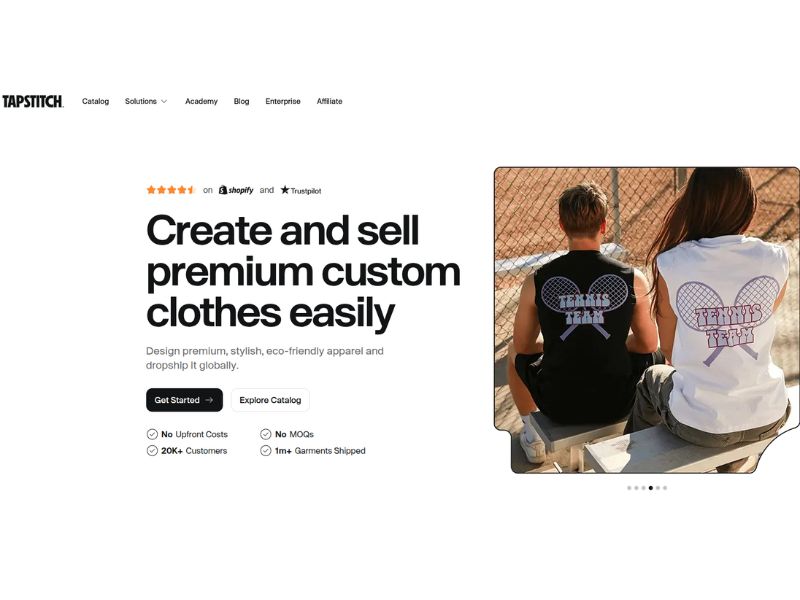
Their big difference lies in the premium product catalog. They provide trendy blank clothes with great fits, such as oversized t-shirts, fleece hoodies, and breathable tees with large print areas, allowing brands to confidently sell at higher prices. In particular, this platform is committed to using eco-friendly ink, recycled packaging, and only producing when there is an order to reduce waste.
In terms of operation, Tapstitch has a dedicated warehouse in Los Angeles that helps fulfill US orders in just 5 days, along with a stable global delivery network. The platform also offers an intuitive design tool and smooth connections with major e-commerce platforms like Shopify, Etsy, WooCommerce, or Squarespace. With blank t-shirt prices starting from around 10 USD, this is a perfect and safe starting choice for anyone wanting to enter the fashion market.
So, is it necessary to consider Tapstitch alternatives?
While there is no denying that Tapstitch is a user-friendly platform with good quality blank clothes and a clean production process, some barriers will appear when you plan to build and scale your brand to a larger level.
Because this platform focuses completely on apparel, you will not find home decor, accessories, or other lifestyle products here. This makes it difficult for brands that want to expand into niche product lines or offer seasonal gifts.
The platform also lacks direct connections with top email marketing tools (like Klaviyo or Mailchimp) and hot social media channels like TikTok Shop or Instagram Shopping. This missing feature forces users to handle things manually or use third-party apps, which slows down the marketing process significantly.
Furthermore, although shipping within the US is very good, international shipping fees for heavy clothing items are quite expensive, which lowers your profit margins and limits your ability to compete on price. Moreover, only supporting two printing methods (DTG and DTF) narrows your creative space if you want to upgrade your products with techniques like embroidery, UV printing, or all-over print.
Finally, the inability to edit products directly after publishing wastes time for brands that launch new designs quickly. To change a design, you must publish a completely new version and manually delete the old duplicate listings on your store.
For these reasons, actively looking for Tapstitch alternatives is completely a right strategy.
Top potential Tapstitch alternatives in 2026
1. Printify
The first name that can solve the product diversification problem is Printify. This platform owns more than 1,300 different items, ranging from basic apparel like t-shirts, hoodies, and hats to common goods such as mugs, bags, phone cases, and wall art. Just like Tapstitch, Printify has absolutely no minimum order quantity, allowing you to sell even a single product.
In terms of operation, Printify acts as a middleman that connects sellers with a wide network of partner print shops across many countries instead of producing by itself. This model offers great flexibility because you can freely compare prices, choose the right supplier, and route orders to the print shop closest to your customer’s location.
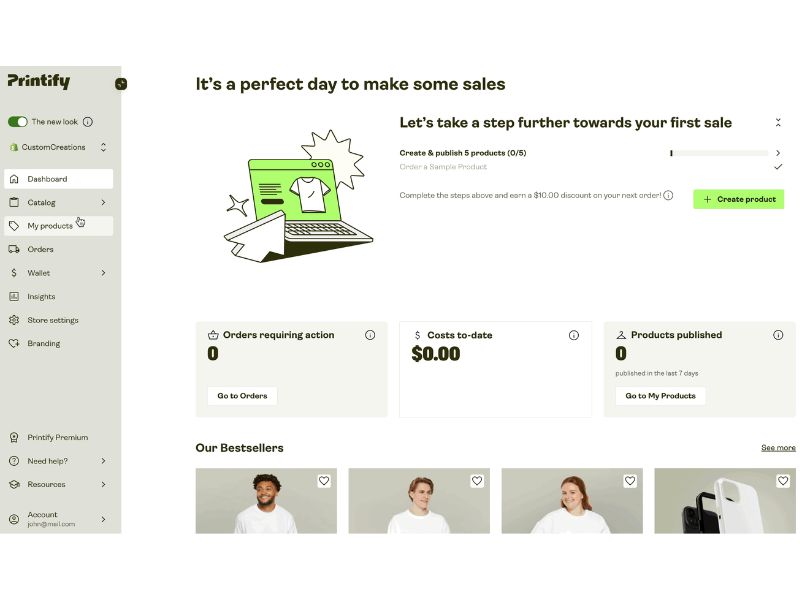
The sales process is also fully automated thanks to direct integration with popular e-commerce platforms like Shopify or Etsy. That means when a customer buys, order information automatically syncs and goes straight to the print shop for production and direct shipping to the buyer.
However, relying entirely on third-party partners is a double-edged sword that makes quality control a difficult problem for Printify. For this reason, to ensure credibility for long-term business, sellers must spend money to order product samples to check by themselves before officially launching.
Quick comparison: Printify vs Tapstitch
| Criteria | Printify | Tapstitch |
| Production Model | Middleman | Direct in-house production |
| Product Quantity | Over 1,300 items | Limited (Focuses only on apparel) |
| Quality Control | Depends on each shop | Highly consistent and stable |
| Blank Segment | Basic and common | Premium and streetwear |
| Shipping Location Optimization | Very flexible (Choose the shop closest to the customer) | Fixed based on the system’s warehouse |
Read more: Printify Alternatives: 11 Powerful Options for Sellers in 2026
2. Merchize
If your goal is to find a comprehensive ecosystem to scale your e-commerce business to a large level, Merchize is the ideal answer.
The outstanding difference of this platform lies in its specialized value-added services, which help realize long-term business strategies. Not just stopping at basic printing, Merchize provides storefront solutions, custom branding, unified packaging, as well as warehousing support and advanced order fulfillment for Amazon FBA or corporate gifts (SWAG).
The combination of technology and manufacturing capacity helps Merchize own a diverse catalog of nearly 1,000 products, especially holding an absolute advantage in all-over print (AOP) apparel and event/holiday decorations.
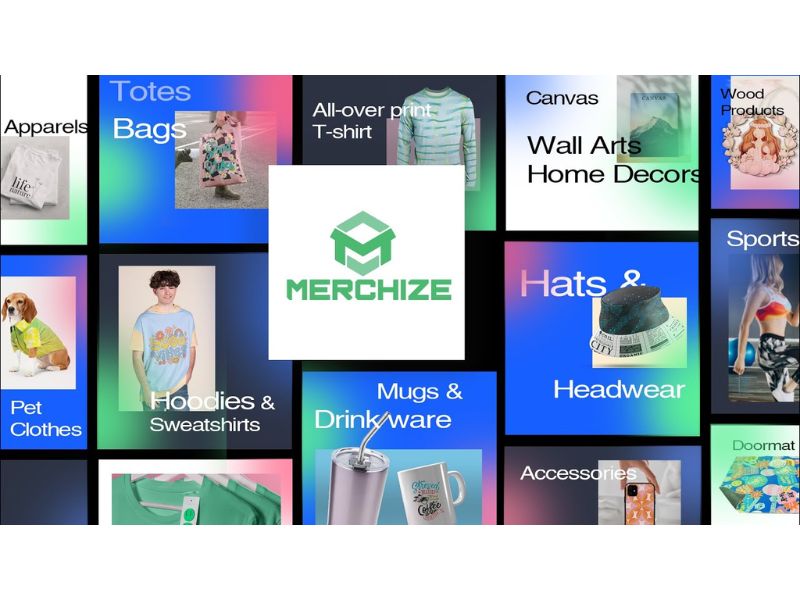
This platform masters many advanced processing techniques on the market, bringing unlimited creative space for brands. You can customize products using sharp DTG printing, sublimation printing, embroidery, as well as UV printing on hard materials and precise laser cutting and engraving.
The reason why Merchize can significantly optimize base costs and ensure consistent product quality when exporting to over 118 countries is that they directly own an in-house manufacturing factory of over 70,000 sq.ft in Vietnam. This self-production capability, combined with a strategic network of distribution warehouses in key markets like the US, EU, UK, Australia, and China, creates a very strong supply chain. This completely solves the cost and operational speed problems for global sellers.
Quick comparison: Merchize vs Tapstitch
| Criteria | Merchize | Tapstitch |
| Product Strength | Over 1,000 items | Limited (Focuses only on fashion apparel) |
| Processing Tech | DTG, Sublimation, Embroidery, UV Printing, Laser | Only DTG and DTF |
| Warehouse System | Global (Vietnam, US, EU, UK, Australia, China) | Main focus in the US |
| Included Services | Comprehensive | Basic (Only print and ship per order) |
| Best Suited For | Brands wanting to scale large and multi-industry | Beginners starting a fashion local brand |
3. Gelato
When your top priority is fast delivery speed and an excellent customer experience, Gelato is a highly recommended alternative. The biggest strength of Gelato lies in its local production and domestic distribution model through a network of over 140 partners in 32 countries (including major markets like the US, UK, Europe, Canada, Brazil, Australia, and New Zealand).
Acting as a technology middleman, Gelato automatically routes each order to the production facility closest to the buyer’s location. This smart process not only minimizes shipping time and saves delivery costs but also significantly reduces carbon emissions into the environment.
In terms of processing techniques, Gelato applies a variety of methods ranging from DTG, DTF, and inkjet printing to computer embroidery. Although they offer apparel and mugs, the core strength that makes Gelato famous lies in print-based products such as posters, canvas, framed art, photo books, and calendars.
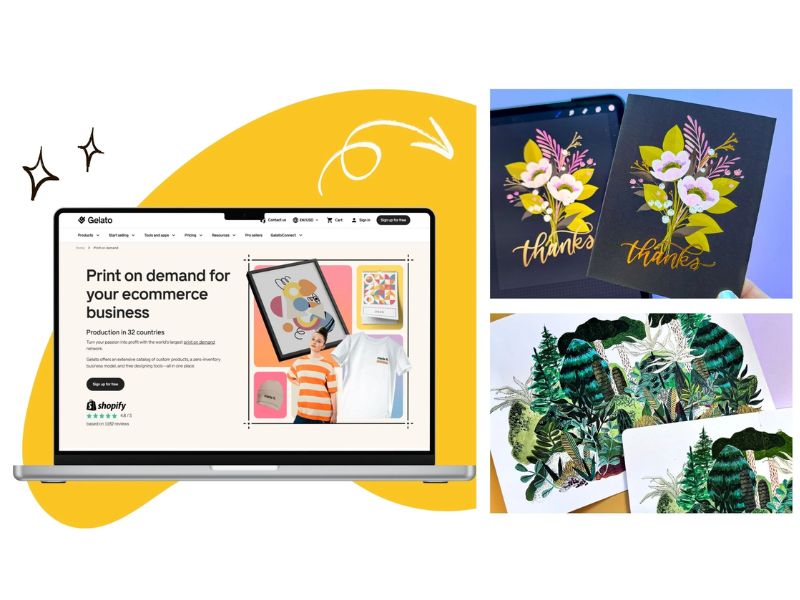
Currently, the platform offers a free plan that is very friendly for beginners with basic features including: access to the entire global production network, 24/7 technical support, and connections for up to 2 online stores. If you want to optimize costs further, sellers can upgrade to paid plans like Gelato+ or Gelato+ Gold to enjoy shipping fee discounts.
However, relying on third-party manufacturers can easily lead to inconsistencies between batches. In addition, the base price for poster items on the system is relatively high, even when you subscribe to a membership. Combined with the fact that shipping fees are not included in the product price, Gelato might not be the truly ideal choice for poster sellers with a limited budget.
Quick comparison: Gelato vs Tapstitch
| Criteria | Gelato | Tapstitch |
| Strongest Product | Print-based items | Fashion apparel (Streetwear, Oversized) |
| Operational Network | Global (Over 140 partner shops in 32 countries) | Mainly focused on the US warehouse system |
| Quality Control | Hard to keep consistent | Highly consistent |
| Shipping Speed & Cost | Highly optimized by printing in the customer’s country | Depends on the distance from the US warehouse |
| Service Plans | Has a free plan (2 stores) & Paid plans for ship discounts | Completely free with no paid subscription plans |
4. CustomCat
If your core goal is to optimize production costs and improve operational efficiency in the apparel sector, CustomCat will be a perfect match. This platform offers a diverse catalog of over 500 products, ranging from clothing and mugs to home decor and accessories.
CustomCat handles the entire production process in-house, ensuring that finished product quality remains consistent across all orders. Although their global shipping service is highly reliable, CustomCat’s biggest strength remains in the US market, making it an ideal choice for brands targeting North American customers.
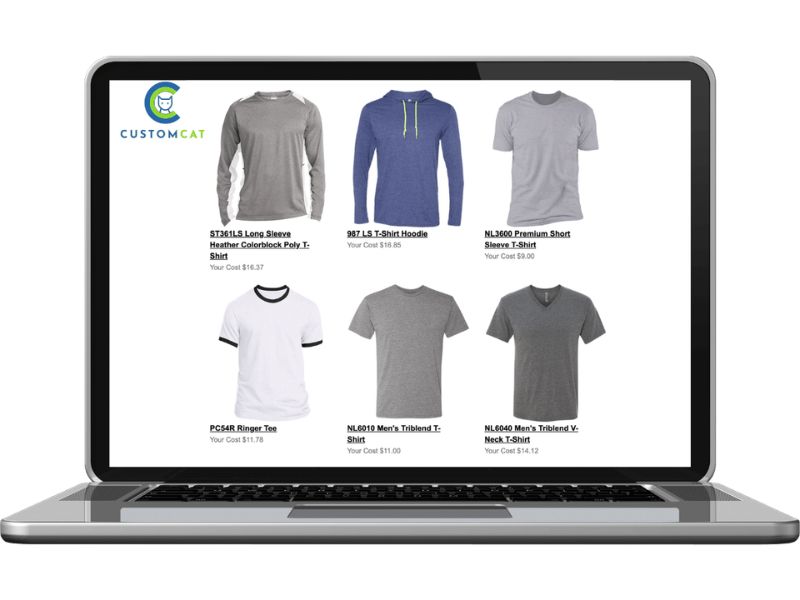
In terms of technology, besides common printing methods like DTG, computer embroidery, or heat transfer, CustomCat exclusively owns DIGISOFT® – an advanced digital printing technology that offers superior durability and colors, and even supports 3D printing in some special cases. Another huge plus is that CustomCat is very strong with discount programs, especially through their Premium plan, which helps significantly lower product base costs.
However, CustomCat’s delivery time, especially for international orders, is often slower than some other competitors. Additionally, the platform does not provide a powerful built-in design tool, requiring sellers to prepare and complete high-quality design files before uploading. And if you want to sell wall art or posters, this is not the ideal place because its product selection in this category is very limited.
Quick comparison: CustomCat vs Tapstitch
| Criteria | CustomCat | Tapstitch |
| Production Process | In-house production | In-house production |
| Product Catalog | Over 500 items: apparel, home decor, accessories | Narrow (Focuses only on fashion apparel) |
| Printing Tech | Very strong (Exclusive DIGISOFT® tech, 3D printing) | Basic (Only supports DTG and DTF) |
| Design Tool | Limited | Intuitive, easy to use directly on the web |
5. Fourthwall
Fourthwall takes a completely different approach as it does not operate like a traditional POD platform. Instead, it is a specialized e-commerce ecosystem designed to help content creators manage all their revenue streams in one place on an independent website. Here, with a catalog of over 200 items, you can sell POD clothing, distribute digital products, and set up and manage paid membership tiers all at the same time.
The biggest selling point of Fourthwall lies in its deep integration with social media platforms to optimize conversion rates — something that some other platforms have not done well. Your merchandise can be displayed directly under YouTube videos (Merch Shelf), on Twitch live streams (including exclusive gifting features), TikTok Shop, or Discord. Bringing products directly into creative content minimizes the distance from “watching" to “buying".
Financially, Fourthwall operates on a very flexible mechanism: no maintenance fees for the Free plan (the system only charges a 5% fee on digital product and membership revenue) or you can upgrade to the advanced Pro plan for a flat $19/month.
However, Fourthwall has absolutely no organic traffic from the system. By nature, Fourthwall is just an independent operational tool. This means you must have an existing loyal audience or actively run ads and drive traffic to your store yourself to generate orders.
Quick comparison: Fourthwall vs Tapstitch
| Criteria | Fourthwall | Tapstitch |
| Platform Nature | E-commerce ecosystem for Creators | Pure print-on-demand (POD) platform |
| Supported Revenue | Diverse (POD, Digital products, Memberships) | Single (Only revenue from POD apparel sales) |
| Social Integration | Extremely strong (YouTube Merch Shelf, Twitch, TikTok Shop) | Limited (Lacks direct social media links) |
| Customer Source | 100% self-driven (Requires existing fan base/traffic) | Self-driven through connected stores/platforms |
| Operational Cost | Free (5% fee on digital sales) or Pro plan at $19/month | Completely free, no platform fees charged |
6. Apliiq
If you are looking for a worthy competitor to Tapstitch in the streetwear segment but want to aggressively push your exclusive brand identity, Apliiq is a name you cannot ignore. Instead of simply printing designs on clothes, Apliiq focuses entirely on helping creators build a true private label that meets strict retail standards.
Apliiq handles the entire production and customization process in-house to guarantee quality. What makes Apliiq famous are the deep customization services that few other POD platforms can offer:
-
Tag removal and replacement: Completely remove the manufacturer’s original tags and replace them with your brand’s own woven or satin labels.
-
Custom cut and sew: Add upgraded design details like custom fabric pockets on t-shirts or artistic fabric lining inside hoodie caps.
-
Diverse apparel techniques: You can flexibly choose high-quality logo embroidery, bulk screen printing, advanced digital printing (DTG/DTF), or sewing custom patches onto clothing and hats.
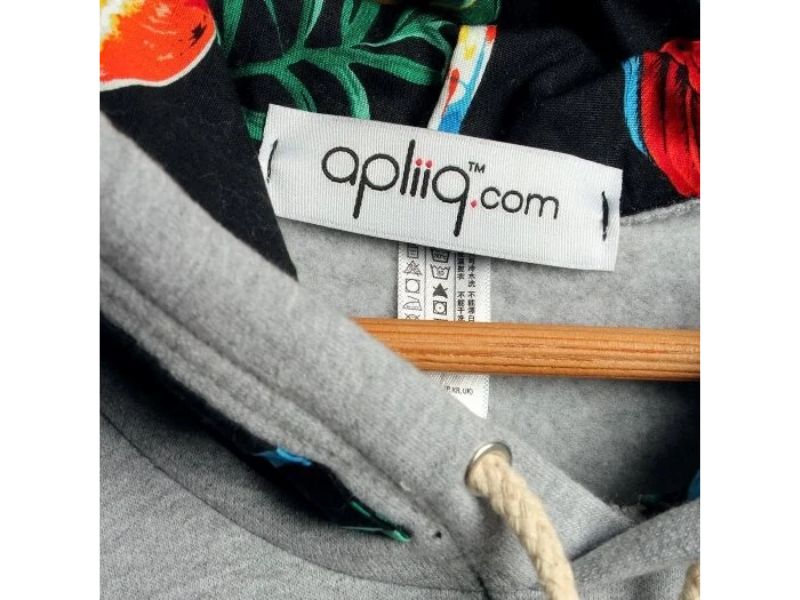
The platform boasts an impressive catalog of over 1,200 premium blank apparel styles from famous brands such as Bella + Canvas, Comfort Colors, and even Nike and Adidas. In terms of operation, Apliiq supports smooth integration with Shopify and WooCommerce to automatically sync your orders.
However, its premium positioning comes with a few trade-offs. The blank costs and processing fees here are significantly more expensive than the general POD market average. Additionally, Apliiq’s product ecosystem is limited strictly to fashion and fabric accessories (shirts, joggers, hats, tote bags), with no expansion into home goods or novelty gifts like mugs, phone cases, and wall art.
Quick comparison: Apliiq vs Tapstitch
| Criteria | Apliiq | Tapstitch |
| Brand Customization Level | Maximum (Woven/satin labels, custom pockets, hood lining) | Basic (Neck label printing, focuses on design prints) |
| Blank Product Sourcing | Diverse major brands (Nike, Adidas, Comfort Colors…) | In-house developed blanks (Oversized, streetwear fits) |
| Processing Techniques | Full (Embroidery, patches, screen print, DTG/DTF) | Limited (Only digital printing DTG and DTF) |
| Production Cost | Very high (Positioned for premium retail segment) | Moderate (Starting from around 10 USD) |
| Product Category | Only apparel & fabric accessories | Only apparel & fabric accessories |
7. Spreadshop
Spreadshop is an independent shop-building tool under the POD giant Spreadshirt. Here, you will be granted an independent, custom-branded online store to drive your own traffic, run your marketing, and fully decide your retail retail prices.
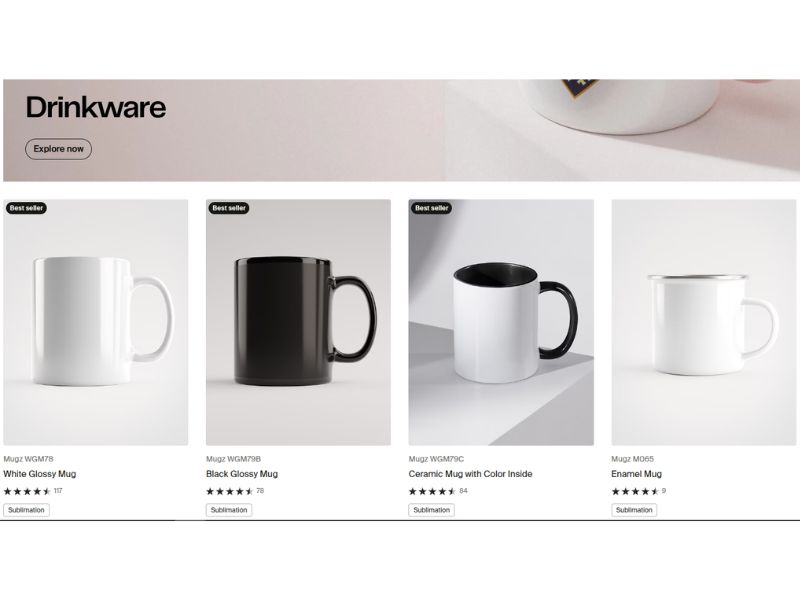
The system takes complete responsibility for all stages, from printing and packaging to shipping directly to buyers. Spreadshop’s catalog boasts over 350 diverse items for you to customize, including shirts, t-shirts, sweatshirts, hoodies (including zip-ups), fabric accessories, hats, and drinkware like mugs.
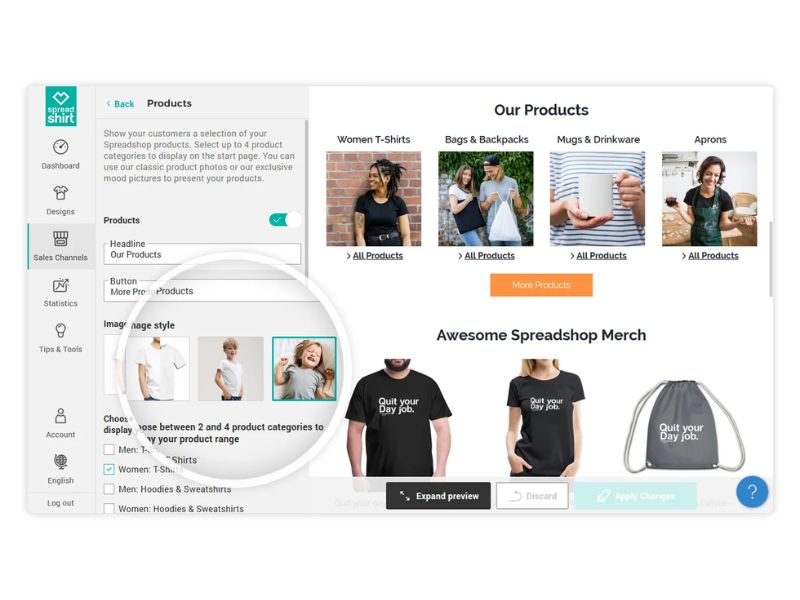
Spreadshop’s business model is very smart, applying a flat $0 monthly platform maintenance fee. You face zero financial risk because products are only printed when an actual order occurs (No upfront cost). Your profit is calculated as the margin between your self-set retail price and the system’s fixed base price.
Notably, to reward high-volume sellers, Spreadshop runs a Performance Bonus program: shop owners with high sales can receive an extra volume commission of up to 40% off the product base price, significantly boosting profit margins.
Quick comparison: Spreadshop vs Tapstitch
| Criteria | Spreadshop | Tapstitch |
| Store Interface | Provides a free, independent Storefront | Connects via 3rd-party apps/platforms (Shopify, Etsy…) |
| Products | Mugs, drinkware… | Focuses only on apparel |
| Margin Boost Mechanism | Up to 40% volume commission for high sales | Fixed base price per blank style |
| Product Segment | Souvenirs, daily goods, basic fashion | Premium fashion, Streetwear silhouettes |
8. Custom Ink
While Tapstitch was born to serve individuals running small local brands, Custom Ink is a “giant" dominating the custom design and printing sector for organizations, groups, schools, and corporate businesses (B2B). With an impressive development history since 2000, Custom Ink possesses a massive product ecosystem with over 10,000 options.
Alongside their core apparel line (t-shirts, hoodies, jackets, workwear), they offer countless premium corporate gift items like tech accessories, sports water bottles, office supplies, and event merchandise. Their market strength is further solidified by the acquisition of Swag.com and Printfection to optimize professional corporate gift services (SWAG).
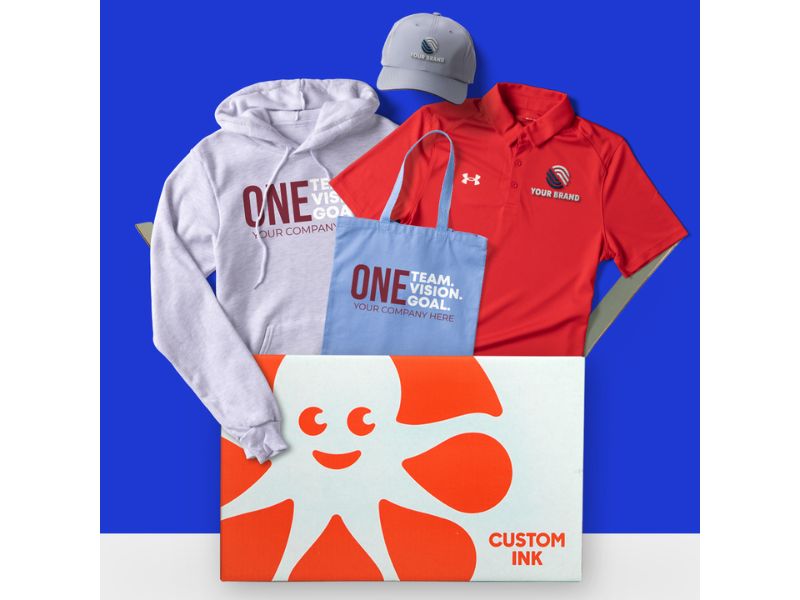
The biggest plus of Custom Ink is the excellent user experience, combined with deep design file support from team experts and a 100% satisfaction guarantee policy.
However, because its destination is serving group orders, Custom Ink does not operate as a standard single-order Print-on-Demand model. The platform enforces a Minimum Order Quantity (MOQ) for most products; if you order in small quantities, the cost per unit becomes very high. Furthermore, their logistics network and free standard shipping policy are currently highly optimized only for the North American market rather than being truly flexible globally.
Quick comparison: Custom Ink vs Tapstitch
| Criteria | Custom Ink | Tapstitch |
| Operational Model | Bulk ordering / Corporate Swag support | POD, no inventory |
| Quantity Requirement (MOQ) | Yes | No |
| Catalog Scale | Over 10,000 items across multi-industries | Under 500 apparel blank styles |
| Order Fulfillment | Customer receives bulk orders and ships retail themselves | Automatically prints and ships straight to end-buyers |
| Optimized Market | Strongly focused on North America | Worldwide shipping |
Read more: Custom Ink Alternatives Compared: Which One Fits Your Store?
9. PODPartner
PODPartner is an alternative that shares many similarities with Tapstitch, as it also focuses all its resources on the fashion apparel sector and clearly positions itself in the premium Streetwear style. Operating under a Print-on-Demand model combined with Dropshipping and having absolutely no minimum order quantity, this platform wins over local brands thanks to its core product catalog including t-shirts, hoodies, sweatshirts, joggers, shorts, and tank tops made from high-weight 100% cotton fabrics (Heavyweight cotton) with great fits.
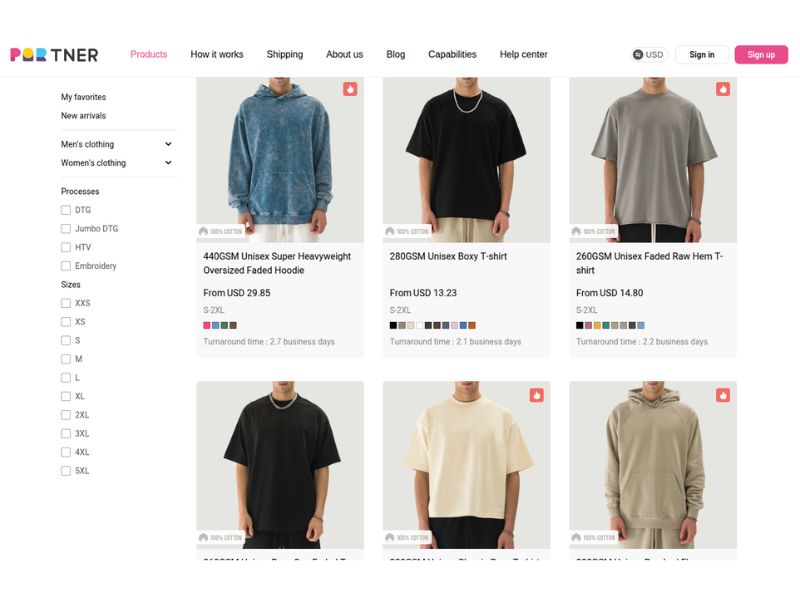
In addition to sharp DTG printing, a huge plus of PODPartner is its unique printing effects, such as Metallic, Glitter, Velvet, and Glow-in-the-dark. To help brands maximize identity recognition, the system allows sellers to fully customize neck labels, hangtags, and packaging. In terms of operation, you can easily sync orders automatically thanks to smooth app integrations on Shopify, Wix, WooCommerce, and Etsy. In addition, PODPartner charges no membership or monthly maintenance fees for using their design technology.
While the product base costs are competitive and worth the premium fabric quality, sellers still need to note a few small drawbacks: the system occasionally experiences minor color shifts due to the conversion from RGB (on screens) to CMYK (in actual printing), and order processing speeds may slow down during peak holiday seasons.
Quick comparison: PODPartner vs Tapstitch
| Criteria | PODPartner | Tapstitch |
| Product Segment | Premium Streetwear (Heavyweight fabrics) | Streetwear & Premium fashion |
| Printing Effects | DTG, Metallic, Glitter, Velvet, Glow-in-the-dark | Only basic DTG and DTF |
| Packaging Customization | Deep (Neck labels, hangtags, custom packaging) | Basic (Focuses on neck label printing) |
| Connected Platforms | Shopify, Wix, WooCommerce, Etsy | Shopify, Etsy, WooCommerce, Squarespace |
10. Subliminator
Founded in 2018 by a Dutch fashion designer, Subliminator brings a completely different vibe to brands thanks to its absolute strength in All-Over Print (AOP) using sublimation technology. Instead of just printing a small graphic in the middle of the chest like Tapstitch, Subliminator prints the entire design onto large rolls of fabric first, and then cuts and sews them into the final product (Cut & Sew). This process ensures the images cover every edge of the garment smoothly, without any cuts or white streaks along the seam lines.
Their catalog is highly diverse with over 130 highly customizable product types, ranging from sportswear, 3D t-shirts, hoodies, leggings, and swimwear to unique items hard to find elsewhere like Baseball Jerseys or indoor slippers. The platform offers a high-quality, free built-in design editor and 3D Mockup Generator, including flat layouts, ghosted forms, and real model photography across various backgrounds and skin tones for your marketing materials.
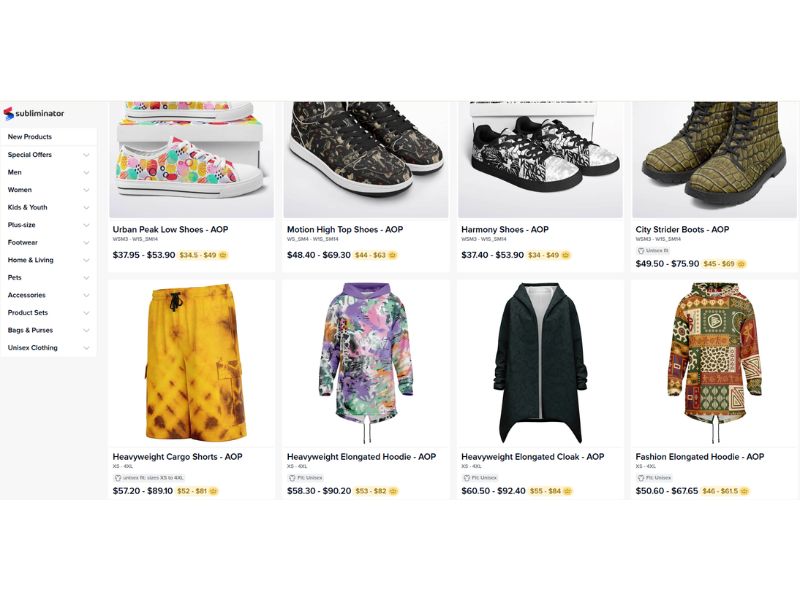
Currently, Subliminator operates most popularly as a highly-rated app on Shopify and Etsy with automatic order syncing. All of their core manufacturing factories are located in China to optimize blank costs and operational capacity.
However, a limitation to note is that because they focus deeply on cut-and-sew fashion, their home decor catalog is very limited, and single-item shipping costs can be a bit high if your customer only orders one product.
Quick comparison: Subliminator vs Tapstitch
| Criteria | Subliminator | Tapstitch |
| Main Printing Tech | All-Over Print | DTG/DTF |
| Sewing Process | Prints on fabric first, then Cut & Sew | Prints directly on pre-made blank garments |
| Mockup System | Very strong (3D mockups, ghosted, real models) | Basic (Flat mockups or fixed studio models) |
| Factory Location | Mainly located in China | Mainly located in the US |