Contents
Looking at the athleisure market right now, sellers only see 2 things: a huge demand and countless stores sinking because they sell the wrong products. Consumers no longer buy athleisure for basic convenience; they are buying a lifestyle, and they are extremely picky.
If you are thinking of importing a few cheap legging models to run ads, you are losing the game. To get a piece of this pie, you need to know exactly which niches lack supply, which suppliers offer truly good profit margins, and how to turn a first-time buyer into a loyal customer. The real data below will give you the answer.
Key Takeaways
-
The global athleisure market size is estimated to reach $459.8 billion in 2026 and explode to $892.5 billion by 2033.
-
The mass segment accounts for the largest share, but the premium segment grows the fastest thanks to high-tech fabrics.
-
North America leads in revenue, while Asia-Pacific is growing the fastest.
-
Women contribute the largest share, with the main buyers being young consumers aged 18–35 who prioritize “Work-to-Gym-to-Social" versatility.
-
T-shirts/shirts account for the largest revenue, while Yoga wear achieves the highest CAGR.
-
4 profitable niches: Workleisure, court-to-street, quiet luxury activewea, and Eco-activewear.
-
Buyers prefer 4-way stretch fabric, seamless technology, squat-proof features, pastel/neutral color palettes, and ESG sustainability standards.
-
Sell in Combos/Sets to increase average order value, leverage KOCs on TikTok/Reels to boost conversions, and use the POD model to expand the size range
How big will the athleisure market be in 2026?
The market for activewear combined with everyday fashion has officially become a long-term lifestyle worldwide. The combination of rising health awareness and the trend toward casual dressing has pushed athleisure beyond the traditional gym setting to become essential daily wear. Flexible working habits, relaxed office dress codes, and the boom in outdoor activities (hiking, marathon running, camping) are driving consumers to look for designs they can wear from work to the gym and to social gatherings.
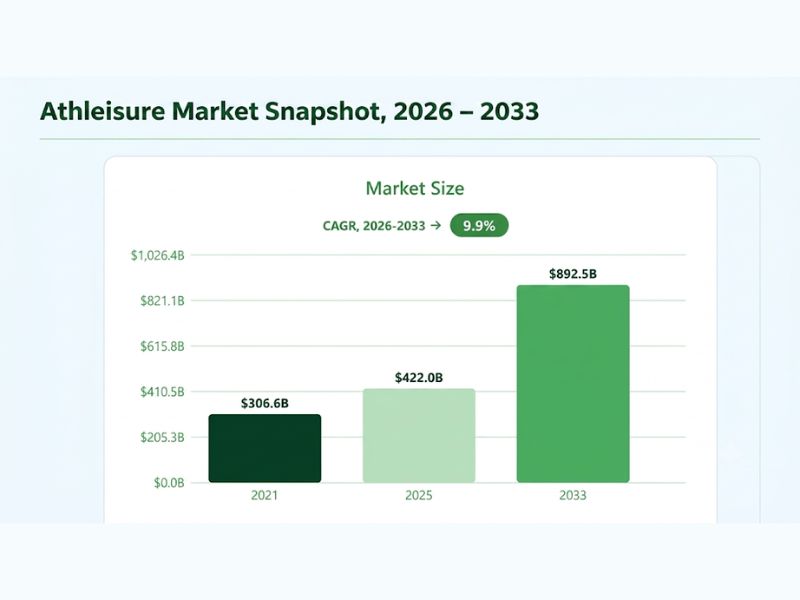
According to Grandviewresearch, the size of the athleisure market is seeing strong revenue growth:
-
2025: Reached $422.0 billion.
-
2026: Estimated to reach $459.8 billion.
-
Forecast to 2033: Booming to $892.5 billion with a compound annual growth rate (CAGR) of 9.9%.
Along with product segments:
-
Mass segment: Leads total market revenue with a 63.46% market share (2025). Advantages lie in accessible prices, minimal designs, and cost-optimized production processes. This is a promising land extremely suitable for on-demand, POD, and e-commerce business models.
-
Premium segment: Is the fastest-growing segment (CAGR of 10.4% from 2026 to 2033). The core factor comes from focusing R&D on high-tech fabrics (Dri-FIT, targeted compression fabrics, body-hugging designs) to attract customers willing to pay high prices.
In addition, the market is recording a convergence among fast-fashion giants, luxury brands, and professional sportswear companies, significantly shortening the launch cycle for new products. Modern sellers are forced to shift from a seasonal sales model to a data-driven model that meets real demand.
Budget sweet spot and demographics
Key geographic markets:
-
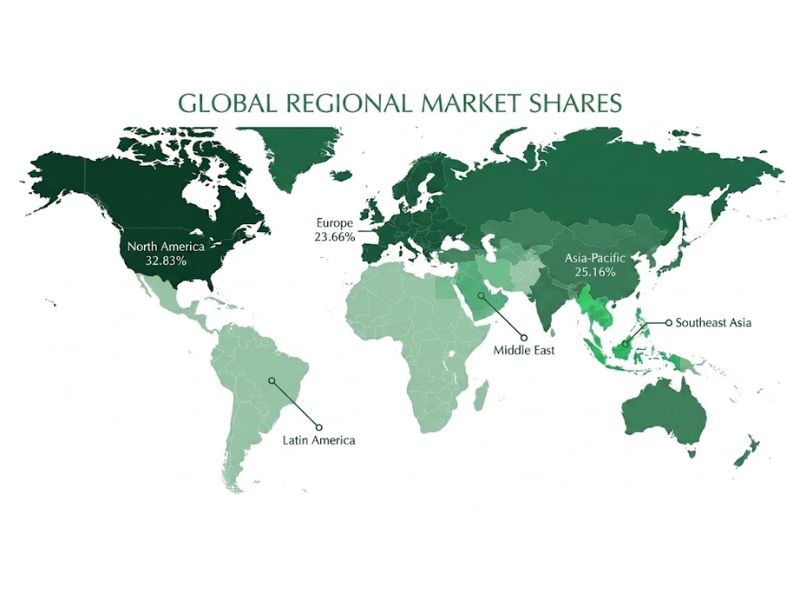
North America: Leads globally with a 32.83% revenue market share. This market is witnessing widespread acceptance of athleisure as daily workwear. The launch of versatile collections like Hanes Moves (launched in 03/2025) is clear proof of the huge consumer potential here.
-
Europe: Holds a 23.66% market share. European consumers prioritize minimal, sophisticated, and versatile designs for urban lifestyles, while making very high demands for ethical sourcing standards and transparency.
-
Asia-Pacific: The fastest-growing region in the world (CAGR of 11.6% from 2026 to 2033). The main drivers come from China (accounting for 25.16% of the regional market share) and India (CAGR of 12.7%) thanks to the growth of urban youth and social media shopping habits.
-
Southeast Asia/ ASEAN: A booming consumer market thanks to a young population, mobile-first shopping habits, and a very flexible manufacturing and fulfillment hub for e-commerce sellers.
-
Middle East: Opens up great opportunities for both low-cost and high-end athleisure segments due to high average income levels and strong government sports investment programs.
-
Emerging markets (Central & South America, MEA): Price sensitive, prioritizing lightweight, breathable clothing suitable for hot climates and community sports activities.
Price segment & target audience:
-
Market structure: Mass-market segment continues to dominate.
-
Gender: Female customers contribute the largest share (40.5% market share), making high demands on both function and aesthetics.
-
Core customer group: The main buying force is young consumers (18–35 years old) who prioritize versatility and high usability.
-
Spending breakdown:
-
Students & first-time buyers: Price sensitive, attracted by discounts and fast-updated new models.
-
High-income urban customers: Willing to pay a premium price for products with long-lasting durability, comfort, and eco-friendliness.
-
What drives purchase decisions
To win over customers in the athleisure market, sellers need to clearly understand the technical and psychological factors that directly affect consumer buying decisions:
Fabric technology & high-tech features:
-
Sweat-wicking & antibacterial: Completely solves the problem of keeping clothes fresh and hygienic after many washes.
-
Honeycomb mesh structure: Creates 3D channels to draw moisture away from the skin surface and increase breathability.
-
Silver ion coating: Breaks down bacterial cells, offering superior odor control lasting for over 50 wash cycles.
-
Abrasion resistance & anti-pilling: Maintains aesthetics and structural fabric durability over long-term use.
Compression & 4-way stretch:
Strong lever for online sales, especially for leggings and body-shaping products.
-
4-way stretch blended fabrics (polyester, nylon, spandex): Ensure multi-directional elasticity, hugging the body while keeping its shape.
-
Compression technology: Supports blood circulation, reduces muscle fatigue, and speeds up recovery.
Sustainability trends:
The sustainable athleisure market is expected to reach $176 billion by 2030 as consumers link personal health with environmental responsibility. Sellers need to note:
-
Recycled fibers: Offer elasticity and durability equal to virgin polyester while significantly reducing environmental impact.
-
Bio-based fibers: Harvested from sustainably managed wood, saving more water and energy than traditional cotton, bringing optimal softness and breathability.
-
Transparency: Customers (especially in the European market) demand clear proof of origin for recycled materials and bio-textile standards.
E-commerce shopping experience & customer retention:
-
Fit accuracy: Providing detailed size charts and diverse size options is key to optimizing conversion rates and reducing return rates.
-
Function-focused design: High-waist structures that reduce friction and stretch waistbands that hold shape help increase repeat purchase rates.
-
Online sales levers: Make full use of free shipping policies, detailed material descriptions, easy return policies, and bundle sales to raise average order value (AOV).
The early-bird shopping window
Direct sales channels (offline) currently hold 65.7% of the global market share. This confirms that growth room for e-commerce and cross-border online sales remains wide open (forecasted CAGR of 10.5% from 2026 to 2033).
Sellers need to proactively plan marketing campaigns and optimize stores before 3 main shopping peaks during the year:
| Peak period | Shopping motivation | Product strategy for sellers |
| January (New Year) | “New Year, New Me" movement – Determination to exercise & change oneself | Focus on pushing compression leggings, body-shaping gym sets, and New Year starter combos. |
| Summer & travel | High demand for outdoor activities, picnics, and sports travel | Prioritize ultra-light, breathable, UV-resistant materials, active bra-tops, and running shorts. |
| Back-to-school season | Students shopping for active outfits for the new school year | Boost the mass-market segment: Hoodies, joggers, and stretch T-shirts at good combo prices. |
Top target audiences and high-demand activewear categories
Who buys athleisure apparel
The shift in modern lifestyle has reshaped the key customer segments of the athleisure market. Understanding the detailed needs and characteristics of each buyer group will help sellers optimize marketing campaigns and select the right target product categories.
Customer analysis by gender & age:
-
Female segment: Holds a 40.5% market share of the entire industry. This is the customer group with the highest shopping frequency, prioritizing products that perfectly combine function and aesthetics, such as body-shaping leggings, sports bras, and modern T-shirts.
-
Male segment: Records impressive growth thanks to the demand for improving everyday dressing experiences. Male customers prioritize versatility and comfort, with key products being flexible joggers, 4-way stretch polo shirts, and workout hoodies.
-
Children segment: Achieves a compound annual growth rate (CAGR) of 10.7%. The main driver comes from parents looking for breathable, high-stretch, and durable clothing for their children to participate in school sports and outdoor play.
Core customer groups & consumption contexts:
-
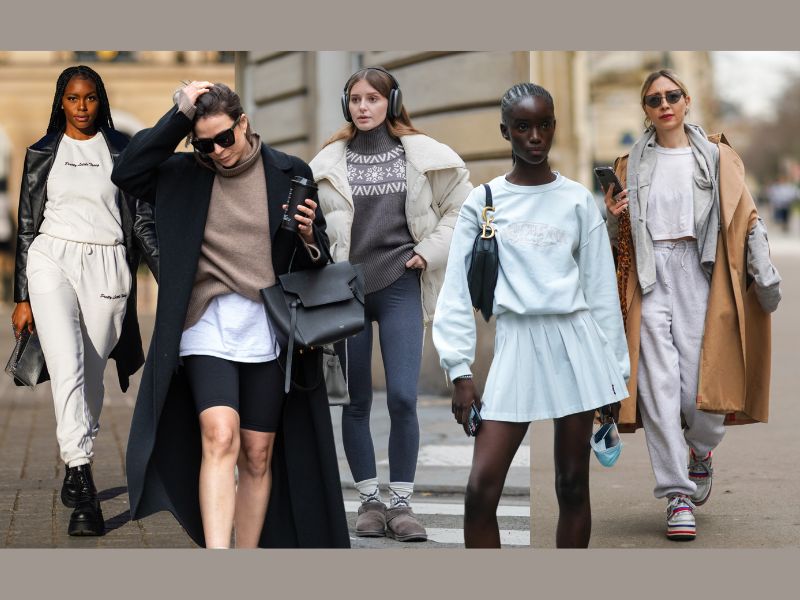
Hybrid office workers: People working flexibly between home and the office require neat outfits that still offer absolute comfort throughout the day.
-
Young consumers (18–35 years old) & mobile shoppers: The main mobile shopping force, trend-sensitive, frequently making purchase decisions through social media platforms and e-commerce.
-
Outdoor & travel lovers: People participating in marathon running, hiking, camping, or travelers who prioritize lightweight, versatile, easy-to-pack clothing that adapts well to various weather conditions.
-
Urban wellness customers: Consumer groups aiming for a healthy lifestyle, viewing sportswear as a lifestyle statement.
What consumers actually want
Fashion solutions that solve the problem of flexibility and convenience in daily life.
-
“Work-to-gym-to-social" apparel: Customers prioritize “all-in-one" designs, meaning they can wear them to work, to train, to travel, or to meet friends without needing to change clothes. Products must be subtle enough not to look like specialized gym wear, but also not too casual like sleepwear.
-
Hidden features in elegant designs: A combination of clean cuts, subtle color palettes, and modern sewing techniques such as: Seamless sewing techniques or sculpting/shaping technology that supports lifting and enhances natural curves.
-
Honoring personal style: Minimalist designs help wearers easily mix & match with everyday clothes like blazers, denim jackets, or sneakers.
Category budgets and high-demand products
Allocating inventory resources into the right categories with high demand and fast growth rates is the key for sellers to optimize cash flow and minimize inventory backlog.
-
Shirts & T-shirts: Became the segment with the largest market share in the entire industry at 30.5% of revenue. This is a basic product line with a short lifecycle and high repeat purchase rate, extremely suitable for sellers to use as a funnel product to attract traffic.
-
Yoga apparel: The segment recording the most breakthrough growth rate with a CAGR of 11.6%. Core technical requirements for this product line are ultra-lightweight fabric, superior 4-way stretch, and a seamless high-waist design.
Winning athleisure product trends for e-commerce and POD sellers in 2026
Catching up with the latest design trends and material tech applications is the key to helping print-on-demand (POD) and e-commerce sellers boost profit margins and optimize conversion rates in 2026.
Trend 1: Performance leggings and seamless sets
The explosion of high-waisted seamless knitting technique is dominating body-shaping product lines. Customers are becoming more demanding about fabric structure; they look for a combination of light body-shaping compression and absolute non-see-through protection. To win over this buyer group, designs need to focus on anti-roll elastic waistbands, moisture control capabilities, and a “wearing nothing" feel all day long.
Read more: 25 Types of Leggings to Sell: Find the Best for Your Store
Trend 2: Eco-friendly & sustainable activewear
Sustainability is no longer a marketing trick but has become a mandatory condition to get money from Gen Z and Millennials. Using recycled materials (recycled polyester) or bio-based fibers (tencel, organic cotton) helps you easily raise profit margins.
However, modern consumers are very alert to “greenwashing" (fake eco-friendly marketing). Prove your words by clearly showing trusted certifications like GRS or OEKO-TEX right on your store to build absolute trust.
Read now: How to Sell Activewear Online in 2026?
Trend 3: Workleisure style – Office & sportswear hybrid
The line between working hours and workout hours has been completely erased thanks to flexible working models. Modern office workers demand outfits that are neat enough for meetings, but comfortable, stretchy, and wrinkle-free when moving around all day.
Sellers should focus heavily on the “workleisure" line with designs like wrinkle-resistant sports polo shirts, stretch blazers with sweat-wicking lining, or elastic waist trousers. The secret to closing orders here is emphasizing convenience: “Wear all day without wrinkles, no ironing needed."
Trend 4: Explosion of court sports style (Court-to-street)
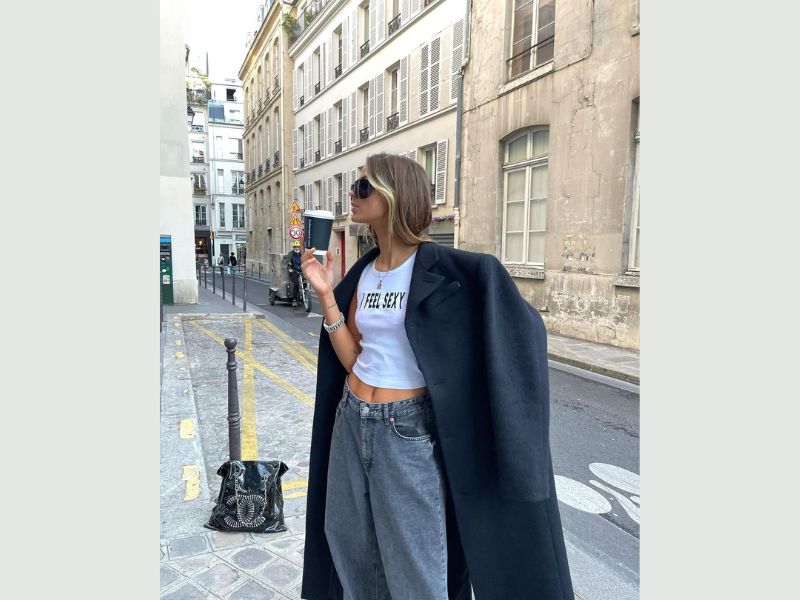
The rise of trendy sports like pickleball, padel, or tennis on social media is turning match outfits into daily street fashion trends. Young consumers want outfits that both support performance on the court and look great in pictures for TikTok/Instagram check-ins.
Fill your store with pleated sports skirts, knit vests paired with polos, or matching accessories like cap hats, headbands, and duffel bags. This is also a golden opportunity for sellers to tap into providing uniforms for local sports clubs.
Trend 5: Urban minimalist fashion
Unlike bright designs that attract short-term visual attention, the high-end urban customer segment is looking for minimalist, timeless products and prioritizing real wearing experiences. They choose heavyweight hoodies, high-end fleece joggers, or matching neutral-color sweater sets without showing off loud logos. To win over this tasteful and high-spending customer group, the seller’s challenge is to position the product as a long-term “investment item" for the daily wardrobe, not just a temporary shirt for the gym.
Trend 6: Fabric technology enhancing wearing experience
Modern customers are increasingly smart and ready to pay higher prices for truly useful technical features. Your product will stand out from competitors if integrated with technologies like: UV protection (UPF 50+), antibacterial sweat-odor treatment, ultra-fast drying fabric, or modular design with smart hidden pockets for phones. When writing product descriptions, show these techniques directly to turn an expensive price tag into a worthy investment in the buyer’s eyes.
Trend 7: Pastel & neutral color trends
The 2026 activewear color palette records the rise of soft earth tones and elegant pastels (represented by Pantone’s Cloud Dancer color code). This color scheme brings a relaxing (wellness), gentle feel and is extremely easy to mix and match. Sellers should prioritize importing or designing earth-tone yoga pants and sweet pastel bra-tops so buyers can easily mix and match into clean monochromatic outfits, thereby easily increasing cross-selling rates.
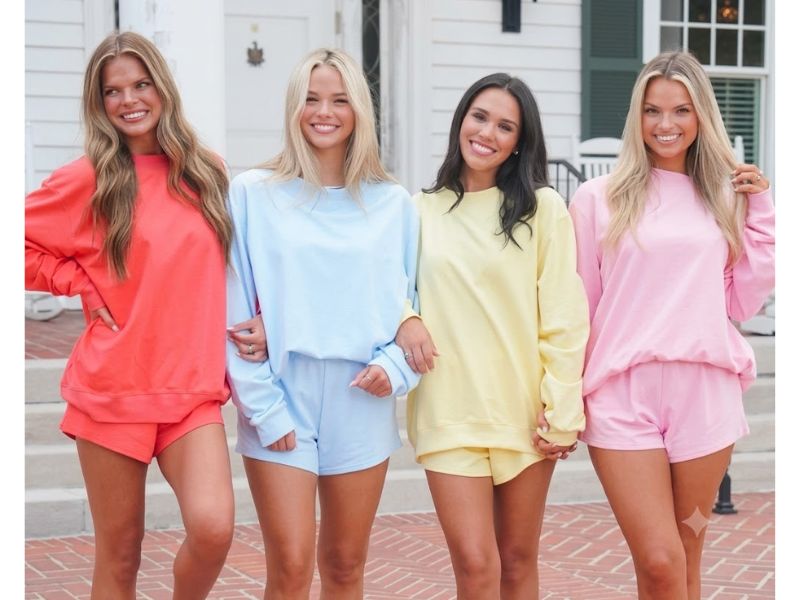
Trend 8: Inclusive sizing
More than 60% of women in major markets like the US wear size XL (size 14) or larger, but most brands leave this segment open. Expanding the size range from 2XS to 4XL+ is not only a brand plus point but also an opportunity to capture a low-competition revenue goldmine.
Do not forget to design smart details like flexible waistbands, adjustable drawstrings, and provide detailed size conversion charts with real model photos to remove customer hesitation when choosing sizes.
| Product name | Material specs & Printing tech | Core technical features (USP) | Positioning tips for sellers |
| AOP leggings |
75% recycled polyester, 25% elastane. AOP sublimation. |
4-way stretch, UPF 50+ UV protection, thick non-see-through fabric. | Focus on unique edge-to-edge printed patterns for yoga/gym classes. |
| AOP sports bra |
75% recycled polyester, 25% elastane. All-over print sublimation. |
UPF 50+ UV protection, flexible removable chest pads, supportive racerback. | Sell in matching sets with leggings to increase average order value. |
| Unisex sports T-shirt |
50% cotton, 50% polyester. DTFlex print or computer embroidery. |
DryBlend moisture control tech, durable fibers, good absorption. | Good price funnel product, suitable for group shirts or running event uniforms. |
| AOP yoga shorts |
75% recycled polyester, 25% elastane. All-over print sublimation. |
4-way stretch, high waist for tummy control, anti-friction thigh length. | Push campaigns in summer or target Pilates/lifting customers. |
| AOP workout jacket |
96% recycled polyester (GRS certified), 4% elastane. AOP sublimation print. |
Smooth outer surface, warm brushed fleece lining, trendy unisex fit. | Position in the high-end segment, focusing on sustainable fashion. |
| Dad hat cap |
High-end 100% cotton twill fabric. Raised embroidery or computer embroidery. |
Soft 6-panel structure, metal adjusting buckle, classic low profile. | Perfect cross-sell accessory for street sports outfits. |
| Adidas sports polo shirt |
Exclusive high-performance technical fabric. Brand logo embroidery. |
Fast heat release, wrinkle resistant, standard fit. | Target golf, tennis, pickleball players, or office workers. |
| Unisex jogger pants |
Heavyweight cotton & polyester blend. DTG print or computer embroidery. |
Soft inner fleece, convenient waist drawstring, neat cuffed ankles. | Sell year-round as convenient loungewear, travel, or flight outfits. |
4 profitable athleisure niches sellers should focus on
To avoid fierce competition in common items, here are the 4 niche segments with the highest growth rates that sellers cannot miss: