Contents
How to break through sales and maintain a stable order rate in the T-Shirt market is a major problem that every seller must solve. Consumer tastes change rapidly, from prioritizing fabric quality and aesthetics to requiring transparency about product origins. If you want to increase revenue, you need to approach the market based on real data. This article will analyze in detail the latest figures, product trends, and operational strategies made specifically for sellers.
Key Takeaways
-
The market will reach $31.9 billion in 2026 and is projected to touch $45.08 billion by 2035, with the men’s segment dominating in sales.
-
Personalization trends and sustainable fashion (organic cotton/recycled fibers) are 2 key factors deciding buying behavior and profit margins.
-
Digital printing is growing strongly and is the optimal solution for Print-on-Demand thanks to no minimum order quantity and low cost for small orders.
-
Focus on micro-niches to avoid mass price competition.
-
You must sell on multiple channels (Etsy, Amazon, Shopify, TikTok) and expand designs across multiple product lines to raise average order value.
How big will the T-Shirt market be in 2026?
Although it is the most basic clothing item, the t-shirt has now grown far beyond normal products to become one of the most competitive segments in the textile industry. The race for market share is fierce among big fashion brands, independent designers, and print-on-demand service providers. This growth comes from a shift in taste toward casual wear, the boom of e-commerce, the demand for self-expression, and relaxed dress codes at work.
Market size and growth potential
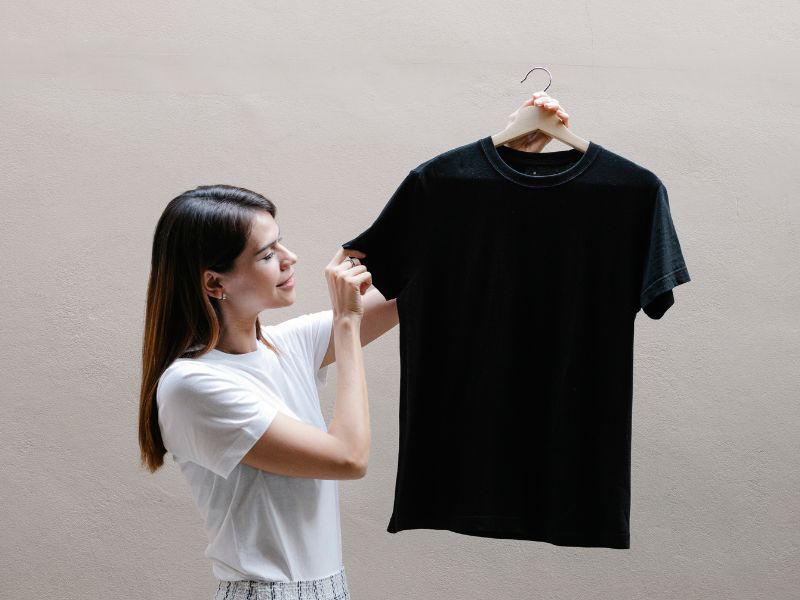
The global T-Shirt market size is valued at $31.9 billion in 2026. Maintaining this steady expansion, the market will reach $45.08 billion by 2035, achieving a compound annual growth rate (CAGR) of 3.9% from 2026 to 2035.
Looking at each gender segment, the global men’s t-shirt market is expected to expand from $43.73 billion in 2025 to $61.58 billion in 2031, with a CAGR of 5.87%. Meanwhile, the global women’s t-shirt market is estimated to reach $161.69 billion by 2028, recording a CAGR of 6.1% from 2022 to 2028.
The core product categories making up the market currently include: plain basics, graphic t-shirts, vintage/retro t-shirts, and custom t-shirts. Besides, the development of E-commerce and the POD model has lowered entry barriers for small brands and independent creators thanks to the advantage of doing business without inventory, without warehouses, and completely eliminating middlemen.
Key markets
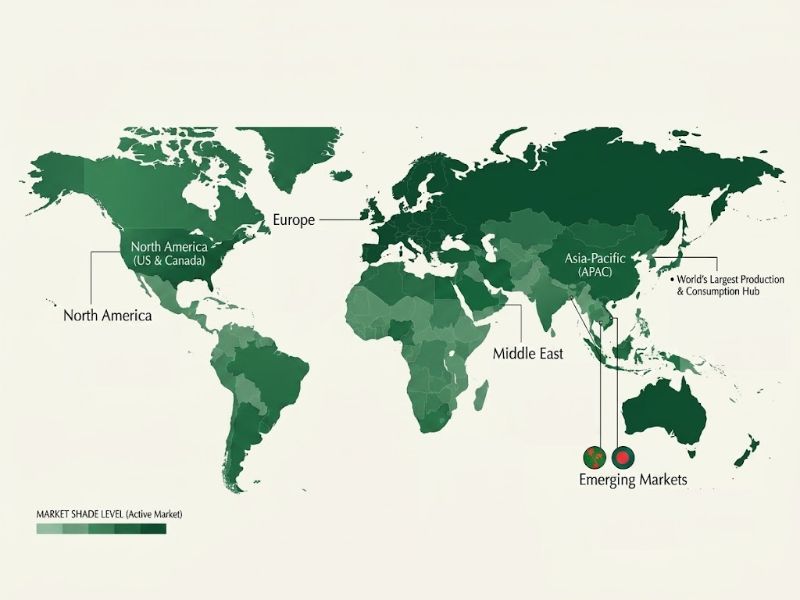
- North America (Focus on the US and Canada)
North America is a key market thanks to high buying power and common online shopping habits. Consumers here really like high-end t-shirts, sportswear, sustainable products, and personalized designs.
The US market alone accounts for about 1/5 of total global t-shirt sales, with a consumption of 2.1 billion pieces per year and growing at 3.8% per year. More than 61% of transactions in the US happen online, in which social media influences 46% of buying decisions. This is also an ideal growth environment for the POD industry thanks to superior e-commerce infrastructure.
- Europe
Europe is an old market but extremely strict about quality and sustainability. Customers here prioritize eco-friendly products, clear origin, and the use of recycled fibers.
Germany, Italy, France, Spain, and the UK are the main revenue contributors. The entire region currently has more than 160,000 retail stores and over 1.3 million textile workers. European brands are pushing automation and digital tailoring to keep their competitive edge.
- Asia – Pacific (APAC)
APAC is both the production hub and the largest t-shirt consumption market in the world. A young population, rapid urbanization rate, and a strongly growing middle class are the main growth drivers. This region owns more than 75,000 large factories, supplying over 60 billion garment products every year.
APAC also leads globally in POD printing, accounting for over 40% of total industry revenue in 2025 and expected to reach $8.25 billion by 2035. In which, China contributed 29% of world t-shirt production in 2024. China and India are transforming quickly into potential consumption markets for custom t-shirts.
- Middle East & Emerging markets
The Middle East and North Africa market expands fast thanks to a high internet user rate and modern retail infrastructure. Customers in this region prefer high-end t-shirts and sportswear.
Meanwhile, over 80% of US fashion companies plan to reduce dependence on supply from China. This shift makes countries like Vietnam, Bangladesh, or the Middle East strategic destinations for global supply chains.
What drives purchase decisions
- Printing Technology
The printing method directly affects cost, quality, and market supply speed. Screen Printing currently holds 40% of the POD printing market share (as of 2025). This method optimizes costs extremely well for large orders like uniforms or event clothes thanks to high color durability, but its growth rate is slowing down.
In contrast, digital printing technology (DTG/DTF) is a fast-growing segment with a CAGR of 12.5% globally and 12.8% in the US alone. Digital printing is the perfect solution for small orders, producing crisp photos-like prints, and requiring no minimum order quantity.
- Fabric material
Material is the top factor shaping the customer experience. Cotton continues to dominate completely, holding 52% of total t-shirt market demand thanks to its breathable, comfortable qualities and optimal ability to absorb DTG ink.
For high-end and sustainable fashion segments, Organic Cotton is the prioritized choice for buyers. In addition, Cotton-Polyester Blends are also very popular by cleverly combining the softness of cotton with the high durability and sweat absorption of polyester.
- Sustainable fashion trend
Consumers are becoming stricter about the environmental impact of the products they use. Producing a single traditional cotton t-shirt consumes up to 2,700 liters of water (equal to the drinking water of one person for 2.5 years). Facing that reality, the sustainable fashion market size is forecasted to reach $58.18 billion by 2033 with a CAGR of up to 22.1%, becoming a huge plus in the eyes of customers.
- Personalized experience
Personalization has become an important standard in customer retention strategies. Statistics show that 81% of consumers feel positive about and prioritize choosing brands that offer personalized experiences.
The early-bird shopping window
T-shirts are low-seasonality items that sell well year-round. This product always holds a top position on the list of best-selling items on all E-commerce platforms.
Even though buyers may have a need at any time, identifying peak shopping periods is still very important. In practice, you need to focus your efforts on 2 “golden periods" below:
| Peak period | Shopping driver | Product strategy |
| Summer peak | Warm/hot weather stimulates the demand for thin, light, and cool clothes. |
|
| Holiday peak | Demand for cheap, popular, and meaningful Christmas gifts. |
|
Top target audiences for T-Shirts
Who buys T-Shirts
Shifts in modern lifestyles have reshaped the main customer segments of the T-shirt market. Understanding the specific needs and traits of each buyer group in detail will help sellers optimize marketing campaigns and select the right target product categories.
Customer profile by gender
-
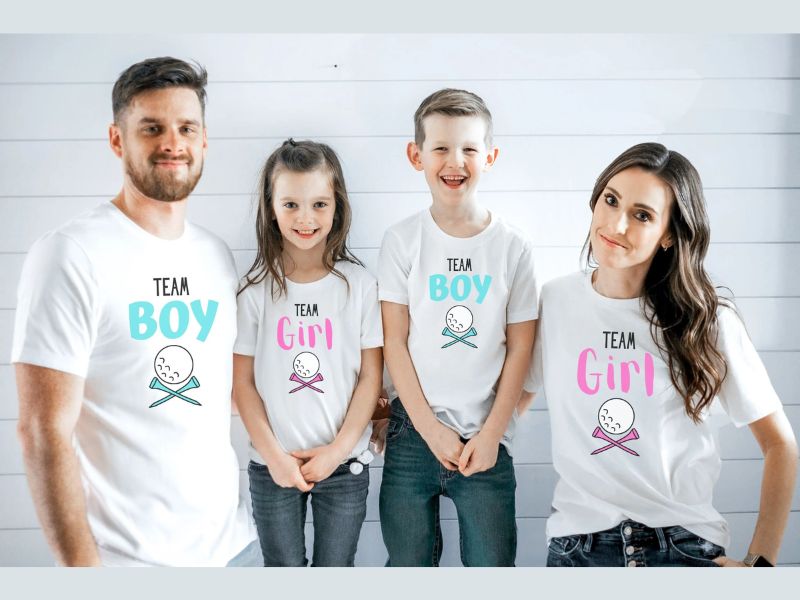
Men: Lead the market, accounting for 58% of total global t-shirt demand. The size of this segment is forecasted to reach $62.96 billion by 2033 with a CAGR of 6.15%.
-
Women: Account for 33% of global demand and are projected to reach $23.5 billion by 2033 (CAGR of 5.5% – 6.1%). This segment is closing the gap thanks to a variety of styles on online platforms and social commerce trends.
-
Children: Although making up only 9% of total global consumption demand, the actual buying power comes from parents who are willing to spend more on safe fabric materials. Additionally, the demand for children’s t-shirts sold in combos or during holiday and Back to School seasons remains high and stable.
-
Unisex trend: Gender-neutral designs are gaining dominance and are positively embraced by modern consumers.
Core customer groups
-
Youth (18–35 years old): The customer group most strongly influenced by social media (affecting the decisions of over 40% of buyers). This is the main consuming force for personalized t-shirts and vintage/secondhand t-shirt trends.
-
Businesses, Organizations & Teams: B2B customers with a need to buy custom-designed t-shirts in large quantities for promotional campaigns, events, uniforms, or branded retail production.
Characteristics of buyer spending distribution
-
Sustainability-first group: Up to 64% of consumers are influenced by eco-friendliness. T-shirt products labeled as sustainable record a growth rate 5.6 times faster than traditional products.
-
Bargain Hunters (Gen Z & Millennials): The main driver of the resale market for t-shirts and secondhand clothes. This segment is valued at $53.7 billion in 2026 and is projected to reach $154.3 billion by 2036 with a CAGR of 11.1%.
What consumers actually want
-
Quality over price: Cheap prices are only suitable for one-time wear needs (events, family uniforms). For daily wear, work, or dates, customers carefully check necklines, loose threads, and fabric softness. Choose to sell shirts with moderate thickness and stiffness that you would be willing to wear yourself.
-
Preference for minimalist designs: Overly complex designs with too many details easily overwhelm viewers with information. Applying the “Less is More" principle, simple and easy-to-understand messages or images make a strong, memorable impression and give the product higher usability.
-
Favoring eco-friendly products: Consumers (especially Millennials) tend to connect with and stay more loyal to socially responsible brands. Eco-friendly t-shirts not only contribute to the environment but also serve as a big plus for brand reputation.
-
Investing in the packaging experience: Creative packaging (like cake boxes, ice cream tubs, or custom concept bags, similar to what Johnny Cupcakes does) helps elevate the perceived value of the product, turning a simple t-shirt into an attractive gift.
Winning T-Shirt trends for E-Commerce sellers in 2026
1. Retro & Nostalgia
The feeling of nostalgia has become one of the strongest buying drivers in the t-shirt market. Instead of breaking into small, separate niches, nostalgia-driven designs help sellers fully cover 4 main groups: 70s Groovy, 90s Kitsch, Y2K, and Vintage Bootleg.
This group features distinct visual traits like distressed graphics, vintage colors, nostalgic imagery, retro fonts, along with worn-out, early internet, neon, glitch, and groovy patterns. To achieve the highest commercial success, you should focus on the Vintage Bootleg line by combining photos of characters, music bands, or pop culture icons on washed gray or black t-shirt blanks.
2. Typography & Statement shirts
Text-centered typography t-shirts attract customers thanks to their ability to directly communicate the wearer’s messages, thoughts, and personal taste. You can run this product niche in 3 directions:
-
The Minimal & Refined direction pursues subtlety with serif fonts, neutral color tones, and compact layouts.
-
The Bold & Expressive direction creates a strong visual impact with large text, warped fonts, and high-contrast colors.
-
Meanwhile, the Funny & Relatable direction hits the mindset of young people through jokes, trending memes, or satirical statements.
3. Food-inspired designs
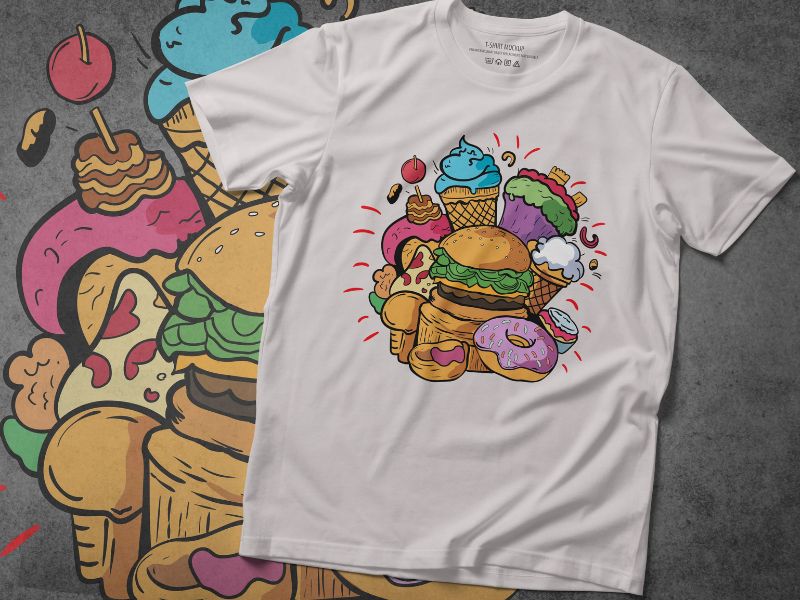
The food theme is seeing a huge surge in demand due to its relatability and people’s love for food. Familiar motifs such as pizza, coffee, fruits, vegetables, local dishes, or especially the tinned fish/sardines trend are covering sales channels everywhere.
Sellers can completely twist these visuals using classic hand-drawn styles, artistic sketches, or mixing in humor through food puns. This is also an ideal product group to combine with Typography to increase average order value.
4. Animal & Pet designs
Pet imagery always brings positive emotions to buyers, ranging from cute kawaii doodles to artistic illustrations or geometric art. However, the key strategy to break through in 2026 is using the Intersection Strategy.
This means instead of printing a plain animal image, you combine a specific pet breed with a specific interest community. For example, a Corgi playing pickleball or a chubby cat doing gardening. This approach helps the product target precise micro-niches and significantly improves conversion rates.
5. Nature, Floral & Botanical
Nature-themed patterns offer massive creative space for designers thanks to the variety of flowers, leaves, trees, mountains, forests, oceans, and botanical illustrations. Depending on your target audience, you can deploy products in several distinct styles:
-
Vintage Botanical evokes a classic, intellectual feel.
-
Romantic Floral brings soft, gentle emotions.
-
Bold Graphic Flowers create visual appeal with bright color blocks.
-
Minimalist Nature wins buyers over with modern simplicity.
Read more: 12 Best-Selling Garden Gift 2026: What Are Buyers Ready to Snap Up?
6. Spiritual, Mystical & Psychedelic
This trend answers young consumers’ need to connect spiritually and express their personal worldview. Zodiac symbols, tarot cards, moons, astronomical shapes, mystical mushrooms, and witch imagery are fully utilized to create unique designs. Mystical color palettes like amethyst purple, night blue, or deep black combined with psychedelic graphics create a haunting beauty, turning the t-shirt into a compelling medium for self-expression.
7. Handcrafted & Tactile-looking designs
In an era where digital images are created too easily and perfectly, consumers are returning to look for human-made values. This trend celebrates the beauty of imperfection through doodles, handwriting, pencil sketches, or effects that simulate embroidery, stitching (soft stitch, patchwork), and mixed media. The rustic, intimate, and “Less Polished" feel is the key factor that helps products stand out completely in the market.
8. Bold, experimental & Artistic graphics
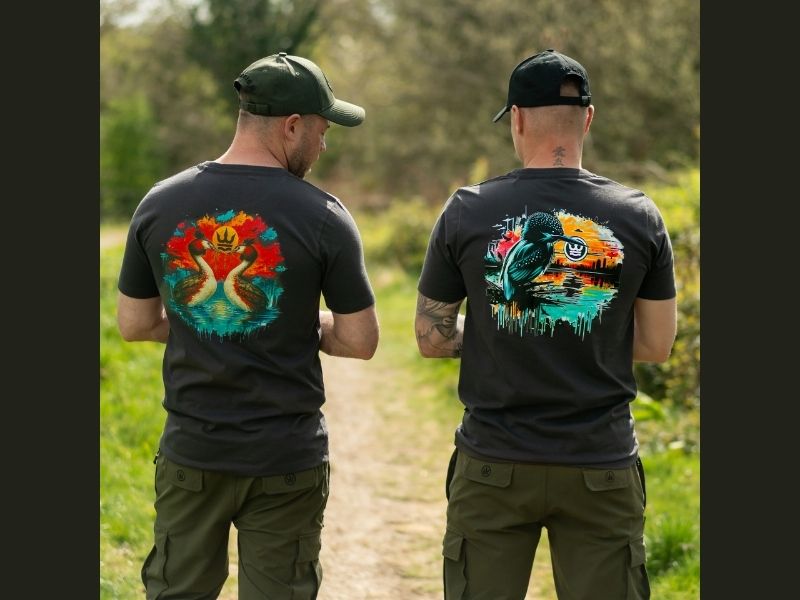
This is a dedicated playground for designs that want to create a strong visual impact and target art lovers or edgy fashion groups. This trend rejects safe layouts to embrace brave combinations of Maximalism, Surrealism, Abstract Geometry, and Mixed Media. Oversized print layouts, vivid color palettes, complex overlapping layers, and unexpected imagery turn the t-shirt into a piece of art.
9. Punk & Alternative aesthetics
Although sharing some similarities with Vintage or Maximalism, Punk aesthetics maintain an independent position thanks to a rebellious spirit and a distinct DIY design language. This product line stays true to newspaper collage cutouts, smudged visuals, asymmetrical layouts, raw typography, and heavy tear or bleach-wash effects. This is the niche that helps sellers dominate the Underground fashion community and Rock/Alternative music culture.
10. Sustainable & Eco-friendly
This is a material and product trend that plays an important role in driving buying decisions. Switching to t-shirt blanks made from 100% Organic Cotton or recycled fibers combined with water-saving printing technology helps brands build long-term reputation. Communicating environmental protection messages on your storefront will help sellers win over responsible consumers and increase profit margins.
3 high-profit T-shirt micro-niches
If you want to avoid fierce price competition, you can focus your resources on the following 3 segments:
-
Made-up running & Sports clubs segment: The trend of creating “fictional" sports clubs with strong local identity and a 90s retro style is taking over the youth. Buyers are excited about shirts named after non-existent running or sports clubs in specific neighborhoods, paired with vintage artwork and subtle humor.
-
Blue-collar & Trade pride segment: Skilled workers and technical laborers such as HVAC technicians, welders, or plumbers have immense pride in their work and strong buying power. Rugged badge designs with distressed effects hit the exact mindset of honoring their profession. This is a potential customer group for both personal use and gifts, barely affected by fast fashion trends.
-
Micro-hobby apparel segment: The explosion of small communities around niche hobbies is opening up valuable business opportunities. Leveraging soft pastel tones or retro graphics for niches like pickleball, living in harmony with nature, or communities pursuing a sober lifestyle helps products target buyers’ exact passions.
Actionable strategies for T-shirt business
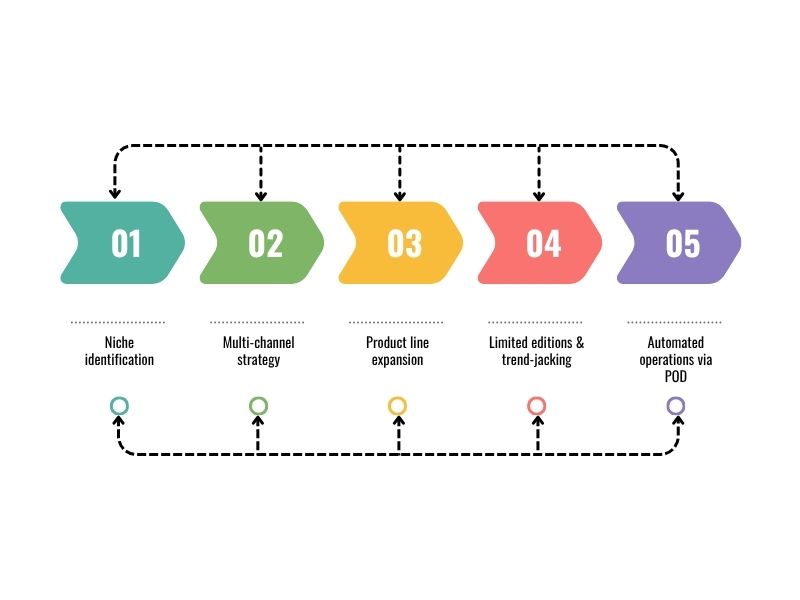
Catching trends is necessary, but the execution strategy determines the success or failure of a store. To capture market share and achieve a sales breakthrough in 2026, sellers need to apply the following tactics immediately:
Step 1: Niche identification
Focus on specific passionate communities (pickleball, technical workers, gardening lovers…) and apply the Intersection Strategy (for example: Corgi + Pickleball). Exploiting micro-niches helps you avoid price wars, easily set higher prices, and optimize ad costs.
Step 2: Multi-channel strategy
Use Etsy/Amazon as a “testing funnel" to leverage organic traffic for finding winning designs, then drive customers to Shopify or TikTok Shop to own your buyer list. This model helps spread risk and optimize long-term profits.
Step 3: Product line expansion
Once you have a best-selling design, immediately clone that artwork onto higher-value POD blanks like hoodies, sweatshirts, ceramic mugs, or tote bags. Bundling or cross-selling helps raise the average order value right away.
Step 4: Limited editions & safe trend-jacking
Create scarcity with limited seasonal collections to trigger fast purchase decisions. When catching cultural or event trends, strictly comply with copyright by using self-designed original retro artwork or public domain elements instead of copying protected logos and names.
Step 5: Automated operations via POD fulfillment systems
Connect your store with reputable POD suppliers (Merchize, Printful) to automate the entire process: from receiving orders, DTG/DTF printing, and packaging to global shipping. You only need to focus on marketing and researching new products.
The big picture of the T-shirt market and key trends have been revealed; the opportunity for a breakthrough is entirely in your hands!