Contents
- 1. Halloween 2026 Statistics: New Insights into Customer Shopping Preferences
- 3. Where Halloween Shoppers Are Looking
- 4. What Should You Actually Sell?
- 5. What Will Halloween Designs Look Like in 2026?
- 8. Don’t Let Fulfillment Become Your Bottleneck
- Download the Full Halloween 2026 Selling Guide
- Turn Halloween Trends Into Your Selling Strategy
Halloween may last for one night, but the selling opportunity starts much earlier.
For POD sellers, success is not simply about uploading a few Halloween designs in October. You need to understand when customers start shopping, what they want to buy, who they are buying for, where they shop, and whether their orders can arrive before October 31.
The 2026 season presents opportunities across apparel, home decor, gifts, personalized products, and niche-focused designs. The key is turning those opportunities into a focused selling strategy.
1. Halloween 2026 Statistics: New Insights into Customer Shopping Preferences
Halloween may last for one night, but the selling opportunity starts much earlier.
For POD sellers, success is not simply about uploading a few Halloween designs in October. It means understanding when customers start shopping, what they want to buy, who they are buying for, and whether their orders can arrive before October 31.
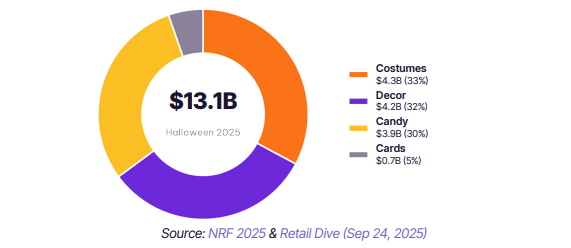
The market is already showing strong signs of opportunity. U.S. Halloween spending reached a record $13.1 billion in 2025, with average spending reaching $114.45 per consumer.
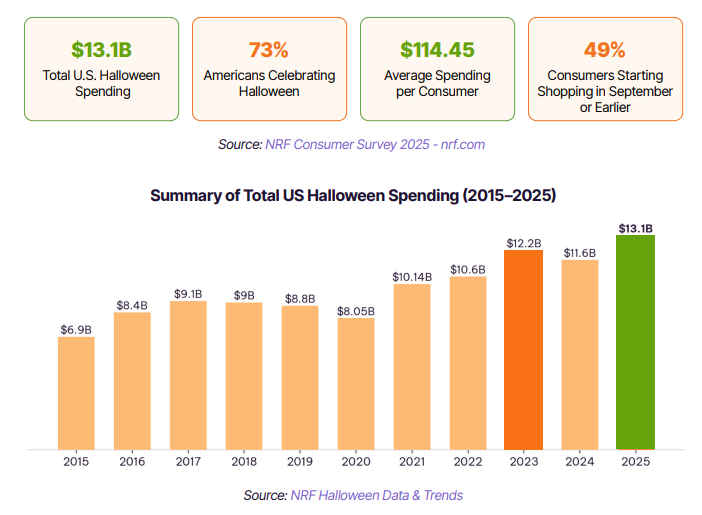
But market size is only part of the story.
Insight 1: Halloween shopping starts months before October
The rise of “Summerween” has pushed Halloween interest into the summer months, giving sellers a much longer opportunity to launch, test, and optimize their products.
Key signals include:
- 49% of Americans start shopping for Halloween in September or earlier.
- Online Halloween spending in early July 2025 increased 71% year over year, according to Adobe Analytics.
- Early demand gives sellers more time to test products and identify winning designs before peak season.
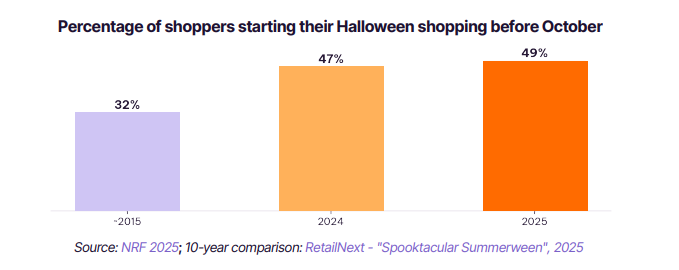
In other words, Halloween is no longer just a four-week October campaign. This creates a clear advantage for sellers who start early.
Starting early gives your listings more time to:
- Get indexed by marketplaces
- Collect views and sales
- Build reviews
- Test keywords
- Identify winning designs
- Optimize product pages
- Scale successful products before demand peaks
Insight 2: Customers are looking for products that feel personal
Another important opportunity lies in personalization.
Halloween shoppers are not only buying generic costumes or decorations. They are also looking for products that reflect their personality, interests, family, profession, pets, or identity.
That creates a natural advantage for POD.
A broad product such as a “Funny Halloween Shirt” can face heavy competition. A more targeted idea, such as a Halloween shirt designed around a specific profession or interest, can speak directly to a smaller but more relevant audience.
Customers may purchase several Halloween-related products during the same season. A household can decorate its home, prepare outfits, attend different events, and buy products for family members or pets.
This creates opportunities to build collections around the same audience instead of relying on one product or one listing.
Insight 3: The biggest opportunities are not just costumes
In 2025, U.S. Halloween spending included:
- $4.3 billion on costumes
- $4.2 billion on decorations
- $0.7 billion on greeting cards
- $9.2 billion combined across these three categories
Home decor deserves particular attention.
Halloween decoration spending increased 62% between 2019 and 2025, rising from $2.6 billion to $4.2 billion. That growth outpaced the overall Halloween market during the same period.
For POD sellers, this opens opportunities beyond the usual T-shirt.
Consider products such as:
- Doormats and porch signs
- Garden flags and banners
- Canvas prints
- Pillow covers
- Ornaments
- Personalized home decor
- Seasonal gifts
Insight 4: Customers are buying for identity, not just the holiday
Think about who the customer is, not just what holiday they are shopping for.
Potential audiences include:
- Home decor enthusiasts
- Pet owners
- Teachers
- Healthcare workers
- Families
- Couples
- Friends and groups
- Book lovers
- Fans of specific Halloween aesthetics
A targeted design can connect with a specific customer more effectively than a generic Halloween design.
3. Where Halloween Shoppers Are Looking
Knowing that Halloween demand is growing is only the first step. The next question is where those shoppers go to discover products and what they search for when they are ready to buy.
Different platforms play different roles in the Halloween customer journey. Some are better for discovery and inspiration, while others are built around product search and conversion.
Here are several important channels for Halloween POD sellers:
- Etsy: Strong fit for personalized and gift-oriented Halloween products.
- Amazon: High-volume marketplace where reviews, price, and fast delivery strongly influence purchases.
- TikTok: Useful for creating demand through short-form content and viral product discovery.
- Pinterest: A strong visual discovery channel, especially for Halloween decor and design inspiration.
- Shopify and Instagram: Useful for building a brand and maintaining relationships with customers beyond the Halloween season.
4. What Should You Actually Sell?
Finding where shoppers search is only the first step. To choose the right products, you need to match product demand with a specific audience, niche, and Halloween use case.
It’s more efficient to build focused product collections instead of relying on one product category or creating unrelated listings.
Build a balanced product mix
Use different product categories for different roles. T-shirts and sweatshirts can capture high Halloween demand, while personalized products, home decor, ornaments, and pet accessories create opportunities for higher-value orders and cross-selling.
Focus on one niche
Go deeper instead of targeting everyone. The ebook identifies 11 Halloween niches, including home decor enthusiasts, pet owners, professionals, couples and groups, and book lovers. A focused niche lets you build multiple products around the same customer and occasion.
Create product ecosystems
Turn one design idea into a collection. For example, a “Front Porch” concept could span a welcome sign, doormat, garden flag, and banner. This makes cross-selling more natural and allows personalization to extend across a customer’s family, home, profession, or pet.
Offer multiple price points
Give shoppers different ways to buy. A simple three-tier structure can include:
- Entry: $15–22 — stickers, totes, mugs
- Core: $22–35 — T-shirts, doormats, pillow covers
- Premium: $35–60+ — sweatshirts, matching sets, personalized products
This approach lets one design concept reach different budgets without requiring hundreds of unrelated listings.
The goal is not to build the biggest Halloween catalog. It is to build a focused catalog where products support the same customers, occasions, and design concepts.
For more product ideas, niche-specific recommendations, and guidance on what to sell in each category, read the full Halloween 2026 ebook.
5. What Will Halloween Designs Look Like in 2026?
Halloween shoppers are increasingly drawn to designs that reflect their personality, lifestyle, or home aesthetic, rather than generic pumpkins and ghosts.
Your design strategy should therefore go beyond simply adding Halloween icons to a product.
Choose a distinct visual direction
Different aesthetics appeal to different audiences and products. Retro and vintage styles offer broad appeal, while styles such as cute ghost, Gothcore, Boho Fall, Disco Halloween, and Minimalist Modern target more specific tastes and use cases.
The key is not to follow every trend. The ebook recommends choosing no more than two design styles per shop to build a recognizable and consistent brand.
Design for identity, not just Halloween
Words can be as important as visuals. Instead of relying on generic Halloween phrases, sellers can create designs around specific identities, interests, and occasions, such as humor, family, professions, pets, or the broader fall season.
This approach helps turn a broad Halloween audience into a more specific group of buyers with a clear reason to connect with the design.
Want to see which aesthetics, themes, and design directions have the strongest potential for 2026? Read the full ebook for the detailed trend breakdown and niche-specific design suggestions.
8. Don’t Let Fulfillment Become Your Bottleneck
Once your products, listings, and marketing are ready, fulfillment becomes the final piece connecting a customer’s order to the Halloween deadline.
For seasonal selling, a fulfillment partner needs to handle more than everyday orders. Production speed, capacity, product variety, quality control, and shipping reach all become especially important when demand rises quickly.
Merchize is built for this type of operation, with:
- 1–3 business-day production, including during peak season
- 100,000 items per day in production capacity
- Around 1,000 product types for testing different product ideas and building collections
- Six global factory clusters and shipping to 180+ countries
- MOQ of 1, allowing sellers to test products without committing to large quantities
- Integrations with major channels including Amazon, Etsy, Shopify, TikTok Shop US, eBay, and WooCommerce
This combination matters because Halloween demand can change quickly. A product that starts trending needs enough production capacity to handle the spike, while late-season orders need fulfillment and shipping options that can meet increasingly tight deadlines.
The goal is simple: your fulfillment setup should support your selling strategy—not become the reason a successful Halloween campaign falls behind.
And that brings the full strategy together: find the opportunity, choose the right niche, create designs that match demand, launch early, and make sure every order can reach the customer on time.
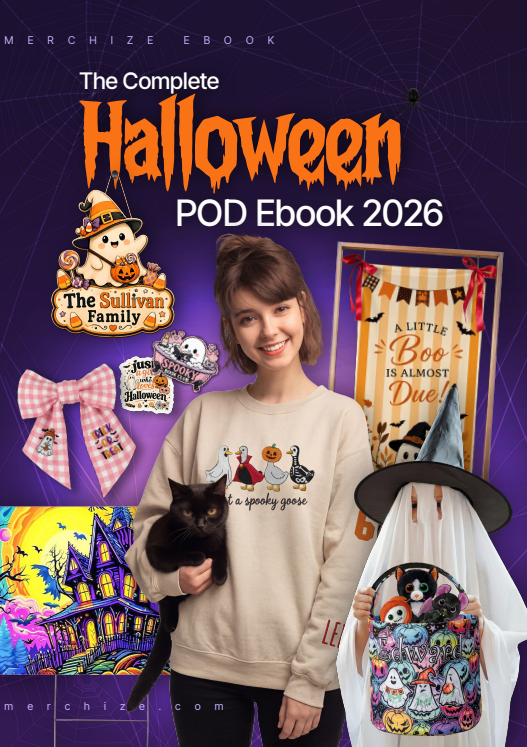
Download the Full Halloween 2026 Selling Guide
Halloween 2026 offers plenty of opportunities—but making the most of the season requires more than finding a few popular designs.
You need to know where demand is coming from, which niches and products have potential, what shoppers are searching for, which design styles are gaining attention, and when to launch, scale, and stop taking certain orders.
This ebook brings those pieces together in one practical guide, covering:
- Halloween market size and customer behavior
- Key platforms and search trends
- High-potential products and 11 niche opportunities
- 2026 design trends and bestselling quote ideas
- Pricing and product-bundling strategies
- A 90-day Halloween selling timeline
- Peak-season fulfillment and shipping considerations
- A step-by-step action plan for the season
The full ebook goes deeper into the data, examples, trends, and actionable recommendations you can use to build your Halloween strategy.
If you’re planning to sell Halloween products in 2026, now is the time to turn those insights into a plan. Download the full ebook and get ready for the season before the October rush begins.