Contents
Choosing the right ecommerce platform affects everything from store setup and payment processing to SEO, marketing, and scalability. We compared 12 leading options to find the best ecommerce platforms based on pricing, ease of use, customization, integrations, scalability, and business-model fit to help you find the right option for your store.
Key Takeaways
- An E-commerce platform is an all-in-one ecosystem that includes web building tools, order management, integrated marketing, and business operation optimization.
- Criteria for choosing a platform need to balance ease of use, setup time, integration capability, and cost.
- Beginners should choose easy-to-use drag-and-drop platforms or quick setup options.
- Businesses focused on content marketing and SEO should self-host on open-source platforms to have full control over customization and data ownership.
- Large enterprises should choose solutions with no percentage-based transaction fees to optimize operational costs.
- Take advantage of huge organic traffic from social media platforms if your business model relies on viral content and Livestreams.
- Businesses selling digital content, courses, or memberships should use specialized solutions that automatically deliver files and handle tax obligations.
What is a best Ecommerce platform?
An e-commerce platform is specialized software that helps you create a storefront, process transactions, and manage your entire online operation. Ultimately, a suitable solution will free you from technical barriers so you can focus maximum effort on driving traffic and closing sales. Here are 6 criteria of a best e-commerce platform:
1. Intuitive admin dashboard
An intuitive management interface helps you reduce unnecessary steps when updating products or processing daily orders. Consequently, the simpler the management, the more time you can spend on product R&D and optimizing sales campaigns.
2. Fast store deployment
The ability to launch quickly allows you to test products and generate cash flow early. For complex systems that take a long time to configure, make sure the platform provides a clear competitive advantage in the long run to make up for the opportunity cost.
3. Supply chain automation
For sellers using Dropshipping or Print-on-Demand models, direct connection to suppliers helps automatically sync inventory and bulk-process orders. As a result, you won’t have to spend time manually entering data for every single order.
4. Design customization
A unique interface helps increase customer return rates and average order value. The platform needs to provide flexible customization tools so your storefront doesn’t look like thousands of other competitors in the market.
5. Built-in marketing ecosystem
Built-in features like SEO optimization, automated cart recovery emails, or ad tracking pixels help you save money on third-party software. In addition, they help reduce data conflict risks.
6. Transparent and optimized costs
You need to calculate the full financial picture, including monthly subscription fees, transaction percentage fees per order, and app extension costs. This ensures your net profit margin is not eaten away as sales grow.
12 Choices for best Ecommerce platforms
Below is a list of best ecommerce platforms evaluated based on pricing, ease of use, customization, scalability, marketing tools, integrations, and suitability for different business models.
| No. | Platform | Starting cost | Target users | Key strengths | Main limitations |
| 1 | Shopify | $29 / month | Beginners & professional sellers | Complete ecosystem, great automation for dropshipping/POD, rich app store. | Transaction fees if not using Shopify Payments, nice themes are expensive. |
| 2 | TikTok Shop | $0 | Sellers via livestreams & niche videos | Huge traffic, ability to generate organic sales booms (viral commerce). | Completely depends on content algorithms, pressure to produce constant videos. |
| 3 | WooCommerce | $0 | Marketers focused on SEO & content marketing | Freedom to customize source code, excellent SEO optimization on WordPress, no core license fee. | Requires technical skills, steep learning curve for beginners. |
| 4 | BigCommerce | Depends on plan | Large retail brands, broad product catalogs | No % transaction fee, strong product filtering, unlimited bandwidth. | Plan upgrades are expensive, community is smaller than Shopify. |
| 5 | Fourthwall | $0 | Creators, merchandise & membership sellers | Free monthly plan, auto-handles tax/VAT and POD packaging/shipping. | Not suitable for complex inventory or overly large catalogs. |
| 6 | Squarespace | $16 / month | Personal brands, art & aesthetic stores | Aesthetic design standards, grid-based layout builder, mobile-optimized. | Less flexible customization than Wix, limited third-party apps. |
| 7 | Wix | $17 / month | People who want design freedom | Integrated AI site builder, 800+ templates, high layout customization. | Average loading speed, cannot change templates after publishing. |
| 8 | Big Cartel | $0 (Up to 5 products) | Artists, painters, small craft makers | Completely free plan, no transaction fees, ultra-minimal interface. | Poor scalability, sales management features are very basic. |
| 9 | Ecwid | Free trial / Paid plans | Businesses wanting to sell on existing websites | Smoothly embeds store into existing sites (WordPress, Wix…) without starting over. | Not optimized to run as a large standalone platform. |
| 10 | Sellfy | $29 / month | Creators selling digital goods/courses | Auto file delivery and license keys, quick store setup under 20 minutes. | Limited design choices (only 5 templates), no built-in blog system. |
| 11 | Weebly (Square Online) | $15 / month | Small & medium stores prioritizing drag-and-drop | Simple drag-and-drop builder, tightly integrated with Square payment ecosystem. | Limited advanced sales features, charges 3% commission on sales. |
| 12 | Shift4Shop | Depends on setup | Marketers & developers with coding skills | Built for deep SEO optimization, 200+ payment gateways, unlimited bandwidth. | Hard to use for beginner. |
1. Shopify
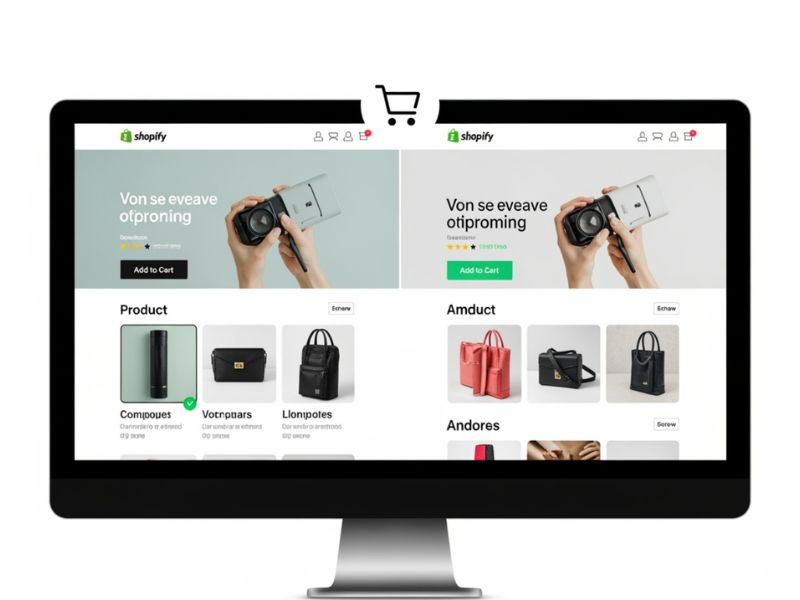
Shopify currently holds a leading market share with over 875 million customers worldwide and more than 5.88 million daily active users across 175 countries. The system provides an all-in-one solution from a drag-and-drop website builder and AI assistant integration to a huge app ecosystem, helping stores run smoothly without requiring coding or design skills.
| Plan | Fixed cost (Annual billing) | Transaction fee (Credit card) |
| Basic | $29 / month | 2.9% + $0.30 |
| Grow | $79 / month | 2.7% + $0.30 |
| Advanced | $299 / month | 2.5% + $0.30 |
Pros: Unlimited physical and digital product sales. Moreover, it offers a rich app store for sales support alongside smooth multi-channel connection to major e-commerce platforms and social networks. In fact, its performance and SEO optimization tools are among the best in the market.
Cons: Free theme library is quite limited; furthermore, most nice themes require a high one-time purchase cost. Deep customization options are also restricted without editing the original source code.
Features:
-
Over 70 templates optimized for conversion rates.
-
Integrated AI to personalize customer experiences and boost sales.
-
Automated multi-channel marketing system including email marketing and social commerce.
-
Accurate inventory dashboard and real-time revenue analytics reports.
-
SEO-friendly blogging system to drive organic traffic and build brand awareness.
Read more: How to Make Money on Shopify: 10 Proven Ways to Earn Income in 2026
2. TikTok Shop
TikTok Shop blurs the line between entertainment and shopping by integrating stores directly into a social media platform with over 2.21 billion users. In particular, the United States has the largest TikTok user base, with more than 136 million users.
Overall, this is a breakthrough solution for dropshipping and social commerce models thanks to its ability to leverage viral trends through short videos and real-time livestreams.
| Cost category | Set fee |
| Account setup & maintenance | $0 (Free setup) |
| Transaction & marketplace fees | Varies by market and product category (sellers pay a fixed percentage fee on total order value) |
Pros: Ability to reach a huge customer base completely organically. Selling directly via livestreams increases interaction and instant order closing. Viral content potential helps products easily explode in sales within a short time.
Cons: Highly dependent on the platform’s content distribution algorithm. User base heavily focuses on young people, requiring products to be highly trend-driven. Constant pressure to produce high-quality video content to maintain visibility.

Features:
-
Direct product tagging in short videos and livestreams.
-
Affiliate marketing system connecting sellers with a huge network of KOCs/KOLs.
-
Inventory sync and direct order processing on the TikTok Seller Center dashboard.
-
Shopping incentive tools like Flash Sales, platform vouchers, and Freeship Extra.
Read more: How to find TikTok trending products to sell in 2026
3. WooCommerce
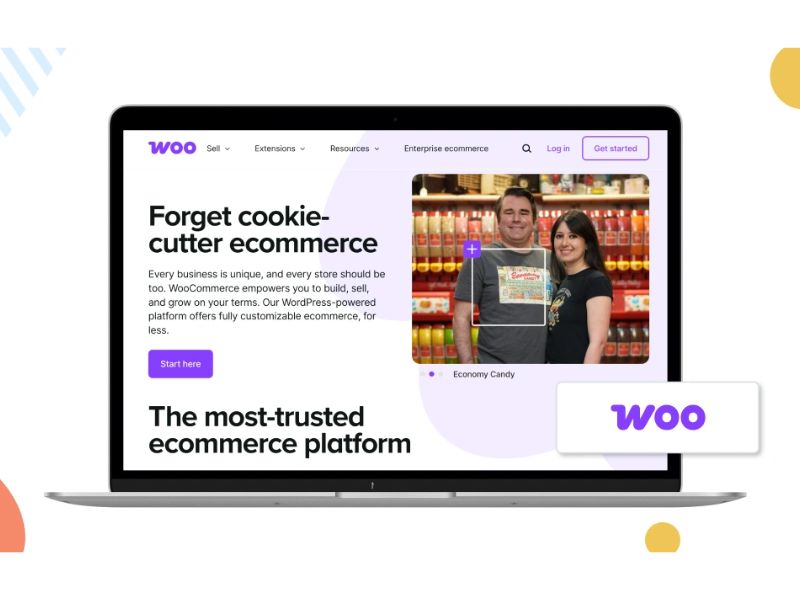
WooCommerce is a free plugin that turns any WordPress website into a full e-commerce store. Powering 4.17 million online stores and holding 20-39% of the global e-commerce market share, this is the top choice for sellers who want to self-host their data and push content marketing strategies. Although it requires a longer learning curve, the platform offers almost infinite customization options in return.
| Cost category | Set fee |
| Plugin license fee | $0 (Free initial setup) |
| Operating cost | Depends on hosting fees, domain, and paid add-ons |
Pros: Best platform for SEO thanks to standardized source code and supporting plugin ecosystems like Yoast. Supports over 140 popular global payment gateways (Stripe, PayPal, Google Pay, Apple Pay…). Deep layout and feature customization. Very detailed guides and community support forums. Multi-language content support (24 languages) and multi-currency options.
Cons: Steep learning curve requiring patience to set up. Actual running costs depend on hosting infrastructure and extra paid add-ons.
Core features:
-
Direct integration into the WordPress content management system.
-
WooCommerce Extension Store with over 300 free and paid add-ons.
-
Full freedom to edit source code to optimize your store.
4. BigCommerce
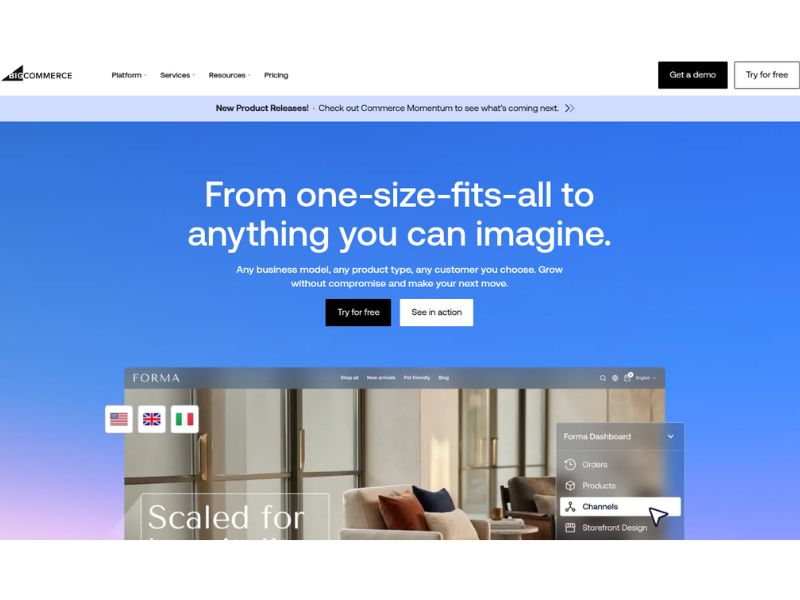
BigCommerce has processed over 25 billion dollars in revenue across 120 countries. Although it serves only about 36,000 to 45,000 active stores, this creates a less competitive advantage for sellers. In addition, the platform features an extremely powerful product search engine, which is very suitable for retail brands with large product catalogs.
| Cost category | Set fee |
| Monthly subscription fee | Cost depends on the business plan level chosen |
| Transactions & infrastructure | Unlimited bandwidth and storage space |
Pros: Unlimited product uploads. Unlimited bandwidth and storage help maintain optimal page loading speeds. Along with this, it includes built-in multi-currency sales features and deep analytics reporting tools. Moreover, it offers smooth connection support with POS software and shipping systems, 12 free templates, over 160 paid templates, and active community forums.
Cons: Requires upgrading to higher-tier paid plans to access 24/7 live chat support.
Core features:
-
In-depth product search and filtering tools for large stores.
-
User-friendly drag-and-drop editor, while also allowing CSS/HTML code editing.
-
Visual market and business performance reports.
5. Fourthwall
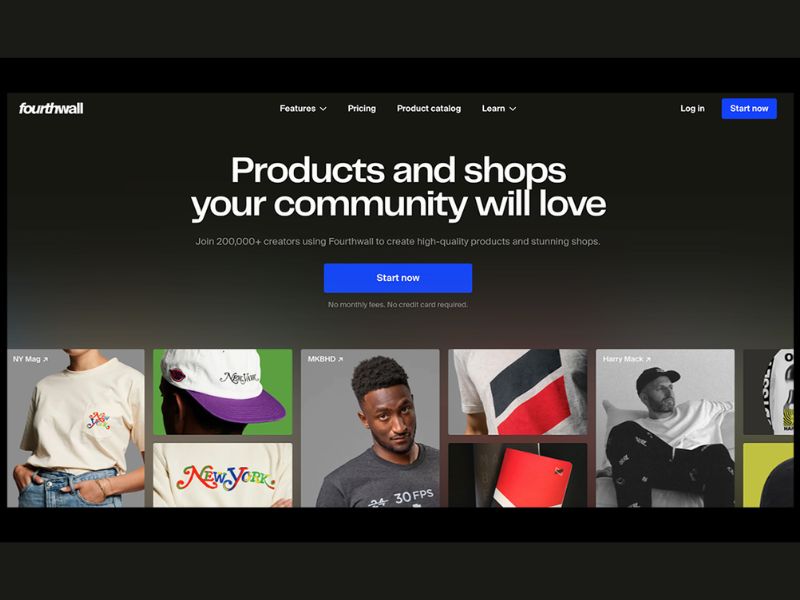
Fourthwall is a platform with no fixed monthly fees, designed specifically for new sellers and content creators who do not want to worry about tech, tax management, or complex operations. Simply put, you just need to upload your products, and the system automatically creates a store interface around that product catalog.
| Cost category | Set fee |
| Monthly platform fee | $0 / month |
| Operations & processing fee | Automatically deducted in its role as payment merchant of record |
Pros: No monthly maintenance fees. Automatically handles sales tax and VAT. Automatically takes care of shipping and customer support for products in the system catalog. Built-in print-on-demand (POD), digital products, and membership subscriptions. Minimalist and easy-to-use dashboard.
Cons: Not ideal for managing complex inventory. Limited integration options compared to other market competitors.
Core features:
-
Automatically acts as the payment merchant of record and handles tax compliance.
-
All-in-one system that packages, ships, and handles customer support for available catalog products.
-
Built-in membership subscription management tool right on the store.
6. Squarespace
Squarespace is the top choice for creators, individual sellers, and small businesses that prioritize design aesthetics. Specifically,, the platform uses a neat grid-based layout builder, allowing you to customize fonts, color schemes, and effects without editing code. While not optimized for high-volume retail models, Squarespace excels at showcasing art products or running small to medium-scale dropshipping stores.
| Cost category | Set fee |
| Starting fee | $16 / month |
| Service plan | No free plan available |
- Pros: Impressive template collection, automatically optimized for mobile display. Built-in email marketing tools and analytics systems. Strong support for booking services and digital products. Intuitive admin dashboard, friendly for beginners.
- Cons: Less layout editing flexibility compared to Wix. Third-party app and extension store is relatively limited.

Core features:
-
Grid-based drag-and-drop editor optimized for clean layouts.
-
Appointment scheduling and online service delivery tools.
-
Built-in email marketing system to retarget customers.
7. Wix
To date, Wix powers over 763,000 e-commerce stores and attracts an average of 47 million visits per month. Overall, this cloud-based platform stands out for its flexible design customization, allowing sellers to have complete control over page layouts. Notably, its built-in AI tool can automatically build a complete website based on a few initial survey questions.
| Cost category | Set fee |
| Starting fee | $17 / month |
| Marketing support | Includes $300 in online ad credits for new users |
Pros: Huge library with over 800 templates across various industries. Full layout customization without being locked into strict templates. Rich app market along with built-in SEO and marketing tools. Supports abandoned cart recovery and direct add-to-cart features from photo galleries. Payment integration with over 40 providers (PayPal, Stripe, Square, Wix Payments).
Cons: Cannot change the main template once the website is published. Page loading speed is somewhat slower compared to Shopify or Squarespace.

Core features:
-
Automated website builder powered by AI (Wix AI Builder) and a mobile sales management app.
-
Multi-currency converter (for Unlimited plans) to support global sales.
-
Instant buy button feature and customer loyalty programs.
8. Big Cartel
Big Cartel is a specialized platform designed specifically for artists, illustrators, and independent craft makers who want to start a business on a small scale. The system focuses heavily on simplicity, helping sellers set up a storefront and upload products in about 10 minutes without complex technical barriers.
| Cost category | Set fee |
| Starting fee | $0 / month (Free) |
| Transaction fee | 0% (No percentage fee per order) |
Pros: Offers a completely free plan for catalogs up to 5 products. No transaction fees per order. Extremely minimalist dashboard for quick store setup. Elegant display interface suited for artistic styles.
Cons: Limited scalability. Restricted number of external app integrations and advanced design customization.

Core features:
-
Quick setup for product details, pricing, and payment gateways.
-
Minimalist interface specialized for handmade and print-on-demand (POD) product lines.
-
Lightweight, simple order management tool set.
9. Ecwid
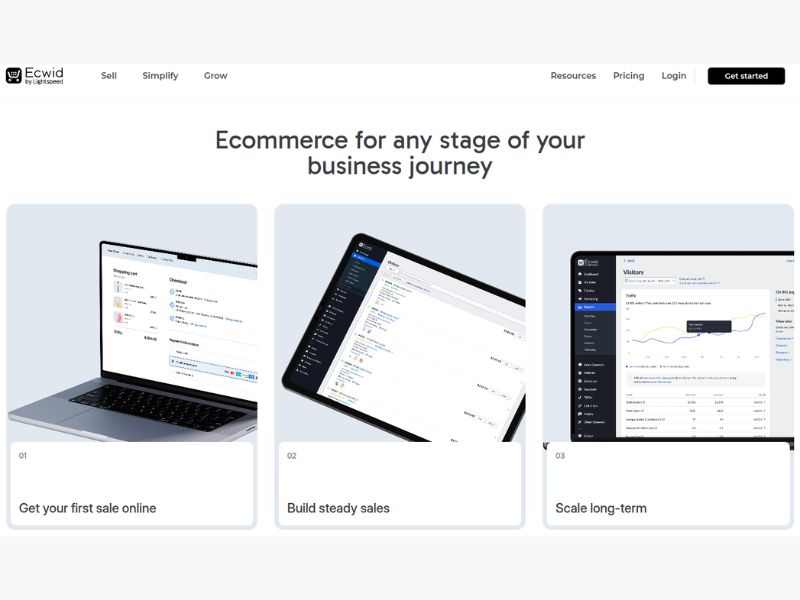
Ecwid (recognized by G2 Crowd as a top platform for fast e-commerce deployment) operates as a unique add-on feature. Instead of building a new store from scratch, Ecwid allows you to embed an online store directly into existing websites such as WordPress, Wix, or Weebly. At the same time, it helps expand multi-channel sales across Amazon, eBay, Facebook, and Instagram.
| Cost category | Set fee |
| Service plan | Offers a free trial plan and customized paid plans based on business size |
| Infrastructure integration | Embeds directly into existing websites via embed codes without starting over |
Pros: Extremely fast deployment speed, user-friendly interface. Flexible brand identity customization (logos, colors, layouts). Built-in management and tracking tools for Facebook and Google ads right on the dashboard. Optimized shopping experience with a customer address book and saved favorite products feature.
Cons: Best suited as an add-on solution for existing websites rather than serving as a large standalone platform.
Core features:
-
Streamlined, high-conversion checkout process.
-
Multi-platform store embedding (Website, Social Media, Marketplace).
-
Integrated multi-channel ad campaign manager.
10. Sellfy
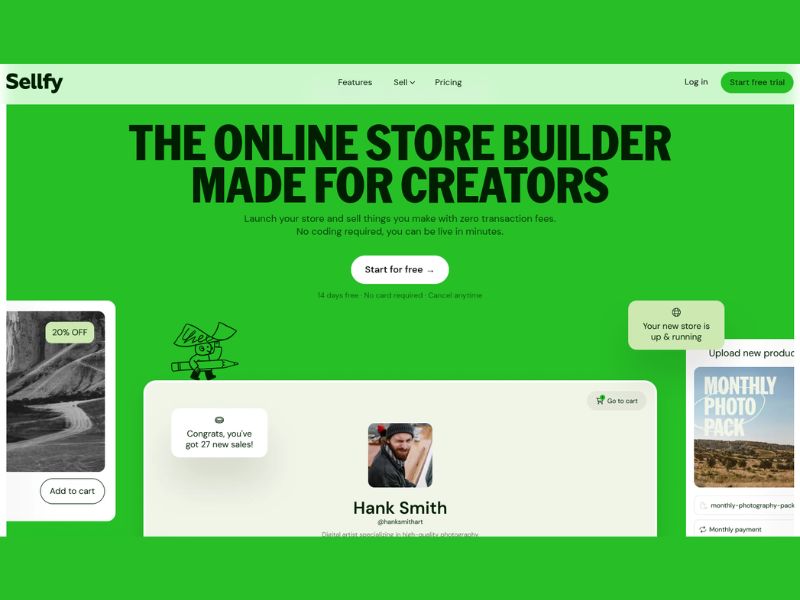
Sellfy is the optimal choice for content creators and businesses selling digital products (e-books, courses, design files, music) or membership models. Specifically, the platform stands out for its ultra-fast store setup in under 20 minutes to list products, along with features for automatically issuing license keys and secure download links.
| Plan | Fixed monthly cost | Annual sales limit |
| Starter | $29 / month | Under $10,000 / year |
| Business | $79 / month | Under $50,000 / year |
| Premium | $159 / month | Under $200,000 / year |
Pros: Deeply optimized for digital goods, subscription plans, and “pay-what-you-want" pricing models. No need for extra apps. Supports multi-currency and automated file delivery. Built-in marketing tools (email marketing, discount codes, cart recovery reminders, upsells). Integrated print-on-demand and “Buy Now" button embedding.
Cons: Design customization flexibility is quite limited (only 5 default themes). No built-in blogging tool.
Core features:
-
Automated creation of license keys and secure download links.
-
Zapier integration connecting with over 5,000 extra apps.
-
Payment support via Stripe and PayPal along with 24/7 customer service.
11. Weebly (Square Online)
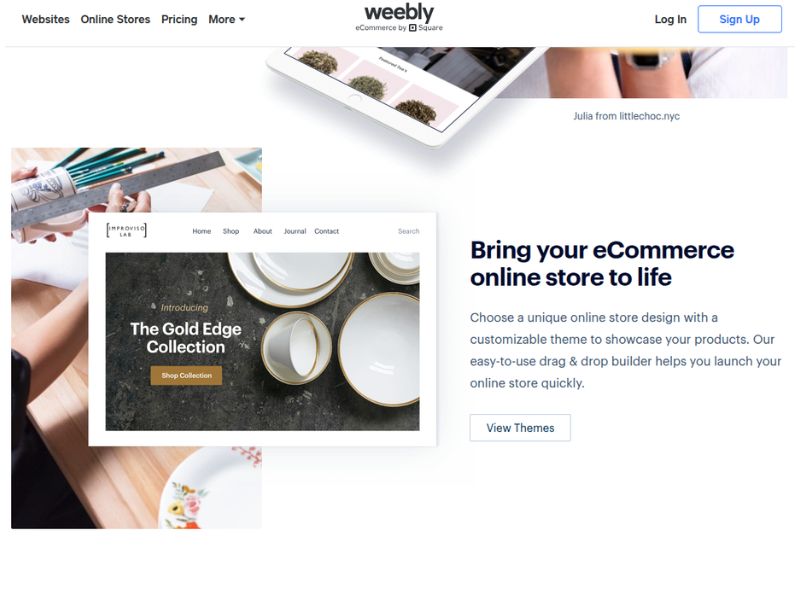
Weebly (currently part of the Square Online ecosystem) is a drag-and-drop website builder focused on simplicity for small businesses. As a result, the system allows sellers to quickly set up an online store, blog, or service page with smooth display on mobile devices.
| Plan | Annual billing cost | Platform transaction fee |
| Pro | $15 / month | 3% commission on sales |
| Performance | $27 – $32 / month | Optimized for high-volume order stores |
Pros: Highly intuitive and easy-to-use drag-and-drop builder. Built-in marketing tools including SEO, email marketing, and social media. Automated layout optimization standardized for mobile devices.
Cons: Design customization options are more limited compared to specialized e-commerce platforms. The 3% transaction fee needs to be factored into your financial calculations.
Core features:
-
Drag-and-drop page builder linked directly to Square payment infrastructure.
-
Built-in multi-channel marketing tools.
-
Cross-platform inventory and sales management.
12. Shift4Shop
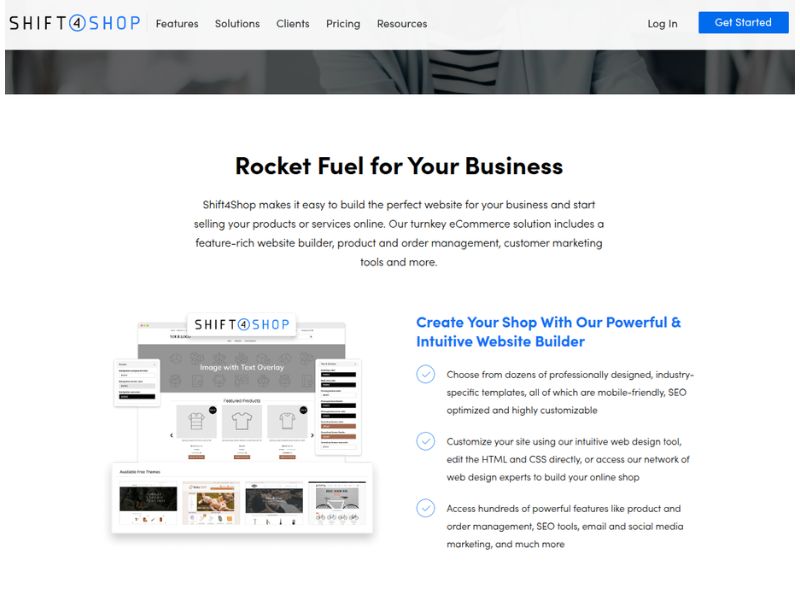
Shift4Shop (formerly 3dcart) is a long-standing solution aimed at a niche user base. Although it does not have a massive user base like Shopify, the system is still chosen by experienced marketers and developers thanks to its superior SEO optimization, unlimited bandwidth, and deep source code customization for users with coding skills.
| Cost category | Set fee |
| Infrastructure & bandwidth | Unlimited bandwidth, no worries about extra costs when traffic spikes |
| Payment gateways | Supports integration with over 200 international payment gateways |
Pros: Advanced built-in SEO tools helping to effectively rank at the top of search results. Unlimited bandwidth ensures stable website performance during sudden traffic surges. Supports over 200 different payment gateways. 24/7 technical support via phone, live chat, and tickets. Built-in blogging system for content marketing.
Cons: No drag-and-drop builder, requiring coding knowledge (HTML/CSS) to customize the layout as desired.
Core features:
-
Standardized source code structure optimized for search engine rankings.
-
Expanded integrations with third-party e-commerce marketplaces.
-
Deep shipping and order management infrastructure.
Learn more: Top 20 High-Profit Things to Sell to Start an Online Business
So which e-commerce platform is right for you?
After understanding the full picture, narrowing down solutions based on your scale, resources, and business model will help you make a fast and accurate decision.
1. For beginners (Easy to use, resource-optimized)
-
If you have a budget and want to operate professionally: Shopify is the standard starting point thanks to its streamlined process, structured ecosystem, and large support community.
-
If you want to expand a store from an existing website: Ecwid or Sellfy helps you quickly embed a checkout gateway into your current site without building from scratch.
-
If you focus on content with minimal tech skills: Fourthwall or Big Cartel allows you to list products almost instantly with $0 upfront cost.
2. For sellers focused on design and brand identity
- For personal brands and high-aesthetic products: Squarespace supports building high-standard interfaces that highlight product images.
- For total freedom to customize layouts: Wix gives deep design control and includes AI tools for automated site creation.
3. For users with technical skills or dev teams
- If you want full data ownership and strong SEO: WooCommerce maximizes its potential when paired with WordPress, allowing complete source code customization.
- If you need optimized infrastructure for heavy traffic and advanced SEO: Shift4Shop is an ideal setup for technical users looking to build a large-scale, independent niche store.
4. For large retail enterprises
If you want to expand product catalogs with no % revenue fees, BigCommerce offers powerful product filters to handle high transaction volumes without eating into net profit margins.
5. For dropshipping & social commerce models
- For full operational automation: Shopify leads the way with smooth connections to hundreds of supply chain vendors.
- To explode sales through organic traffic: TikTok Shop is an essential channel for closing instant orders via livestreams and trending videos.
In conclusion, finding the best ecommerce platforms that fit your business model is the core foundation to optimize costs, enhance customer experience, and boost revenue. Whether you are a beginner prioritizing simplicity or a large business aiming for maximum flexibility, carefully weigh your actual resources to make the right choice. Picking the right solution from the start will save you hundreds of operational hours and create sustainable growth momentum for your online store.