
Contents
- What is Direct to Garment (DTG) Printing?
- What is Embroidery?
- DTG vs Embroidery: Key Differences at a Glance
- DTG vs Embroidery: Detailed Comparison
- When should you use DTG printing for your custom products?
- When should you use embroidery for your custom products?
- Start Selling DTG & Embroidery with Merchize
- FAQs
A beautiful design alone is not enough to get orders; the important thing is that you choose the right method to put that design on the product. With the same artwork, DTG (Direct-to-Garment) can bring a soft, detailed feeling like a printed photo, while embroidery creates a floating, high-end effect and easily increases product value. This difference not only affects customer experience but also directly determines your selling price, customer base, and profit margin.
In this article, Merchize will help you understand the difference between DTG vs embroidery so that you cannot only print beautifully, but also choose the right way to make products that sell and optimize profits.
What is Direct to Garment (DTG) Printing?
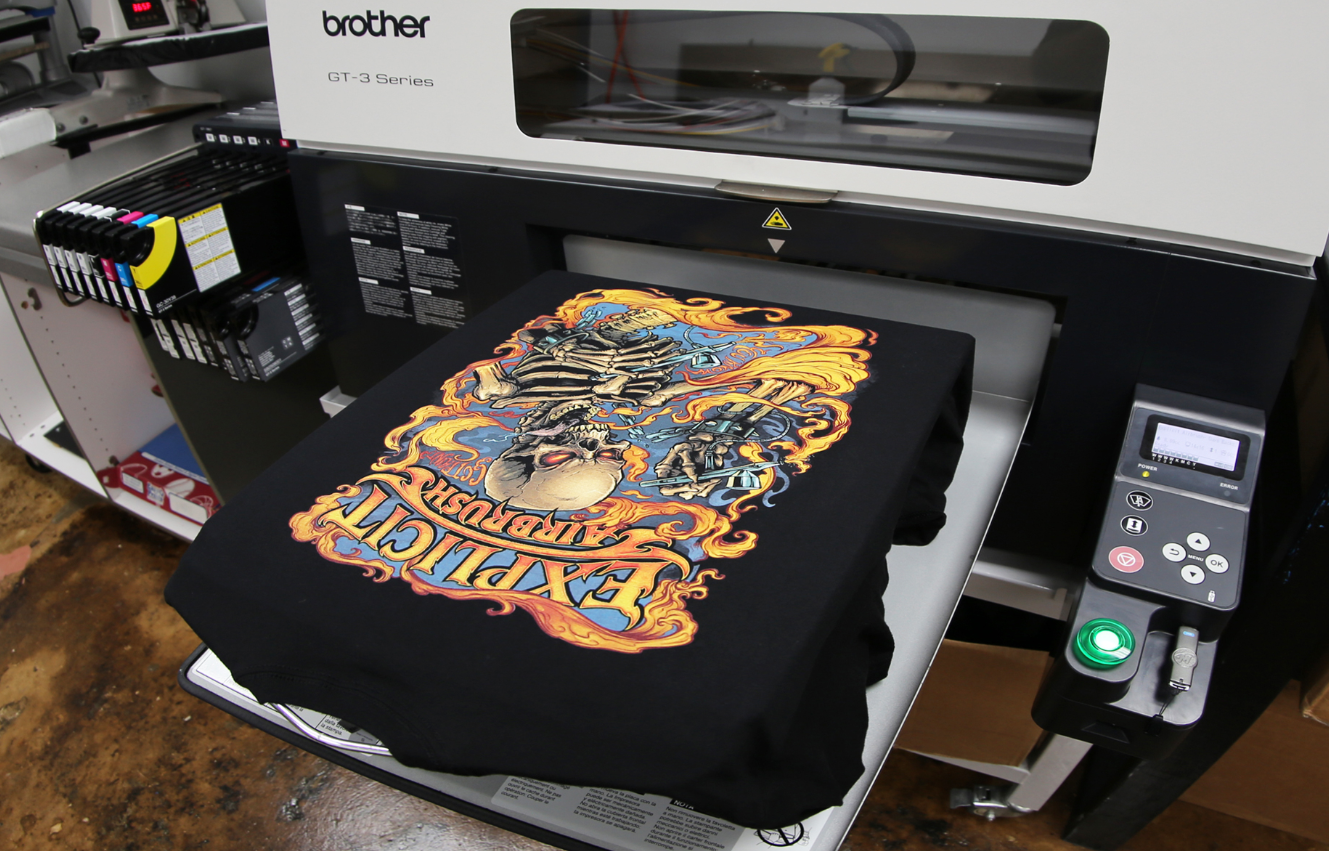
Direct-to-Garment (DTG) printing is a digital printing method that uses technology similar to an inkjet printer to print directly onto fabric. Instead of using printing molds or a complicated setup like traditional methods, DTG allows you to transfer designs from your computer to the product almost immediately. This is a huge advantage in the print-on-demand model.
Regarding how it works, the DTG printer will spray water-based ink directly onto the fabric fibers, helping it penetrate the fabric rather than lie on the surface. Before printing (especially with dark shirts), the product is often treated with a pretreatment solution to increase ink adhesion and sharpness. After printing, the shirt will be heat-pressed to fix the print, helping the design last through many washes.
DTG’s greatest strength lies in its ability to reproduce designs with great detail and almost unlimited colors. You can print images, gradients, and complex artwork without worrying about costs increasing with the number of colors, making DTG an ideal choice for highly creative designs or needing to quickly test many ideas.
However, DTG also has certain limitations. This method works best on cotton or blends with a high percentage of cotton, and effectiveness may be reduced when printing on polyester or synthetic materials. In addition, to ensure durability, DTG products need to be washed and stored properly. For POD sellers, DTG is not only a printing method but also a tool to help you test the market quickly, optimize costs, and scale products flexibly without investing in inventory.
What is Embroidery?
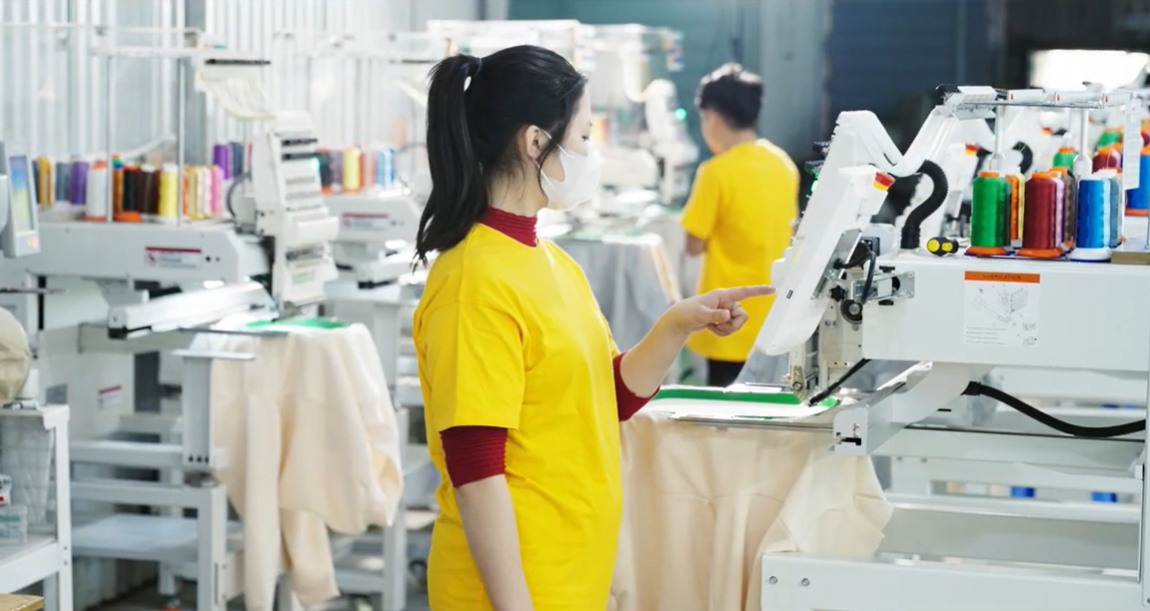
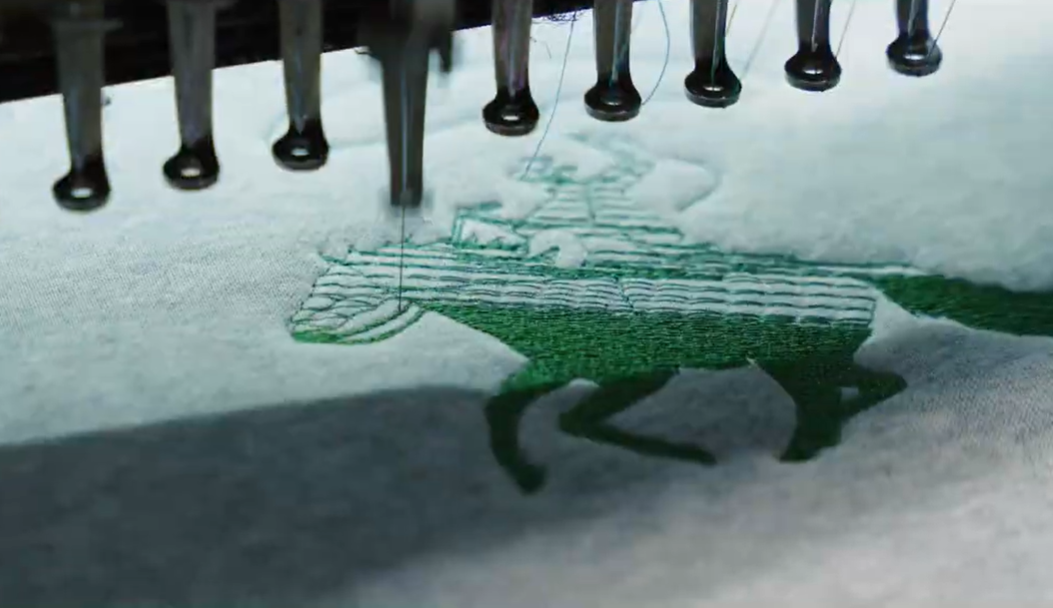
Embroidery is a method of decorating products by directly embroidering threads onto the fabric surface, creating designs with raised texture and clear structure. Unlike DTG printing embroidery, which uses ink, embroidery uses colored threads to build the design stitch by stitch, giving it a more solid, high-end feel and greater depth.
Regarding the process, a design first needs to be digitized (converted into an embroidery file) so the machine can understand the path of each stitch, the order of colors, and the density of the embroidery. Then, the product is fixed on a frame (hooping), and the industrial embroidery machine automatically completes the design at high speed. This process ensures embroidery achieves accuracy and consistency, making it particularly suitable for logo or branding designs.
The biggest strength of embroidery lies in its superior tactile value and durability. The design does not fade, peel, or crack like some printing methods, but it almost lasts as long as the product. At the same time, the raised effect and subtle sheen of the thread make the product look more premium, a crucial factor if you want to sell in the high-price segment or build a long-term brand.
However, embroidery isn’t the optimal choice for every design. Overly complex artwork, intricate details, or gradient effects are difficult to accurately represent with thread. Additionally, the cost often depends on the number of stitches, so larger or more elaborate designs will have a higher price. For POD sellers, embroidery isn’t just a technique; it’s a way to elevate your product, increase perceived value, and expand into a higher-paying customer segment.
DTG vs Embroidery: Key Differences at a Glance
Before going to detail comparison between these printing methods, you should take a look at the overview in the table below:
| Criteria | DTG (Direct-to-Garment) | Embroidery |
| Printing Method | Direct ink printing onto fabric using inkjet technology. | Embroidery is done directly into the fabric using an industrial embroidery machine. |
| Design Capability | Unlimited colors, capable of printing photos, gradients, and intricate details. | Suitable for logos, text, and simple designs; not suitable for complex artwork. |
| Visual Effect | Smooth surface, vibrant colors, great detail. | The raised, textured effect creates a premium feel. |
| Fabric Compatibility | Best on cotton and cotton blends | Versatile on a variety of materials (cotton, polyester, fleece, wool, etc.) |
| Durability | Durable if properly cared for (may fade over time). | Very durable, virtually fade-resistant, and does not peel. |
| Cost Structure | There are no setup costs, and the cost does not increase with the number of colors. | There is a digitizing fee, the cost of which depends on the number of stitches. |
| Production Speed | Fast, suitable for on-demand production, and small quantities. | Slower due to setup and embroidery time. |
| Best Use Cases | T-shirts and hoodies with colorful designs and creative artwork. | Polo shirts, caps, uniforms, and high-end branding products. |
| Business Fit | Suitable for testing designs, rapid scaling, and trend-following. | Suitable for brand building, selling at a high price, and increasing perceived value. |
DTG vs Embroidery: Detailed Comparison
To determine which printing method is best suited to your needs, let’s delve into a comparison of the core aspects of these two techniques.
Print Quality & Design Capability
DTG is a superior choice when it comes to design reproduction capabilities. Thanks to digital printing technology, this method can smoothly handle high-detail images, complex colors, gradient effects, or even photographs, without being limited by the number of colors. Therefore, DTG is often the “go-to option" for creative, artistic, or trend-setting designs.
Meanwhile, embroidery is more suitable for minimalist designs such as logos, text, or symbols. Because it is made up of stitches, this method struggles to accurately represent very small details or complex color transitions. However, this “controlled minimalism" helps the design become cleaner, sharper, and more professional, especially in branding applications.
Notably, embroidery technology has made significant progress. While previously the color palette was usually limited to around 15 colors, it has now been significantly expanded. At Merchize, our on-demand embroidery service supports up to 35 thread colors, giving sellers more creative freedom while maintaining the quality and aesthetic appeal of embroidery.
Durability & Longevity
In terms of durability, embroidery is almost unrivaled. The design is embroidered directly into the fabric, so it doesn’t peel, crack, or fade as printing methods can. This is why embroidery is often used for uniforms, sportswear, or products that need to be used for a long time.
DTG (Damaged Textile) still has good durability, but it depends heavily on the print quality and how it’s cared for. After many washes, the print may fade slightly or lose its sharpness if not properly cared for. To maximize the lifespan of DTG prints, users should wash them inside out and air-dry them naturally.
Fabric Compatibility
You need to know that the fabric you choose also greatly affects the quality of the print on the finished product. DTG works best on cotton or fabrics with a high cotton content, as the ink needs to penetrate the fabric fibers for optimal results. When printing on polyester or synthetic materials, the quality may be inconsistent.
Conversely, embroidery is much more versatile in terms of materials. From cotton and polyester to fleece and wool, most can be embroidered well. This allows embroidery to expand into many more product lines, such as jackets, hats, bags, or sportswear.
Production Process & Scalability
With DTG printing, you almost don’t need any setup; just upload your design, and you can start printing immediately. This reduces production time, making it especially suitable for print-on-demand models where you need to process orders quickly and flexibly.
Embroidery requires a preparation step of digitizing (converting the design file into an embroidery file), and production time is longer because the machine has to perform each stitch individually. However, once set up, embroidery is very stable for repeat orders with the same design. At Merchize, both printing methods are optimized for speed and consistent quality, ensuring orders are completed on time as promised.
Customer Perception & Product Value
This is a strategic differentiating factor. DTG (Direct-to-Garment) offers a modern, youthful feel and is suitable for casual products like t-shirts or streetwear. Meanwhile, embroidery creates a premium, sturdy, and professional feel, making it easier to price your product higher.
With the same logo design, an embroidered shirt may be perceived by customers as more valuable than a printed one, even if the production costs aren’t significantly different.
When should you use DTG printing for your custom products?
Direct-to-Garment (DTG) is the optimal choice when you need to reproduce complex designs with high precision while maintaining fast turnaround times and business flexibility. Thanks to its direct-to-garment digital printing technology, DTG can smoothly handle highly detailed artwork, complex colors, gradients, and even photographs without color limitations. This makes DTG an ideal solution for brands or sellers focusing on creative, highly visual designs.
DTG is particularly suitable in the following cases:
- Streetwear brands: Large graphic designs on the front/back of shirts require sharpness and vibrant colors.
- Products for artists/designers: Accurate reproduction of paintings, illustrations, or digital art.
- Event t-shirts: Multi-color designs, requiring fast production in small quantities.
- Niche/enthusiast products: Unique concepts, many details, requiring a wide color palette.
Beyond just print quality, DTG is also a weapon for those who want to move quickly and test extensively. No setup required, no digitization fees, and costs don’t increase with the number of colors. You can:
- Launch products almost instantly.
- Test multiple designs simultaneously to find winning products.
- Quickly catch trends (seasonal, viral, niche-specific).
- Scale quickly when the product shows good results.
Simply put: if your goal is speed + flexibility + the ability to continuously experiment, DTG is the right choice to optimize the effectiveness of your POD business.
When should you use embroidery for your custom products?
Embroidery is an ideal choice when you’re not just selling a product, but building long-term brand value. With its distinctive raised effect and superior durability, embroidery conveys a sense of premium quality, meticulousness, and reliability, important factors if you want to position yourself in the premium segment.
This method is particularly suitable in the following cases:
- Uniforms & company attire: Embroidered logos on polo shirts and jackets enhance professionalism and durability over time.
- Caps and beanies: Embroidered designs feel significantly more premium than printed ones.
- Athleisure / casual wear: Small, subtle branding on hoodies and joggers conveys a high-end feel.
- Premium fashion: Exquisite embroidery details can elevate a basic item.
Unlike DTG, which focuses on artwork, embroidery excels when you prioritize branding and product feel. Specifically, embroidery helps you:
- Increase the perceived value of your product
- Easily set higher prices, improving your profit margin
- Create a professional and sustainable brand image in the eyes of customers
Simply put: if your goal is to build a long-term brand + position yourself as premium + optimize profit per product, embroidery is a very worthwhile option to consider.
Start Selling DTG & Embroidery with Merchize
Once you’ve decided whether to choose DTG or embroidery, the next step isn’t just about starting to sell, but also about choosing the right partner to scale your products sustainably and efficiently.
With Merchize, you can implement both DTG and embroidery within the same ecosystem, allowing you to flexibly experiment, optimize products, and expand your portfolio without changing your operational processes. From multi-color designs and complex artwork for DTG to high-end branding products with embroidery, everything is handled with an optimized production process for the print-on-demand model. Instead of choosing between speed (DTG) and value (embroidery), you can leverage both to build a balanced product portfolio that is both easy to sell and offers better profit margins.
Starting with Merchize isn’t just about choosing a supplier; it’s about building a foundation for sustainable and flexible POD business growth.
FAQs
1. Is DTG or embroidery more durable?
Embroidery is a more durable option in the long run because the design is embroidered directly into the fabric, unlike printing, which can peel or fade. DTG still has good durability if washed and cared for properly, but after multiple uses, the printed image may fade slightly.
2. Which is more cost-effective for print-on-demand sellers?
DTG is generally more cost-effective when selling multi-color designs or needing to quickly test a product because there are no setup costs. Embroidery is more expensive due to its digitizing and stitch count, but it allows you to price your product higher in the premium segment.
3. Can DTG and embroidery be used on the same design?
Yes. Many sellers use DTG to test and scale designs, then transfer them to embroidery to create a premium version or upsell. However, not all designs are suitable for direct conversion, especially very complex artwork.
4. Which method is better for beginners?
DTG is an easier option to start with because of its simple, flexible process and lower risk when testing the product. Embroidery is more suitable when you already have a clear branding direction and want to build a higher-value product.