
Contents
Selling on eBay this year is completely different from a decade ago: the search algorithm is stricter, buyers expect more, and the platform enforces tighter operating rules. On the bright side, the number of buyers ready to spend money on eBay remains massive. If you are struggling with low orders or getting overwhelmed by packaging costs, taxes, and customer complaints, you need a precise strategy.
This article gathers the most practical eBay selling tips from top sellers to help you optimize every listing and protect your cash flow.
Is selling on eBay easy?
The answer is yes. eBay offers a very intuitive and simple interface, allowing beginners to easily create an account, list products, and start doing business with just a few basic steps.

So, is selling on eBay worth it? Absolutely, because the market reach here is massive. With over 1.7 billion active listings across 190 countries, the platform boasts 136 million active buyers worldwide.
That means 136 million potential customers for your products.
Your only real challenge is the competition from other sellers and complying with the platform’s buyer protection policies. However, this strictness creates a transparent business environment, helping buyers feel confident enough to purchase quickly. As long as you create well-crafted listings and honest product descriptions, you will always have strong sales opportunities.
In fact, countless business models from local thrift shops to large warehouses are significantly boosting revenue and clearing inventory fast with eBay. If you are looking for an effective reselling channel to scale your sales, eBay is a platform you cannot ignore.
17 essential tips for selling on eBay to boost sales
1. Optimize keyword-rich titles
eBay’s search algorithm prioritizes precise titles that contain the actual terms buyers type into the search bar. You should use all 80 allowed characters to put essential information like brand, product type, size, model, material, and color right at the beginning.
Emotional or noisy words like “Hot", “Wow", “Great", or “Rare" bring zero search value and waste display space. Potential customers search for products based on real technical specs, and they can judge an item’s value on their own without seller hype.
2. Take standard product photos
Photos are the very first factor that determines whether a buyer clicks on your listing among hundreds of competitors. The first main photo needs to show the entire product clearly on a white or solid background, using natural light to get the most accurate colors.
You need close-up shots of important details like tags, serial numbers, tech specs, and especially every single flaw, no matter how small. Using stock photos from manufacturers makes buyers doubt the authenticity of your product and increases the rate of complaints after delivery.
3. Write complete and transparent product descriptions
Buyers on eBay tend to skim and want to get information instantly. Present your description in short paragraphs with a clear structure instead of a dense block of text.
You should adopt a slightly stricter description approach than reality so that customers feel surprised by better-than-expected quality when opening the box. Writing irresponsible lines like “see pictures for details" will push customers to your competitors’ shops, as they won’t waste time messaging you about basic things.
4. Prioritize Buy It Now format
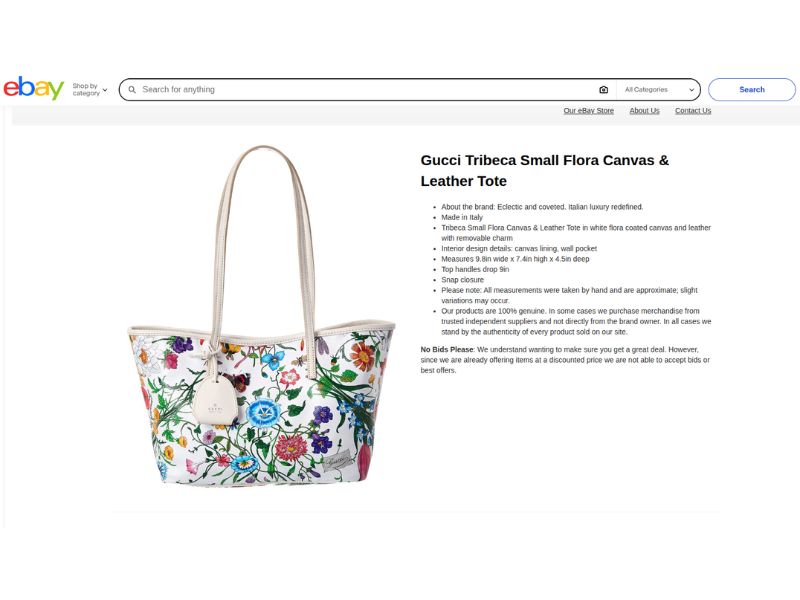
The Buy It Now (BIN) format accounts for up to 88% of all successful transactions across eBay. Choosing BIN helps you actively control your desired price and protect profit margins for expensive items like electronics or musical instruments. Furthermore, this method requires buyers to pay immediately at the time of purchase.
5. When to use Auction format
Auctions are not a daily selling tool, but they are the best solution for collectibles, rare items, or when you need to clear inventory urgently. Operational data shows that an auction helps liquidate stock significantly faster, with an average time of 9.3 days compared to 21.8 days for fixed-price listings. Use auctions to let the market set the price for unique items where you don’t know the real value, or to recover capital quickly for new product lines.
6. List items regularly every day
eBay’s search algorithm gives strong favor to stores that maintain consistent activity levels. Uploading a batch of products in a single day and then staying silent for an entire week will lower your account’s engagement score.
Therefore, you should break up your total items to list them steadily every day. This habit sends positive signals to the system, helping both your old and new products stay near the top of search results.
Read more: How to Get More Views on eBay: The Ultimate Guide
7. Manage inventory clearance
Holding onto a attachment mentality or hoping a hard-to-sell item will bring high profits only disrupts your cash flow. An item sitting in the warehouse for too long incurs storage costs and lowers your capital turnover efficiency. You need to closely monitor inventory age to take timely price-cut measures, even accepting breakeven or a slight loss.
8. Stand firm against partial refund requests
Tricks using minor flaws as an excuse to demand a partial refund are a fairly common tactic from dishonest buyers. When facing this situation, you should never give in or rush to send compensation.
Give a firm response stating that you are willing to take the product back and issue a full refund as soon as the item returns to your warehouse. This tough handling will cause most intentional nitpickers to back off automatically and keep the item.

9. Be fully transparent when selling broken items
For products listed under parts-only or broken status, clarity is a life-or-death factor to avoid disputes. You only need to state the exact model number, technical specs, and actual condition of the unit without adding misleading notes.
Accidentally giving hope that the device can be repaired will turn into a trap that harms you when the customer fails to fix it. As soon as an order comes in, send a confirmation message to the buyer regarding the broken condition before packing the item.
10. Block high-risk buyer accounts early
Customers who are overly demanding right from the inquiry stage are usually the source of trouble after receiving the goods. If a buyer constantly asks dozens of rapid-fire questions for a low-value item or pushes for unreasonable discounts, you should add them to your block list immediately. Cutting off transactions with these individuals helps you prevent intentional negative feedback, false claims, and protects your shop’s trust score.
11. Optimize costs with a Free Shipping strategy
Free shipping is one of the most used filters by buyers and contributes to 71% of all successful transactions on eBay. The platform’s algorithm always prioritizes pushing listings with a Free Shipping policy to the top positions.
Calculate the exact average shipping cost and add it directly to the product’s selling price. This method helps increase listing visibility while catering to consumers’ preference for all-inclusive pricing.
12. Tighten packaging and shipping procedures
Care in preparing goods will protect you against disputes over lost packages or fraud. Only ship items to the exact address printed on eBay’s official Shipping Label.
If a buyer sends a private message asking to change the address, cancel that order, instruct the customer to update their personal information on the system, and then have them place the order again. Additionally, saving clear photos or videos of the Serial number and product tags right before sealing the box will serve as undeniable evidence if complaints arise.
13. Maintain a professional and standard attitude
How you communicate and handle issues determines the long-term sustainability of your account. Carefully check your shipping fee settings to avoid manually adding shipping costs incorrectly, which can cause misunderstandings with buyers.
If you accidentally list an item at a price far too low compared to its actual value, the wisest approach is to send a sincere apology and deliver the order as promised to preserve your store’s reputation. Never argue or use unedited, emotional language in messages, as all chat history is used by eBay to evaluate your service quality score.
14. Focus on fast order processing and tracking updates
Order fulfillment speed directly impacts your shop’s performance metrics. Set up an efficient workflow to pack and ship orders out within one business day. Updating the tracking code on the system immediately allows customers to track their shipment, minimizes incoming inquiries, and builds full confidence in your shop’s professionalism.
15. Apply a Free Return policy
Many sellers fear the risk of allowing returns, but this is a powerful leverage tool to boost demand. Offering a 30-day Free Return policy removes buyer hesitation and encourages them to make purchases much faster. E-commerce industry data shows that actual return rates hover around 16.9%, which is much lower than the additional sales volume this policy generates.
16. Earn Top Rated Plus status
Achieving Top Rated Plus status is the ultimate goal to help your store outperform competitors. This badge is eBay’s highest trust certification, giving you priority display in top search results. More importantly, Top Rated Plus accounts receive strong platform protection against unreasonable buyer claims, along with significant discounts on final value fees.
17. Choose reliable suppliers
A stable and high-quality product source is the foundation that determines the success or failure of an eBay store. Whether you run a reselling business or POD, a low-quality supplier with long production times or defective items will directly destroy the reputation you worked hard to build. Take time to carefully check a partner’s production capacity, actual delivery times, and defect policy before collaborating.
If you are looking for high-quality product sources to optimize your store, check out top custom product suppliers on eBay to select the best partner for your business model.
How to sell on eBay successfully
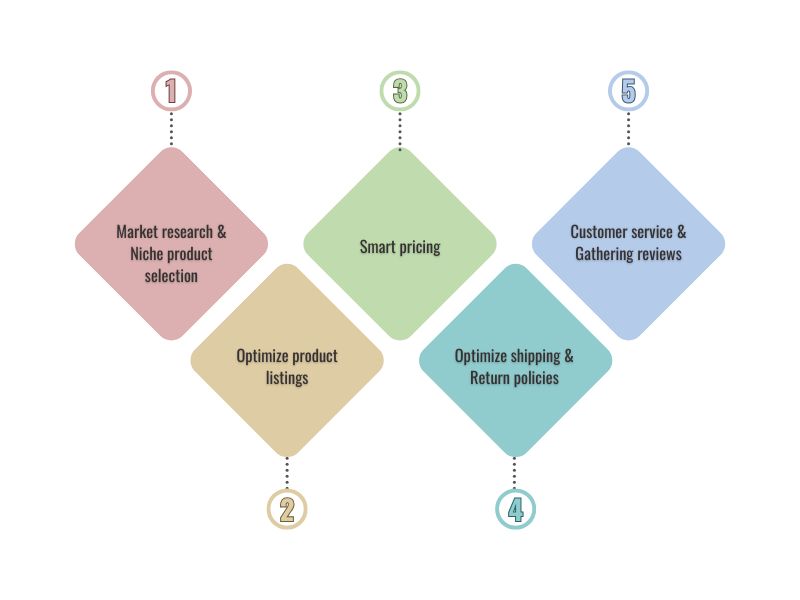
Step 1: Market research & Niche product selection
A seller’s success depends on product selection. Instead of jumping into general items with fierce price competition, focus your resources on niche products. These are categories with stable demand but fewer sellers.
You can use eBay’s built-in Terapeak tool to analyze real sales data: review sell-through rates, average pricing, and competitor volume. Then, list the best-selling items on eBay to maintain solid profit margins and easily secure top display positions.
Step 2: Optimize product listings
An SEO-optimized listing is the key to getting eBay’s algorithm to push your products to the top of search results. Once you choose a product, optimize the following:
-
SEO-friendly title: Place the most important keywords at the beginning. Avoid ALL CAPS or unnecessary filler words with no search value.
-
Detailed and transparent description: Clearly present tech specs, actual condition, and any scratches or flaws. Honesty minimizes complaints and returns.
-
High-quality photos and videos: Take 5 to 8 real photos from multiple angles under natural light against a solid background. Include a short close-up video of the product to boost conversion rates.
Step 3: Smart pricing
Accurate pricing attracts buyers while protecting profit margins after platform fees. You need to understand how to apply both selling formats:
-
Buy It Now (BIN): Best for 80% to 90% of standard goods, electronics, and fashion. BIN locks in your desired price, secures immediate payment, and appeals to buyers who want fast delivery.
-
Auction: Reserve this for hard-to-value collectibles, rare items, or urgent inventory liquidation. Set a reasonable starting price to encourage bidding wars.
Step 4: Optimize shipping & Return policies
Consider factoring shipping costs into the selling price to enable Free Shipping. This drives purchasing decisions and improves listing visibility. Additionally, set your handling time to within 24 hours. For returns, offering a 30-day option (Free Returns) removes buyer hesitation and builds store trust.
Step 5: Customer service & Gathering reviews
Seller Rating is an invaluable asset on eBay. To accumulate 5-star feedback, respond to buyer messages quickly, handle issues politely, and upload tracking numbers as soon as you ship. Earning positive feedback boosts your seller metrics, helping you quickly achieve Top Rated Seller status and platform perks.
If you want to start a lean business model without worrying about inventory or large upfront capital, check out our guide on how to sell Print-on-Demand on eBay.
Common mistakes to avoid when starting on eBay
1. Violating VeRO policies, copyrights, and platform rules
Listing counterfeit items or restricted products forbidden by eBay and the law will lead to an immediate permanent ban. A common mistake for beginners is improper dropshipping. Sourcing products directly from retail sites like Amazon or Walmart to ship to buyers, rather than partnering with wholesale suppliers, violates eBay’s policies.
2. Misleading descriptions and lack of transparency
Some sellers hide flaws, scratches, or damage hoping to get a higher price. This always backfires, leading to harsh disputes and negative feedback. Another technical error is failing to input exact package dimensions and weight, causing inaccurate shipping charges that eat into your profits.
3. Misunderstanding the Return policy
Many new sellers assume that choosing “No Returns" means they never have to issue a refund. In reality, eBay’s Money Back Guarantee prioritizes buyer protection. Even with returns disabled, eBay will force refunds for claims involving defective items, Not As Described, or Item Not Received.
4. Poor account risk management and financial control
New accounts easily become targets for scammers if you rush into listing expensive items or tech gear.
For cash flow management, using a personal bank account instead of a dedicated business account complicates accounting and increases security risks. Keep a reserve fund for unexpected expenses like returns, lost packages, or claims. Monitor your performance metrics to avoid penalties or store suspension.
5. Wasting budget on paid promotions
Many sellers spend money on Promoted Listings as soon as they open a store without understanding the setup or measuring ROI. If your listing isn’t optimized with good photos, titles, and competitive pricing, running ads only wastes money without generating sales.
Selling on eBay with Merchize
Merchize is an ideal choice to help you launch a Print-on-Demand model on eBay easily and cost-effectively. Pricing starts at $29/month for 100 products, with no minimum order requirements and a 20% discount on sample products.
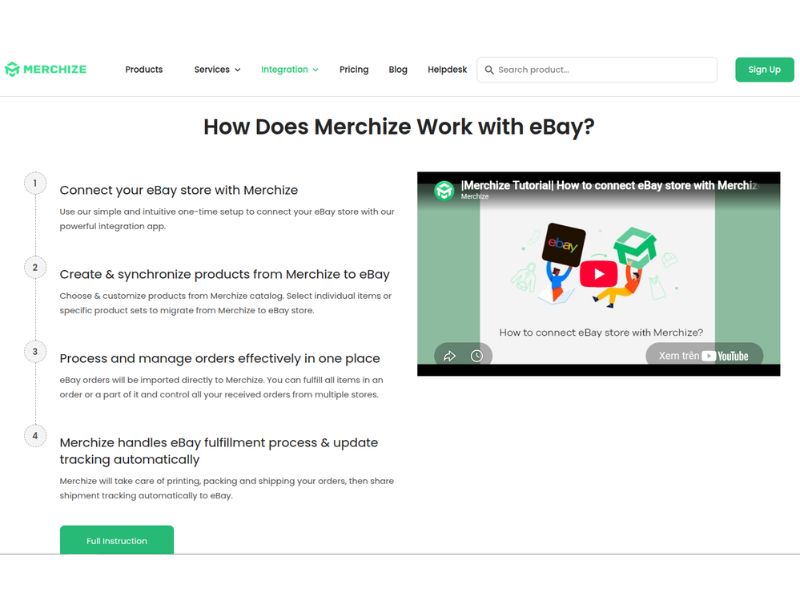
Featuring powerful automation, the Merchize system syncs orders from your eBay store every 5 minutes. Once an order comes in, Merchize handles production, printing, packaging, and high-quality shipping directly from Vietnam. Tracking numbers update automatically to eBay, saving you from operational and warehousing hassles.
All you need to do is register a Merchize account, connect it to your eBay store, and upload your designs. To maximize conversion rates, focus on eye-catching thumbnail images and SEO-optimized titles. With zero inventory risk and no initial capital investment required, you can devote 100% of your time to designing and marketing.
Conclusion
Building a successful store on eBay takes patience, smart pricing strategies, and flexible application of practical eBay selling tips right from day one. By optimizing titles, taking clear and honest photos, managing operations neatly, and taking a firm stance on risk management, you can easily attract millions of potential buyers around the globe.
Starting a new business always comes with challenges, but each small early order serves as a solid foundation for your eventual sales breakthrough. Set up your store with confidence, apply these helpful selling tips, and start your journey toward building a sustainable income on eBay today!