Contents
Many sellers think that selling on Shopify requires a big budget for inventory and ads. In reality, it is the opposite: many million-dollar brands started from absolute zero by knowing how to make the most of their resources. Whether you are a newbie or a seller trying a new market, this guide on how to start a Shopify store with no money will give you a lean step-by-step process to get your first sales.
Key Takeaways
- You can start with a trial, free tools, and a no-inventory model, but you still need to prepare for maintenance costs once your store makes sales.
- Digital products, POD, dropshipping, services, and handmade/upcycled items can all start with very little money, but they differ in skill requirements, product control, and operations.
- Identify your customers, test demand, analyze competitors, and find your USP before investing time in products and branding.
- Launch with a lean product set, track feedback, and only expand products that show good signals.
- SEO, blogs, social content, communities, and free sales channels help you generate traffic without spending money on ads.
- Images, product copy, pricing, trust signals, navigation, and the checkout experience must be ready before driving more traffic to your store.
- Instead of expanding too fast, reinvest your profits into areas that directly support growth, such as Shopify fees, domains, samples, essential tools, or marketing.
Can you start a Shopify store with $0?
The answer is Yes. You can start with $0, but you cannot run it for free forever. The nature of this model is that instead of spending money, you trade your time and effort while finding ways to use your resources wisely.
Launching a store with zero dollars is a strategy that helps sellers test business ideas, measure market demand, and practice operational skills before scaling up. If the model succeeds, you keep all the profits; if it fails, you gain useful lessons.
Of course, this path requires a lot of patience because early growth will be a bit slower. However, budget limits force you to be more creative in reaching customers and optimizing conversion steps. Once your store gets its first orders, you can reinvest those profits to pay for Shopify fees and scale your business.
How to start a Shopify store with no money
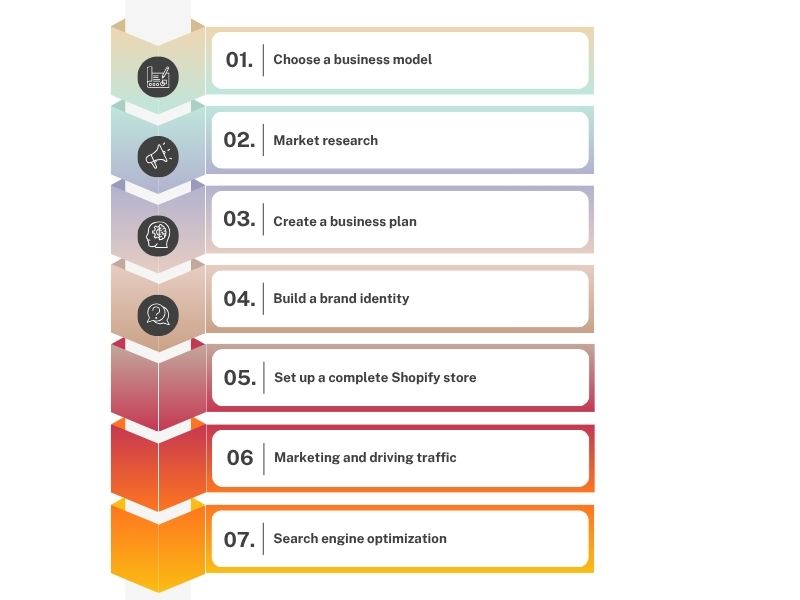
Step 1: Choose a business model
To launch a Shopify store without capital for inventory, you need to consider some no-inventory business models. You can leverage your knowledge, automated tools, or resources from third parties.
Below is a quick comparison table of the 5 most popular $0 capital business models on Shopify:
| Model | Initial investment capital | Inventory & shipping | Nature |
| Digital products | $0 | Not needed | Create content/files once, sell automatically unlimited times with nearly 100% profit margin. |
| Print on demand | $0 | Handled by third party | Upload designs to mockups (shirts, mugs, bags). Suppliers only print and ship when an order comes in. |
| Dropshipping | $0 | Handled by third party | List suppliers’ products for sale. When customers buy, you order from suppliers to pack & ship. |
| Services business | $0 | Not needed | Sell skills, expertise, or consulting services leveraging existing resources. |
| Handmade & Upcycle | Very low / $0 | Self-managed | Utilize recycled items/available materials, produce in small quantities, or raise funds before production. |
1. Digital products
Digital products are the shortest path to earn high profits without a budget. The global digital goods market is booming strongly and is projected to reach USD 157.39 billion in 2026 and will reach USD 511.43 billion by 2031, at a CAGR of 26.60% during the forecast period (2026-2031) (mordorintelligence).
You can start by using your own knowledge, content, or creative works to package into products such as:
-
Ebooks
-
Online courses
-
Worksheets, documents, and templates
-
Photography presets
Since physical production or storage is not required, you only need to create the product once and can sell that file unlimited times. To automate the process, you just need to install the free Digital Downloads app by Shopify so the system automatically sends files to customers right after payment.
2. Print on demand
If you have good taste or creative skills with words and images, POD is a model that helps you build your own fashion or gift brand quite well. The global POD market is projected to grow from USD 13.1 billion in 2026 to USD 57.5 billion by 2033, at a CAGR of 23.6% from 2026 to 2033, proving the continuous appeal of the personalization trend. And the North American market accounts for the largest market share, reaching 36% by the end of 2025 (grandviewresearch). Naturally, this model eliminates inventory risk.
How it works: You upload designs to blank products (t-shirts, mugs, tote bags, posters…). When customers place orders on Shopify, the orders are automatically pushed to the POD supplier to print, pack, and ship directly to the customers’ hands.
Another advantage is that reputable suppliers like Merchize offer no MOQ, so you can completely order a sample size of 1 to test the quality.
Detail: How to sell print on demand on Shopify: 2026 Profit Guide
3. Dropshipping
The global dropshipping industry is projected to grow from USD 583.5 billion in 2026 to USD 2,180.8 billion in 2033, growing at a CAGR of 20.7% from 2026 to 2033 (grandviewresearch).
Dropshipping is almost similar to POD, allowing you to sell physical products without buying inventory in advance. When customers place orders on your store, you then buy those products from suppliers, and they will ship directly to customers’ hands. You do not have to store, pack, or deliver goods.
The big difference compared to POD is that this model offers more diverse products from clothing, accessories, health care products, household goods, and electronic devices, providing more opportunities for sellers. However, sellers can only sell available products from suppliers, meaning you cannot intervene too much in design aspects. Therefore, you do not have the opportunity to integrate brand imagery directly into products if you follow a branding approach.
Read more: Dropshipping vs Print on Demand: Which is the best for your online business?
4. Handmade & Upcycle
In case you possess skillful hands, turn your personal hobby into a source of income. From scented candles, handmade jewelry to recycled clothes, you can completely start on a small scale and expand gradually as customer volume increases.
Advice to start selling handmade goods with $0 capital:
-
Start simple: Choose lean projects to keep initial costs at the lowest level.
-
Utilize upcycling: Reuse old items to create unique, eco-friendly products without spending money to buy new materials.
-
Crowdfunding: Use funding platforms or collect pre-orders from customers to get funds for purchasing production materials.
5. Services & Consulting business
Selling services is one of the best ways to start with $0 cost because what you sell is skills and time, not goods. You can operate independently right at home and hire more staff when demand increases. The business services market is valued at US$0.3 trillion in 2026 and is projected to grow at a CAGR of 27.9% to reach US$1.9 trillion by 2034 (researchandmarkets).
Some $0 cost service ideas:
-
Freelance writing
-
Virtual Assistant
-
Social media marketing
-
Personal shopping services
Combination tip: You can package services together with other models. For example: Provide closet cleaning services, then ask for permission to resell the customer’s unneeded old items on your Shopify store to create a second income source.
In summary, each model above has its own advantages to help you launch a Shopify store with $0 inventory capital. Choose the model that best fits your personal strengths to start.
Step 2: Market research
Launching a Shopify store with $0 means you cannot choose products based on gut feeling. You need a structured market research strategy to identify products with high demand.
The steps are as follows:
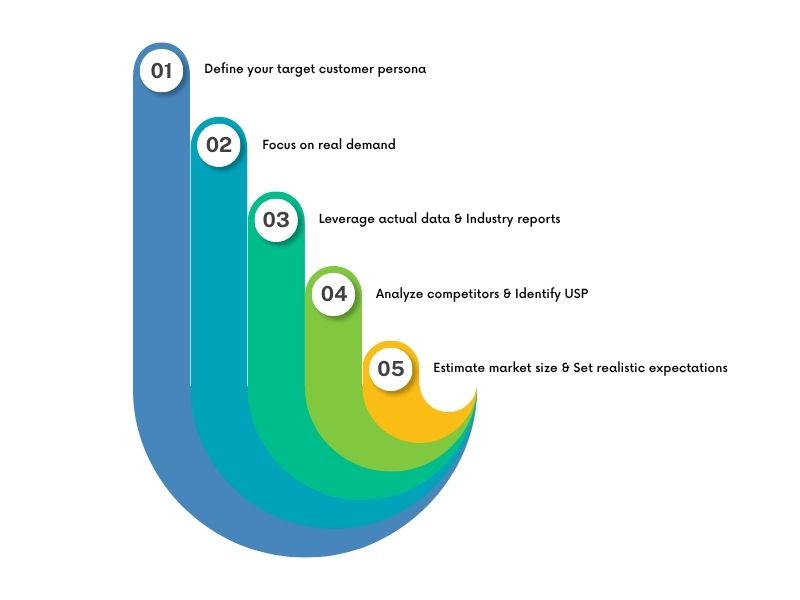
(1) Define your target customer persona
When you have no budget for expensive advertising campaigns, understanding your customers deeply is the key to optimizing marketing efficiency. Build a detailed customer profile covering age, interests, pain points, and shopping habits. This helps you reach the right audience.
(2) Focus on real demand
Prioritize choosing product lines from the $0 capital business models mentioned in Step 1. The ideal choice is a trending segment in the market that matches your personal knowledge or interests.
(3) Leverage actual data & Industry reports
To get a big picture of the market size, gather information from reputable industry reports. In addition, you can collect qualitative data yourself by conducting short surveys, direct interviews, or participating in discussions in groups and potential customer communities.
(4) Analyze competitors & Identify your unique selling proposition
Look closely at competitors who share your customer segment: What are they selling? What are their prices? What are customers complaining about regarding their products or services? From there, define your own USP along with reasons why customers should buy from you instead of competitors, even though you are a new seller.
(5) Estimate market size & Set realistic expectations
Finally, evaluating the total market capacity and the market share you can capture will help you set proper business goals, avoiding unrealistic expectations in the initial phase without an ad budget.
Step 3: Create a business plan
After finalizing your product and target market, you need to outline a detailed operational plan. This plan will help you stay on track, control cash flow, and measure the feasibility of your business model.
To do that, you should focus on 3 key pillars:
- Finalize core elements & Financial forecast
The plan needs to clearly state why your business exists and the value it brings to customers, along with a detailed financial forecast (expected revenue, minimum maintenance costs, and break-even point). Since you are starting with $0 capital, your entire financial forecast must revolve around organic growth strategies.
- Build an omnichannel sales strategy
Make full use of Shopify’s free trial to build a SEO-standard store and optimize user experience. Once the store is complete, you can consider connecting your Shopify store to major e-commerce platforms like Etsy or Amazon to leverage their existing traffic and reach a broader customer base.
- Choose a B2C or B2B model
Clearly define whether you will sell directly to end consumers (B2C) or provide wholesale items/services to other businesses (B2B). Advice for new sellers is to start lean with a B2C model through POD or digital products to generate quick cash flow first.
Step 4: Build a brand identity
After choosing a business model, it is time to lay the first bricks for your brand identity. At this stage, you can completely own a professional image without spending a single penny.
- Impressive brand name & slogan: Leverage free AI tools like ChatGPT to create unique store names and write slogans that hit the psychology of your target audience.
- Professional logo design: You do not need to spend money hiring a designer. Use Shopify’s free logo tools (such as Hatchful) to self-design a simple, modern, and identity-ready logo in just a few minutes.
- Use a free domain name: Take advantage of the “yourstorename.myshopify.com" domain format provided for free by Shopify upon account registration. Keep this domain to run the initial phase; you can always buy and point a custom domain to your store after you start generating revenue.
Step 5: Set up a complete Shopify store
To save time and avoid redesigning the interface repeatedly, the standard process for sellers is: Add products first, design the store later. The reason is simple: Product catalogs and images will determine the website layout. Customizing the layout based on the actual product frame will make your store consistent, pleasing to the eye, and much more professional.
1- Create collections and product listings
Access the Shopify admin dashboard, go to Products -> Add product. To help your product page achieve a high conversion rate, optimize the following information fields:
- Product title: Set clear titles containing accurate, concise search keywords so customers can easily identify the product.
- Product copywriting: Focus writing on customer benefits, use natural language, and break text into short paragraphs or bullet points for easy reading. Do not forget to highlight unique features, promotion programs, and answer common questions in advance.
- Media & images: Customers buy with their eyes, so images must be sharp. Operating with $0 capital, you do not necessarily need to hire a photographer; use your smartphone camera in places with sufficient natural light, or use high-quality images provided by Dropshipping/POD suppliers. You can also add short videos or 3D models if available.
- Pricing, inventory & variants: Set up detailed prices, SKU codes, inventory quantities (if any), variants (size, color), and optimize search engine displays.
See more: 20 Best Selling Items on Shopify 2026 for Long-Term Wins
2- Theme customization
After having products, go to Online Store -> Themes.
- Choose a theme: Select one of Shopify’s optimized free themes (such as Dawn, Refresh, Sense…).
- Customize layout: Click Customize to place your logo, brand color scheme, products, and banners in the right positions. Add a collection slideshow to create a smooth moving visual effect, making your store look more lively.
3- Create mandatory content pages
Go to Online Store -> Pages, select Add page to build core content pages that increase your store’s credibility:
- About us page: Share your brand story and the value you bring.
- Contact us page: Provide a contact form and customer support email.
- FAQ & policy pages: Answer frequently asked questions, operating policies, returns, and privacy policies.
4- Activate payment gateways
Configure payment collection methods by enabling Shopify Payments directly in the settings. Setup is completely free, allowing you to accept international payment cards securely without relying on complex third-party payment gateways.
Step 6: Marketing and driving traffic
Your store is ready, but without visitors, you cannot generate sales. During the phase without a budget for paid ads, try to get organic traffic by:
- Expanding touchpoints through free sales channels: Shopify allows you to sync product catalogs directly to major platforms and social networks like Facebook Shop, Instagram Shopping, X (Twitter), as well as e-commerce marketplaces like Amazon or Etsy. Appearing multi-channel helps you leverage existing user bases from these platforms to reach potential customers without listing costs.
- Building engaging content on the store blog: Leverage the built-in blog feature on Shopify to publish posts sharing knowledge, guides, or answering user questions. Blogging not only helps build trust and brand positioning, but is also the most sustainable tool to drive organic traffic to your store.
- Utilizing free marketing apps on the Shopify App Store: Exploit Shopify’s free app ecosystem to optimize operations. You can install email collection tools (email marketing), promotion countdown timers, customer review displays, or basic data analytics tools to increase conversion rates at no additional cost.
Read now: 40+ Best Shopify Apps: All-in-One Toolkit for Your Store 2026
- Boosting social commerce & community marketing: Create short video content (TikTok, Instagram Reels, YouTube Shorts) presenting product features, experiences, or behind-the-scenes moments. In addition, actively participate in discussions and share value in online communities (Facebook Groups, Reddit, Quora) to spread your brand completely organically.
Step 7: Search engine optimization
SEO is a method that helps your store appear at top positions on Google whenever customers type search keywords. To optimize SEO for your Shopify store, follow these steps:
- Keyword research: Put yourself in the buyer’s shoes to identify phrases they usually type when searching for products (for example: “handmade scented candles", “oversized cotton t-shirt"). Insert these keywords naturally into product titles, descriptions, SEO titles, meta descriptions, and blog posts.
- Write SEO-standard product descriptions: Avoid copying descriptions directly from Dropshipping/POD suppliers. Rewrite detailed, clear descriptions highlighting the solution your product offers, and structure text using short paragraphs combined with bullet points so Google can easily scan and rank it.
- Add alt text to all images: Search engines cannot understand image content without text. Add concise, accurate alt text describing the image with keywords (for example: “Red ceramic mug with Christmas pattern"). This gives your products a chance to appear on Google Images as well.
- Implement a content SEO strategy: Write blog posts that address customer pain points or search needs directly. For example: If you sell skin care products, write “Top 5 skincare steps for oily acne-prone skin" or “How to choose suitable sunscreen". These useful posts will attract a large number of potential customers to visit your website before they decide to shop.
- Optimize UI/UX: A website with a clear category structure, an easy-to-use navigation bar, and fast page loading speed not only keeps customers around, but is also highly rated by Google, which prioritizes pushing your store’s ranking to the top.
Some free resources to support running Shopify
Launching an online store on a tight budget is completely feasible if you know how to leverage the ecosystem of free tools. Below is an essential toolkit to help sellers setup, design, and run a professional store without extra costs:
Tip for sellers: Most supplementary tools provide free plans with monthly usage quotas. In the early stages, if you know how to manage and use them effectively within these limits, you can run your entire store smoothly without paying for upgrade fees.
Advice for starting a Shopify business for free
Starting an e-commerce business with $0 cost is a journey full of potential, but it also requires persistence. To optimize limited resources and maximize your success rate, sellers should keep in mind these 7 principles:
- Choose a niche market you truly understand & feel passionate about: Selling products originating from personal interests not only maintains positive energy, but also helps you deeply understand customer pain points. Passion shows clearly through the way you create content, advise customers, and build a brand story that makes a difference to buyers.
- Keep the initial scale minimal: You do not need a catalog of 100 products to launch a store. Start lean with 3–5 core products (or “winner" products) to easily manage quality and operational processes. Once orders come in, expand your catalog based on customer feedback and actual demand.
- Optimize product pages to hit customer psychology: Make your product message as clear and enticing as possible. Beside sharp images, focus on writing benefit-driven descriptions appealing to emotions rather than just listing technical specs. For example: Instead of writing “Organic coffee beans", change it to “Rich, smooth organic coffee beans—Awaken your alert energy for the morning".
- Build trust and transparency: Eliminate buyer hesitation by setting up complete policy pages (shipping, returns, privacy). Communication transparency, such as proactively informing customers about longer delivery times than expected, will help you build long-term trust.
- Build interactive content instead of focusing solely on selling: Leverage the power of social media to connect with potential customer groups. Instead of posting plain product photos, share behind-the-scenes processes, tutorials, or useful tips related to your niche. For example: If you sell cosmetics, post short videos showing a 3-step morning skincare routine using your products.
- Stay persistent & patient: Developing a store without capital means trading time for sustainable growth. Maintain the habit of posting, interacting with customers, and optimizing your store daily. Small, consistent efforts create big cumulative results over time.
- Continuously learn & adjust based on data: Starting a business is a chain of experiments. If a product does not sell as expected or content fails to get views, analyze the cause and adapt your strategy flexibly. Treat every challenge as a practical lesson to help your store continuously improve.
Success in e-commerce is not measured by the amount of money you invest initially, but by the value you deliver to customers and your persistence throughout the journey. Mastering how to start a Shopify store with no money is a solid stepping stone to help you turn limited resources into a sustainable revenue-generating machine. It is time to set aside capital worries and roll up your sleeves to launch your own Shopify store!