Contents
Which print-on-demand Shopify stores are actually worth learning from?
What really matters is how they identified profitable niches, built memorable brands, and made their stores stand out in a competitive market.
Instead of simply listing successful stores, this guide groups each one by the strategy behind its success, helping you identify the patterns that fit your own business and the ideas that are actually worth adapting.
Why is Shopify still worth it for print on demand sellers?
Absolutely. Shopify remains one of the top choices for print-on-demand sellers alongside marketplaces like Etsy, Amazon, and eBay.
Unlike online marketplaces with built-in audiences, Shopify gives sellers the tools to build their own brand from the ground up while retaining full ownership of customer data for marketing and long-term growth.
With the global print-on-demand market reaching $10.8 billion in 2025 and projected to grow at a 23.6% CAGR from 2026 to 2033, more than 316,937 Shopify stores have installed and use print-on-demand apps.
Shopify also brings together a large ecosystem of suppliers offering thousands of customizable products. Combined with the no inventory and low upfront costs model, sellers can quickly test new niches, products, and designs without tying up capital in inventory.
Typical Shopify print-on-demand store data:
- Average catalog size: 10 to 49 products
- Most common price range: $25 to $49 (58%), under $25 (21%), other price ranges (21%)
- Top product categories: Fashion and accessories, Arts and entertainment, Home and garden, Gifts and occasions
- Top marketing channels: Instagram, Facebook, TikTok, Google
- Top markets: United States, United Kingdom, Germany
- Marketing and analytics tools: Google Analytics, Google Tag Manager, Google Ads, Meta Ads
Top Success Print on Demand Shopify Store Examples
Successful Shopify print on demand stores all focus on a niche that is specific enough for customers to feel noticed right away, a story that gives people a reason to choose that seller over a marketplace search result, and a product catalog that is kept small enough to manage well. None of that requires a big budget. It requires choosing one of the patterns below and committing to it for longer than most sellers do.
Pattern 1: Going narrower than feels comfortable
Nine out of ten new print on demand sellers believe that launching more products gives them a better chance of making sales. As a result, they release dozens of designs across different niches, hoping that one of them will eventually succeed. In reality, the most successful stores take the opposite approach. They start with a small catalog focused on a single target audience before expanding.
Store 1: Classic Dad – Print on demand t shirt
Website: Classicdad.co
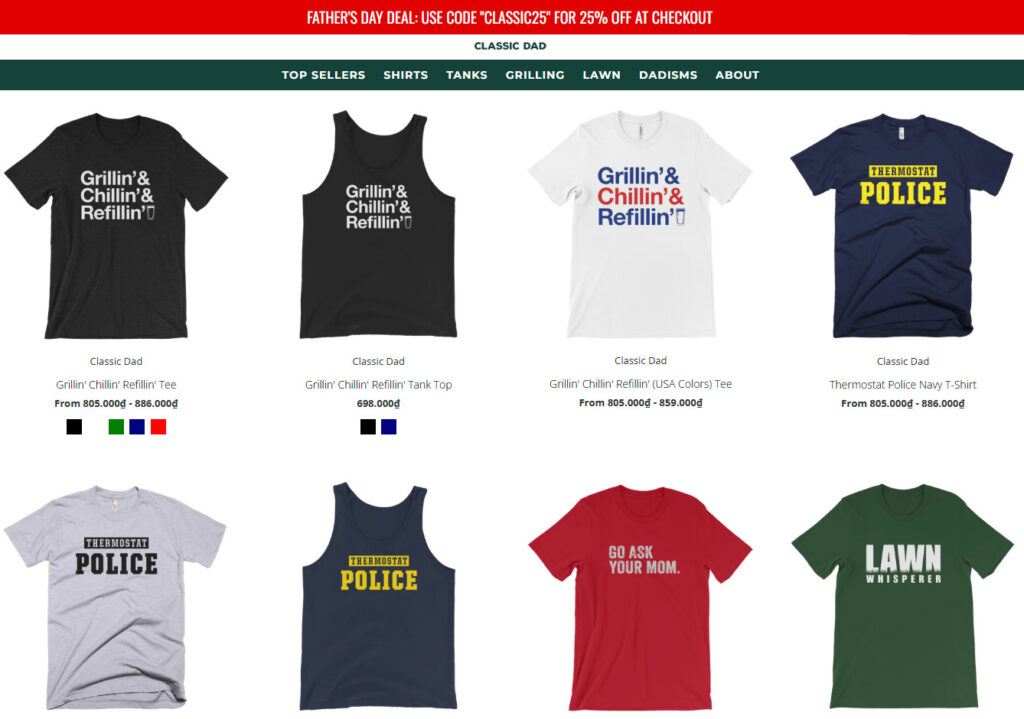
Classic Dad was founded by Daniel Stone, a father from Austin, Texas. After noticing that the market lacked T shirts for dads while mothers had plenty of options, he decided to turn his jokes into products.
Daniel built the store on Shopify and found a print on demand provider through the Shopify App Store. He started by selling T shirts and tank tops featuring dad humor. The store uses creative collections such as “Dadisms," “Lawn," and “Grilling" to help shoppers browse its products.
Based on SEMrush estimates, the store attracts around 1,000 to 2,000 monthly visitors.
Daniel has also built a Facebook following of more than 575,000 people, giving him an effective channel to promote the store and drive additional sales.
See more: Compare Shopify vs Amazon
Store 2: ND Renegade
Website: Ndrenegade.com
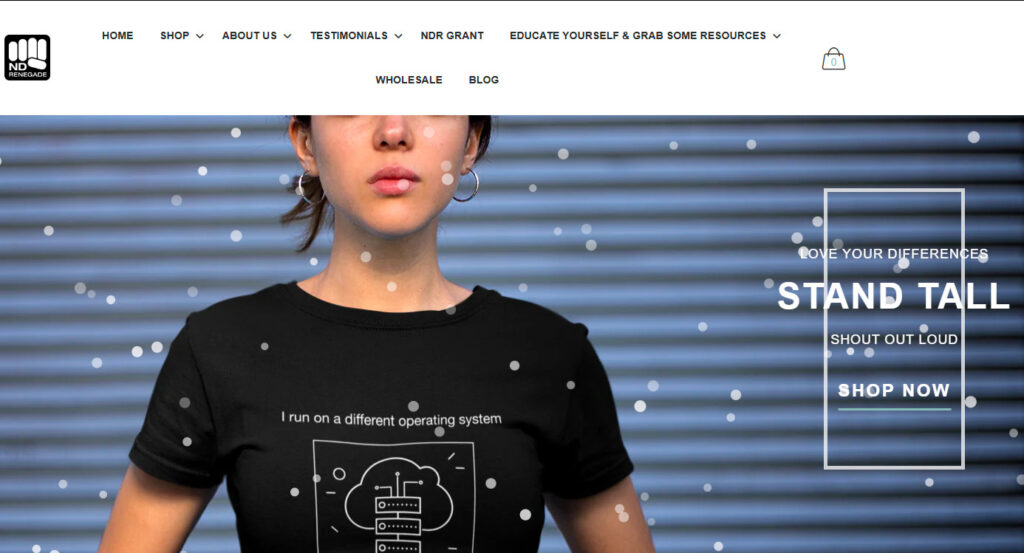
ND Renegade was founded by Sally Willbanks, a well known Australian artist. She changed the direction of her career by launching a fashion brand with the goal of inspiring pride within the neurodivergent community, including her two children.
The Shopify store’s best-selling products include custom hoodies and ultra soft tagless T shirts. Within two years, Sally had built a successful online store with a catalog of 60 designs.
Some of the store’s signature designs include “Autist," “ADHDer," “Ride the Spectrum," “OCD Battler," “FASD," “Dyslexic," “Advocate," “Lining Up Cars," and “Fans." Each design reflects personal stories and lived experiences from members of the neurodivergent community.
ND Renegade has mastered authentic storytelling through Sally’s direct approach and her Instagram marketing strategy.
The store is also a great example of a well-designed Shopify website, featuring helpful resources such as an informative blog, a lookbook, and a chatbot that improve the overall shopping experience.
How to apply this on Merchize
Classic Dad and ND Renegade show that customers buy products because they see themselves reflected in them. Both brands focus on highly specific niches, making it easy for their core audience to connect while also attracting broader interest.
Their success also depends on having a print on demand supplier with a diverse product catalog that supports niche products while helping sellers maintain healthy profit margins.
Merchize is a strong fit for this strategy because niche first stores succeed through constant iteration, not massive catalogs. As new ideas, messages, or designs resonate with the same audience, sellers can launch, validate, and refine them quickly without taking on inventory risk.
Pattern 2: Letting the founder’s real story carry the brand
A few of these stores succeed almost entirely because of who’s behind them, not because of a clever niche.
Store 3: Shadawear
Website: Shadawear.com
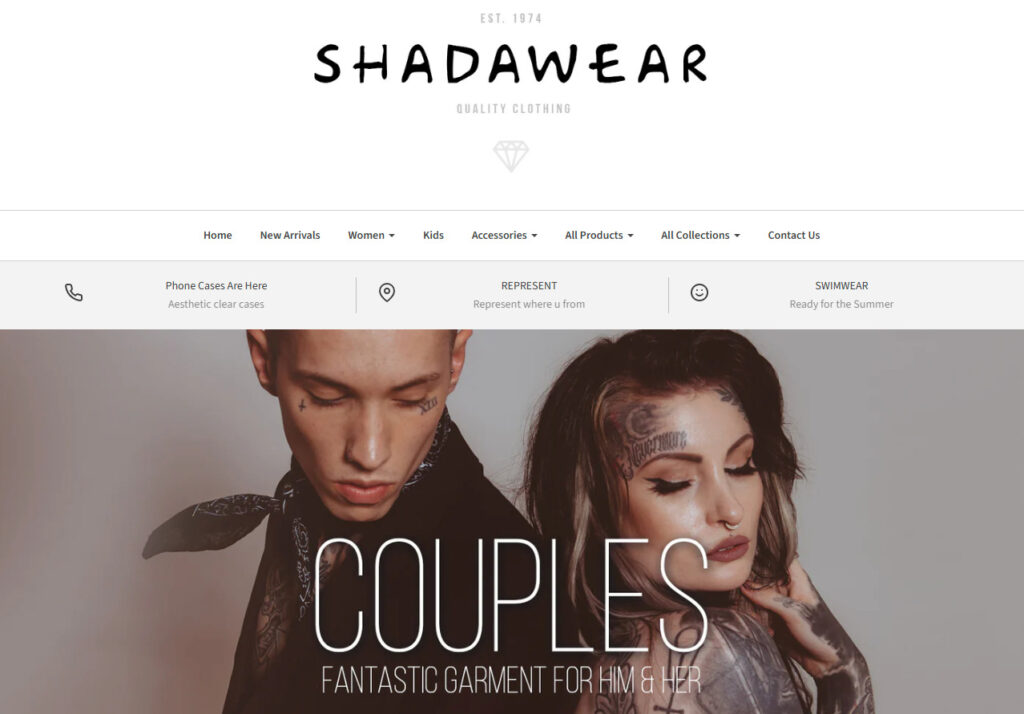
Shadawear is a community driven brand founded by musician Kaysha. The store sells a wide range of products, including T shirts, hats, leggings, phone cases, and swimwear, all featuring energetic designs and positive messages.
Kaysha started with T shirts and hoodies before expanding into children’s apparel. When asked how he chose new products, he said, “I pick what I like, then check whether it can be shipped worldwide. I want every customer to have the opportunity to buy my designs."
A key reason behind Shadawear’s success is Kaysha’s community first marketing approach. Instead of relying on paid ads, he grew the brand by sending products to dancers, giving away free T shirts to his audience, and consistently engaging with followers, turning an existing music community into loyal customers.
See more: How to sell on Shopify without inventory
Store 4: The Philosopher’s Shirt
Website: The-philosophers-shirt.com
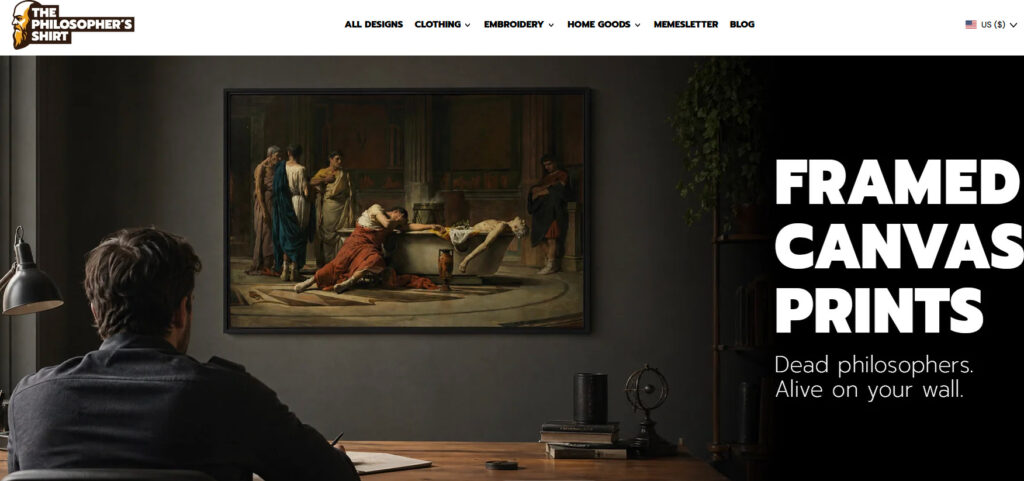
The Philosopher’s Shirt is a philosophy inspired apparel brand founded by Markus, a philosopher and psychologist. The store sells T shirts, hoodies, mugs, and posters featuring designs inspired by influential thinkers such as Nietzsche, Marx, and Foucault.
Markus launched the brand after realizing that no one was creating philosophy-themed T-shirts. Together with Alex, he managed everything in house, from content and advertising to product design. As Markus put it, “Not everyone understands our designs, and that’s perfectly fine."
A key reason behind The Philosopher’s Shirt’s success is Markus’s niche-first approach — targeting philosophy students and professors instead of a mass audience. This focus built a loyal 137K-follower Instagram community while selling across Shopify, Etsy, and Faire.
How to apply this on Merchize
For founder-led brands, the product is only part of the story. Merchize takes care of production and fulfillment, allowing creators to focus on building trust, growing their community, and consistently showing up as the face of the brand, which is often the real competitive advantage.
Pattern 3: Building around a cause people already care about
Store 5: Got Funny
Website: Gotfunnymerch.com
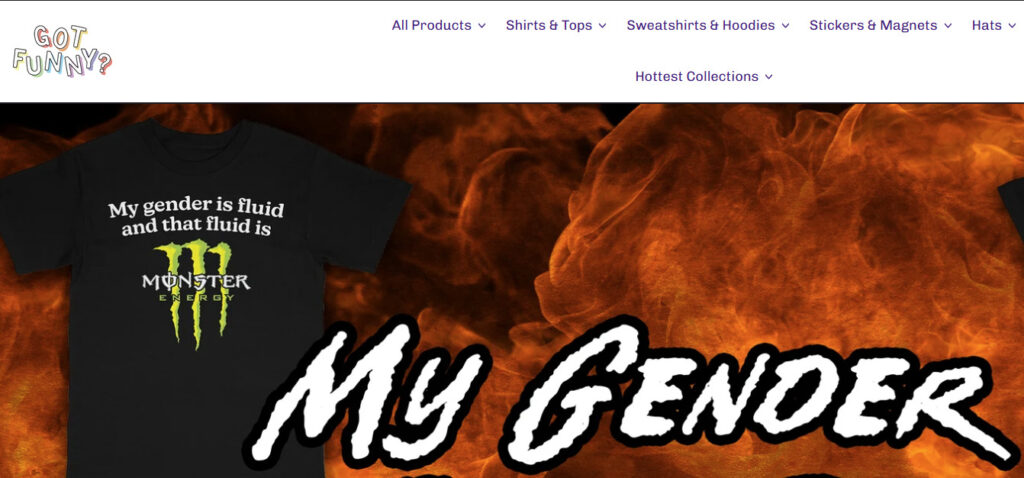
Got Funny is a meme inspired T shirt brand founded by Bryson Oppermann on Shopify in 2022. It started as a side hustle after friends encouraged him to put his designs on T shirts.
Bryson began posting short videos featuring his products on TikTok. One video unexpectedly went viral, turning Got Funny from a side project into his full time business within just a few days.
A key reason behind Got Funny’s growth is Bryson’s TikTok first strategy, using viral short form content as a direct sales channel. The brand has grown to more than 28,900 TikTok followers and 3 million likes, along with 181,000 Instagram followers and more than 60,000 customers.
The store has also sustained its growth with a catalog of more than 2,600 meme inspired products while expanding into collections tied to social causes such as Earth Day, Pride, and STEM. A 4.9 star rating, a loyalty program, and bundle offers such as “Buy 3, Get 1 Free" and “Buy 2, Get 50% Off a Third Hoodie" also help increase average order value.
See more: How to get sales on Shopify
Store 6: Afro Unicorn
Website: afrounicorn.com
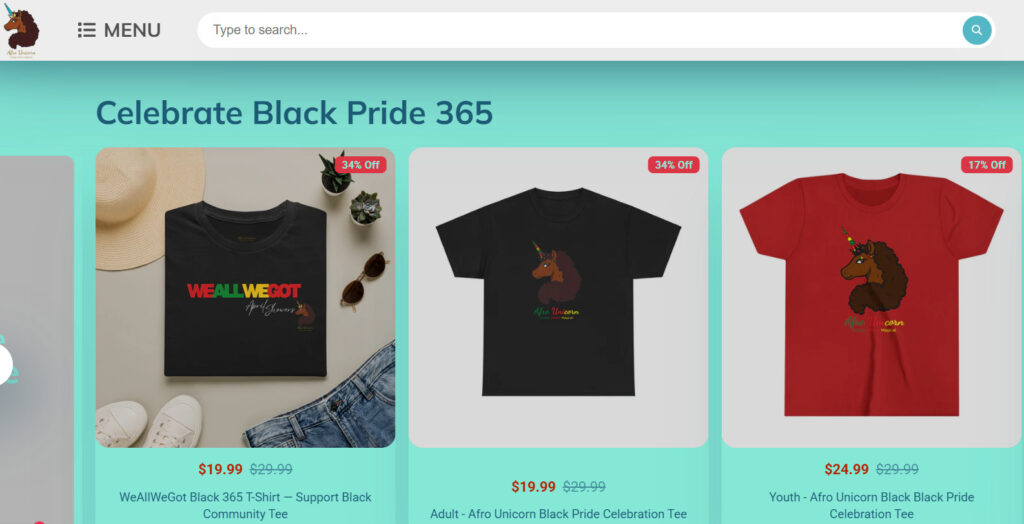
Afro Unicorn was founded by April Showers on Shopify in 2019. The brand sells T shirts featuring unicorns in vanilla, caramel, and mocha skin tones to represent women and children of color.
A key reason behind Afro Unicorn’s success is that April built the brand around a cause people already cared about: representation. Instead of selling generic unicorn designs, she created unicorns that reflected an underserved audience, turning an existing emotional need into a reason to buy.
Because the brand already had a community that believed in its mission, it grew without paid advertising. In its first year, Afro Unicorn reached 10,000 followers and generated $100,000 in organic revenue as customers shared the brand because they felt represented.
Store 7: Bullies & Co
Website: bulliesandco.com
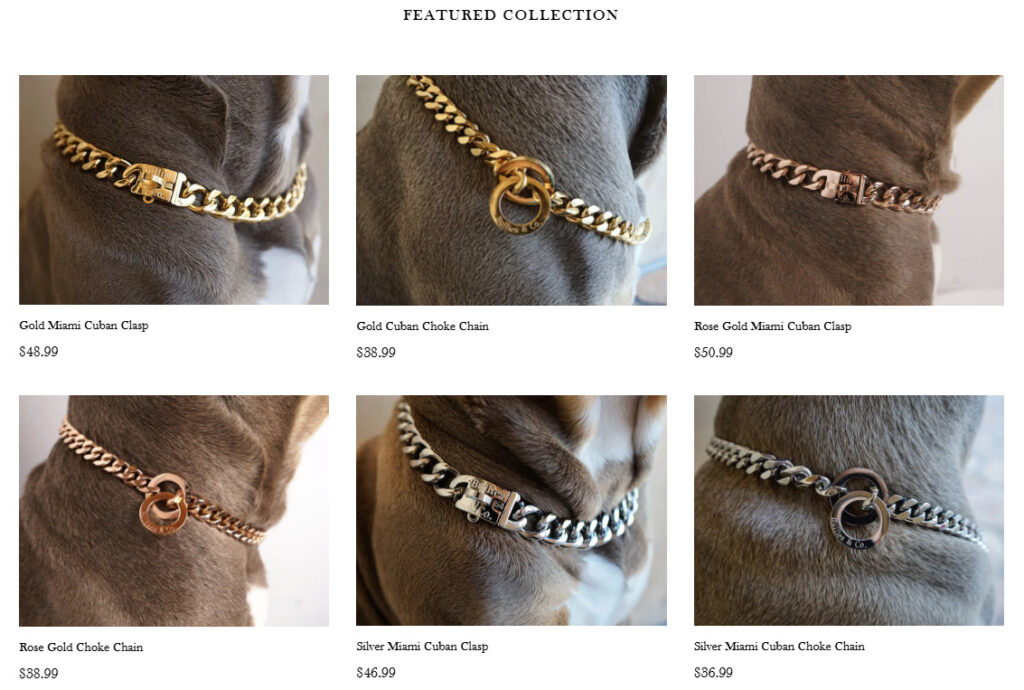
This family-run brand sells exactly seven products — dog collars plated in 18-karat gold, silver, or rose gold — through a deliberately simple Shopify store. Almost all of the brand’s traction comes from Instagram, where it’s built an audience of roughly 19,000 followers. The store’s job isn’t to convert cold traffic; it’s to close sales that social media already warmed up.
Store 8: FIERCEPULSE
Website: fiercepulse.com
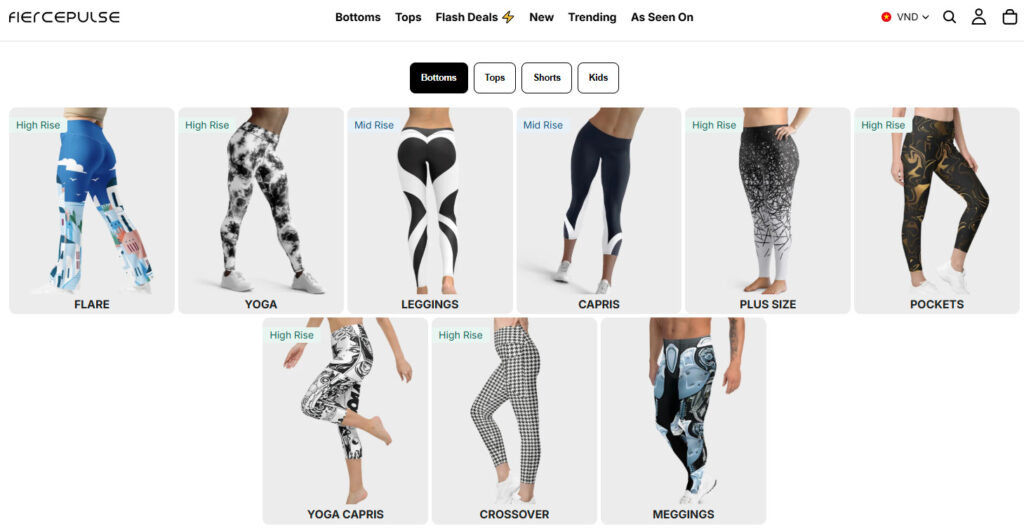
FIERCEPULSE sells leggings and has grown into seven-figure annual revenue with around 14,000 Instagram followers. The founders had run a dropshipping store before this and switched to print-on-demand specifically to fix inconsistent quality and slow shipping. What sets the brand apart is process: every design goes through deliberate research and validation before it’s listed, rather than getting uploaded and left to sink or swim.
How to apply this on Merchize
The biggest advantage of this strategy is speed. Once you identify a community, movement, or cultural moment people already care about, Merchize lets you turn that insight into products quickly without inventory risk, making it easier to capitalize on momentum while it’s still relevant.
How to figure out which pattern fits your store
Before copying any of the three patterns above, it helps to answer a few honest questions:
- Is your audience already narrower than your current catalog suggests, or are you trying to sell to “everyone”?
- Do you have a real story to tell, or are you hoping the products will speak for themselves?
- Does your brand stand for something specific enough to repeat in one sentence?
- Is your traffic coming from somewhere already—social or an existing audience—or are you starting from zero?
Are you listing designs based on a guess or on some kind of validation step first?
Most stores lean naturally toward one or two patterns. Trying to run all three at once usually means none of them get done well.
FAQ
1. Do successful POD stores need a big budget to start?
No. Several of the stores above — Bullies & Co with seven products, Shadawear starting with 200 printed shirts — started with a small catalog and little to no upfront marketing spend. The common thread is a validated niche, not a large budget.
2. Is it better to copy a niche that’s already working, or find a new one?
A niche that’s already selling proves there’s demand, but it also means more competition. The stores above succeeded less. Their niche was unique and more because they went deeper into it than competitors did — a narrower audience, a real founder story, or a cause stated specifically enough to repeat.
3. How long does it usually take a POD Shopify store to become profitable?
There’s no fixed number, but most sources point to a similar range: a first sale often takes a few months of consistent promotion, and revenue tends to stabilize somewhere around six to twelve months of regular effort. Stores that start selling while still building up their original designs often see revenue sooner than ones that wait for a perfect catalog before launching.
4. Do these stores use their own fulfillment or a POD partner?
Most of the stores in this list run on a POD partner rather than handling printing and shipping themselves, which is the point of the model: no inventory risk, and the ability to test new designs without committing to stock. The stores that grow simply build their brand and audience strategy on top of that fulfillment layer instead of around it.