Contents
- What is scalability? The difference between “increasing orders" and “scaling up"
- Where are you stuck on your business scaling journey?
- 16 most potential scalable business ideas in 2026
- Which scalable business idea should you choose?
- How to recognize a scalable idea
- The truth is every business model can scale up
Revenue is vanity, profit is sanity.
Selling 1,000 orders a day doesn’t mean you’re successful if your ad costs, staff salaries, and inventory expenses also jump 10 times. A truly scalable business model must create a clear gap between revenue and costs.
If you are looking for scalable business ideas to maximize your profit, this article is for you. We will analyze the most potential online business models from financial plans and inventory risks to the automation tools that go with them.
What is scalability? The difference between “increasing orders" and “scaling up"
Most online sellers mistakenly think that selling more orders means their store is scaling up. The reality is completely the opposite.
A non-scalable business model is one where costs and effort grow right alongside revenue. This means a truly scalable model will see revenue increase by many times, while costs and operational effort stay almost the same (or only increase very little).
Let’s take a simple example. You sell handmade items that you make yourself. Selling 5 orders a day takes you 3 hours; to sell 50 orders a day, you would need to work 30 hours (which is impossible) or hire more staff, buy more machines, and expand your workshop. You are running a store with fake revenue growth, but your profit margin is shrinking and you become a slave to your own job.

Why must you choose a true scalable business idea?
-
Marginal cost approaches $0: The cost to serve your 1,000th order is almost the same as your 10th order. Net profit spikes along with order volume.
-
Complete time freedom: Thanks to digital asset packaging or automation tools, the system closes deals and delivers products on its own without requiring you to be on call 24/7.
-
Eliminating tied-up capital risks: You won’t fall into the trap of “the more orders you sell, the less money you have to buy stock," keeping your cash flow flexible and safe.
Where are you stuck on your business scaling journey?
- “I want to be financially independent with a modest budget, but I don’t want to trade away all my personal time."
You want to find your own path to escape the 9-to-5 life, but everywhere you look, you see risks. With limited savings, you hate the idea of spending hundreds of millions of dong to buy inventory, only to pray that the goods don’t get stuck in the warehouse. What you are looking for is a low-capital model (no stocking inventory) one that a single person can manage, using technology to automate sales. What keeps you up at night right now is the fear of choosing the wrong niche, spending all your savings, and ending up with nothing.
- “The more orders I sell, the more exhausted I get. The profit I make just isn’t worth the time I put in!"
You are past the stage of having no orders. Whether you sell handmade goods, do freelance work, or run a small online shop, products are still moving steadily. But you realize a bitter truth: you are using your own sweat and 24 hours a day to trade for money.
If you want to double your revenue, you have to work twice as hard. You long to escape this trap by switching from selling labor to selling products or systems. But you are also afraid: changing your model might mean losing old clients, while building an automated system leaves you not knowing where to start.
- “I have enough capital and staff, but I need a leverage model to make a bigger breakthrough."
You no longer have to worry about daily expenses or buying small batches of stock. Your goal is to build a proper, branded, and optimized business system to dominate the market.
You need a model that holds an economy of scale: profit margins must widen as orders grow, market coverage speed must be fast, and 80-90% of operations must be handled by AI and technology. Your biggest fear isn’t running out of money, but burning cash on ads without keeping customers, or having a model that is too easy for competitors to copy overnight.
No matter which group you belong to above, the common key is choosing the right model that fits your budget, strengths, and risk tolerance. The next section covers the top 16 proven scalable business ideas.
Read more: Guide: Best 15 Online Marketplace Options in 2026
16 most potential scalable business ideas in 2026
The business ideas with the highest scalability are models that help you grow sales without draining your time or capital. They run on automation systems, lean production, and effective marketing strategies – meaning they allow you to grow without burning out.
Summary table of 16 scalable business ideas
| No. | Business model | Initial capital requirement | Net profit margin | Automation level | Suitable seller group |
| 01 | Print on demand | Extremely low (Print as you sell) | Medium | Very high | Beginners, Solopreneurs, Inventory-averse sellers |
| 02 | Micro-DTC brand | Medium | Fairly high | Medium | Sellers wanting to build their own brand |
| 03 | AI content agency | Extremely low | High | High | Freelancers, Marketing service providers |
| 04 | Niche digital products | Extremely low | Extremely high | Very high | Niche experts, Designers, Content creators |
| 05 | Subscription box | Medium to fairly high | Medium | Low | Sellers with stable niche suppliers |
| 06 | Affiliate marketing | Extremely low | Extremely high | High | Content creators, Reviewers |
| 07 | Private label | Fairly high to high | High | Medium | Well-funded sellers aiming to dominate markets |
| 08 | Online courses & training | Low | Extremely high | Very high | Experts, Experienced professionals |
| 09 | Virtual event coordination | Low | High | Medium | People strong in management and tech |
| 10 | App / software development | Medium to high | Extremely high | Very high | Developers, Coders, Tech-entrepreneurs |
| 11 | Paid niche newsletter | Extremely low | Extremely high | High | Analysts, Writers |
| 12 | Lean service agency | Low | Fairly high to high | Medium | Freelancers wanting to upgrade to management |
| 13 | All-in-one content production | Low to medium | Fairly high | Medium | Creative teams, Small studios |
| 14 | Niche software | Medium to high | Extremely high | Very high | Tech founders, Deep niche experts |
| 15 | Business operations consulting | Extremely low | High | Low to medium | Management experts, Experienced HR professionals |
| 16 | Eco-friendly product consulting | Low | High | Low to medium | Supply chain experts, Environmentalists |
1. Print on demand
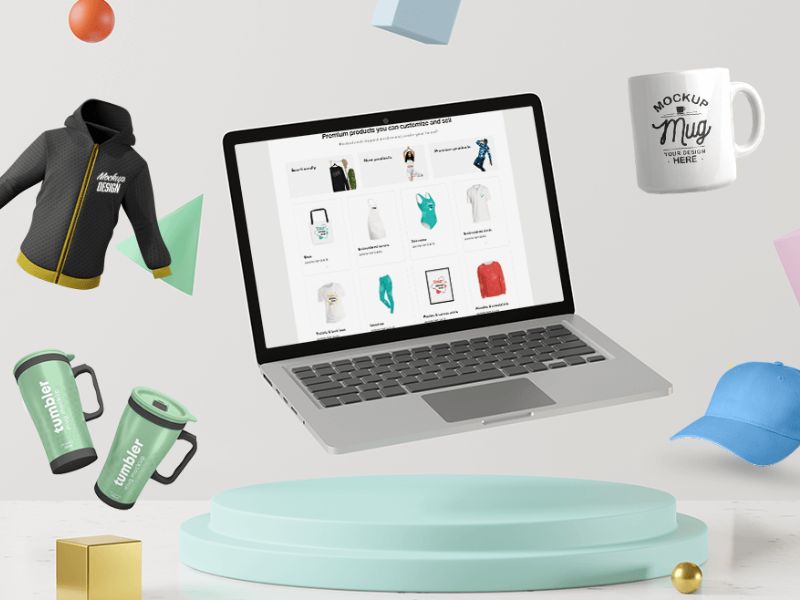
Print on demand is currently one of the most chosen business models by e-commerce sellers thanks to its extremely lean operation and unlimited scaling potential. With this model, you only need to focus 100% of your resources on design, marketing, and closing sales; the entire printing, packaging, and shipping process to global buyers is handled by fulfillment providers.
Looking at the market briefly, the global POD market size reached 10.8 billion USD in 2025 and is expected to hit 13.1 billion USD in 2026 (according to Grand View Research). With an impressive compound annual growth rate (CAGR) of 23.6% per year, POD continues to be a “gold mine" for sellers who know how to capitalize on the product personalization trend among global consumers.
POD stands out because:
-
You own your brand and customer list.
-
You set up stores on Shopify, WooCommerce, Etsy, Amazon, or eBay and connect directly with POD suppliers. When an order comes in, the system automatically pushes the info to the factory to produce, pack, and ship straight to the customer.
-
You aren’t limited by production capacity or warehouse space. Whether your store hits 10 or 10,000 orders a day, your operational workflow stays just as lean.
To scale up successfully with the POD model, picking the right fulfillment partner is the key factor deciding your profit. Platforms like Merchize provide all-in-one solutions for sellers with direct manufacturing facilities, optimized fulfillment warehouses in the US, EU, Vietnam, AU,… and the ability to sync orders automatically across multiple e-commerce platforms. This helps sellers keep the highest profit margins and scale ads with peace of mind, without worrying about operational crashes.
Pros:
-
No need to hold inventory, no worries about capital lock-up or storage costs.
-
All orders from selling channels are synced automatically to suppliers for production and delivery.
-
You can publish hundreds of new designs every week to test the market without paying upfront production costs.
Cons:
-
Lower net profit margin per order compared to self-manufacturing: Since you have to split profits with the print factory and fulfillment provider.
-
Heavy reliance on factory quality: If you choose the wrong production partner, slow shipping times or defective goods will directly ruin your store’s reputation.
Read more: Top 8 Best Print On Demand Sites for Beginners in 2025
2. Online micro-DTC brand
The rise of direct-to-consumer micro-brands is also changing the retail game. Today’s customers are increasingly wary of mass-produced industrial goods and tend to favor niche, highly personalized brands.
Think about minimalist planners, pet wellness products, or eco-friendly kitchenware. Micro-DTC brands thrive by focusing on deeply solving a single small pain point of a niche community, rather than trying to sell hundreds of different items.
You can start by testing demand through pre-orders or small-batch production. Once market demand is proven, you reinvest profits to place OEM/Private Label orders at much cheaper production costs, causing your profit margin to shoot up.
Leverage channels: Combine short-form videos (TikTok, Reels, Shorts) to drive organic traffic along with email marketing to maximize customer lifetime value (LTV).
Pros:
-
Builds brand equity: Extremely good profit margins thanks to brand value and a loyal customer base with high repeat purchases.
-
Fast viral potential: Very easy to go viral on social media if your brand story and products touch users’ emotions.
Cons:
-
Capital needed for production: When transitioning to the private label stage to optimize costs, you’ll need to put up capital to order minimum quantities (MOQ).
-
Requires well-rounded marketing skills: You need a solid understanding of branding, content, and proper customer care to retain users.
3. AI content agency
2026 is the era of AI, and those who know how to use it will speed up content production many times over. You can offer packages for website articles, product descriptions for online stores, video scripts, or sales emails with extremely low operational costs.
Clients pay you because you know how to prompt tools, fine-tune tone of voice to match their brand, and optimize articles for SEO.

How to scale: You standardize your process into fixed steps, pick a target client group like e-commerce stores or training centers, and sell monthly service packages. As order volume increases, you hire additional editors to review content before delivering it to clients.
Pros:
-
Low initial capital; you only need to subscribe to quality AI accounts.
-
Fast completion speed, creating good profit margins on each order.
Cons:
-
High competition due to low barriers to entry.
-
Must update tools continuously to maintain output quality.
4. Niche digital products
This model allows you to sell globally without inventory, warehousing, or shipping costs. You create a product once and sell it endlessly to many different customers. Today’s market favors products that solve one specific need for a specific group of people.
Practical examples:
-
Expense tracking spreadsheets for freelancers.
-
Image design templates for wedding photo studios.
-
Contract templates for design service providers.
-
Work planner files for busy people.
How to scale: You upload files to selling platforms like Etsy, Gumroad, or Shopify. When a customer pays, the system automatically sends the file via email. You don’t need to intervene in the delivery process.
Pros:
-
Profit margins are nearly 100% as there are no additional production costs.
-
Sell to customers anywhere in the world without shipping barriers.
Cons:
-
High risk of pirated file sharing or design copying.
-
Requires heavy investment in preview visuals and running ads to attract buyers.
5. Subscription box
This model converts one-time buyers into a steady monthly revenue stream. You curate a set of themed products such as snacks from different countries, pet accessories, or natural skincare items. Pack them neatly, and deliver them regularly to subscribers.

How to scale: You use platforms like Shopify, Subbly, or Cratejoy to manage monthly recurring payments and shipping quantities. As subscriber numbers grow, you gain bargaining power with suppliers to buy stock at lower wholesale prices, widening your profit margin gap.
Pros:
-
Predictable cash flow thanks to fixed monthly recurring revenue.
-
High customer retention rate if product quality and curation remain consistent.
Cons:
-
Costs time and money for sourcing, packaging, and shipping operations.
-
Must constantly refresh items inside the box to prevent customers from canceling after a few months.
6. Affiliate marketing and Personal brand selling
If you already have a community channel, review page, or an established follower base, affiliate marketing is a near-zero-risk way to make money. You recommend other companies’ products through your unique link and earn a commission on every successful order.
How to scale: You focus on creating detailed review articles, comparison videos, or user guides containing purchase links. When this content trends or ranks high on search engines, link clicks increase continuously without requiring extra effort to start over.
Pros:
-
Zero worries about inventory, stock-outs, packaging, or post-purchase customer support.
-
Passive income grows automatically alongside traffic to your content channels.
Cons:
-
Completely reliant on third-party commission policies and stock availability.
-
Takes significant time upfront to build a trustworthy audience base.
7. Private label product business
Unlike reselling mass-produced items, the private label model allows you to take existing products from a manufacturer, put your brand on them, redesign the packaging, and sell them to the market under your own name.
Your job is to find best-selling products on the market, contact factories to order moderate quantities to test quality, and as sales grow, place larger bulk orders to lower production costs while expanding your store across multiple e-commerce platforms.
Pros:
-
Full authority over selling prices and desired profit margins.
-
Builds unique brand equity, making it easy to encourage repeat customer purchases.
Cons:
-
Requires upfront capital to meet minimum order quantities (MOQ) set by manufacturers.
-
Must bear the risk yourself if inventory moves slowly or ad costs run too high.
8. Online courses and training
The demand for online learning to upgrade professional skills or personal development grows steadily year after year. You package your knowledge, experience, or practical workflows into video lectures, assignments, and study guides.

How to scale: You film and produce a complete set of lectures once and upload them to platforms like Teachable, Kajabi, Thinkific, or Podia. The system automatically processes payments and grants access to students. To increase revenue, you run ads to attract new students or upsell high-ticket 1-on-1 coaching sessions.
Pros:
-
Sell to an unlimited number of global students without incurring extra lecture production costs.
-
Establishes expert positioning and a loyal audience to sell future products to.
Cons:
-
Requires real expertise and proven results to attract learners.
-
Demands significant time and effort during initial curriculum design and video production.
9. Virtual event coordination services
Businesses, experts, and organizations are shifting heavily toward hosting workshops, summits, or product launches on online platforms. However, most struggle with technical setup, speaker management, and audience interaction. This is where you come in to provide end-to-end coordination from scripting and tech infrastructure to live execution.
How to scale: You use tools like Hopin, Zoom, or Airmeet to build a standard operational framework. After a few successful projects, you package the event execution process into SOPs and hire technical staff to run events following the template. Your business transitions from selling personal time to offering professional team services.
Pros:
-
Large market demand with upfront equipment costs much lower than physical events.
-
Easy to secure long-term contracts with companies running recurring events.
Cons:
-
High pressure to resolve real-time technical glitches during live events.
-
Initial income still depends on the number of projects you take on.
10. App and software tool development
Habitual reliance on mobile and desktop apps to handle daily tasks makes software businesses exceptionally high-margin. You build a software application or mobile app that solves one specific small problem, such as expense tracking, workout scheduling, or workflow automation.
How to scale: You build a complete version of the app and list it on the App Store, Google Play, or offer it as a web-based SaaS product. Revenue comes from paid downloads, in-app purchases, or monthly subscription fees. A single piece of software can serve millions of users simultaneously without requiring a proportional team expansion.
Pros:
-
Strong ability to generate recurring monthly cash flow from user subscriptions.
-
High business valuation, making it easier to raise capital or sell the app to larger corporations.
Cons:
-
Heavy initial development costs and time if you cannot code yourself.
-
Heavily reliant on app store approval policies and requires continuous updates to fix system bugs.
11. Paid niche newsletter
A paid newsletter is a business model that lets you turn analytical insights or deep-dive content into a recurring revenue stream. You research and synthesize information about a specific niche (such as e-commerce trends, investment strategies, or small business finance) and deliver it via email to a list of readers.

How to scale: You use platforms like Substack, Beehiiv, or Ghost to manage your email list and collect monthly subscription fees from readers. You only write a post once, but the system automatically distributes it to tens of thousands of readers simultaneously. Revenue grows alongside your paid subscriber count without requiring extra time to reproduce content.
Pros:
-
Stable and predictable cash flow thanks to monthly or annual subscription fees.
-
Full ownership of your customer list without relying on social media algorithms.
Cons:
-
High demands for deep knowledge and a strong commitment to consistent content production.
-
Requires significant time upfront to build trust and gather enough readers willing to pay.
12. Lean service agency
This model helps you transition from a freelancer into a business owner. You take your personal skills such as writing, design, SEO optimization, or running ads and turn them into fixed-price service packages with standardized workflows and monthly retainer fees.
How to scale: You build standard operating procedures (SOPs) for each service and hand them off to junior staff or contractors to execute. Clients sign up for service packages on your website, the system automatically assigns tasks to staff, and you step into a final quality control role. Having an independent operational machine lets you take on many more clients at once.
Pros:
-
Easily scale revenue by taking on projects beyond your personal time limits.
-
Low operating costs since you only hire contractors per actual project.
Cons:
-
Time-consuming to build standard workflows for staff to follow accurately.
-
Risk of reputation damage if contractor work quality is inconsistent.
13. All-in-one content production agency
Brands and online stores have a massive demand for visuals, short-form videos, social media posts, and sales emails to maintain their internet presence. Because of this, you can start an agency providing end-to-end content production solutions for businesses.
How to scale: You design recurring service packages (such as a 30 short-form videos/month package or a full fanpage management package). You leverage pre-made design templates, shared asset libraries, and distribute work among your creative team. As your client base grows, you simply hire more production staff following your established workflow frame.
Pros:
-
Huge market demand, with businesses frequently signing long-term retainers.
-
Easy to increase order value by upselling complementary services like ad management or channel management.
Cons:
-
Heavy pressure on time management and delivery deadlines for multiple clients at once.
-
Requires a tight project management system to avoid missed deadlines or overlooked tasks.
14. Vertical SaaS (Niche software)
Instead of building generic software to serve all industries, the most effective current trend is focusing on a specific market niche. You create a software solution that deeply solves operational pain points for a distinct industry. For example: appointment booking software for gyms, inventory tracking tools for fashion boutiques, or record management systems for medical clinics.
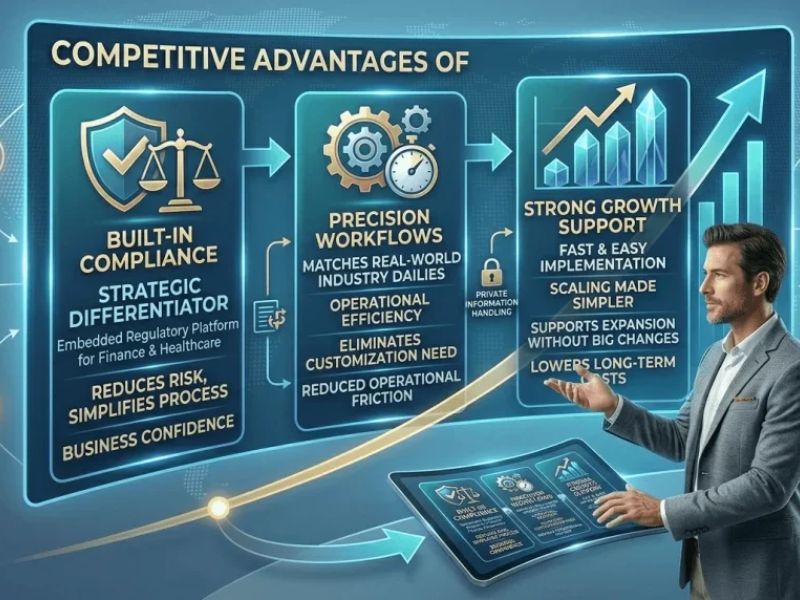
How to scale: You use no-code or low-code platforms like Bubble or OutSystems to quickly build a minimum viable product (MVP) and test market response. Clients pay a fixed monthly or annual subscription fee to access the tool. The software runs automatically on cloud infrastructure, allowing you to serve thousands of businesses simultaneously with only a tiny increase in server costs.
Pros:
-
Highly predictable recurring income with low churn rates because the software becomes embedded in their daily operations.
-
Less fierce competition compared to generic, multi-purpose software.
Cons:
-
Demands deep research and a thorough understanding of the target industry’s operational workflows.
-
Requires good technical support and customer care systems to resolve glitches promptly.
15. Business operations consulting & standardization
Remote and hybrid work models leave many companies in crisis regarding communication, progress tracking, and maintaining work culture. If you have experience in management, HR, or operations, you can provide system audit and restructuring services for these companies.
How to scale: You offer workflow audit packages, host live video training sessions, and digitize all resources into template kits, tool guides (for tools like Notion, Slack, Loom), or recruitment scripts to bundle into sales. As your credibility grows, you transfer this methodology framework to junior consultants to execute on your behalf.
Pros:
-
High contract value with nearly $0 travel or hosting costs.
-
Easy to upgrade into long-term consulting retainers or monthly system maintenance fees.
Cons:
-
Limited project intake capacity early on when you lack a support team.
-
Heavily reliant on personal credibility and proven results from past projects.
16. Sustainable product consulting
Pressure from regulatory requirements and eco-friendly consumer trends is forcing brands to change how they produce goods. You act as a consultant helping businesses source green raw materials, minimize packaging waste, or attain environmental certification standards.

How to scale: You digitize your technical expertise into ready-made resource packs: supplier directories of certified raw materials, packaging compliance checklists, or short training courses for corporate design teams. You combine selling self-study materials with high-ticket consulting contracts for larger brands.
Pros:
-
A booming niche market with strong demand and few high-quality competitors.
-
Clients are willing to pay premium fees to clear export barriers or meet green standards.
Cons:
-
Requires accurate expertise in technical standards, supply chains, and legal compliance regulations.
-
Time-consuming to stay continuously updated on new environmental laws and standards across international markets.
Which scalable business idea should you choose?
If you are still hesitant between the 16 business models above, use the quick filter below to instantly pick the direction that best fits your capital, skills, and personal goals:
-
Extremely low capital (Under $500): Print on demand (POD), Affiliate marketing, Digital products, AI content agency, Paid newsletter, Operations consulting.
-
Medium capital ($500 – $2,000): Online courses, Virtual event coordination, Lean service agency, All-in-one content production, Eco-friendly product consulting.
-
Large capital ($2,000+): Micro-DTC brand, Private label, Vertical SaaS, Subscription box.
-
For creative people & designers: Print on demand (POD), Design templates / digital files, Design courses, Content production studio.
-
For developers & tech-savvies: App & software development, Vertical SaaS.
-
For marketers & creators: AI content agency, Affiliate marketing & personal brand, Lean service agency.
-
For experts & consultants: Online courses & training, Paid niche newsletter, Business operations consulting, Eco-friendly product consulting.
-
Highest automation & passive income: Digital products, Software / SaaS, Print on demand (POD).
-
Long-term brand builders with equity assets: Online micro-DTC brand, Private label business.
-
Predictable recurring cash flow: Vertical SaaS, Paid newsletter, Subscription box.
Learn more: Top 20 High-Profit Things to Sell to Start an Online Business
How to recognize a scalable idea
A truly scalable business idea usually carries the following operational traits:
-
Fast replicability: The operational model doesn’t rely on your personal time. Whether it’s physical products, services, or courses, the machine still handles things well when order volume grows 10x.
-
Decreasing marginal cost: As customer numbers grow, the cost to serve one additional new customer approaches $0 (most noticeable in digital products, software, or POD models).
-
Thick net profit margins: The gap between selling price and operational costs is large enough for you to reinvest in ads, systems, and hiring.
-
Large market size: Your chosen niche has a wide enough customer base or belongs to an industry growing rapidly year after year.
-
Fast or recurring cash flow cycle: The model generates recurring revenue (monthly fees) or has high customer repeat purchase rates.
-
Easy-to-standardize processes: Core steps from marketing and closing sales to delivery can be documented into SOPs for automated tools or staff to take over.
The truth is every business model can scale up
Any business idea has the capacity to scale up. Scaling up isn’t about forcing yourself to do more work; it’s about building systems that grow revenue without eating up more of your personal time. A business only scales sustainably when the backend operation handles increased order volume smoothly.
Steps to move a business from launch to stable growth:
-
Automate repetitive tasks: Integrate tech tools to handle email marketing, sync inventory, manage customer service, and schedule posts to free up time for strategic planning.
-
Delegate and outsource properly: Assign specialized work (designing, running ads, tech support) to freelancers or third parties.
-
Focus on effective data: Track conversion rates and customer retention rates closely to channel budget into the channels bringing the best return.
-
Build a loyal customer base: Maintain connections through social media and email. Returning customers buying repeatedly are your lowest-cost revenue source.
-
Diversify your catalog: Add complementary product lines or digital file bundles to increase value per order.
A strong operational foundation helps your business grow according to a calculated roadmap.
The easiest starting point for sellers: If you decide to go with POD but don’t know where to start designing, Merchize is the perfect launchpad.
With an all-in-one ecosystem from direct manufacturing facilities and international fulfillment warehouses to automated order-syncing platforms, Merchize completely solves your operational challenge. You only need to focus on what matters most: finding ideas and scaling ad budgets. The system automatically shoulders the entire back-end logistics so you can scale up without limits.