Contents
- What Is Walmart Fulfillment Services (WFS)?
- How Does Walmart Fulfillment Services Work? (Step-by-Step)
- Walmart Fulfillment Services Fees: What Will It Actually Cost You?
- Walmart Fulfillment Services vs. Amazon FBA: Which Is Right for You?
- WFS Eligibility: Can You Use Walmart Fulfillment Services?
- How to Sell on Walmart Without WFS: Self-Fulfillment and Other Options
- Why You Should Sell Print-on-Demand on Walmart?
- Practical Tips to Succeed with Walmart Fulfillment Services
- Is Walmart Fulfillment Services Worth It? Who Should (and Shouldn’t) Use It
- Conclusion — Making the Right Fulfillment Decision for Your eCommerce Business
Walmart’s US eCommerce sales have crossed $100 billion in gross merchandise value — and the marketplace is still accelerating. If you’ve been sleeping on Walmart as a sales channel, now is the time to wake up.
Most sellers are still laser-focused on Amazon or Etsy. That’s actually your opportunity. Walmart Marketplace has a growing base of shoppers, less seller competition than Amazon, and a fulfillment infrastructure that can put your products in front of millions of buyers with 2-day shipping. Walmart Fulfillment Services (WFS) is the engine behind that. This is Walmart’s in-house program where they store, pack, and ship your products, so you don’t have to.
Whether you’re weighing Walmart fulfillment services fees, trying to understand eligibility requirements, or just figuring out where to start, this guide walks you through everything you need to make a confident decision.
What Is Walmart Fulfillment Services (WFS)?
If you’ve ever wondered how smaller sellers manage to offer fast, reliable shipping on Walmart.com without running their own warehouse, this is how.
How WFS Works
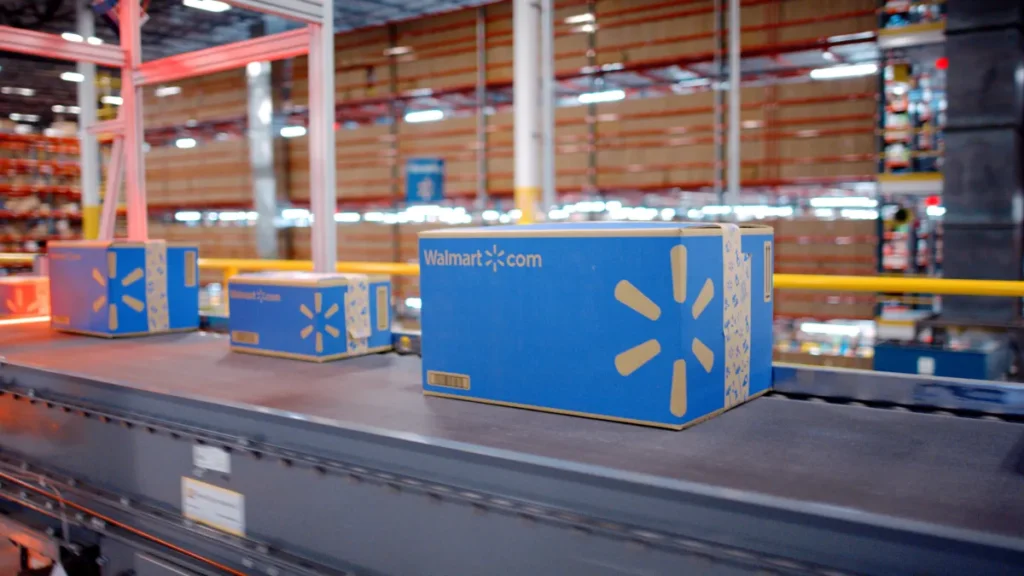
Walmart Fulfillment Services is Walmart’s in-house fulfillment program for third-party sellers on the Walmart Marketplace. Think of it as Walmart’s version of Amazon FBA: you send your inventory to Walmart’s fulfillment centers, and they take it from there — picking, packing, shipping orders to customers, and even handling returns on your behalf.
The flow is straightforward. You prep and ship your products to a Walmart fulfillment center. When a customer places an order, Walmart’s team processes and ships it — typically with 2-day delivery. You stay focused on running your business while Walmart handles the logistics.
Who Is WFS Designed For?
WFS is built for third-party sellers who want to scale on Walmart Marketplace without managing their own fulfillment operation. It’s a strong fit if you’re:
- Already selling on Amazon FBA and want to diversify your sales channels
- A product-based business with physical inventory ready to ship
- An eCommerce entrepreneur targeting US shoppers who want fast delivery
- A seller exploring Walmart seller fulfillment options beyond self-shipping
If you’re in the print-on-demand space and selling custom physical products, WFS works differently for you.
What It Means To Feature WFS for Your Listings
When your products are enrolled in WFS, they automatically qualify for Walmart’s “2-Day Delivery" badge. That small tag carries real weight. Shoppers trust it, and Walmart’s algorithm rewards it.
Listings with the 2-day badge tend to rank higher in Walmart’s search results and are more likely to win the Buy Box — the featured placement that drives the majority of sales on any given product page. In a marketplace where visibility directly equals revenue, that badge isn’t just a nice-to-have. It’s a competitive edge that self-fulfilled listings simply can’t match.
How Does Walmart Fulfillment Services Work? (Step-by-Step)
Getting started with Walmart Fulfillment Services is more straightforward than most sellers expect. Here’s exactly how the process works, from application to your first fulfilled order.
Step 1: Apply and Get Approved for Walmart Marketplace
Before you can use WFS, you need to be an approved Walmart Marketplace seller. Walmart is selective — they review your business history, product catalog, and fulfillment track record before letting you in.
What they’re typically looking for:
- A registered US business entity with a valid tax ID
- A proven track record of selling (prior marketplace experience helps)
- Products that meet Walmart’s quality and compliance standards
- Competitive pricing relative to other channels
The application itself lives at marketplace.walmart.com. Approval can take anywhere from a few days to a few weeks, so apply early if you’re planning around a specific sales season.
If you don’t know what products to start selling on Walmart, check out the list of the best-selling items on Walmart.
Step 2: Set Up Your WFS Account
Once you’re approved as a seller, enabling WFS happens inside Walmart Seller Center — your main dashboard for managing listings, orders, and shipping. From there, you’ll activate WFS, set up your shipping plans, and create your first inbound shipment (the batch of inventory you’re sending to Walmart’s fulfillment center).
This is also where you’ll configure product-level settings, like which items you want fulfilled by Walmart versus self-shipped. You don’t have to use WFS for your entire catalog right away.
Step 3: Send Your Inventory to Walmart Fulfillment Centers
Walmart has specific requirements for how inventory arrives at their facilities. Products need proper barcodes (GTIN or UPC), compliant packaging, and correct labeling. Walmart will reject shipments that don’t meet their inbound standards, so it’s worth reviewing their prep guidelines carefully before you pack your first box.
A few things to keep in mind:
- Each item must be scannable and uniquely identified
- Poly-bagged or boxed items need to meet specific packaging rules
- You’re responsible for the cost of shipping inventory to Walmart’s centers
Step 4 — Walmart Handles Storage, Picking, Packing & Shipping
This is where WFS earns its keep. Once your inventory lands at a Walmart fulfillment center, they take over completely. When a customer orders your product, Walmart picks it from their shelves, packs it, and ships it — typically with 2-day delivery to most US addresses.
Walmart’s carrier network is extensive, and their fulfillment centers are distributed across the country to keep delivery times fast. Your listings automatically qualify for the 2-Day Delivery badge, which boosts both visibility and conversion.
Step 5: Returns and Customer Service
WFS includes returns handling, which is one of the more underrated perks. When a customer initiates a return, Walmart manages the process end-to-end. Returned items are inspected and either restocked as sellable inventory or flagged as unsellable, in which case you can request they be returned to you or disposed of.
One thing to plan for: return rates vary by product category, and restocking isn’t always guaranteed. Factor that into your inventory forecasting, especially around peak seasons.
Once your WFS setup is running smoothly, the next question most sellers ask is: What will this actually cost me? Let’s break down the Walmart fulfillment services fees so you know exactly what to expect.

Walmart Fulfillment Services Fees: What Will It Actually Cost You?
Fees make or break your margins, so let’s get straight to the numbers. Walmart Fulfillment Services uses a straightforward pricing model — but there are a few costs that catch sellers off guard if they’re not prepared.
WFS Fee Structure Breakdown
WFS charges two main types of fees: fulfillment fees and storage fees.
Fulfillment fees cover the picking, packing, and shipping of each order. They’re calculated based on the item’s shipping weight — the heavier and bulkier the product, the higher the fee. As a rough benchmark, a small lightweight item under one pound typically runs around $3–$4 in fulfillment fees. Larger items cost more.
Storage fees are charged monthly based on the cubic footage your inventory occupies in Walmart’s fulfillment centers. Rates go up during the peak season (October through December), so holding excess inventory heading into Q4 costs more than the rest of the year.
Compared to Amazon FBA, WFS fees tend to be competitive — and in some weight categories, slightly lower. That said, Amazon’s larger customer base means the volume potential is still higher for most sellers. It’s worth running a side-by-side comparison for your specific products before committing.
Hidden Costs to Watch Out For
Beyond the standard fees, a few extra costs are worth factoring in from the start:
- Long-term storage fees apply to inventory that sits in a Walmart fulfillment center for an extended period without selling — a strong reason to forecast demand carefully before sending large quantities
- Return processing fees may apply depending on how returned items are handled and whether they’re restocked or disposed of
- Inbound shipping costs are entirely on you — Walmart doesn’t cover the cost of getting your products to their fulfillment centers, so build that into your unit economics
How to Estimate Your WFS Profitability
The simplest way to check if WFS makes sense for a product is this formula:
Revenue – Cost of Goods – WFS Fulfillment Fee – Storage Fee – Inbound Shipping = Your Margin
Walmart provides a fee calculator inside Seller Center, and it’s worth using it on your top SKUs before you commit to sending inventory. Products that tend to perform best on WFS are small-to-medium sized, consistently in demand, and priced at $25 or above — enough room to absorb fees and still turn a healthy profit.
If your margins are looking tight, that’s a signal to either reprice, reduce product size, or reconsider whether WFS is the right fulfillment option for that particular item. Knowing your numbers upfront saves you from a costly surprise later.
Walmart Fulfillment Services vs. Amazon FBA: Which Is Right for You?
If you’re already using Amazon FBA, Walmart Fulfillment Services probably feels familiar — and that’s intentional. But familiar doesn’t mean identical, and the differences matter when you’re deciding where to send your inventory.
Side-by-Side Comparison
| Metric | Walmart WFS | Amazon FBA |
| Fulfillment fees | Competitive, weight-based | Weight + size-based, often higher |
| Storage fees | Monthly + seasonal peaks | Monthly + long-term fees |
| Audience size | Growing, 100M+ monthly visitors | Largest in US eCommerce |
| Seller competition | Lower, less saturated | Very high in most categories |
| Approval process | Application required, selective | Open to more sellers |
| Shipping speed | 2-day to most US addresses | 2-day via Prime network |
| Advertising tools | Walmart Connect (growing) | Mature, robust ad ecosystem |
Where WFS Wins
The biggest advantage of Walmart Marketplace fulfillment right now is the competition level — or rather, the lack of it. Most categories on Walmart.com have far fewer third-party sellers than Amazon, which means your listings have more room to rank and convert without an aggressive ad spend.
Walmart’s traffic is also growing steadily, and a meaningful portion of those shoppers actively prefer Walmart over Amazon — either out of habit, loyalty, or because they’re not Amazon Prime members. That’s a real audience that FBA simply doesn’t reach.
On the cost side, Walmart fulfillment services fees tend to be slightly lower for certain product sizes and weights. For sellers with tight margins, that difference adds up over volume.
Where Amazon FBA Still Has the Edge
Amazon’s customer base is still larger, and its brand trust with online shoppers is hard to match. If you’re launching a brand-new product and need maximum visibility fast, Amazon’s search volume and advertising tools give you more levers to pull.
The FBA seller ecosystem is also more mature — better third-party software, more robust analytics, and a wider network of prep and logistics partners. If you’re used to running a well-oiled FBA operation, there’s a learning curve when you add WFS into the mix.
Why Smart Sellers Use Both
Here’s the real answer to the “which is better" question: the sellers seeing the strongest results aren’t choosing one or the other. They’re using both.
Running WFS alongside FBA reduces your dependency on a single platform — if one changes its fees, policies, or algorithm, your entire business doesn’t take the hit. It also means your products are in front of two distinct audiences at the same time.
The key to making this work is inventory syncing. Multi-channel management tools can connect your Walmart and Amazon stock levels so you’re not manually updating quantities across platforms. Once that system is in place, managing both channels becomes much less of a headache.
With the comparison clear, let’s look at who actually qualifies for WFS — and what the eligibility requirements mean for your specific situation.
>> Read more: Selling on Walmart vs Amazon: Which Platform is the Best for Your Business To Thrive in 2025?
WFS Eligibility: Can You Use Walmart Fulfillment Services?
Not every seller qualifies for Walmart Fulfillment Services right away — and that’s actually part of what makes the marketplace less crowded than Amazon. Here’s what you need to meet the bar.
Marketplace Approval Requirements
Before WFS is even an option, you need to be an approved Walmart Marketplace seller. Walmart reviews applications manually, and they’re looking for established businesses — not just anyone with a product to sell.
The baseline requirements include:
- A US-based business entity with a valid EIN (international sellers can apply but face additional scrutiny)
- A history of selling on another marketplace or your own eCommerce store
- Products that comply with Walmart’s policies and don’t fall into restricted categories
- Competitive pricing that aligns with Walmart’s price parity expectations
If your business is brand new with no sales history, it’s worth building some track record on Etsy, Shopify, or Amazon first before applying.
Product Requirements for WFS
Even after you’re approved as a seller, not every product in your catalog will qualify for walmart marketplace fulfillment. WFS has specific requirements at the product level.
Size and weight matter — items must fall within Walmart’s dimensional limits for their fulfillment centers. Oversized or extremely heavy products may not be eligible. Every item also needs a valid GTIN or UPC barcode so it can be scanned and tracked through the fulfillment network. Products without proper barcodes will be rejected at the inbound stage.
Certain categories are either restricted or prohibited entirely on Walmart Marketplace — this includes hazardous materials, some food and supplement products, and items that require special handling. Check Walmart’s restricted items list before building your catalog around a category you haven’t verified.
Common Reasons Sellers Get Rejected (And How to Avoid Them)
Walmart rejects a significant number of applications, but most rejections are preventable. The most common issues are:
- An incomplete or thin product catalog — too few listings or products with missing information signal that you’re not ready
- Poor performance metrics from other platforms — low ratings, high cancellation rates, or fulfillment issues elsewhere will count against you
- Non-compliant listings — incorrect categories, missing attributes, or policy violations in your existing product data
The fix is straightforward: clean up your catalog before you apply, make sure your seller metrics are in good shape, and review Walmart’s listing requirements in detail. A polished application moves much faster.
How to Sell on Walmart Without WFS: Self-Fulfillment and Other Options
WFS isn’t the only way to fulfill orders on Walmart Marketplace. Depending on your business model — especially if you’re in the print-on-demand space — other Walmart seller fulfillment options may actually be a better fit.
Walmart Seller-Fulfilled (DSV vs. Marketplace Self-Ship)
There are two main non-WFS paths for fulfillment on Walmart. The first is the Drop Ship Vendor (DSV) program, which is typically reserved for larger, established brands that ship directly from their own warehouse to customers. DSV is invitation-based and not the typical route for independent marketplace sellers.
The more accessible option is Marketplace Self-Ship — where you list products on Walmart.com and fulfill orders yourself or through your own logistics setup. This gives you more control over packaging and shipping, but you won’t automatically qualify for the 2-day delivery badge, which can hurt your visibility in search results.
Self-fulfillment makes the most sense when your products are custom, made-to-order, or when your margins don’t support WFS fees. POD sellers, for example, often work this way — partnering with a production supplier who ships directly to the customer.
Third-Party Fulfillment (3PL) as an Alternative
A 3PL — short for third-party logistics provider — is an external warehouse and fulfillment company that stores your inventory and ships orders on your behalf. It’s an alternative to both WFS and self-shipping, and it works well for sellers who want professional fulfillment without locking into Walmart’s own infrastructure.
Many 3PLs integrate directly with Walmart Marketplace via API, meaning orders flow automatically from your Walmart storefront to the 3PL for processing. This setup gives you flexibility across multiple sales channels — your 3PL can fulfill orders from Walmart, Shopify, and Etsy from the same inventory pool.
If WFS eligibility is out of reach right now, or if your product type doesn’t fit the WFS model, a 3PL is worth exploring as a bridge solution while you build toward full Walmart marketplace fulfillment.
Why You Should Sell Print-on-Demand on Walmart?

Walmart Marketplace is opening up for custom products, and POD sellers are in a strong position to take advantage — if they approach fulfillment the right way.
Can You Sell POD Products on Walmart Marketplace?
Yes, you can list print-on-demand products on Walmart Marketplace. Walmart doesn’t prohibit custom or made-to-order items, and several POD-friendly categories are already performing well on the platform — particularly apparel, home décor, and accessories like mugs and tote bags.
From a listing standpoint, your products still need to meet Walmart’s standard requirements: valid barcodes, accurate categorization, quality images, and competitive pricing. The good news is that if you’ve already built listings on Etsy or Amazon, you know the drill. The format is different, but the principles are the same.
The Challenge of Fulfillment for POD Sellers
Here’s where the standard Walmart Fulfillment Service model doesn’t apply to POD. WFS requires you to send pre-made inventory to Walmart’s fulfillment centers in advance — but POD products are made to order, meaning nothing is produced until a customer actually buys.
That means POD sellers on Walmart need a different fulfillment path: a production partner who can print, pack, and ship directly to the customer on your behalf. Without that, you’re either stuck self-fulfilling every order manually or sitting on inventory you can’t pre-produce in bulk.
How Merchize Helps POD Sellers Enter the Walmart Market
This is exactly the gap Merchize’s Walmart fulfillment service is built to fill. As a POD production and fulfillment partner, Merchize handles the full process — from printing your custom designs to shipping finished products directly to your Walmart customers. You don’t hold inventory, and you don’t manage logistics.
Merchize’s US-focused fulfillment helps you meet the delivery speed expectations that Walmart shoppers have come to expect. Faster shipping means happier customers, better reviews, and stronger standing on the platform over time.
If you’re ready to start listing custom products on Walmart Marketplace, exploring Merchize’s POD catalog for Walmart is a practical first step — you’ll find a wide range of apparel, home goods, and accessories that translate well to Walmart buyers.
Practical Tips to Succeed with Walmart Fulfillment Services
Getting accepted into Walmart Fulfillment Service is just the starting line. What you do next determines whether you’re a seller who shows up in search results and converts browsers into buyers — or one who quietly gets buried on page six.
Optimize Your Walmart Listings for Search
Walmart’s search algorithm rewards relevance and completeness. Your product title should lead with the most important keyword, follow with key attributes (size, color, material), and stay under 75 characters where possible. Think: “Unisex Graphic Tee – Floral Print, Cotton Blend, S–3XL" rather than something vague like “Cool Shirt."
Fill out every attribute field Walmart gives you — category, material, fit type, use case. These aren’t optional extras; they’re how Walmart decides when to show your product. Pair that with high-resolution images (at least 1000x1000px) and, if you can swing it, a short product video. Listings with rich media consistently outperform those without.
Price Competitively Without Killing Your Margins
Walmart has a price parity policy — if your product is listed cheaper elsewhere (say, on your Shopify store), Walmart can suppress your listing. That’s worth knowing before you run a flash sale somewhere else and forget to update your Walmart pricing.
The fix? Use a repricing tool like Wiser or Feedvisor to monitor competitor prices and adjust automatically. Set a floor price based on your actual costs — product, Walmart fulfillment services fees, shipping, and your margin target — so you’re never repricing yourself into a loss.
- Calculate your break-even price before listing anything
- Factor in WFS fees (pick, pack, storage) alongside your base product cost
- Set a minimum margin threshold your repricing tool won’t go below
- Review pricing monthly, especially heading into peak seasons
Manage Inventory Smartly to Avoid Storage Fees
Walmart charges long-term storage fees for inventory sitting in their fulfillment centers too long, similar to how Amazon FBA handles it. For POD sellers transitioning to pre-produced inventory on Walmart marketplace fulfillment, this is a real consideration — you can’t just send in 500 units and hope for the best.
Look at your historical sales data and seasonal trends before each restock. If you sell holiday-themed tees, don’t ship them in January. Set reorder points so you’re restocking before you hit zero, not after. Most inventory management tools (Skubana, Linnworks) can automate this for you once you’ve run a few sales cycles.
Leverage Walmart Advertising (Walmart Connect)
Walmart Connect’s Sponsored Products ads work a lot like Amazon’s — you bid on keywords, your listing appears at the top of relevant search results, and you pay per click. The difference is that Walmart’s ad marketplace is far less saturated right now, which means lower CPCs and a better shot at visibility without a massive budget.
WFS-eligible listings get a boost in ad performance because they qualify for Walmart 2-day shipping fulfillment — that badge builds trust and improves conversion rates, which in turn improves your ad’s quality score. Running ads without WFS eligibility is possible, but you’re leaving a real edge on the table.
Start with Sponsored Products on your two or three best-selling designs, set a modest daily budget, and let the data tell you what to scale. Getting your listings, pricing, and inventory right first means every ad dollar you spend is working harder from day one.
>>> Read more: How to Sell on Walmart Marketplace 2026: Hidden Tips No One Tells
Is Walmart Fulfillment Services Worth It? Who Should (and Shouldn’t) Use It
Walmart Fulfillment Service isn’t the right move for every seller — and knowing which camp you fall into saves you time, money, and a lot of frustration.
WFS Is a Strong Fit If…
You’re selling physical, branded products that move consistently. If you’ve got proven bestsellers with steady demand — not one-off custom orders — WFS gives you the infrastructure to scale without managing your own warehousing or shipping logistics.
It’s also worth serious consideration if you’re over-reliant on Amazon. Diversifying into Walmart marketplace fulfillment means you’re not one policy change or account suspension away from losing your entire revenue stream. Walmart’s customer base skews value-conscious and practical, which makes it a strong channel if your products solve a real everyday need at a competitive price point.
You’re a good candidate for WFS if:
- You have pre-produced inventory ready to ship to a fulfillment center
- Your margins can absorb WFS fees after factoring in storage, pick, and pack costs
- You meet Walmart fulfillment services eligibility requirements (US-based operations, solid seller metrics)
- You want to qualify for Walmart 2-day shipping fulfillment to compete with Amazon Prime listings
- You’re targeting US shoppers and can commit to consistent restocking
WFS May Not Be Right If…
If you’re running a print on demand business — where products are made to order after a customer buys — WFS isn’t built for your model. You’re not holding inventory, so you can’t send stock to a Walmart fulfillment center. That’s not a dead end; it just means your path to the Walmart marketplace looks different.
Thin margins are another red flag. Walmart fulfillment services fees add up across storage, fulfillment, and returns — if your product profit is already tight, those costs can flip a winning SKU into a losing one fast.
And if you haven’t been approved for Walmart Marketplace yet, that’s the actual first step. WFS is only available to approved sellers, so eligibility isn’t something you can work around.
Conclusion — Making the Right Fulfillment Decision for Your eCommerce Business
Here’s the honest summary: WFS is a legitimate, growing fulfillment channel with real advantages — but only for the sellers it’s actually designed for.
The smartest ecommerce businesses in 2025 aren’t betting everything on one platform. They’re building across Amazon, Walmart, and their own store — spreading risk, reaching different customer segments, and not letting any single marketplace hold all the cards. That multi-channel approach is where the durable businesses are being built.
For POD entrepreneurs specifically, getting onto Walmart doesn’t require WFS. It requires a production partner who can fulfil orders on demand, integrate cleanly with your store, and consistently deliver quality that holds up against Walmart’s customer expectations. That’s a supplier problem, not a fulfillment center problem.
The timing here matters too. Walmart Marketplace is still less competitive than Amazon — there are fewer sellers, lower ad costs, and a growing customer base that’s actively being pushed toward marketplace shopping. Early movers have a real edge right now, and that window won’t stay open forever.
Whether you’re scaling an inventory-based brand with WFS or building a POD product line ready for the US market, Merchize can help you get there — with a catalog, print quality, and integrations built for serious sellers.