Contents
When you start an online business, the most painful thing isn’t the cost of buying stock. It’s the helpless feeling of watching your profits disappear into hidden fees. So, why lose your hard-earned money when you can start for completely free?
Moving to websites to sell items online for free is the smartest choice right now. But be careful: free listing doesn’t mean easy success. The secret is still about choosing the right platform for your customers and managing your shipping well. Save these top free selling websites now to boost your sales.
Checklist 15 websites to sell items online for free in 2026
If you want to keep all your profits without any upfront costs, looking for websites to sell items online for free is the perfect start. Depending on your products and shipping methods, each platform has its own advantages. Here is a list of 15 websites where you can list your items completely free, helping you boost your sales effectively in 2026.
1. Shopify
Shopify is currently the “gold standard" in the e-commerce industry. It has a huge customer network of over 875 million people and about 5.88 million active users every day (Demandsage). Shopify’s “Starter" plan has helped many brands, big and small, take their first steps to set up a professional online store completely free.
The biggest difference with Shopify is the total control it gives you, which very few other platforms can match. Besides the initial free version, sellers can flexibly use extended trial packages to upgrade and build a high-end online store. In addition, the secure payment system serves as a strong support for sellers, especially in the fashion industry, helping them manage their money with confidence.
Read more: How to sell print on demand on Shopify: 2026 Profit Guide
Pros:
-
Full control over your online store
-
Strong system that makes it easy to grow your business
-
A very rich app store to support your sales
-
High reputation and top brand recognition
Cons:
-
You need to switch to a monthly paid subscription after the trial period ends
-
Transaction fees apply to every order

2. Etsy
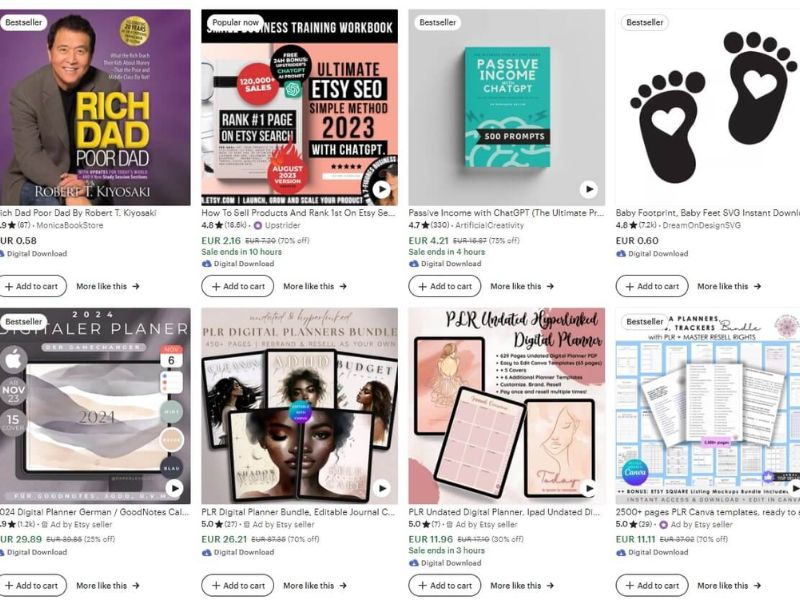
Etsy is known as the perfect place for anyone selling handmade items, unique products, or print-on-demand clothes. The best part about this e-commerce platform is its large, ready-made customer base: by December 2025, the platform had nearly 87 million active buyers. Although there is a small fee to list products, in return, you get to enter an active international market for free.
Another advantage is that Etsy automatically optimizes SEO for your store. Instead of spending money on expensive ad campaigns, you just need to use the right keywords for your products. Etsy’s algorithm will automatically show your items to the exact people who are looking for them.
Read more: How to Make Money on Etsy: Step by Step Guide in 2026
Pros:
-
You can benefit from a huge amount of traffic
-
Simple and easy-to-use interface to set up your store
-
Strong ability to show up on search engines
Cons:
-
There is a listing fee for each product
-
You have to pay a percentage transaction fee for each successful order
-
High competition in main product categories
In reality, you are just “renting" attention from Etsy’s customers. This platform is a great place to test how well a new product sells, but it will be difficult if your long-term goal is to build a unique and deeply different brand identity.
3. Amazon
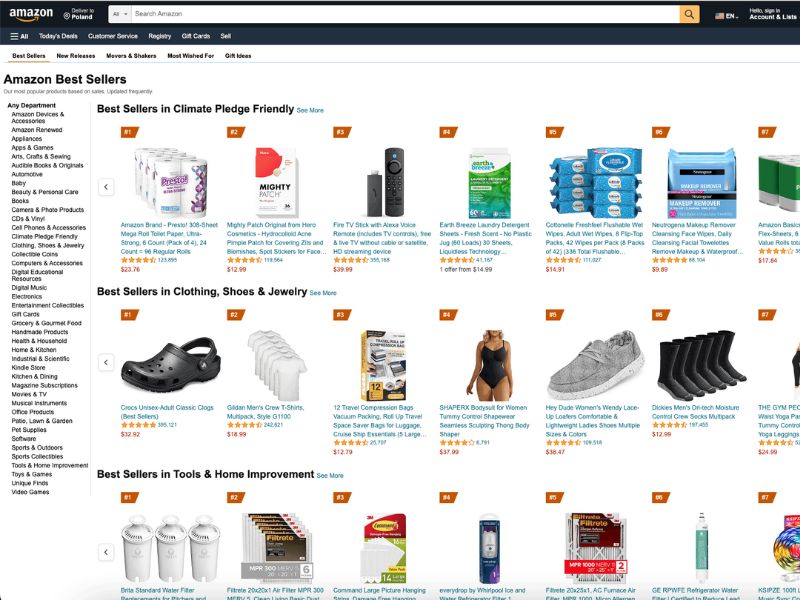
Amazon is a very familiar name in the e-commerce world, with a huge user base of 635 million people on its shopping app. For small sellers or beginners, the individual account plan is a very budget-friendly choice: you do not have to pay any fixed monthly subscription fee, and you only pay a fee when you make a successful sale.
The advantage of Amazon is that you can sell almost any kind of product. However, for the fashion niche, sellers need to put in more effort because competition here is very high. To survive and stand out among millions of products, taking care of eye-catching images and having a proper brand strategy are must-have elements.
Read more: How to sell on Amazon without inventory
Pros:
-
Huge natural traffic from the platform
-
Support from a professional shipping and warehouse system
-
Benefit from the strong trust that consumers have in the platform
Cons:
-
High referral fees on each order
-
Intense competition from global competitors
-
Limited space to build and tell your own brand story
4. eBay
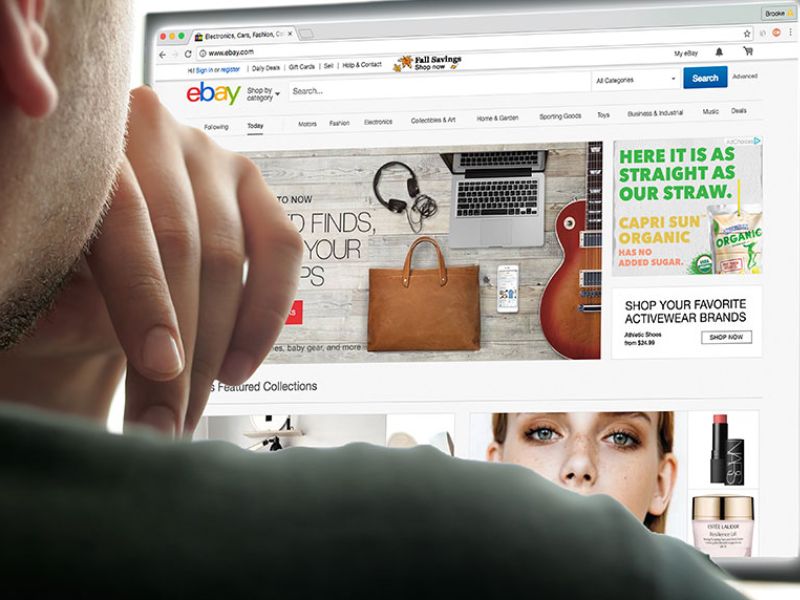
eBay is a global marketplace that offers maximum flexibility for sellers because it allows you to choose between two options: auctioning products or setting a fixed price. This platform has a huge audience with over 136 million active buyers worldwide, opening up a great opportunity to reach the international market, especially for those who love used items, rare collectibles, or tech gadgets.
In terms of cost, you can list up to 250 items completely free every month. The system only charges a fee when an order is successfully completed, and a small fee applies only if you exceed that limit. In addition, the built-in seller protection policy helps make every transaction safer and more reliable.
Read more: How To Sell Print On Demand On eBay?
Pros:
-
Access to a huge customer base
-
Diverse and flexible selling methods
-
Clear policies to protect seller rights
Cons:
-
High competition in many product categories
-
Fees based on the final value of the item can add up to a significant amount
5. WooCommerce
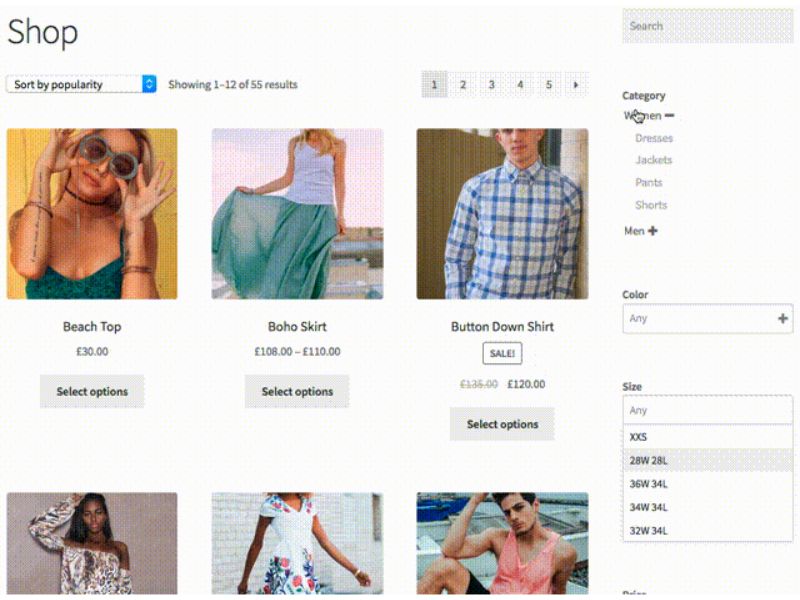
If you are tech-savvy and want to have 100% control over your data and website design, WooCommerce is an ideal choice. By nature, this platform is open-source software, which means you do not have to pay any fee for the core software itself.
In addition, having full control allows you to freely shape your brand the way you want without being tied to the rules of any third party. However, this flexibility means you have to spend more effort to run and optimize the site yourself.
Pros:
-
The core plugin is completely free
-
Deep customization for design and features based on your needs
-
Complete independence
Cons:
-
Requires users to have a certain level of technical knowledge
-
You have to pay for external costs yourself
-
Sellers must take full responsibility for system security and maintenance
6. Facebook Marketplace
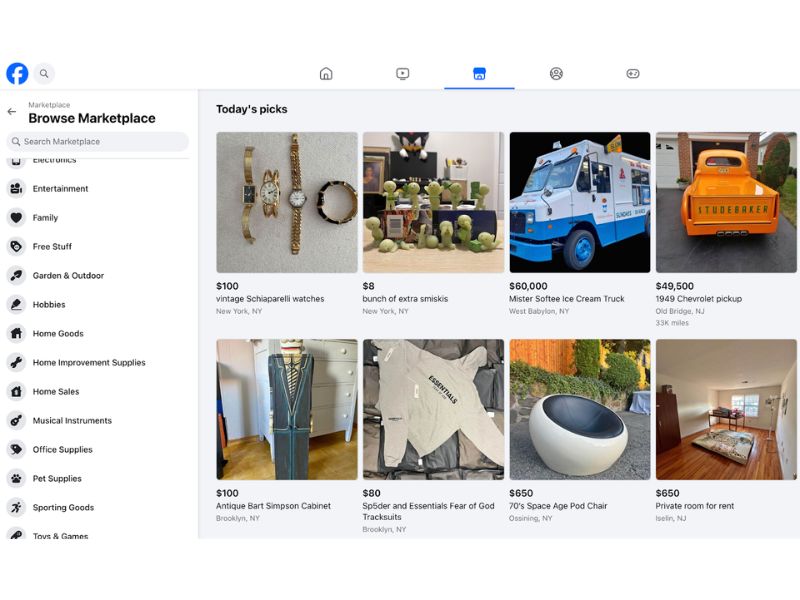
As the world’s largest social network with over 3 billion monthly active users, Facebook offers a very effective local trading channel. Facebook Marketplace helps you directly reach potential customers around your living area, allowing you to easily post items, message each other, and arrange a time for pickup.
A big plus is that both buyer and seller profiles are linked to real accounts, building trust right from the start. For those who want to quickly sell used items like furniture, clothes, or baby stuff, this is the shortest path with instant results. You can also use this channel to test how the local market reacts to new designs before mass production.
Regarding costs, listing items and trading directly (where the buyer comes to pick up the item) is completely free. However, for orders shipped through Facebook’s payment system, the platform applies a 10% fee (minimum $0.80 per order) or a flat fee of $0.40 for items under $8.
A good tip is to actively join local buying and selling groups or niche groups to increase your post’s visibility many times over.
Pros:
-
Tap into the largest user community on the planet
-
No cost for listing products
-
Posts are instantly shown to users nearby
Cons:
-
Hard to build and position a professional brand reputation
-
The display format and shop design are limited to a standard template
7. OfferUp
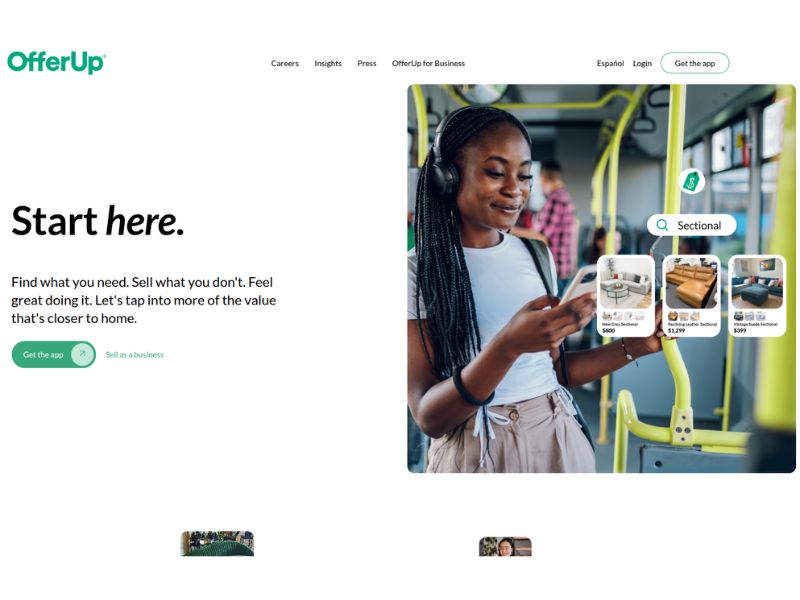
OfferUp is a mobile app optimized for selling from home through local transactions. The process here is as simple as possible: you just need to download the app, take a picture of your product, set a price, add a short description, and your item can immediately reach buyers nearby.
Interested customers will message you to bargain the price and arrange a time and place to meet. This platform is completely free if you choose to meet in person to trade, allowing you to keep 100% of your profit.
Pros:
-
Built-in rating and review features
-
Supports nationwide shipping services
Cons:
-
A 12.9% service fee applies if you choose to use OfferUp’s shipping solution
-
High shipping costs can significantly lower your profit margins, making low-priced items harder to sell
8. Poshmark
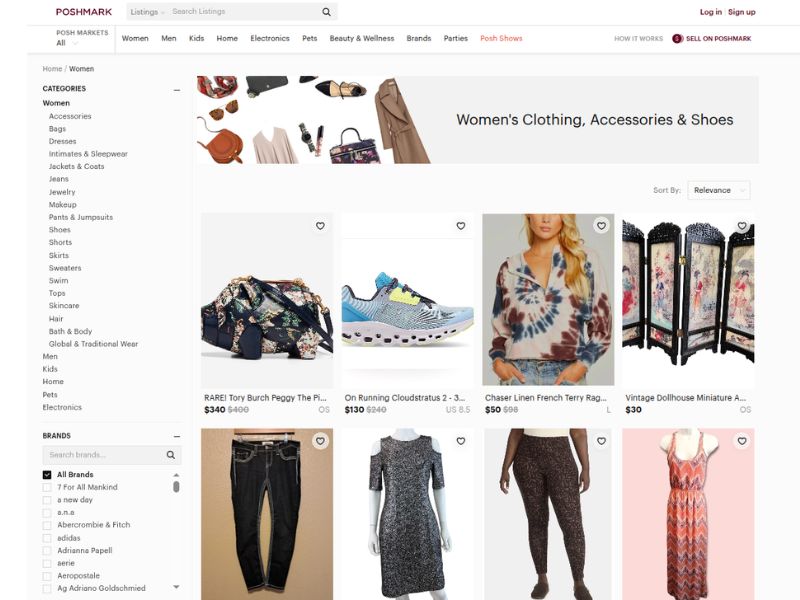
For those who have clothes, shoes, bags, or home decor items to sell (whether new or used), Poshmark is an ideal place. This marketplace has a policy of being completely free for listing products.
When a sale is successful, the system automatically sends you a prepaid shipping label. The only thing you need to do is print this label, stick it on your package (under 5 pounds), and drop it off at the post office. The fixed shipping cost of $6.49 will be paid by the buyer.
Best suited for: Fashion items, especially high-end brands or trending products.
Pros:
-
Has a very active fashion market with high demand
-
Simple and reliable packaging and shipping process thanks to pre-printed labels
Cons:
-
The platform’s commission fee is quite high: a flat fee of $2.95 for orders under $15, and 20% for orders with higher values
-
Strict rules on inventory management: your account risks being temporarily locked if you delete or mark a product as “Not for Sale" within 60 days (which often happens when that item was already sold on another channel), causing inconvenience for multi-channel sellers
9. Craigslist
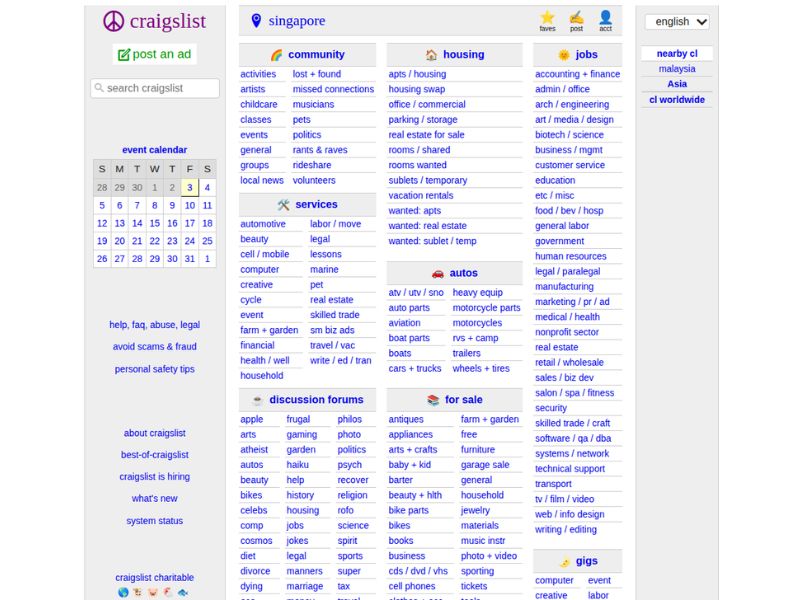
Operating as a long-running classifieds website, Craigslist focuses heavily on direct local buying and selling. This is where bargain hunters, DIY lovers, or people who want items quickly without paying for shipping come together.
Most popular categories such as furniture, electronics, antiques, household goods, bulky items, large appliances, vehicles, and services, are allowed to be listed for free without limits. Since the system does not require a complex account setup but only verifies posts via email, a successful trade depends entirely on your own negotiation and buyer screening skills.
Pros:
-
Listing product information is completely free
-
Simple, easy-to-use interface that does not require complex tech skills
-
Extremely effective for cash transactions and direct local trades
Cons:
-
Lacks a user verification system, leading to a higher risk of scams
-
The platform does not provide any tools for shipping support or order tracking
-
Fees apply to a few specific categories like job postings, services, or vehicle sales
10. Nextdoor
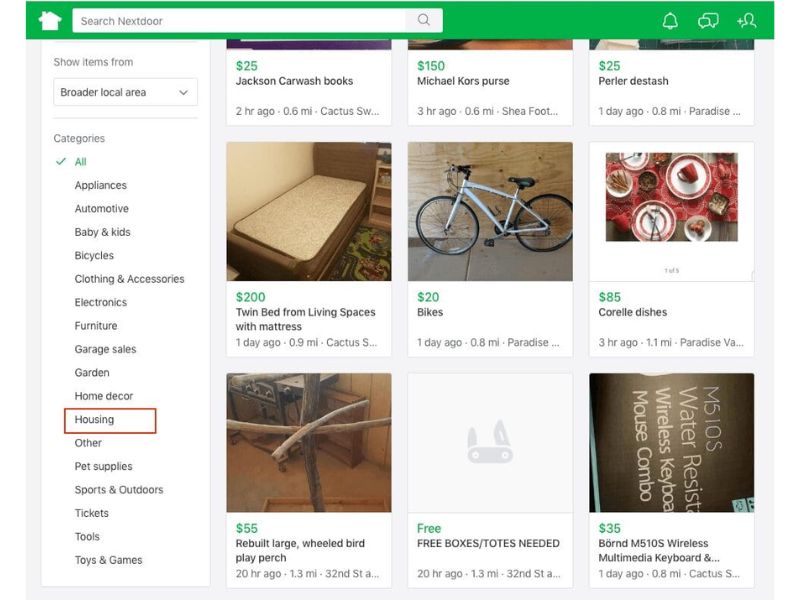
Nextdoor is a mini social network designed for specific neighborhoods, making it easy to trade right near your home. The selling process here is very convenient: you go to the “For Sale & Free" section, upload pictures, set a price and product description, or you can use the built-in AI assistant to automatically suggest this information.
Neighbors living around your area will see the post directly and message you to negotiate. The great thing about this platform is that trading directly helps you keep 100% of your revenue.
Pros:
-
Keep all your income because the platform is 100% free
-
Secure in-app messaging system makes communication between neighbors safe and easy
Cons:
-
The customer base is limited to a narrow geographic area, much smaller than public online marketplaces
-
Professional business posts or reselling are strictly banned; the system only accepts individuals selling their personal used items
11. Mercari
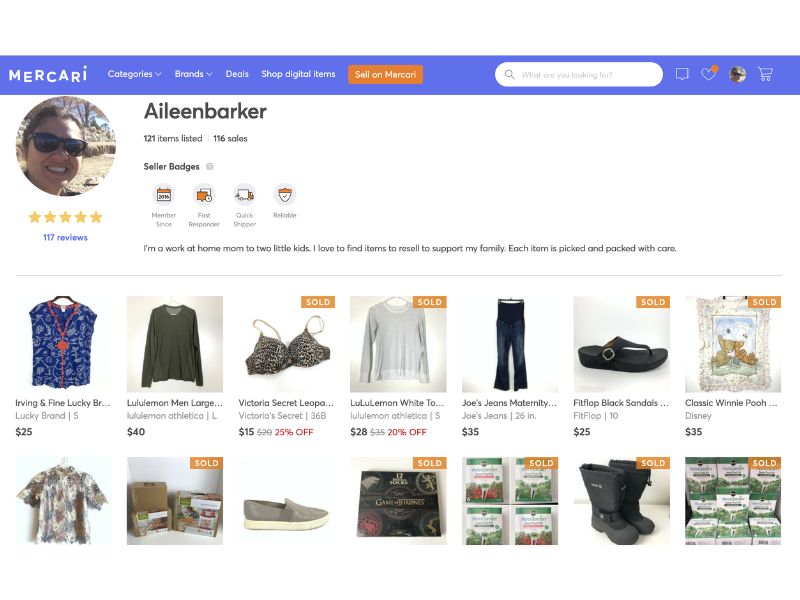
Mercari is perfect for sellers who want to clear out their stock through nationwide shipping. The app experience is very friendly: sellers can upload unlimited products for free.
The platform has a huge community of users who are always looking for used items, from clothes and books to toys and tech gadgets. With built-in features like “smart pricing" and seller protection, Mercari makes running a small business very easy.
Pros:
-
Setting up your store and listing products is completely free
-
Built-in management system and shipping options make packaging simple
-
Access to a very active network of buyers in the US market
Cons:
-
Currently, the service only supports and applies to users inside the US
-
Sellers must take full responsibility for packaging and dropping items off at the post office
-
When sales grow and you want to scale up, total costs can rise quickly with a 10% commission fee per successful order, plus a 2.9% + $0.50 payment processing fee
12. Depop
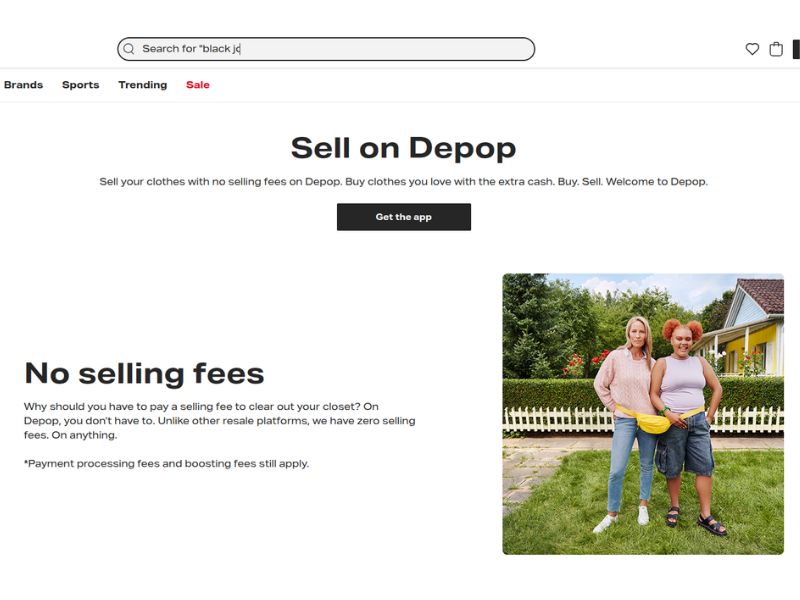
Depop is a platform that combines a social network layout with an e-commerce marketplace. If you have ever used Instagram, Depop’s interface is very similar.
Listing items here costs nothing, and you can freely build a profile that shows your own style. Using good taste, eye-catching photos, and trending outfits will help you get loyal followers and a steady income.
Best suited for: Streetwear, unique vintage clothes for trendy Gen Z buyers, and people who love sustainable fashion.
Pros:
-
No initial product listing fees
-
Visual profile format that really helps with personal branding
-
Ability to expand your sales to a global market
Cons:
-
The target audience focuses too deeply on fashion and accessories; other product types will find it hard to sell here
-
Requires sellers to spend a lot of time and effort to interact, take care of images, and post regularly to keep followers
-
Applies a 10% transaction fee plus payment processing costs for every order
13. BigCommerce
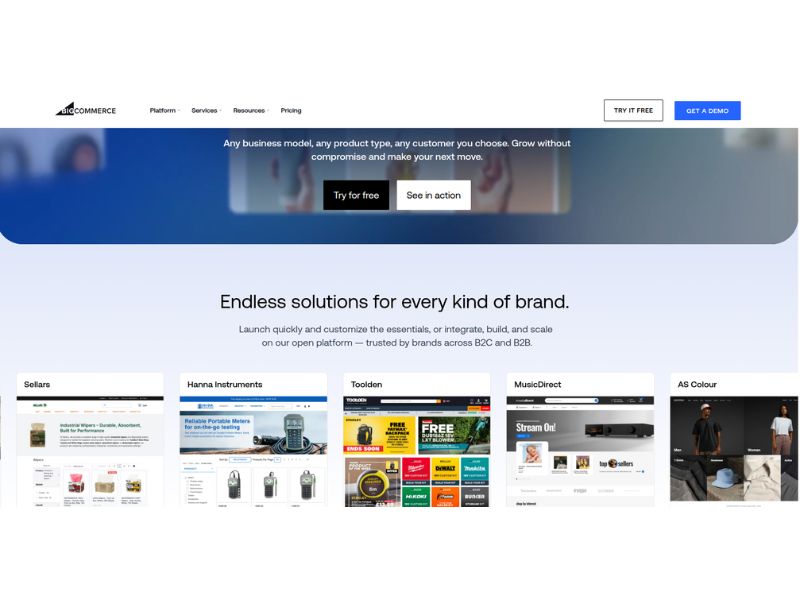
Similar to Shopify, BigCommerce offers a feature-rich business environment designed for scaling up. Through its basic plans, you can easily shape and build a professional online store. This is the perfect launchpad for sellers who want to speed up production and break sales records in the near future.
Pros:
-
Extremely strong and deep back-end management tools
-
Supports effective multi-channel sales integration and syncing
Cons:
-
You must switch to fixed paid plans after the trial period ends
-
The system has many complex features, requiring sellers to spend time learning to master the technology
14. Vinted
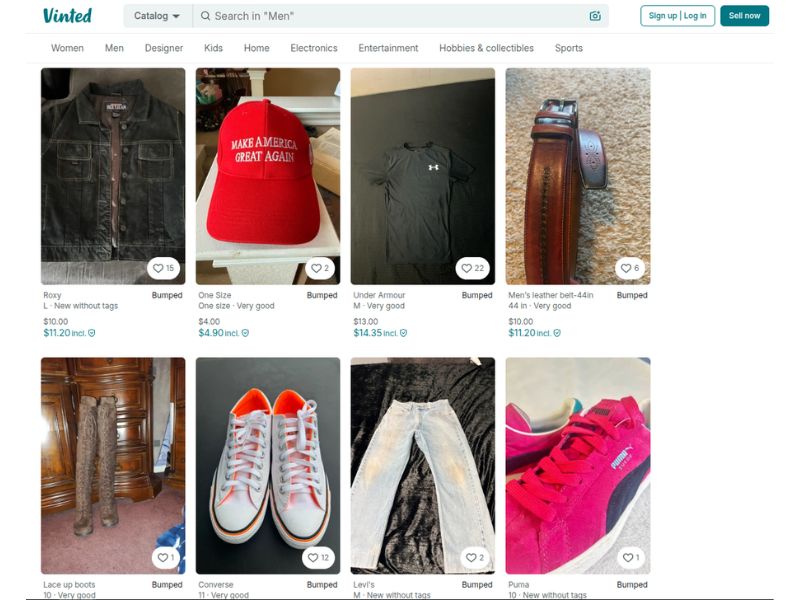
Vinted takes a completely different path by moving all cost burdens to the buyer (including buyer protection fees and shipping fees). For sellers, this platform charges zero transaction fees, meaning you get to keep 100% of your profit. You only need to focus on uploading info, setting competitive prices, and offering bundle discounts to encourage customers to buy multiple items at once.
The operation is also very convenient: when an order comes in, the system provides a prepaid shipping label, and the buyer chooses and pays for shipping. The money will go into your Vinted wallet as soon as the customer confirms they received the package safely.
Best suited for: Clearing out used clothes, shoes, accessories, and small household items following the sustainable fashion trend.
Pros:
-
Keep 100% of your profit
-
Easy to create posts and simplified packaging process
-
Attracts a large user community
Cons:
-
Does not support local in-person pickups
-
Competition is extremely high
-
Only available in certain countries, and commercial reselling accounts are strictly banned
15. eCrater
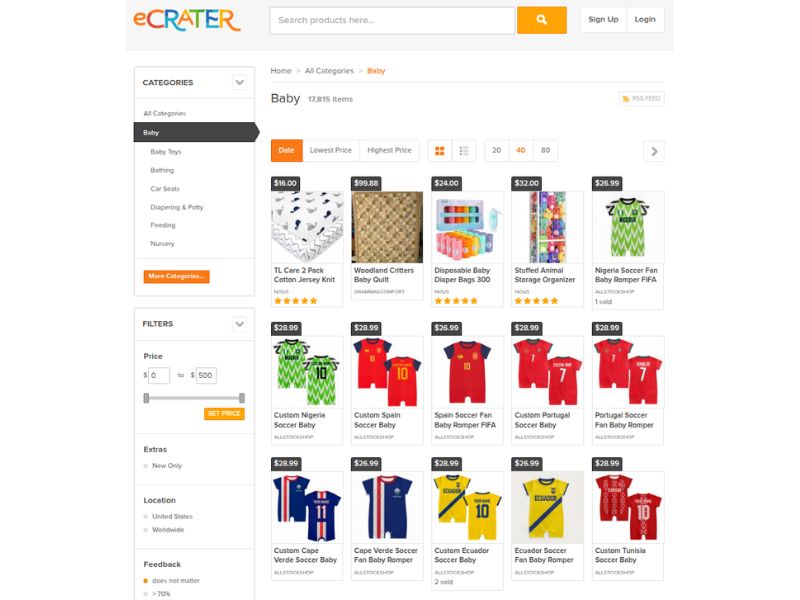
eCrater is a unique mix of a public online marketplace and a personal website, offering a budget-friendly solution. The platform allows you to set up a customized online store with your own layout, logo, and shipping settings completely free without needing to know coding. At the same time, your products automatically appear on eCrater’s shared marketplace and connect directly to advertising partners like Google Shopping.
All costs to list items and maintain your store are $0. The system only charges a 2.9% fee on the final sale price if your order comes directly from the marketplace or eCrater’s ad channels. Sellers can actively turn off this ad feature to bring the platform fee down to 0% and manage their money through PayPal or Stripe.
Pros:
-
Have a store with your own brand identity completely free
-
Flexible system where you can bring costs down to 0% by opting out of the marketplace ads
-
Allows you to connect your account directly with Google Merchant Center for SEO
Cons:
-
Available store templates look quite basic and outdated
-
Natural traffic is significantly lower than Etsy or eBay, requiring sellers to actively market their store through social media or do their own SEO to attract customers
Why should you choose a free e-commerce website?
Starting by learning and testing is always the move of smart business owners. Using free platforms not only helps you lower your financial risk to the minimum, but it is also a golden opportunity to check how the market welcomes your products and prices.
-
Measure customer reactions: Test new designs and models before deciding to spend money on stock.
-
Understand buyer behavior: Watch how customers interact, search for items, and make buying decisions.
-
Standardize operations: Get used to and improve every step, from receiving and packaging to processing orders.
-
Shape your brand identity: Perfect your brand positioning based on real feedback from your first customers.
-
Create early cash flow: Make a profit immediately to reinvest without the pressure of fixed upfront costs.
For content creators or small brands, choosing a free platform is not just about cutting costs; it is a smart, controlled testing strategy.
Read more: Guide: Best 15 Online Marketplace Options in 2026
Choosing the right free website option – which one should you pick?
With so many free selling websites, the best choice depends on your business niche and your favorite way of working. You can look at the table below for reference:
| Platform | Best for | Keep this in mind |
| Shopify | Building a professional e-commerce website. | Only free at the start, then has a monthly fee. |
| Etsy | Handmade items, unique products, print-on-demand clothes. | Good automatic SEO, but has a small listing fee for each product. |
| Amazon | Selling a wide variety of retail items. | The individual plan has no monthly fee, but final fees are high and competition is fierce. |
| eBay | Used items (second-hand), rare collectibles, or tech items. | Free to list 250 products/month; fees are only charged when a sale is successful. |
| WooCommerce | Tech-savvy people who want 100% control over their website data. | The software is completely free, but you must pay for your own hosting and domain name. |
| Facebook Marketplace | Quickly selling used items, furniture, and clothes to local buyers. | Completely free for direct trades; real account profiles create high trust. |
| OfferUp | Selling from home through local trades using a mobile app. | $0 for meeting in person, but choosing to ship through the app costs a 12.9% fee. |
| Poshmark | Consigning and reselling trendy fashion clothes and accessories. | Free to post items and comes with shipping labels, but the commission fee is quite high. |
| Craigslist | Classified ads and clearing out bulky items or large appliances locally. | Quick to use without needing an account, but has no seller protection system. |
| Nextdoor | Trading, selling, or giving away household items directly to neighbors. | Keep 100% of your profit, but limited to a small area and business accounts are banned. |
| Mercari | Clearing out used items quickly through shipped consignment. | Only available in the US; free to post items but charges a 10% fee when successfully sold. |
| Depop | Vintage clothes and streetwear targeting young people (Gen Z). | Visual interface like Instagram, but only focuses on the fashion niche. |
| BigCommerce | Growing brands that want to scale up quickly. | Strong back-end tools, but you must pay a fee after the trial ends. |
| Vinted | Clearing out everyday used clothes and accessories. | Sellers keep 100% of the profit because the platform charges protection and shipping fees to the buyer. |
| eCrater | Creating your own branded website combined with selling on a shared marketplace for $0. | Free to create a store, but the layout looks basic and a bit outdated. |
Smart selling tips on “$0" platforms
1. The art of writing product descriptions that make people want to buy
Your post title needs to be as specific as possible by providing full details: brand name, size, color, and the actual condition of the item. Prepare 3 to 5 clear photos taken in natural light, including close-ups of the material or small flaws if there are any. Keep the description short and to the point, customers go online to find exact information, not to read unnecessary, wordy sentences.
2. Using pricing psychology as a tool
A valuable piece of advice is to always list your product price slightly higher than the minimum amount you expect to get. This creates a safe “buffer zone," allowing you to comfortably accept bargain offers or discount requests from buyers without hurting your profit margins. Also, using prices that end in odd numbers (for example, $19.95 instead of $20) always makes items feel cheaper. Combining this with bundle discounts will encourage customers to automatically add more items to their cart.
3. Rules for shipping and transaction safety
-
In-person trades: Always prioritize meeting customers in busy public places with security cameras, like coffee shops or shopping malls. It is also best to go with a friend for maximum safety.
-
Shipping through the post office: Use strong, neat packaging and mail the items out as soon as possible. Remember that on e-commerce platforms today, slow shipping is the number one reason that lowers a store’s rating.
Conclusion: Free is a starting point, not the final destination
Using free selling platforms is a smart strategy to lay the first bricks for your online business career. However, the journey to change from a small seller into a sustainable brand requires you to always stay alert.
Please remember that there is no such thing as a perfect free lunch. Free platforms can come with hidden transaction fees that eat into your profits, limited access to customer data, or total dependence on sudden algorithm updates and rules that change overnight. Moreover, putting your store in a marketplace that is too crowded can sometimes accidentally lower the value and unique identity of the brand you are working hard to build.
In the end, your business will never truly belong to you if it sits entirely on someone else’s land. Free websites are indeed great launchpads for you to gain experience. But when your business wings are strong enough, upgrading and owning an independent platform will be the deciding step for you to truly master your own business destiny.