
Contents
- Why Accurate T-Shirt Measurements Matter
- Tools You Need Before Measuring
- How to Measure a T-Shirt (Step-by-Step)
- Garment Measurements vs. Body Measurements: What’s the Difference?
- Common Mistakes to Avoid When Measuring a T-Shirt
- How Different T-Shirt Fits Affect Measurements
- How to Read and Use a T-Shirt Size Chart
- FAQs
- Conclusion
Whether you’re buying t-shirts online, building a size chart for your store, or running a print-on-demand (POD) business, knowing how to accurately measure t-shirts is an essential skill. Even a small error in measurements can lead to customers choosing the wrong size, resulting in returns, negative reviews, and a poor shopping experience.
This article will guide you step by step through the standard method of measuring a T-shirt based on widely accepted industry practices. It also shares important notes on size charts and helpful tips for POD sellers to optimize product information and minimize sizing issues.
Why Accurate T-Shirt Measurements Matter
In POD businesses, a beautiful design can attract customers to click on a product, but accurate size information is what gives them the confidence to click the buy button. Even a few centimeters of discrepancy can result in customers receiving an unsatisfactory garment, leading to returns, negative reviews, and damage to the store’s reputation.
Help customers choose the correct size with confidence
Unlike in-store shopping, online customers cannot try on clothes before deciding. They often rely on size charts and product measurements to determine if the garment fits them.
A detailed, transparent, and easy-to-understand size chart will help customers compare it with a well-fitting T-shirt they already own, making it easier to choose the right size. This not only improves the shopping experience but also increases conversion rates on the product page.
Reduce returns and save time on customer support
Incorrect sizing is always one of the most common reasons for returns in the fashion industry. Providing accurate and consistent measurements helps customers choose the correct size, reducing returns and minimizing customer support inquiries.
For POD sellers, this means reduced complaint processing time, lower customer support costs, and a higher post-sales satisfaction rate.
Size labels alone are not enough
A size M shirt from one brand may not be the same size M from another brand. Differences in manufacturer, style, or fit (regular fit, slim fit, or oversized) can significantly alter actual measurements.
Therefore, instead of relying solely on size labels such as S, M, L, or XL, always provide specific measurements such as chest width, shirt length, and sleeve length. This is the most effective way for customers to understand exactly what product they will receive.
An Essential Practice for Every POD Seller
For print-on-demand sellers, proper garment measurements are crucial not only for creating size charts but also for building a professional and trustworthy store. Using accurate, product-specific size charts helps customers choose the right fit and strengthens trust in your brand.
Tools You Need Before Measuring
You don’t need specialized equipment to measure a t-shirt. Just prepare the following tools:
- Flexible measuring tape: Used to accurately measure parameters such as chest width, shirt length, shoulder width, and sleeve length.
- Flat surface: A flat table or floor surface to allow the shirt to lie naturally, avoiding inaccuracies due to folds or stretching of the fabric.
- Wrinkle-free T-shirt: Lay the shirt flat and ensure it is wrinkle-free for more accurate measurements.
- Notebook or spreadsheet: Record the measurements for future reference or when creating a size chart.
- Good lighting: Helps to clearly identify seams and the start and end points of each measurement.
How to Measure a T-Shirt (Step-by-Step)
Before you begin, lay the T-shirt flat on a clean, even surface and smooth out any wrinkles. Make sure the fabric is in its natural position without being stretched or pulled, as this can affect the accuracy of your measurements.
Step 1: Measure Chest Width (Pit-to-Pit)
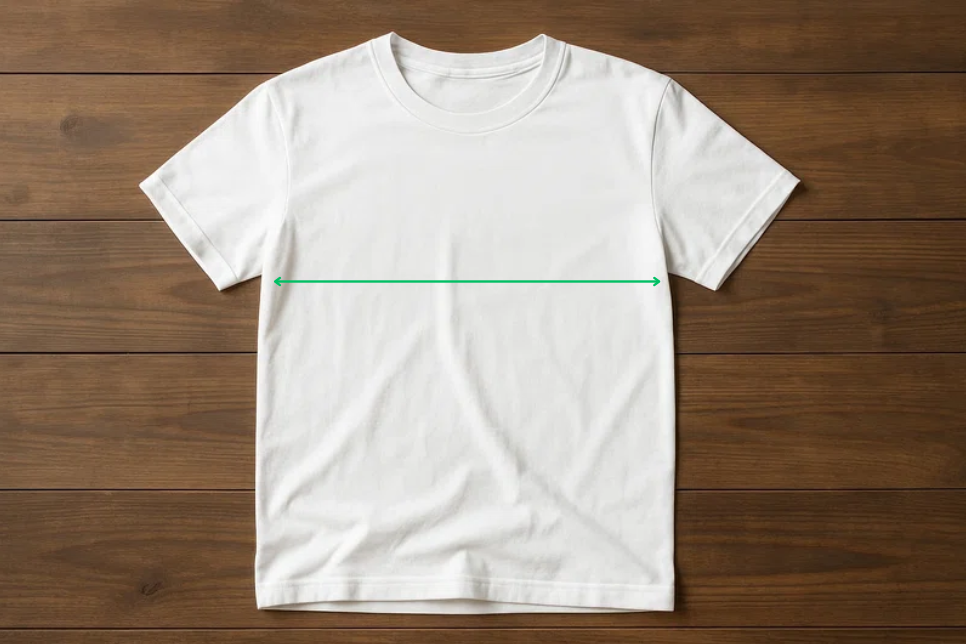
Place the measuring tape about 1 inch (2.5 cm) below the armpits and measure straight across from one side of the shirt to the other.
Note: This is the garment’s flat width, not the wearer’s chest circumference.
Step 2: Measure Body Length
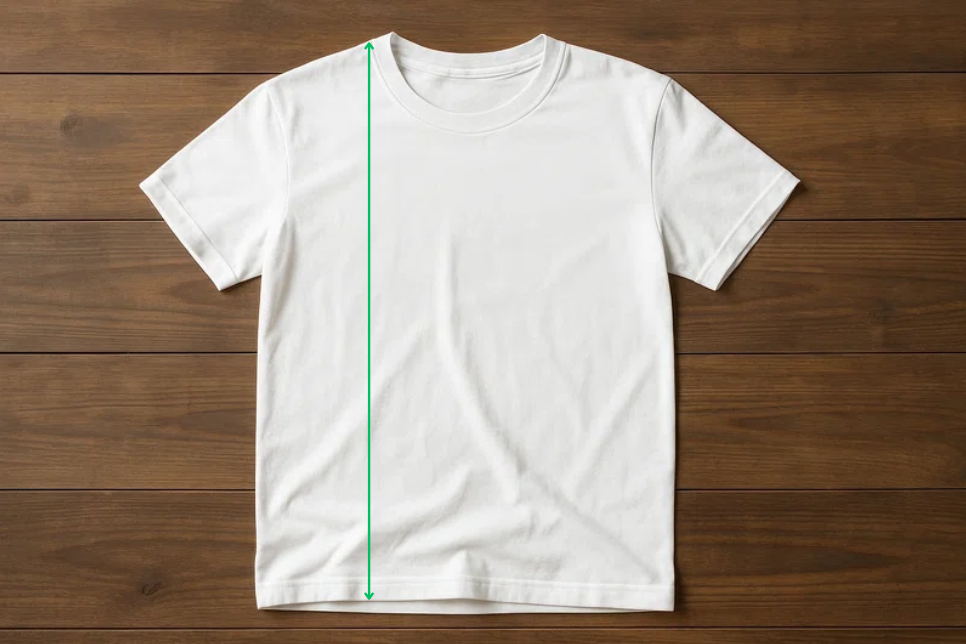
Start at the highest point of the shoulder (HPS), where the shoulder meets the collar, and measure straight down to the bottom hem.
This measurement represents the overall length of the garment from shoulder to hem.
Step 3: Measure Shoulder Width
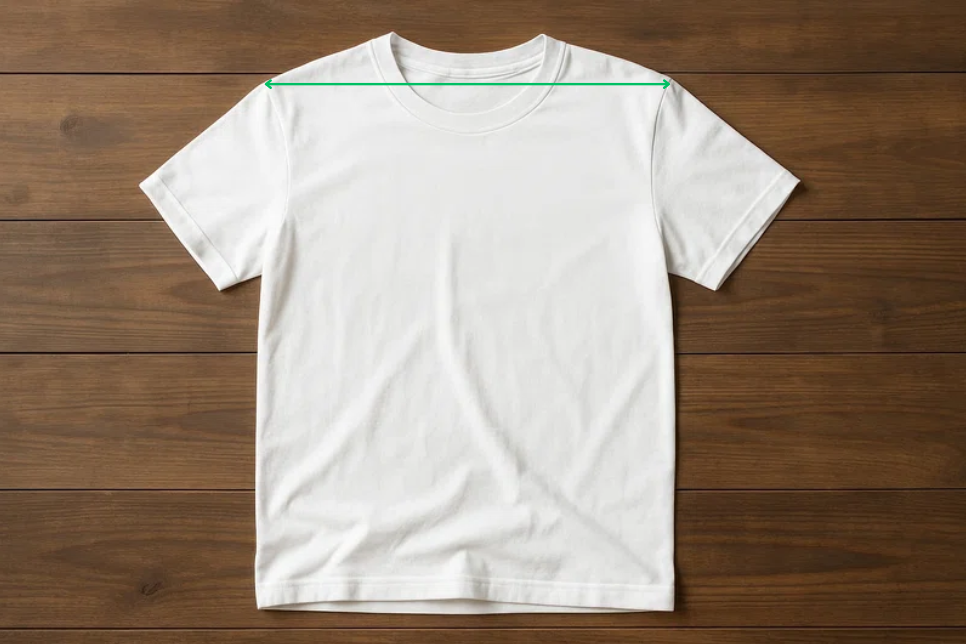
Turn the shirt over and measure from one shoulder seam to the other across the upper back.
Shoulder width plays an important role in determining how fitted or relaxed the shirt feels.
Step 4: Measure Sleeve Length
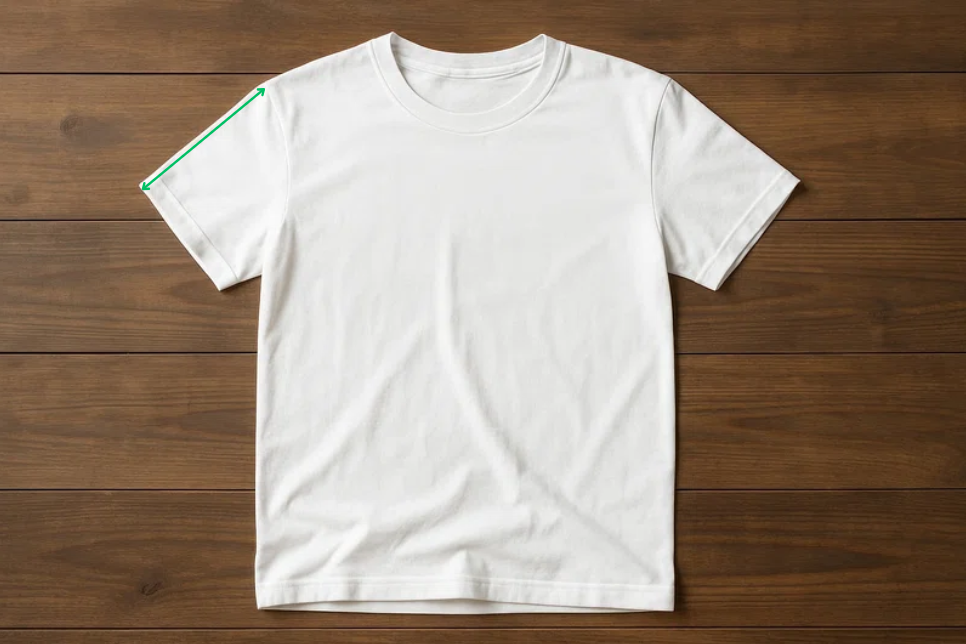
Place the measuring tape at the shoulder seam and measure along the top edge of the sleeve to the end of the sleeve opening.
For most short-sleeve T-shirts, this is the standard measurement used by manufacturers.
Step 5: Measure Bottom Hem Width
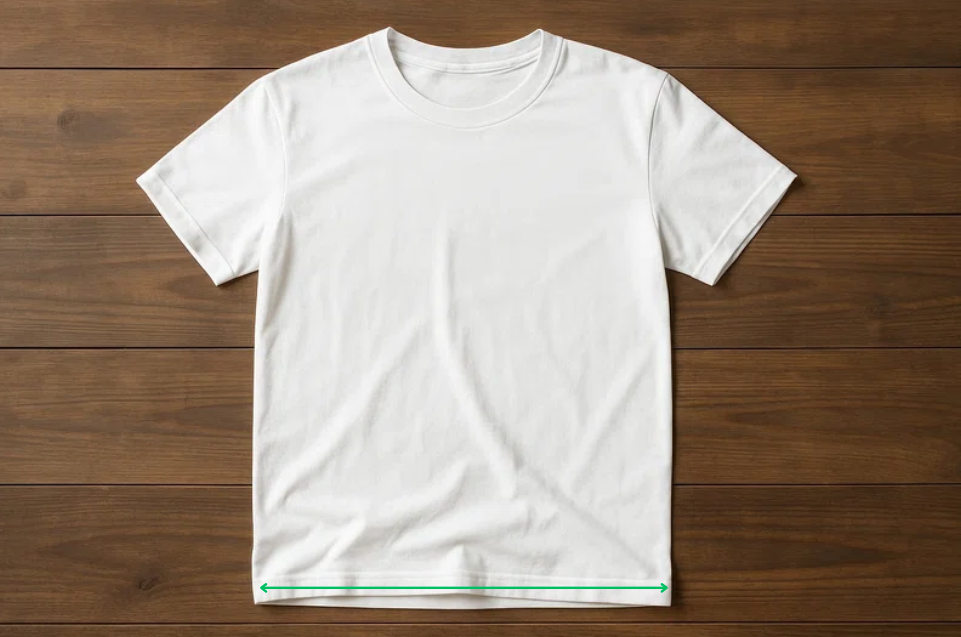
Measure straight across the bottom edge of the shirt from one side seam to the other while it remains flat.
This measurement is especially useful for evaluating the overall fit and silhouette of slim-fit or oversized styles.
Tip for POD Sellers: Always use the same measuring method for every product and clearly state whether your size chart is based on flat garment measurements. Consistent sizing information helps customers make more confident purchasing decisions.
Garment Measurements vs. Body Measurements: What’s the Difference?
One of the most common mistakes when buying or selling t-shirts online is not distinguishing between garment measurements and body measurements. Understanding this difference will help customers choose the right size and help POD sellers create more accurate size charts.
Garment Measurements
Garment measurements are the measurements of the finished garment, taken when the garment is laid flat on a surface. These measurements typically include:
- Chest width: The width of the chest (measured from one armpit to the other).
- Body length: The length of the garment (from the highest point of the shoulder to the hem).
- Shoulder width: The width of the shoulder.
- Sleeve length: The length of the sleeve.
These are the measurements commonly found in the size charts of manufacturers and print-on-demand suppliers.
Body Measurements
Body measurements are direct measurements of the wearer’s body, such as chest circumference, waist circumference, or height. These measurements are used to determine the correct size, but should not be compared directly to the garment measurements.
For example, if your chest circumference is 40 inches, you shouldn’t necessarily choose a 20-inch chest size just because it doubles to 40 inches. Most t-shirts need extra room for comfort and movement.
Which One Should You Use?
For buyers, garment measurements are usually the most practical reference because they can be directly compared with a well-fitting T-shirt they already own. For POD sellers, displaying garment measurements and clearly stating that they were taken with the garment laid flat helps create more accurate and reliable size charts.
Common Mistakes to Avoid When Measuring a T-Shirt
Measuring a T-shirt might seem simple, but even a small mistake can lead to inaccurate size charts and customers choosing the wrong size. Here are some common mistakes to avoid:
Measuring when the shirt isn’t laid flat
Before measuring, lay the shirt on a flat surface and smooth out any wrinkles. If the shirt is folded, twisted, or stretched during the measurement process, the result will not accurately reflect the actual size of the product.
Measuring at the wrong standard location
Each measurement has a fixed measurement point. For example, chest width should be measured from one armpit to the other, while body length is measured from the highest point of the shoulder down to the hem. Changing the measurement location can lead to inconsistent data and confusion when comparing products.
Confusing shirt measurements with body measurements
This is a very common mistake when creating or using size charts. Garment measurements are the measurements of the finished garment, while body measurements are the direct measurements taken on the wearer’s body. These two types of measurements are not interchangeable and should not be compared mechanically.
Inconsistent measurement methods
If each product is measured differently, the size chart will lose consistency and make it difficult for customers to choose. Therefore, use the same process, the same measurement points, and the same unit of measurement (inches or centimeters) for the entire product catalog.
Ignoring manufacturing errors
In the garment industry, the actual size of the finished product may differ slightly from the published specifications due to fabric characteristics and manufacturing processes. This is normal and does not necessarily reflect a product defect. Clearly stating the expected measurement tolerance helps set realistic expectations and reduces confusion.
How Different T-Shirt Fits Affect Measurements
Although the method of measuring t-shirts is always the same, the fit of the shirt directly affects parameters such as chest width, shoulder width, and body length.
Regular Fit
Regular fit is a standard fit, balancing comfort and a snug fit. Chest, shoulder, and body length measurements are usually designed to fit a wide range of body types.
Slim Fit
Slim fit is closer to the body, especially in the chest, waist, and sleeves. Therefore, even with the same size, a Slim Fit shirt usually has a narrower chest width and a more tailored silhouette than a Regular Fit shirt.
If customers prefer a more comfortable fit or are somewhere between two sizes, they should carefully check the size chart before ordering.
Relaxed Fit and Oversized Fit
Relaxed Fit and Oversized Fit are designed to feel loose when worn. These styles typically have:
- A wider chest measurement.
- Broader shoulders or drop-shoulder construction.
- A longer and/or roomier body, depending on the design.
Therefore, an Oversized size M shirt may have measurements equivalent to or even larger than a Regular Fit size L shirt.
Why Fit Matters More Than the Size Label
Instead of just looking at the size name, compare the actual measurements such as chest width, body length, and shoulder width to assess whether the shirt is a good fit.
How to Read and Use a T-Shirt Size Chart
A size chart is only truly useful when you know how to read and apply it correctly. Instead of choosing a shirt based on the symbols S, M, or L, focus on the garment measurements to determine the best fit.
Understanding the meaning of each parameter
Most t-shirt size charts will include parameters such as:
- Chest Width: The width of the shirt’s chest, measured from one armpit to the other when the shirt is laid flat.
- Body Length: The length of the shirt, measured from the highest point of the shoulder to the hem.
- Shoulder Width: The width of the shoulder, measured from one shoulder seam to the other.
- Sleeve Length: The length of the sleeve, measured from the shoulder seam to the end of the sleeve.
Some brands may add other parameters such as hem width or neck circumference, but the four above are the most common.
Compare to a shirt you are currently wearing that fits well
Compare a well-fitting T-shirt you already own with the product’s size chart to find the closest match.
Check the measurement unit
Size charts may be presented in inches, centimeters (cm), or both. Before comparing, make sure you are using the same unit of measurement to avoid confusion.
If selling to international customers, providing both inches and centimeters will make it easier for buyers to choose.
Don’t just look at the S, M, or L symbols
Size labels can vary significantly between brands and fits. Therefore, always prioritize comparing actual measurements rather than relying solely on the size name.
Note on size discrepancies: In the garment industry, finished product sizes may vary slightly due to fabric material and manufacturing processes. This is normal and does not affect product quality.
FAQs
How do you measure pit-to-pit on a T-shirt?
Pit-to-pit is a method of measuring the chest width of a shirt. Lay the shirt flat, then use a tape measure to measure in a straight line from the bottom edge of one armpit to the bottom edge of the other armpit. This is the measurement of the shirt when laid flat, not the wearer’s chest circumference.
Should you measure a T-shirt flat or while wearing it?
You should measure when the shirt is laid flat on a flat surface. This is the standard method used by most brands and manufacturers to create sizing charts. Measuring while wearing the shirt can lead to inaccurate measurements due to stretching or misalignment.
Is chest width the same as bust measurement?
No. Chest width is the horizontal dimension of the shirt, measured from one armpit to the other when laid flat. Bust measurement, on the other hand, is the wearer’s chest circumference. These two measurements serve different purposes and should not be confused.
How much measurement variation is acceptable?
A measurement variation of around ±0.5–1 inch (approximately ±1–2.5 cm) is generally considered acceptable, depending on the manufacturer and fabric type.
Do cotton and polyester T-shirts measure differently after washing?
Yes. Some 100% cotton T-shirts may shrink after washing, especially if they are not pre-shrunk or are dried at high temperatures. With blended materials (cotton/polyester blend), shrinkage is usually less than with pure cotton, but it can still occur depending on how it’s cared for.
What is the best way to choose the right T-shirt size online?
Measure a well-fitting T-shirt you already own and compare its dimensions with the product’s size chart. This is generally more reliable than choosing a size based only on labels or body measurements.
Should POD sellers create their own size charts?
Yes. Use product-specific size charts whenever possible, as measurements can vary between garment styles and manufacturers.
Conclusion
Knowing how to measure a T-shirt correctly helps buyers make informed purchases and enables sellers to provide more accurate sizing information. With just a few simple steps and a consistent measurement method, you can confidently create or use size charts for most types of T-shirts.
If you’re running a POD business, partnering with a reputable POD partner is equally important. At Merchize, we offer a diverse range of t-shirts in various styles, materials, and price points to meet the needs of many markets and customer segments. Each product includes detailed sizing information and garment-specific size charts, making it easier to build accurate listings and help customers choose the right fit with confidence.