Contents
- Key Takeaways
- Starting an E-commerce business with 0 dollars: Is it possible?
- What E-commerce business models can you start with no money?
- How to start an e-commerce business without money
- Challenges when starting an e-commerce business with a 0-dollar budget
- So is there any way to increase e-commerce sales?
- Start an e-commerce business without money with Merchize
- Conclusion
The biggest barrier for most founders starting an online business is not the idea, but financial pressure. Therefore, learning “How to start an ecommerce business without money" is a smart move to help owners save costs and reduce risks. This is completely possible thanks to lean business models like dropshipping or print-on-demand. This article will explain in detail how to build a complete online store by making the most of free tools and available resources.
Key Takeaways
-
Choose lean models like print-on-demand, dropshipping, or digital products to remove costs as much as possible.
-
Launch your store using free trials, free plans on e-commerce platforms, or take advantage of free traffic from existing marketplaces to save money.
-
Choose suppliers who have their own factories, low base costs, and accept a minimum order quantity of 1 to ensure delivery quality and keep brand reputation without financial risks.
-
Attract customers with good product images, descriptions focused on practical value, and make full use of free marketing channels.
-
Spend resources on taking care of and keeping existing customers to bring in a stable cash flow with zero marketing costs.
Starting an E-commerce business with 0 dollars: Is it possible?
Yes. You can definitely start an e-commerce business without money.
However, you need to understand the truth: Not spending money means you have to pay with time, effort, and hard work. You cannot get rich overnight or have a perfect store from day one. But right now, starting an online business from scratch is completely realistic.
1. Start thanks to the free tool system
You do not need to spend money renting a space, buying stock, or hiring staff. You can run everything yourself with the help of technology:
-
No-inventory models: No product capital or warehouse needed. You only sell the supplier’s products. When an order comes in, they will pack and ship it directly to the customer.
-
Store platforms: Use free trials or free plans from e-commerce platforms to build your store.
-
Domain & website templates: Use subdomains and available free templates to keep startup costs low.
-
Payment processing: Use payment gateways that only charge a fee per transaction (like Stripe), with no monthly maintenance fees.
-
Content creation: Use free AI tools to write posts, design images, and do marketing.
2. Low-risk business model
E-commerce is one of the few industries that allows you to test ideas before investing.
-
Zero financial risk: If a product does not sell, you do not lose money on stuck inventory or fixed costs.
-
Huge growth potential: The global e-commerce market is growing strongly and is expected to pass 13 trillion USD by 2030. Opportunities are open to anyone who knows how to use technology.
3. Exchange cash for skills and freedom
When you have no budget, you are the biggest asset of your business. You will have to do everything yourself: from learning technology and creating content to managing the store.
Although it is harder, this process gives you an advantage: understanding how every part of the business works. This will be a strong foundation to help you manage effectively and scale up your business with confidence once you start making money.
What E-commerce business models can you start with no money?
Here are 8 common online business models you can choose:
(1) Print-on-demand
This model helps you sell products with your own brand without worrying about storing items or holding inventory. Your only job is to create design ideas. When an order comes in, the manufacturer will handle everything from printing and packing to delivering the product directly to the customer.
To get started, you need to find and partner with a trusted POD company. After that, you set up a store on e-commerce platforms or online marketplaces and connect it to the supplier’s system.
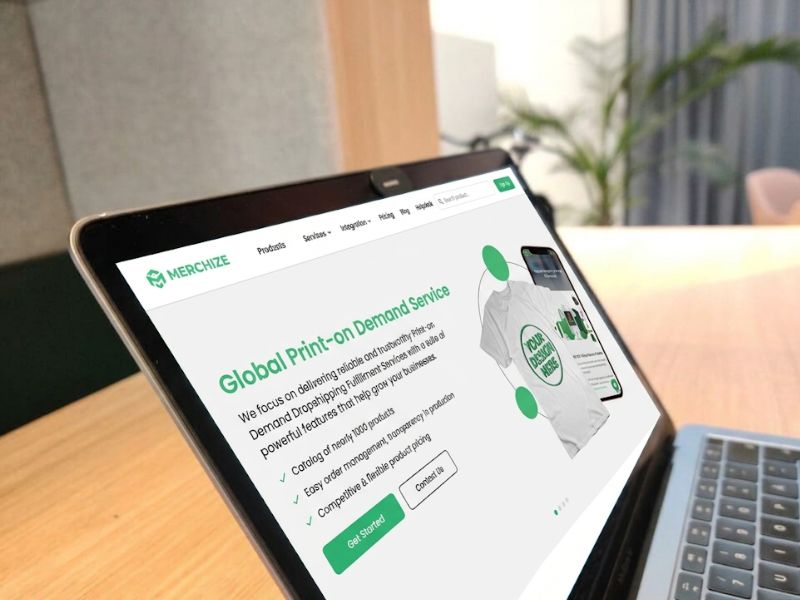
For example, at Merchize, sellers get access to an ecosystem of nearly 1,000 product categories, ranging from fashion and home decor to accessories like cups and mugs. Automating the entire operational process behind the scenes allows you to focus all your resources on marketing and finding customers.
(2) Dropshipping
Similar to print-on-demand, dropshipping completely frees you from managing inventory and shipping. When an order is placed, the product is packed and shipped directly from a third-party factory to the buyer.
The main difference is that most dropshipping goods are mass-produced factory items, which are hard to customize with unique designs. Even so, you can still build a personal brand by agreeing with the factory to add custom packaging, labels, or logos, helping improve the customer’s unboxing experience.
(3) Selling digital products
This is the business model with the highest profit margin because it requires no mass production costs or shipping fees. You just need to package your knowledge, skills, or resources into digital products like ebooks, online courses, work management templates, or design files.
You do not need complex coding or design skills at all. Free apps today like Canva, Tella, or Gumroad allow you to package and sell your products very quickly. If you already have a follower base on social media or a personal blog, converting your content resources into paid recurring membership packages will create a very sustainable passive income source.
(4) Affiliate marketing
With affiliate marketing, you do not need to own products or manage your own store. Your main job is to promote products from other businesses through a unique referral link. Every time a consumer completes a transaction through that link, you receive a matching commission percentage.
With just a smartphone connected to the internet, you can start creating product review content on TikTok, YouTube, or writing reviews on your personal page. You can check out the affiliate program at Merchize with attractive commissions up to 19% for each successful referral order, or try your hand on large affiliate networks like Amazon Associates, ShareASale, or Impact.
(5) Pre-selling
This method helps you recover capital and measure exact market demand before spending any money on production or running ads. To run it, you need to build an attractive product landing page, complete with good special offers and clear delivery time commitments.
This is a very popular strategy used when launching new book lines, courses, or fashion brands. Even big cosmetic brands like Rare Beauty use pre-selling to spark curiosity and test product demand before a mass market launch.
(6) Selling handmade items
If you are good at crafts like crocheting, jewelry making, or sticker designing, you can turn your hobby into a source of income. Start with small individual orders to gain experience before scaling up.
Besides listing products on platforms specialized in crafts like Etsy, you should make use of short video platforms to record the whole creation process. These authentic videos help build trust with viewers while naturally converting followers into potential customers without spending money on ads.
(7) Social commerce
E-commerce combined with live streaming on social platforms like TikTok Shop or Instagram Live is becoming a booming trend, recording closing rates 5 to 10 times higher than traditional sales websites.
This model is very suitable if you feel confident talking in front of the camera. Just with a smartphone and an engaging speaking style, you can start presenting products. All payment and delivery procedures afterward are built right into the platform.
(8) Subscription box model
The highlight of this model lies in its ability to generate steady monthly cash flow by grouping and packaging products around specific themes. Customers pay a recurring fee to receive experience gift boxes every month.
You can start testing on a small scale with niche topics like health care boxes, painting tool kits, or local snack treats. Using a pre-order collection method will give you ready capital to buy goods for the first delivery round without spending your own money.
How to start an e-commerce business without money
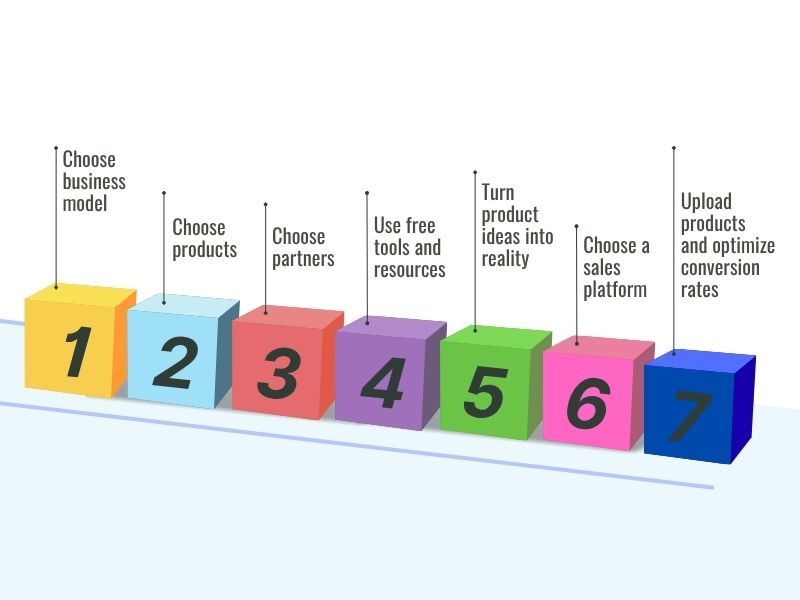
Step 1: Choose a cost-optimized business model
The first step is to choose an operating model that does not require starting capital, inventory buying costs, store rental fees, or production expenses. An ideal model at the beginning must meet 3 criteria:
-
Completely free of fixed cost burdens.
-
Make use of your personal strengths: If you are good at creativity or design, choose print-on-demand (POD) or selling digital products. If you are strong in marketing and communication, affiliate marketing or social commerce will be the best choice.
-
Easy to run by yourself: Priority should be given to models that already have automation support from technology and suppliers so you can manage the store on your own.
Do not try to do everything at once. Choose just 1 model that you feel most confident in to focus 100% of your resources on testing and improving the process in the first phase.
Step 2: Choose products with high profit margins
When starting a business with a small budget, product choice directly decides the survival of your store. The rule is to look for items with very low production or supply costs, but high perceived value so you can sell them at a good price while customers are still happy to pay.
Here are specific strategies to help you maximize profit margins on every order:
(1) Use data from product research tools
Instead of choosing products based on feelings, you should rely on real data from analytics platforms. Support tools like Jungle Scout or Sell The Trend help you quickly identify product lines with high demand but not too much competition.
Besides, following TikTok Creative Center will help you update exact items that are starting to make waves in real time, helping you catch trends on time before the market gets saturated.
(2) Focus on a specific niche market
A niche market is where you find customer groups with very specific needs, and they are willing to pay a higher price to completely solve their problem. Selling a product that solves the right pain point always brings much higher profit margins compared to general goods.
Instead of selling broad items like “pet accessories", you can narrow down to a smaller niche like “custom designed scarves for large dog breeds". This focus helps you cut marketing costs and increase order conversion rates.
Read more: 15 Best Ecommerce Niches To Start And Sell In 2026
(3) Increase value through customization and branding
Product lines that allow custom designs or private branding always bring much higher profit margins than mass-produced items. The print-on-demand (POD) model is the optimal solution for this direction, allowing you to sell unique fashion, mugs, or home decor without inventory costs.
When looking for suppliers, you need to prioritize partners who ensure consistent quality, fast delivery times, and support adding custom logos or packaging. Customers are always ready to pay higher prices for personalized products or a neat unboxing experience.
Read more: 50+ Best-Selling Custom Items To Sell Online in 2026
(4) Take advantage of short-term trends to feed main product lines
Trendy items on social media can bring in huge traffic in a short time, but they fade away very quickly. If you put all your resources into one trending product, you will face the risk of losing revenue as soon as the wave cools down.
A smart strategy is to use trending products as bait to get attention, then direct customers to year-round bestsellers to maintain a stable cash flow. You can actively forecast market demand through free trend search tools like Google Trends or Pinterest Trends.
Read more: Top 20+ Trending Products to Sell Online in 2026 (Data-Backed)
(5) Build sustainable cash flow from a recurring subscription model
Selling repeatable products (like health supplements, personal care items, planner notebooks, or digital resource packages) allows you to collect fixed monthly revenue after acquiring a customer just once.
This model helps lower marketing costs per order over time, pushing overall profit margins to the maximum level. You can start with small subscription packages and continuously adjust based on real user feedback.
Quick tip: Give priority to small, lightweight, and hard-to-break items (like decorative LED lights, workout accessories, or smart kitchen tools). These products not only help you lower shipping costs as much as possible but also reduce the risk of returns due to damage during delivery.
Step 3: Choose operational partners
In a zero-capital business model, suppliers are the main pillar carrying your entire logistics process. They take care of manufacturing, storage, packing, and shipping orders, helping you free up resources to focus all your mind on design, marketing, and customer service.
Customers do not care much about whether you make products yourself or order through a third party. What they really care about is whether the product they receive has good quality, matches the description, and arrives on time. Therefore, finding a reliable supplier both ensures smooth operations and boosts repeat purchase rates.
Here are the criteria you need to evaluate before deciding to partner up:
(1) Product quality and catalog variety
Standard-quality products are the foundation for building trust, helping minimize complaint or return rates as much as possible. You should prioritize choosing partners with diverse product catalogs that catch market trends and have a stable supply history. Actively order sample items to test the actual material quality, colors, and finishing details before putting them on your store.
(2) Shipping costs and speed
High shipping fees are the leading reason why most buyers are ready to abandon their shopping carts at the last minute. Beside the cost factor, accurate delivery times also play a deciding role in the shopping experience. Partnering with fulfillment providers that have a reliable shipping network will help you optimize your closing rates.
(3) Brand reputation and transparency
Take time to research real reviews from previous sellers, and carefully review support policies like return processes for defective items or product specification details. A transparent partner will always provide full certifications and clear problem-solving procedures.
(4) Warehouse locations and distribution networks
Choosing suppliers with warehouses located near your target customer base will significantly shorten delivery times and optimize shipping costs. If you plan to sell to international markets, give priority to partners owning fulfillment centers in multiple countries to avoid shipping bottlenecks or unexpected tax fees.
(5) Support capability and fast response
Issues coming up during shipping or product quality are hard to avoid. A supplier with a fast support team operating 24/7 will help you resolve customer complaints on time, preventing bad impacts on your store’s reputation. You should try out their customer service before signing an official partnership.
Step 4: Take advantage of free tools and resources
Once you have products and supply partners, the next task is to get your business running. Making use of free apps will help you manage and grow your store smoothly without starting fixed costs.
-
Design & branding: Use Canva or Printful Design Maker to design your own logo, brand identity, and polish product images in a clean, professional way.
-
Marketing & automation: Take advantage of free plans from MailerLite or Beehiiv to run email marketing. At the same time, use Later or Buffer to schedule and automate posts on social media channels.
-
Growth analytics: Track user behavior on your website through Google Analytics, organize workflows using Trello or Notion, and use ChatGPT to come up with marketing content ideas.
Step 5: Turn product ideas into reality
If you choose the print-on-demand model, you need unique designs to stand out among thousands of competitors. Through this, you also shape your brand style and increase perceived value.
To prepare for this phase, you should spend time researching image trends, fonts, and best-selling messages on Pinterest or Etsy. Understanding the aesthetic tastes of your target customers clearly will help you create designs that hit the right preferences instead of creating based on feelings.
After catching the trends, you can create polished design works yourself using free tools like Canva, Kittl, or built-in design tools from POD suppliers. Once the files are ready, upload your designs onto free mockups to place the images into real-life settings, like a model wearing the shirt or a mug sitting on a table.
This not only helps you check exact proportions and colors before publishing, but also creates a professional, eye-catching sales photo set to attract buyers without spending any money on photography.
Step 6: Choose a sales platform
Where you showcase your products plays an equally important role as the product itself. The sales platform will directly shape customer experience and business scalability. Depending on your goals, target customers, and budget, you can choose 1 of the 2 main paths below:
(1) Build your own store on e-commerce platforms
Solutions like Shopify, WooCommerce, or BigCommerce allow you to design your own store without needing coding skills. Most of these platforms offer free trials or discounted costs for the first stage, which is very suitable if you want to build a brand properly in the long run.
-
Pros: Full control over design, branding, and customer data; good SEO support and easy integration with print-on-demand (POD) systems.
-
Cons: Takes setup time at the beginning; monthly maintenance fees apply when the free trial ends.
To choose the best solution for your budget, you can check out the 12 best e-commerce platforms.
(2) Sell on e-commerce marketplaces
If you want to start right away without building a website, online marketplaces like Etsy, Amazon, or eBay are top choices. This option helps you take advantage of the huge existing buyer pool right on the platform.
-
Pros: Quick store setup; instant access to free organic traffic without spending much on ads at first.
-
Cons: High competition; limited brand identity customization, and you have to share a part of your profits as platform fees (listing fees, transaction fees).
Explore the detailed pros and cons of each sales channel here at the most trusted e-commerce marketplaces.
Step 7: Upload products and optimize conversion rates
After finishing your store setup, put your products on display based on these principles:
-
Sharp, standard images: Online buyers judge products completely through visuals. Use high-resolution photo sets or mockups (at least 1,000 × 1,000 px) to meet display standards on marketplaces and websites. Images need to show colors, materials, and real-life use settings clearly to build trust.
-
Product descriptions focused on practical value: An effective description does not just list technical specs, but explains why customers should own the product. Present content concisely using bullet points, emphasizing practical benefits, sizing, materials, and care instructions to completely remove buyers’ hesitation.
-
Competitive pricing while keeping profits: Research prices of competitors in the same segment, then add up base costs, shipping fees, and platform fees to set a reasonable price. You do not necessarily have to join a price drop race; customers are ready to pay a higher price if your product has a unique design or a meaningful message.
-
Thoughtful customer service: Fast reply speeds and good problem-handling attitudes are the keys to keeping buyers. Turning visitors into loyal customers not only increases order value, but also creates sustainable repeat revenue through positive reviews.
Challenges when starting an e-commerce business with a 0-dollar budget
Starting a business with zero capital means you have to use time, effort, and persistence to make up for money. Recognizing these barriers in advance will help you proactively make risk management plans and keep your operational focus:
1- Time pressure and burnout risk
Having no budget to hire staff means you have to take on every role: from website design, content creation, and product sourcing to order processing and customer service. This huge workload can easily lead to feeling overwhelmed, especially if you are running it alongside another regular job.
-
Solution: Divide your work time into distinct task blocks (time-blocking), and join communities to share and learn from experiences.
2- Limits in shaping brand identity
Free tools can certainly help you design a logo or set up a store yourself, but this process requires a certain “learning curve" to master the technology. Being too much of a perfectionist about aesthetics when you lack skills can stall your launch progress.
-
Solution: In the first phase, prioritize simplicity. A clear text-based logo along with a basic but neat layout is enough to get the store running.
3- Trust barriers from customers
A completely new store using a subdomain and having zero real reviews can easily make buyers hesitant about credibility. Cart abandonment rates due to lack of trust are the biggest challenge for newly launched stores.
-
Solution: Make information transparent by adding a brand story page (About Us), providing clear contact details, and publishing a transparent return policy.
4- Slow initial growth rate
When you do not use paid ads or partner with big KOLs, reaching customers will depend entirely on organic channels like SEO, content marketing, and word of mouth. These methods take time to build up and show results.
-
Solution: Be truly patient and accept a step-by-step progress roadmap. Measure success using engagement metrics and small initial orders instead of expecting immediate sales explosions.
So is there any way to increase e-commerce sales?
With most consumers prioritizing online shopping, the biggest challenge for businesses is creating a distinct shopping experience. To make your store stand out, implementing the synchronized optimization strategies below is a key requirement:
1. Stay ahead of market trends
Constantly updating new product trends helps your item catalog stay fresh and attractive. However, instead of risking large inventory orders from the start, begin by testing small batches to measure real customer feedback before investing heavy capital.
2. Optimize your store for SEO
SEO is the most sustainable strategy to attract potential customers without spending money on ads.
-
If you own a website: Optimize keywords in titles, product descriptions, image ALT tags, and page loading speed to boost rankings on Google.
-
If you sell on marketplaces (Etsy, Amazon, eBay): Optimize keyword systems and tags according to the specific search algorithm of each platform.
3. Email marketing
Email is still one of the channels that brings the highest return on investment (ROI). You can use free plans from MailerLite, Klaviyo, or Mailchimp to collect lead lists, send new product launch newsletters, or automatically send abandoned cart reminder emails.
4. Boost social media marketing and make use of user-generated content (UGC)
Platforms like TikTok, Instagram, or Pinterest are ideal spaces to show off products and interact directly with target customers. Beside running targeted ads, making use of review posts and real experience photos from buyers (UGC) will significantly increase trust and viewer buying decisions.
5. Improve user experience
A beautiful layout is not enough; your website needs to ensure fast loading speeds, a clean layout, and smooth navigation. Optimizing user experience helps keep buyers longer, minimizes bounce rates, and directly increases conversion rates.
6. Invest in customer service
Dedicated support service is the key factor creating brand differentiation and driving customer return rates. In fact, most consumers are willing to pay higher prices for brands that give them peace of mind and a good shopping experience.
7. Simplify the checkout process
A complex checkout process with too many steps is the leading reason why customers cancel orders at the last minute. Shorten unnecessary steps, offer diverse payment methods, and optimize a simple, clear checkout page to help buyers complete transactions as quickly as possible.
8. Partner with micro-influencers
Instead of spending big money on celebrities, reach out to small content creators (micro-influencers with 1,000 to 100,000 followers). You can offer to send free gift products in exchange for honest review posts. Micro-influencer audiences usually have very high engagement and trust levels.
9. Analyze data and adjust strategies
Do not forget to track traffic and conversion rates regularly. Use free analytics tools like Google Analytics or built-in analytics on marketplaces. Continuously testing, understanding data, and tweaking marketing plans will help you optimize operational processes over time.
Tip: Be patient and make full use of zero-dollar marketing solutions until your store generates a stable cash flow. Only when you have profits should you reinvest in paid tools to automate processes and scale up. Check out more highly scalable business ideas to prepare for your business’s next growth stage.
Start an e-commerce business without money with Merchize
If you are looking for a reliable partner to launch a print-on-demand model without starting capital, Merchize is the complete solution for you.
As a trusted supply and manufacturing platform, Merchize completely solves cost barriers through a lean operational system:
-
In-house manufacturing facility: A leading provider owning direct production facilities, Merchize takes 100% full control over quality management, order fulfillment times, and packaging optimization.
-
Low base costs: Thanks to direct manufacturing, Merchize offers highly optimized base costs, helping you easily set flexible retail prices and earn the highest profit margins.
-
MOQ = 1: Merchize handles, prints, and ships even when there is only 1 single order from your customer.
-
Rich product ecosystem: Access a catalog of nearly 1,000 high-quality products (from fashion, homeware, and mugs to unique accessories) ready for you to add personalized designs and sell.
-
Flexible multi-platform integration: Easily connect your Merchize store with major e-commerce marketplaces like Etsy, Amazon, WooCommerce, or Shopify in just a few simple steps.
Conclusion
The digital age has proven that money is no longer the only barrier stopping you from becoming a business owner. Understanding the roadmap of “How to start an e-commerce business without money" combined with a mindset of making the most of lean models like POD, dropshipping, and free tech tools is the key to helping you turn ideas into real cash flow.
Although starting a business from scratch takes a lot of time, persistence, and self-learning effort, the value and experience you gain will be the strongest foundation for future breakthroughs. Start building your online store today!