
Contents
Redbubble has long been a familiar “home” for many creative artists thanks to its large community and simple user experience. However, if you want to expand your audience and maximize revenue, exploring Redbubble alternatives is a smart strategic move.
Instead of relying on a single platform, combining Redbubble with suitable alternatives allows you to diversify your sales channels, leverage the unique strengths of each marketplace, and build a more sustainable and flexible print-on-demand business ecosystem in the long run.
About Redbubble
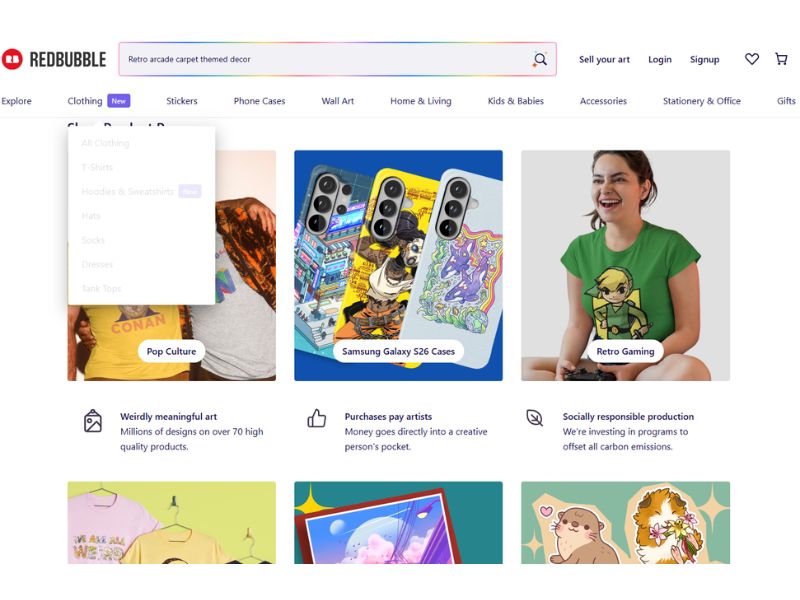
Launched in 2006 in Melbourne, Redbubble is often chosen by beginners thanks to its simple process for uploading designs and selling products. Up to now, the platform has connected more than 700,000 artists and designers worldwide with millions of customers who love creative products.
Its product ecosystem is quite diverse, offering more than 70 different product types. Among them, stickers are the best-selling items because they are low-cost and easy to access. Other popular categories include apparel (t-shirts, hoodies, leggings), phone accessories (cases, wallets), home decor (pillows, blankets, canvas prints, posters), stationery (notebooks, greeting cards), and many more.
When an order is placed, Redbubble automatically sends it to third-party printing partners near the customer for production and delivery. You almost don’t need to handle any backend process or worry about operations and shipping times.
So, is it necessary to consider Redbubble alternatives?
There’s no doubt that Redbubble is beginner-friendly, but it mainly works well at the early stage. As your business grows, several issues start to appear.
Product prices are often higher than average because everything is printed on demand per order. Quality is not always consistent since it depends on multiple printing partners. More importantly, you are competing with millions of sellers on the same platform, which makes it harder to stand out and get sales.
But that’s still not the biggest problem.
Redbubble is a marketplace. You don’t control the checkout experience, you don’t own customer data, you don’t build a real brand, and you don’t even control how the platform operates in the future. Simply put, you are running a business on someone else’s “land.” When the platform favors you, you get sales. When it doesn’t, your performance can drop quickly.
That’s why, after achieving initial results, many sellers start exploring and comparing Redbubble alternatives to reduce dependency and unlock more growth opportunities.
Therefore, looking into Redbubble alternatives is completely a good strategy.
Top potential Redbubble alternatives in 2026
1. Printify
When you start getting serious about cost and operations, you may move to Printify.
What makes Printify different is that it doesn’t produce items itself. Instead, it acts as a middle platform, connecting you with more than 90 printing partners worldwide. It may sound more complex than Redbubble, but in reality, it gives you something Redbubble doesn’t: choice.
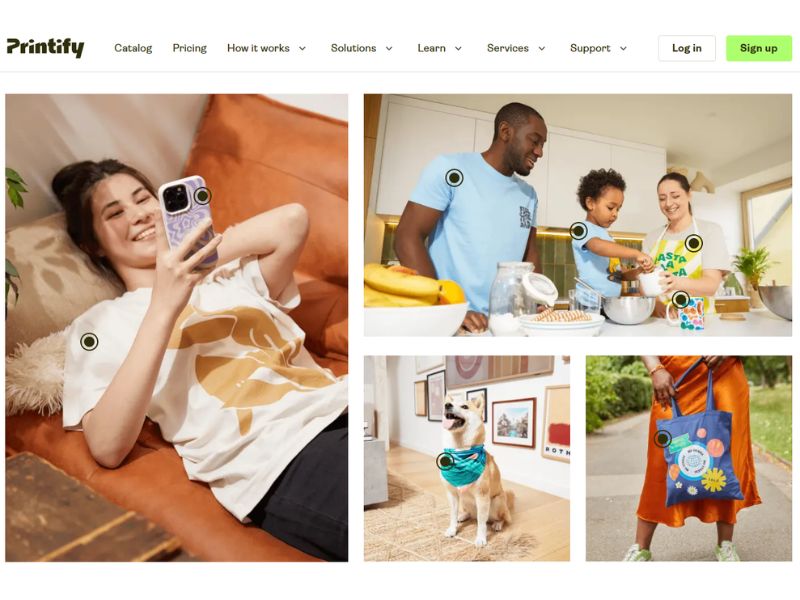
You can choose a printing partner close to your customers for faster shipping. You can compare prices between suppliers to optimize your margins. You can also decide what matters most to you: lower cost, better quality, or faster delivery.
With over 1,300 products, Printify offers enough variety for you to test different directions, from apparel to accessories and home decor, all with competitive base costs.
However, since it relies on multiple partners, product quality may not always be consistent. Ordering samples before scaling is recommended if you want to control the customer experience.
Quick comparison: Printify vs Redbubble
| Criteria | Printify | Redbubble |
|---|---|---|
| Model | Connects multiple print providers (B2B marketplace) | Retail marketplace |
| Base cost | Lower, flexible by supplier | Higher due to platform fees |
| Control | High (choose supplier, product) | Low |
| Quality | Not consistent | More stable but hard to control |
| Branding | Available | Limited |
| Integration | Shopify, Etsy, Amazon, eBay, Wix… | No |
| Scalability | High, multi-channel | Limited |
Read more: Printify Alternatives: 10 Powerful Options for Sellers in 2026
2. Printful
If your priority is quality and building a strong brand, Printful is almost the “default” choice.
Unlike Printify, Printful operates its own production system in North America and Europe, while also working with some partners in Asia and other regions. This helps ensure more consistent quality and faster delivery times.
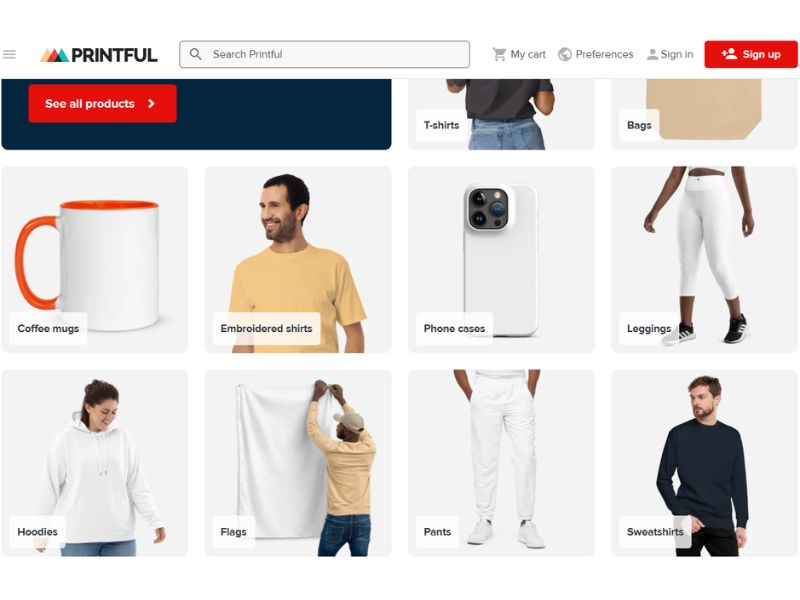
Printful currently offers nearly 500 products, focusing on key categories like apparel, accessories, wall art, and lifestyle items.
Its key strengths include:
- High print quality (especially for DTG and embroidery)
- Multiple printing technologies: DTF, all-over print, heat transfer, and more
- Strong integrations with Shopify, Etsy, Amazon, Wix…
Printful is also one of the few platforms that supports branding quite well, including packing slips, white-label packaging, and a better unboxing experience.
However, base costs are usually 10–30% higher than average, and some custom products are still limited for specific niches.
Quick comparison: Printful vs Redbubble
| Criteria | Printful | Redbubble |
|---|---|---|
| Model | POD + in-house fulfillment | Marketplace |
| Quality | High, consistent | متوسط, depends on partners |
| Base cost | Higher (10–30%) | Includes platform fees |
| Branding | Strong (white-label) | Almost none |
| Control | High | Low |
| Integration | Shopify, Etsy, Amazon, WooCommerce… | No |
Read more: 12 Cheap Printful Alternatives to Maximize Your Profits in 2026
3. Merchize
If you don’t just want to do POD but aim to build a complete business system, Merchize is worth considering.
Unlike the two platforms above, Merchize focuses on controlling the entire production and fulfillment process. This helps optimize costs and ensure consistent output quality. With factory systems of around 70,000m² and fulfillment networks across the US, EU, UK, Australia, and China, it can ship to 118+ countries.
Merchize also offers a large catalog of nearly 1,000 products, along with multiple printing technologies such as:
- UV printing
- DTG, sublimation
- Embroidery
- Laser cutting & engraving
- Heat transfer
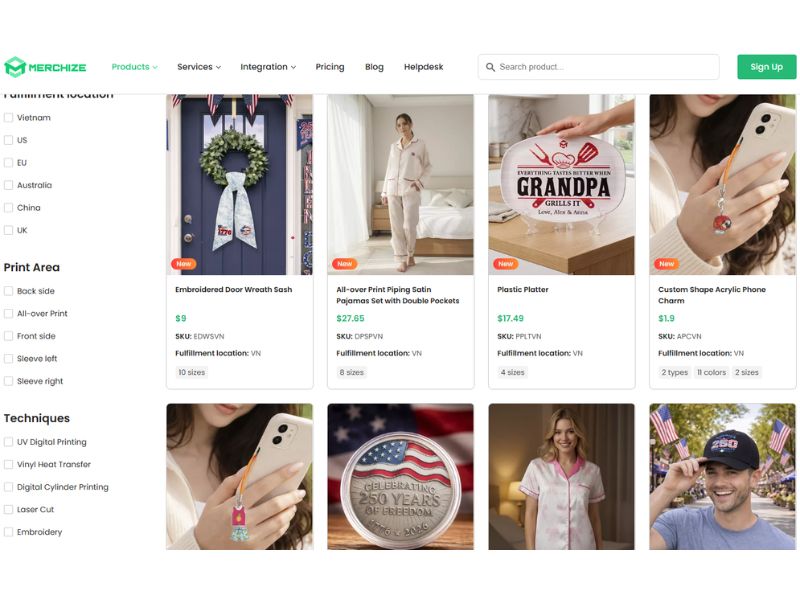
A clear difference is that Merchize also provides:
- Branding services
- Storefront solutions
- Amazon FBA support
- Corporate swag/merch services
>> This creates a more complete ecosystem for long-term business scaling.
Quick comparison: Merchize vs Redbubble
| Criteria | Merchize | Redbubble |
|---|---|---|
| Model | POD + in-house production & fulfillment | Marketplace |
| Control | Very high | Low |
| Quality | Stable, internally controlled | Not consistent |
| Base cost | Optimized by scale | Higher due to platform fees |
| Branding | Strong | Limited |
| Integration | Shopify, WooCommerce, Etsy, Amazon, eBay | No |
4. TeePublic
If you focus on pop culture niches or illustration styles, TeePublic can be a good fit.
Even though it is owned by Redbubble, TeePublic operates as a separate platform with a different audience and distribution approach. Selling here often feels “less competitive,” although there are frequent sitewide sales.
TeePublic offers around 75+ products, mainly in familiar categories like t-shirts, hoodies, stickers, phone cases, mugs, and home decor.
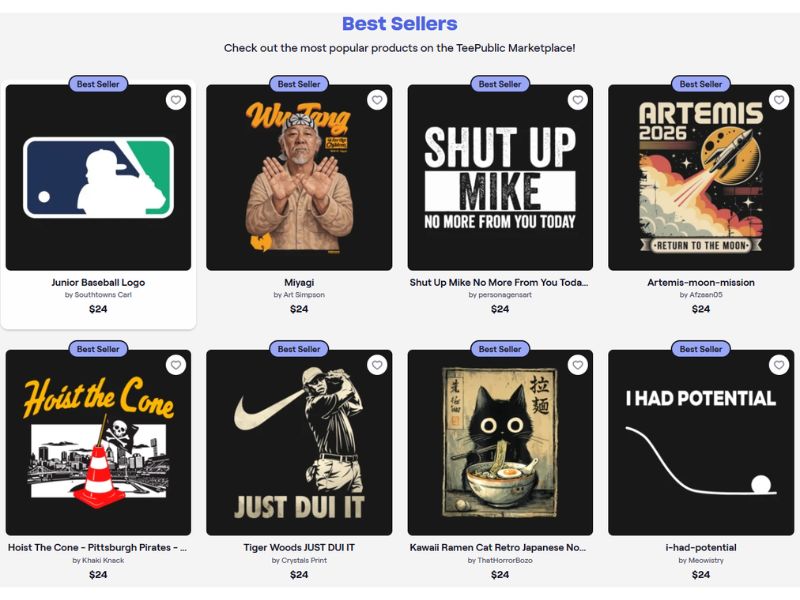
One of the most interesting features is the Fan Art Program, which allows you to submit officially licensed designs from big brands. If approved, you can avoid copyright risks and tap into large existing fanbases.
However, TeePublic uses a fixed earning model. For example, most apparel items give you about $4 per sale at regular price and $2 during sitewide sales.
The downside is limited control over pricing and fewer printing options compared to other platforms. On the bright side:
- You can import designs directly from Redbubble
- Simple storefront setup
- No need to handle operations
Quick comparison: TeePublic vs Redbubble
| Criteria | TeePublic | Redbubble |
|---|---|---|
| Model | Marketplace | Marketplace |
| Earnings | Fixed (less flexible) | More flexible (markup) |
| Competition | Lower | High |
| Products | ~75 products | 70+ products |
| Integration | No | No |
5. Gelato
Gelato is a strong match if you prioritize shipping speed and delivery experience.
Similar to Printify, Gelato doesn’t focus on centralized production. Instead, it builds a network of over 140 partners across 30+ countries. Each order is automatically routed to the nearest facility, helping reduce shipping time and cost while improving customer experience.
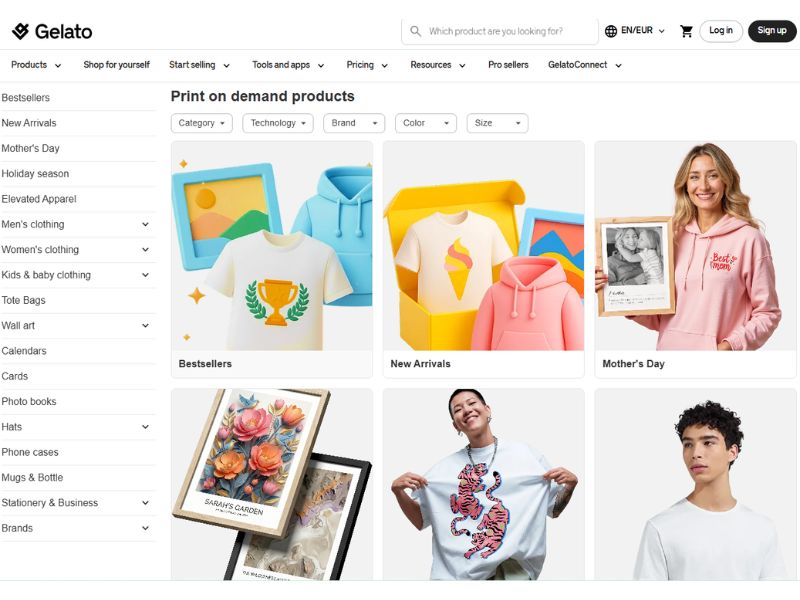
Its catalog is quite diverse, but the strongest categories are print-based products such as posters, canvas, framed art, photo books, calendars, and other paper-based items. Gelato also follows an eco-friendly approach, making it suitable if you target environmentally conscious customers.
However, because it depends on partner networks, product quality may not always be consistent. Also, some items—especially posters—can have relatively high base costs, and shipping fees are not always included.
Quick comparison: Gelato vs Redbubble
| Criteria | Gelato | Redbubble |
|---|---|---|
| Model | Global production network | Marketplace |
| Shipping | Fast (local fulfillment) | Depends on system |
| Products | Strong in print-based items | Diverse |
| Quality | May vary | Hard to control |
| Integration | Shopify, Etsy, WooCommerce… | No |
6. Zazzle
Zazzle offers a slightly different approach compared to other platforms. It’s still a marketplace where you can earn from designs without running your own store.
Basically, you upload your design, set your desired royalty, and the platform handles everything else: production, shipping, and customer service.
The biggest difference is that customers can customize the design before purchasing, such as adding names or changing content.
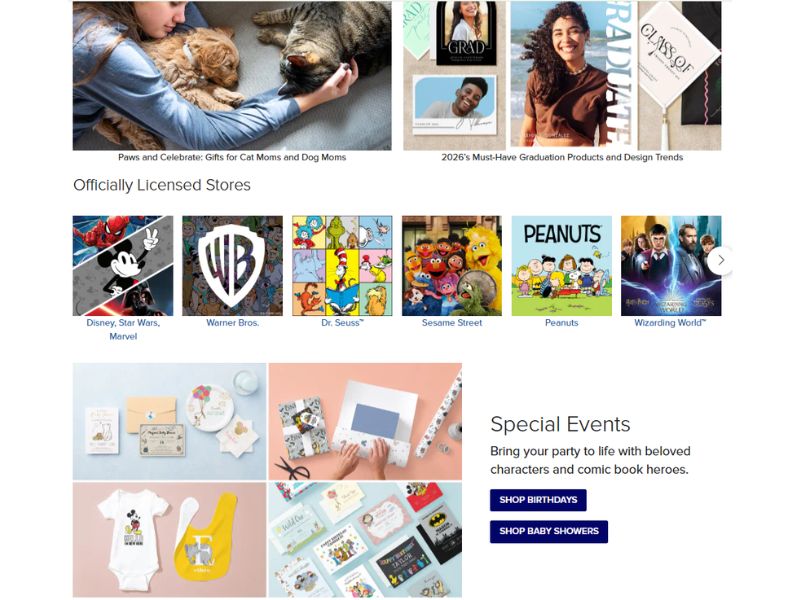
Zazzle offers thousands of products, with a strong focus on paper-based items like invitations, greeting cards, stationery, and event decorations. It also includes apparel and home decor.
Zazzle uses a royalty-based model, meaning you control your profit margin:
- Set 5%–50% royalty for physical products
- Up to 99% for digital products
- Final price = base price + your royalty
And you don’t need any upfront cost to start.
Quick comparison: Zazzle vs Redbubble
| Criteria | Zazzle | Redbubble |
|---|---|---|
| Model | Marketplace + personalization | Marketplace |
| Earnings | Royalty (%) | Markup |
| Key difference | Customers can customize designs | No |
| Products | Very diverse (strong in paper) | Diverse |
| Integration | No | No |
7. Displate
Displate is a special case on this list—it doesn’t try to do everything, but focuses on one thing only: premium metal posters.
If your designs are visually strong, artwork-driven, or collectible, Displate allows you to price higher instead of competing on low-cost items like t-shirts. The buying behavior here is different—customers don’t buy because they need it, but because they like it, and they are willing to pay more.
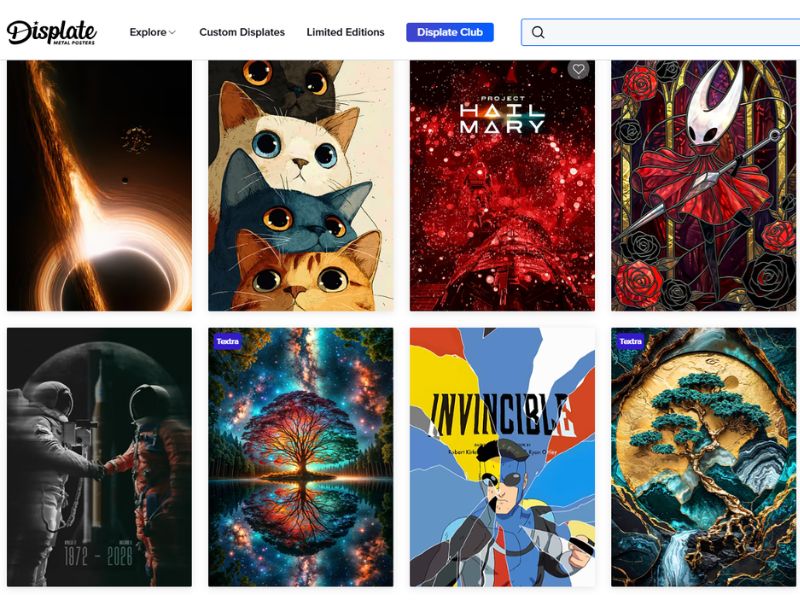
In terms of model, you just upload your design, and Displate handles everything from production to shipping (from Poland). Your income comes from fixed commissions on standard products (for example, around $4.5 for size M), while limited edition products can generate much higher earnings depending on the deal.
Displate works as a curated marketplace—not everyone can join, and not every design is approved. This reduces low-quality competition but also makes it harder to enter.
Quick comparison: Displate vs Redbubble
| Criteria | Displate | Redbubble |
|---|---|---|
| Model | Curated marketplace | Open marketplace |
| Products | Metal posters | Diverse |
| Order value | High | Low–medium |
| Earnings | Fixed + limited editions | Markup |
| Integration | No | No |
8. Gooten
Gooten is the type of platform you’ll notice when you want to go beyond basic apparel.
Its biggest strength is the variety of printing techniques. Not just DTG or DTF, but also embroidery, foil printing, laser engraving, weaving, and more—opening up many niche product opportunities that other platforms don’t offer.
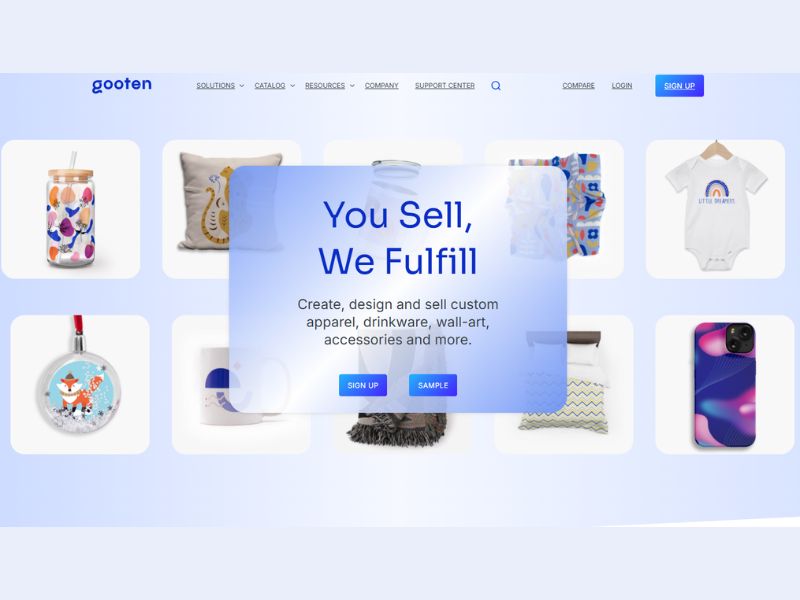
In terms of operations, Gooten doesn’t own factories but connects with a partner network (mainly in the US, plus the UK, Spain, Canada, and Australia). You upload designs, set your price, and they handle the rest.
A notable advantage is integration with Customily, allowing customers to personalize products (add text, edit images, AI background removal…). This is especially useful for personalized niches.
However:
- No in-house production → quality may vary between orders
- No direct integration with Amazon/eBay
- Customily works best with Etsy & Shopify
Quick comparison: Gooten vs Redbubble
| Criteria | Gooten | Redbubble |
|---|---|---|
| Model | POD network | Marketplace |
| Printing methods | Very diverse | Basic |
| Products | 500+ products | 70+ products |
| Control | High | Low |
| Integration | Shopify, Etsy, WooCommerce | No |
9. Spreadshirt
Spreadshirt is often underestimated, especially if you mainly focus on the US market. But in the EU, it’s a platform worth exploring.
One key advantage is flexibility in how you sell:
- Sell on the marketplace (they bring traffic)
- Create your own Spreadshop (you bring traffic)
- Connect with channels like TikTok, YouTube, Google
You can combine both approaches—use existing traffic while building your own brand at the same time. This is something Redbubble cannot offer.
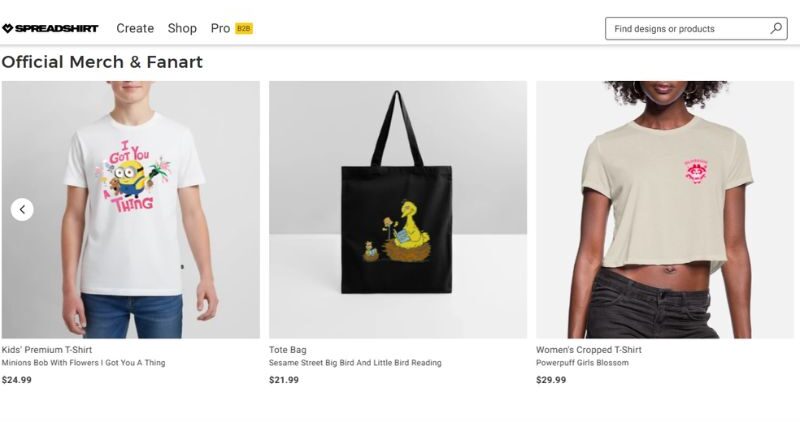
The user experience is also quite smooth: fast upload, clean UI, and good mobile support. A strong feature is localization—you can publish the same design across multiple countries with just a few clicks, optimized for each market’s SEO.
In terms of products, Spreadshirt focuses on core items like t-shirts, hoodies, hats, and mugs. While not highly diverse, these are proven, scalable products.
Earnings come from:
- Fixed commission on the marketplace
- Or setting your own price on Spreadshop (keep the margin)
Quick comparison: Spreadshirt vs Redbubble
| Criteria | Spreadshirt | Redbubble |
|---|---|---|
| Model | Marketplace + own store | Marketplace |
| Strong market | EU | Global (US-focused) |
| Products | Basic (apparel, mugs) | More diverse |
| Earnings | Commission + markup | Markup |
| Integration | TikTok, YouTube, Google (indirect) | No |
10. Fourthwall
Fourthwall is not a traditional POD platform—it’s more like a commerce system built for creators, offering over 200 products.
If you already have an audience on YouTube, TikTok, or Instagram, Fourthwall helps you turn viewers into customers smoothly. You can sell not only print-on-demand products but also digital files, memberships, and subscriptions—all in one system.
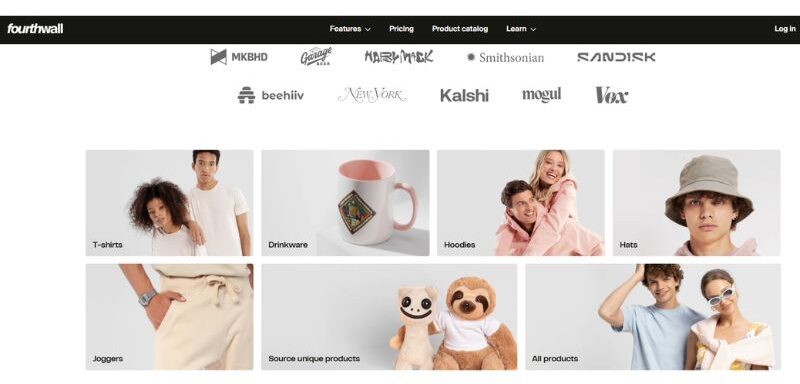
The biggest advantage is deep integration. Products can appear directly inside your content, shortening the gap between “viewing” and “buying.” This is something platforms like Redbubble cannot do.
In terms of pricing:
- Free plan: no monthly fee, 5% fee on digital & memberships
- Pro plan (~$15/month): includes extra benefits like credits
However, one important thing to understand: Fourthwall does not provide built-in traffic. It’s just a tool, so you need an existing audience or the ability to drive traffic yourself.
Quick comparison: Fourthwall vs Redbubble
| Criteria | Fourthwall | Redbubble |
|---|---|---|
| Model | Creator commerce platform | Marketplace |
| Products | POD + digital + subscription | POD |
| Traffic | You bring your own | Built-in |
| Control | Very high | Low |
| Integration | YouTube, TikTok, Instagram, Twitch | No |
11. PrintAura
PrintAura is a relatively low-key option, but it fits well if you want to focus on branding without dealing with a complex system.
Its workflow is quite standard for a POD platform: upload your design, set your price, and it handles production and shipping.
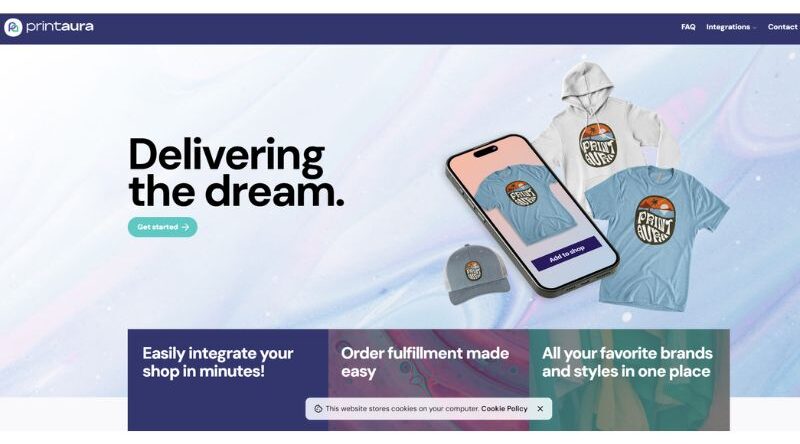
What makes PrintAura different is its strong branding customization:
- Custom labels
- Branded packaging
- Remove manufacturer tags
- Heat transfer options
These features help your products look more like a real brand instead of generic POD items.
However, the UI is not very user-friendly, base costs for some products are relatively high, and it’s not a strong platform for scaling.
Quick comparison: PrintAura vs Redbubble
| Criteria | PrintAura | Redbubble |
|---|---|---|
| Model | POD + branding | Marketplace |
| Control | High | Low |
| Branding | Strong | Limited |
| Pricing | Medium–high | Includes platform fees |
| Integration | Shopify, Etsy, WooCommerce | No |
12. Spring
Spring (formerly known as Teespring) has evolved from a simple t-shirt selling tool into a full creator commerce platform.
You can now sell physical products, digital products, memberships, and even event tickets.
Its biggest strength is social integration:
- Direct connection with YouTube (products shown under videos)
- Selling through TikTok, Instagram, Twitch
- Checkout links embedded directly in content

This significantly reduces friction, as users don’t need to leave the platform to make a purchase.
However, like Fourthwall, Spring does not provide built-in traffic. Without an existing audience, you’ll need to generate traffic from scratch.
Other limitations include:
- Higher base costs compared to some platforms
- Limited printing techniques
- Store customization is not as strong as Shopify
Quick comparison: Spring vs Redbubble
| Criteria | Spring | Redbubble |
|---|---|---|
| Model | Creator commerce | Marketplace |
| Traffic | Self-generated | Built-in |
| Products | POD + digital + membership | POD |
| Integration | YouTube, TikTok, Twitch | No |
13. Fine Art America
Fine Art America is a completely different case. It’s not a typical POD platform focused on apparel—it works more like an online gallery + fulfillment system.
The main users are photographers, painters, and illustrators. The platform operates multiple fulfillment centers in the US, along with international partners.
It focuses heavily on high-end art products such as canvas prints, framed prints, and metal prints, with higher quality than average. The customer base is also different—more art-focused and willing to pay for value.

A key advantage is pricing control. You can set your own selling price without being limited by fixed royalties or platform-defined margins. If your artwork has high value, you can price it higher and keep the full margin.
Although it has less traffic than Redbubble, it connects with the Pixels network, helping increase exposure. Still, you’ll need to actively market if you want stable sales.
Quick comparison: Fine Art America vs Redbubble
| Criteria | Fine Art America | Redbubble |
|---|---|---|
| Products | High-end art | Diverse |
| Pricing | Set your own | Markup |
| Control | High | Low |
| Integration | No (indirect Shopify support) | No |
14. Amazon Merch on Demand
Amazon Merch on Demand is the go-to option if your goal is maximum traffic. It allows you to sell directly within the Amazon ecosystem, which already has millions of customers.
You don’t need to worry about production, shipping, or customer service.
The biggest advantage is massive traffic. If your listing is well-optimized (title, keywords, images), your chances of getting sales are very high.
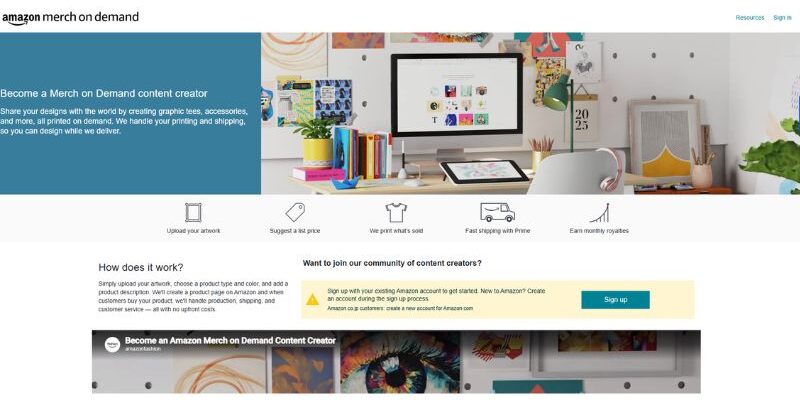
However, you’ll face intense competition, with millions of products targeting the same audience. Product variety is still limited, margins are not very high, and brand-building is almost impossible.
Quick comparison: Amazon Merch on Demand vs Redbubble
| Criteria | Amazon Merch | Redbubble |
|---|---|---|
| Traffic | Very high | High |
| Competition | Very high | High |
| Control | Low | Low |
| Integration | Within Amazon ecosystem | No |
15. Sellfy
Sellfy is a clear choice if you want to fully move away from marketplaces and build your own system.
It provides a complete store setup—from POD products to digital products, from payments to marketing tools.
Besides POD items (t-shirts, hoodies, mugs…), Sellfy is also strong in:
- Ebooks
- Design files
- Presets
- Music
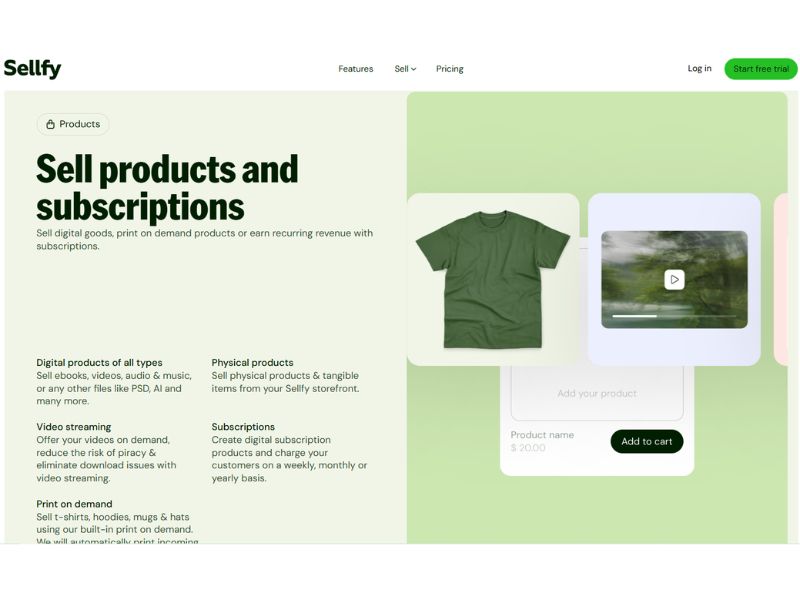
You control everything: pricing, products, branding, and customer experience. A big advantage is built-in marketing tools like email marketing, discount codes, and analytics.
However:
- No strong integration with Etsy/Amazon
- Requires a subscription (starting around $22/month)
- Revenue limits depending on the plan
Quick comparison: Sellfy vs Redbubble
| Criteria | Sellfy | Redbubble |
|---|---|---|
| Model | Store builder + POD | Marketplace |
| Control | Very high | Low |
| Products | POD + digital | POD |
| Integration | Limited (standalone system) | No |
| Pricing | Subscription-based | Free |
Redbubble competitors comparison chart
| Platform | Core Model | Built-in Traffic | Control Level | Branding | Integrations | Best For |
| Redbubble | Marketplace | Yes | Low | Low | None | Beginners |
| Printify | POD backend (multi-supplier) | No | High | Medium | Strong | Cost optimization, scaling |
| Printful | POD + in-house production | No | High | High | Strong | Brand building |
| Merchize | POD + fulfillment ecosystem | No | Very High | Very High | Strong | Long-term scaling |
| TeePublic | Marketplace | Yes | Low | Low | None | Passive income |
| Gelato | Global POD network | No | High | Medium | Strong | Global brands |
| Zazzle | Marketplace + customization | Yes | Low | Low | None | Customization niches |
| Displate | Curated marketplace | Yes | Low | Medium | None | Visual-focused artists |
| Gooten | POD network | No | High | Medium | Strong | Complex/custom products |
| Spreadshirt | Marketplace + store builder | Yes | Medium | Medium | Moderate | Selling in Europe |
| Fourthwall | Creator commerce platform | No | Very High | Very High | Strong | Creators with audience |
| PrintAura | POD + branding | No | High | High | Strong | Small brands |
| Spring | Creator commerce | No | High | High | Strong | Influencers/streamers |
| Fine Art America | Art marketplace + fulfillment | Yes | High | High | Limited | Professional artists |
| Amazon Merch | Marketplace (Amazon ecosystem) | Very High | Low | Low | Internal | SEO & volume sellers |
| Sellfy | Store builder + POD | No | Very High | Very High | Limited | Independent business builders |
Factors to consider when choosing the right Redbubble alternative
The first thing you should look at is not whether a platform is popular, but whether it fits the way you sell. If you focus on apparel, choose platforms that are strong in clothing. If you sell art or decor, platforms specialized in canvas, posters, or metal prints will be a much better fit than Redbubble.
Next is how you make money. Some platforms use fixed royalties, some let you set your markup, and others give you full control over pricing. Each model directly affects your margins and how well you can optimize profit in the long run.
If you are serious about building a brand, don’t overlook details like packaging, labels, or white-label options. These small elements play a big role in whether customers remember your brand or just the platform you sell on.
User experience is another factor many people ignore. When you start uploading dozens or hundreds of designs, a complicated system will slow you down significantly. Platforms with simple dashboards and easy order/pricing management will help you operate much more efficiently.
Finally, the most important factor if you want to scale is integration. A platform that connects with Shopify, Etsy, or WooCommerce allows you to sell across multiple channels and truly scale. In contrast, closed marketplaces limit you to their traffic and rules.
Conclusion
There is no “best” platform for everyone. A platform that works well at the beginning can become a limitation as your business grows. Exploring Redbubble alternatives is not about finding another place to sell; it’s about finding a model that better fits your goals. Instead of chasing “trending” platforms, focus on what you actually need right now, and choose a partner that can grow with your business over time.