Contents
Is a welcome kit still worth sending in 2027, or is it just another box of branded merch that ends up in a drawer?
The answer is yes, if you give it to the right people at the right time. Beyond welcoming new hires during onboarding, welcome kits can also help businesses strengthen relationships with high-value B2B clients and strategic partners.
Each audience calls for a different mix of gifts, budget, and delivery approach. This guide covers 12 flexible welcome kit ideas to enable you to create a better recipient experience and make a positive first impression.
Key Takeaways
- A welcome kit is a curated package of branded essentials and a personal note for new hires, VIP clients, or strategic partners.
- Each audience needs a different mix of items, budget, and delivery moment.
- Timing matters: kits delivered on Day 1 lift new hires’ sense of belonging (34% vs. 18% with no kit), while late kits do almost naothing.
- Choose quality over quantity: three to five well-made items and a personal note beat a box full of cheap merch.
- Merchize SWAG lets you order from one kit to 1,000+, with no minimum and multi-address shipping.
Why is a welcome kit actually worth investing in?
A welcome kit creates a first impression in any relationship and can influence how it develops. Its value depends on who receives it.
- New hires: 34% of employees who received a welcome kit on their first day said they felt a sense of belonging from the start
- B2B clients: Build trust during the critical first 90 days, when clients are most likely to leave. A thoughtful welcome gift adds a personal touch from the moment a contract is signed
- Strategic partners: A well-planned kit shows that the partnership matters and gives partners branded products and materials they can use when representing your business
| Audience | What the kit should say | What usually goes in | When it should arrive |
| New hires | “We were expecting you” | Wearable pieces, daily-use items (tumbler, tote), a personal note | On or before Day 1, shipped to the home for remote hires |
| B2B clients | “Your business matters to us” | Fewer, higher-quality items, premium packaging, a note from the account manager | Between contract signing and the kickoff call |
| Strategic partners | “We’re building this together” | Co-branded items, product samples, partner-facing materials | Around the partnership announcement or launch |
12 Welcome kit ideas for every budget and team
A memorable welcome kit doesn’t need to contain dozens of items. The best choices combine everyday usefulness, quality, and a personal touch that makes recipients feel valued.
The right combination depends on who receives the kit, how it will be used, and how much the organization can spend.
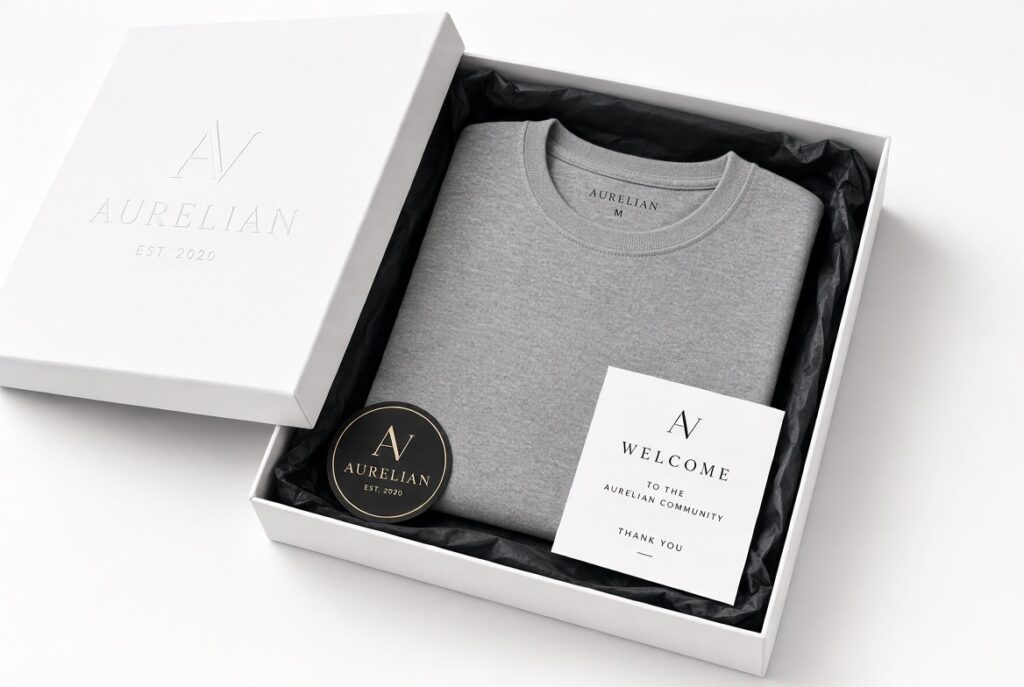
1. The first-impression box
What’s inside: a classic unisex tee, a sticker, and a short welcome card, in a branded sleeve or box.
A gift box that instantly fulfills a new hire’s first wish: wearing something that makes them feel part of the team.
Best for: bulk hiring, interns, seasonal staff, and the first kit you ever build.
2. The daily balance kit
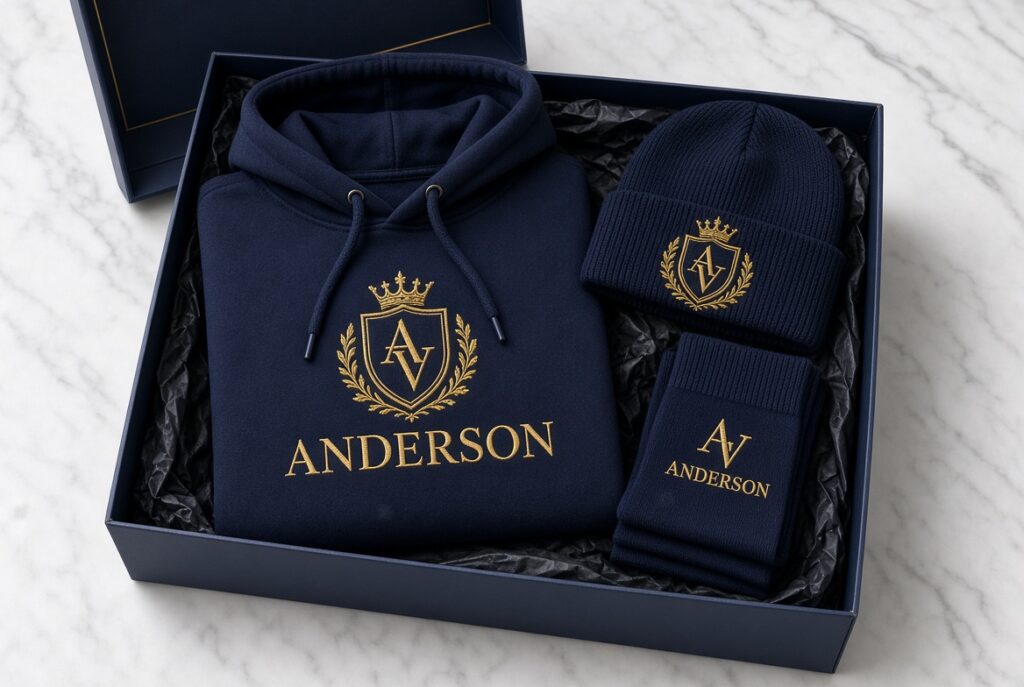
What’s inside: a hoodie, a cap or beanie, and a pair of socks
Hoodies consistently rank as the most popular item in welcome kits. The reason is simple: it’s something people actually want to wear, even after work hours. Many companies opt for custom embroidery to make the logo pop and ensure long-lasting durability.
Best for: teams in cooler climates and fully remote teams that spend the day at a desk at home.
3. The remote pro kit
What’s inside: a tumbler, a tote or sling bag, a notebook, and a welcome letter.
Remote hires miss the physical “here is your desk" moment, so build the kit around what sits next to their laptop every day. The tumbler matters most: 43% of employees named a high-quality water bottle or tumbler in their top three, the highest of any item. Browse tumblers, bags and office and stationery.
Best for: distributed teams that never share an office.
4. The premium kit
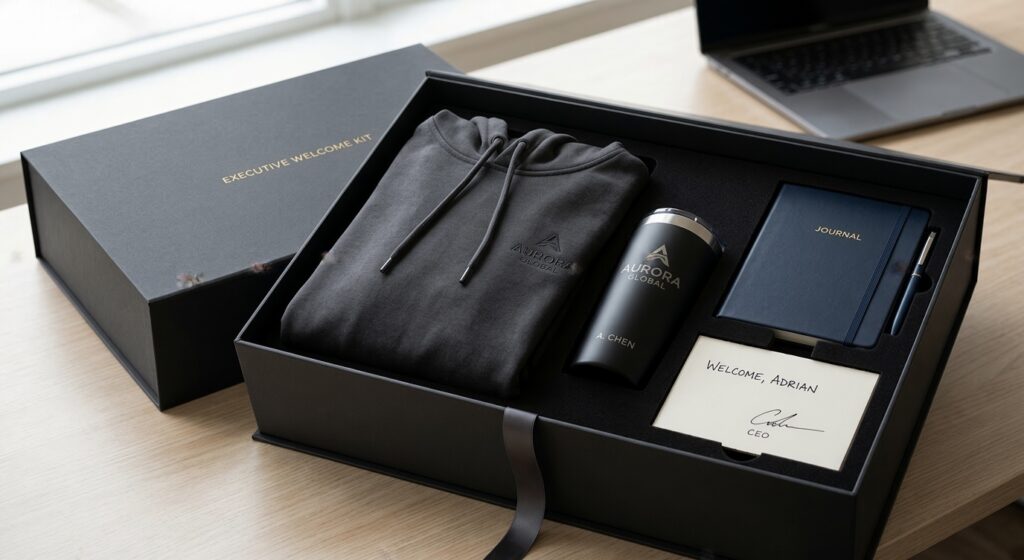
What’s inside: an embroidered jacket or heavyweight hoodie, a premium tumbler, a hardcover notebook, and a gift box with a signed note.
The early weeks are when a new B2B account is most fragile. Spend more on fewer, better things to protect that window. Use custom branding services to elevate the unboxing experience and show high-value clients that their business matters from day one.
Best for: High-value B2B clients and key accounts right after contract signing.
5. The desk setup kit
What’s inside: A notebook, sticky notes, a couple of pens, a mug, and one small desk item such as a phone stand.
For roles that start at a desk, the best kit is the one that gets used in week one. Keep it to what people reach for during onboarding: something to write on, something to drink from, something to prop a phone against on video calls.
Look through the mug, office and stationery and phone accessories categories on Merchize.
Best for: In-office and hybrid teams, and any company that wants new hires set up fast.
6. The on-the-go pack
What’s inside: A tote or backpack, a bottle, stickers, and a keychain.
Bags came in second in the employee survey (36%), and they have a bonus: they carry the rest of the kit and get used outside work, so your brand ends up at the gym, the grocery store, and the commute. The custom shape acrylic keychain is a low-cost way to add a personalized detail, listed at a $2.10 base cost.
Best for: Field teams, sales reps, consultants, and anyone who commutes or travels frequently.
7. The partner alliance kit
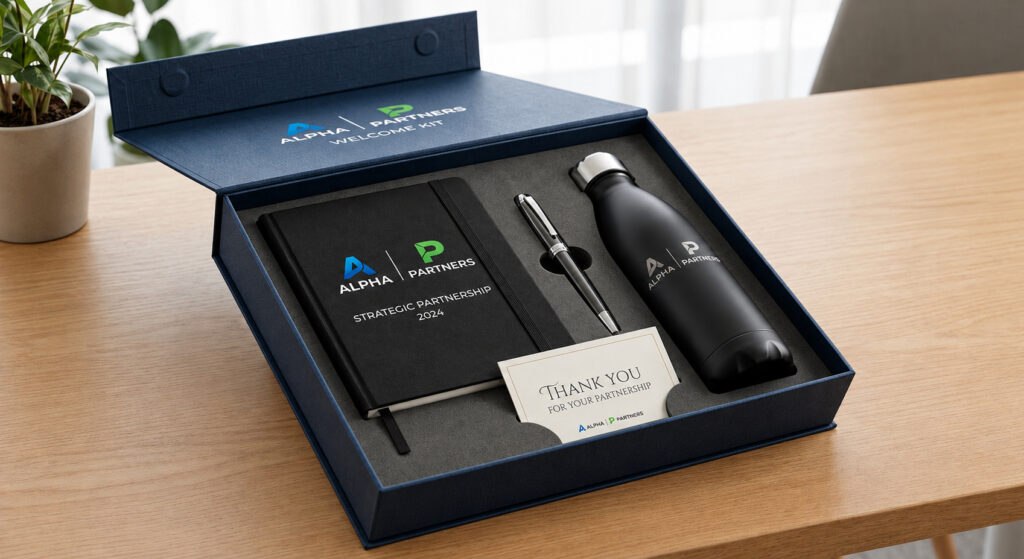
What’s inside: Co-branded items featuring both logos, product samples, and partner-facing project materials.
Strategic partners, resellers, and agencies choose where to spend their attention. A well-made, co-branded kit signals that the partnership is a mutual priority and hands them useful collateral to represent your brand proudly in the market.
Best for: Strategic partners, creators, and suppliers around a partnership announcement or project launch.
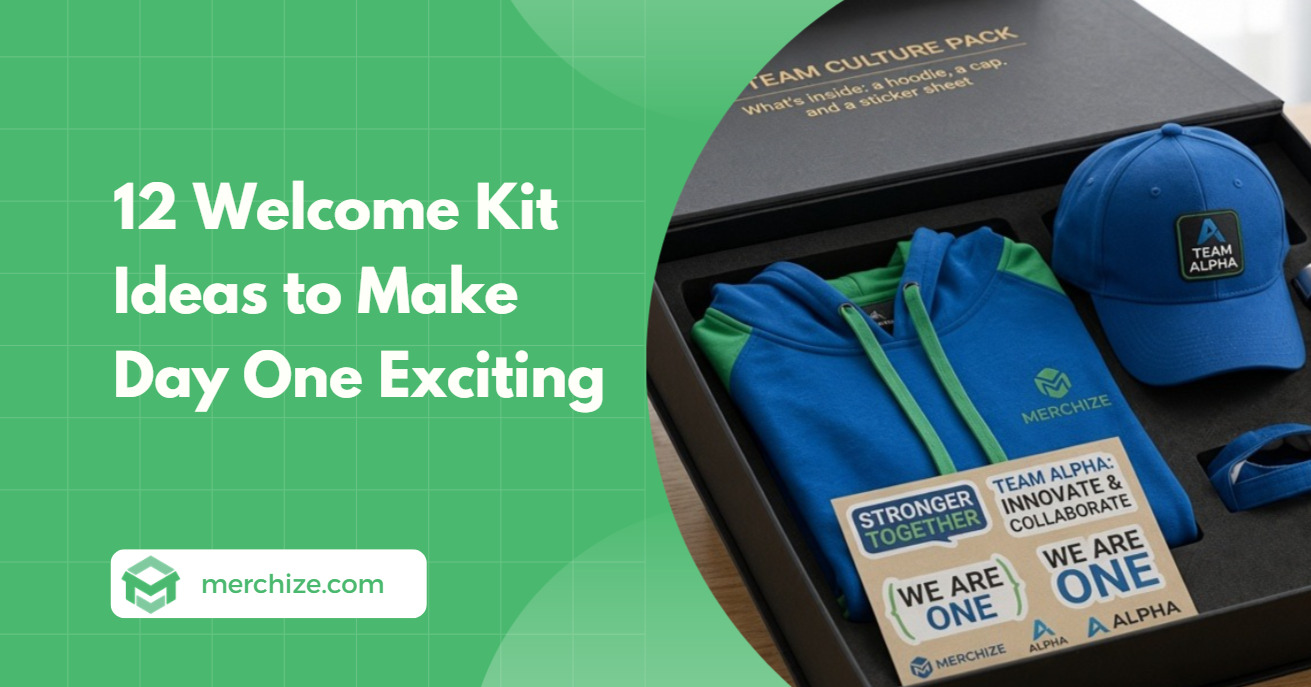
8. The team culture pack
What’s inside: A hoodie or jersey, a cap, and a sticker or pin in your team colors.
Matching colors turn a new hire into a visible member of a group. A custom jersey or all-over-print piece works well for sales pods, support squads, and companies with a sports or gaming identity. Merchize lists an all-over-print baseball cap at a $14 base cost and an all-over-print baseball jersey at $16.75.
Best for: Sales, support, startups with a strong in-group culture, and companies with sports-adjacent brands.
9. The eco-essentials set
What’s inside: A reusable bottle, an organic cotton tote, a notebook, and a card printed on recycled stock.
If sustainability is a core value at your company, the kit is the cheapest place to prove it. Skip the throwaway plastic items which ranked among the most overdone, least appreciated swag in surveys. Offer fewer, reusable pieces produced via made-to-order models so nothing sits in a warehouse wasting resources.
Best for: Mission-led companies, B Corps, and teams where sustainability is part of the hiring pitch.
10. The tech gear back
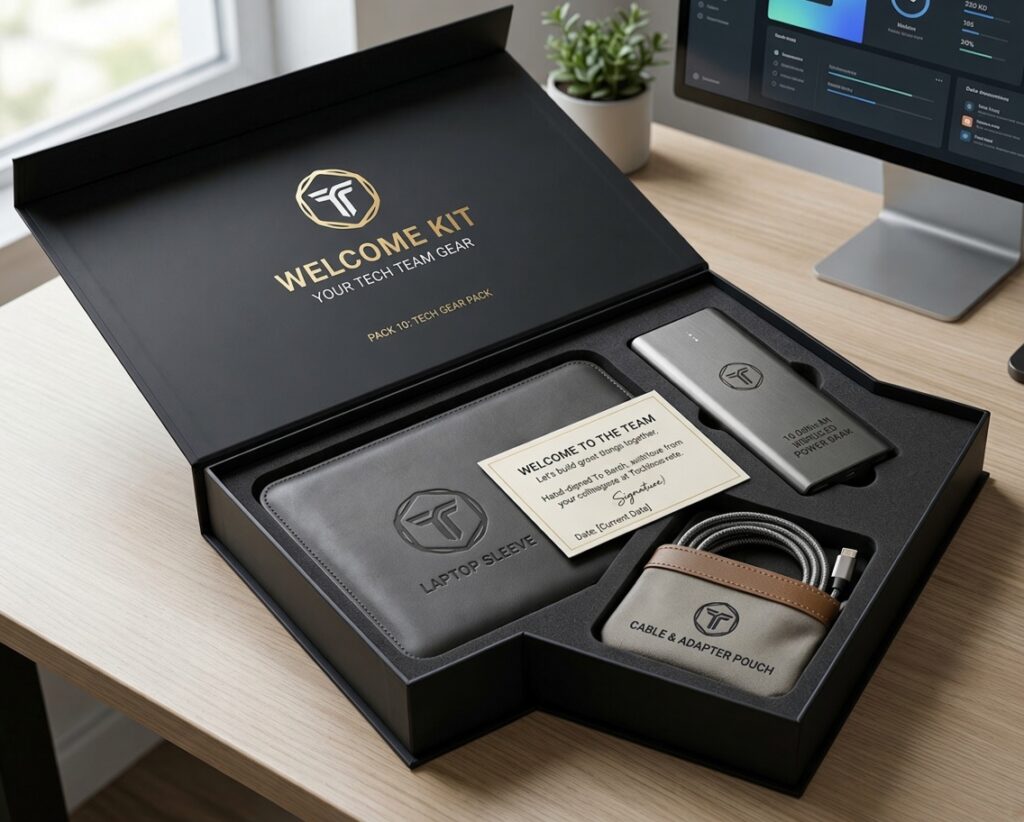
What’s inside: A phone stand, a cable organizer or tech pouch, a laptop sleeve, and a welcome card.
Tech accessories tied with hoodies at 34% in the employee survey, proving they are essential desk companions. Pair a practical phone accessory with a travel accessory like a cord pouch or tech organizer that actually survives daily commuting.
Best for: Engineering, design, and remote roles built entirely around a laptop and a phone.
11. The wellness and care box
What’s inside: A cozy blanket or soft socks, a mug, a small snack or tea, and a note highlighting wellness benefits.
Starting a new position brings excitement mixed with nerves, and a wellness kit acknowledges both sides. Items like blankets and comfortable loungewear make a kit feel deeply personal, while a card pointing to your mental-health and time-off policies adds substance.
Best for: Healthcare, customer support, education, and roles with high-stress initial quarters.
12. The digital-first kit
What’s inside: One physical item (such as a tee, mug, or tote) plus a QR code to a welcome video, team page, or playlist.
For lean budgets and very large hiring waves, pair a single impactful physical item with a digital welcome experience. A short video from the team lead, a digital guide of “who does what," and a pinned message in your internal communication channel cost nothing to produce.
Best for: High-volume hiring, early-stage startups, and teams testing out a pilot welcome program before scaling up.
What Merchize SWAG offers for welcome kits
Merchize SWAG helps you create custom welcome kits for new hires, B2B clients, and business partners. Our team can recommend products that fit your recipients and budget, then handle customization, production, and delivery.
- Product recommendations: Find suitable gifts for each audience, from branded apparel to premium accessories
- Custom design and packaging: Add your logo, personalized labels, and thank-you cards
- Flexible order quantities: Order one kit or hundreds, with no minimum order quantity
- Production and delivery: In-house production in Vietnam and the US
- Multi-address shipping: Send kits to recipients across different locations in one bulk order
Check out our case studies to see how brands use our SWAG services to create tailored gifts for their unique audiences: Case study SWAG for Amazon and Case study SWAG for Google Vietnam.
FAQs
- What should I include in a welcome kit?
Aim for 3 to 5 useful items plus a personal note. New hires need everyday essentials like a hoodie, tumbler, or tote. Clients prefer fewer, premium-packaged goods. Partners look for co-branded items and product samples. Either way, the note matters as much as the merch.
- When should a welcome kit arrive?
It should always land on or before the moment that matters most to the recipient:
- For new hires: On or before Day 1
- For B2B clients: Between contract signing and the kickoff call
- For strategic partners: Around the partnership announcement or product launch
- Can I send welcome kits to recipients in different countries?
Yes, but you need to plan. Collect addresses early, check delivery times and import duties for each destination, and use a partner that can ship to several addresses from one order.